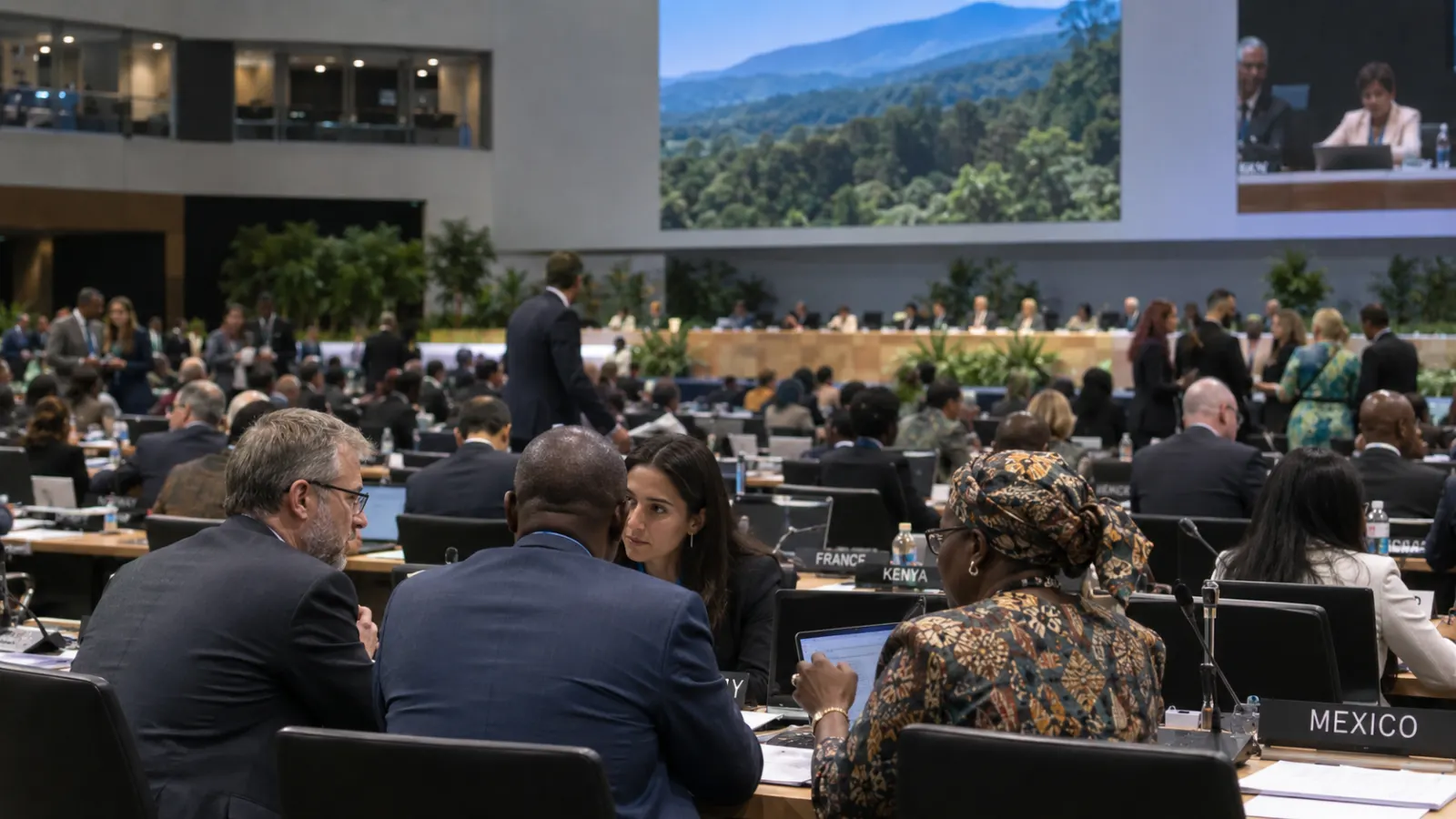
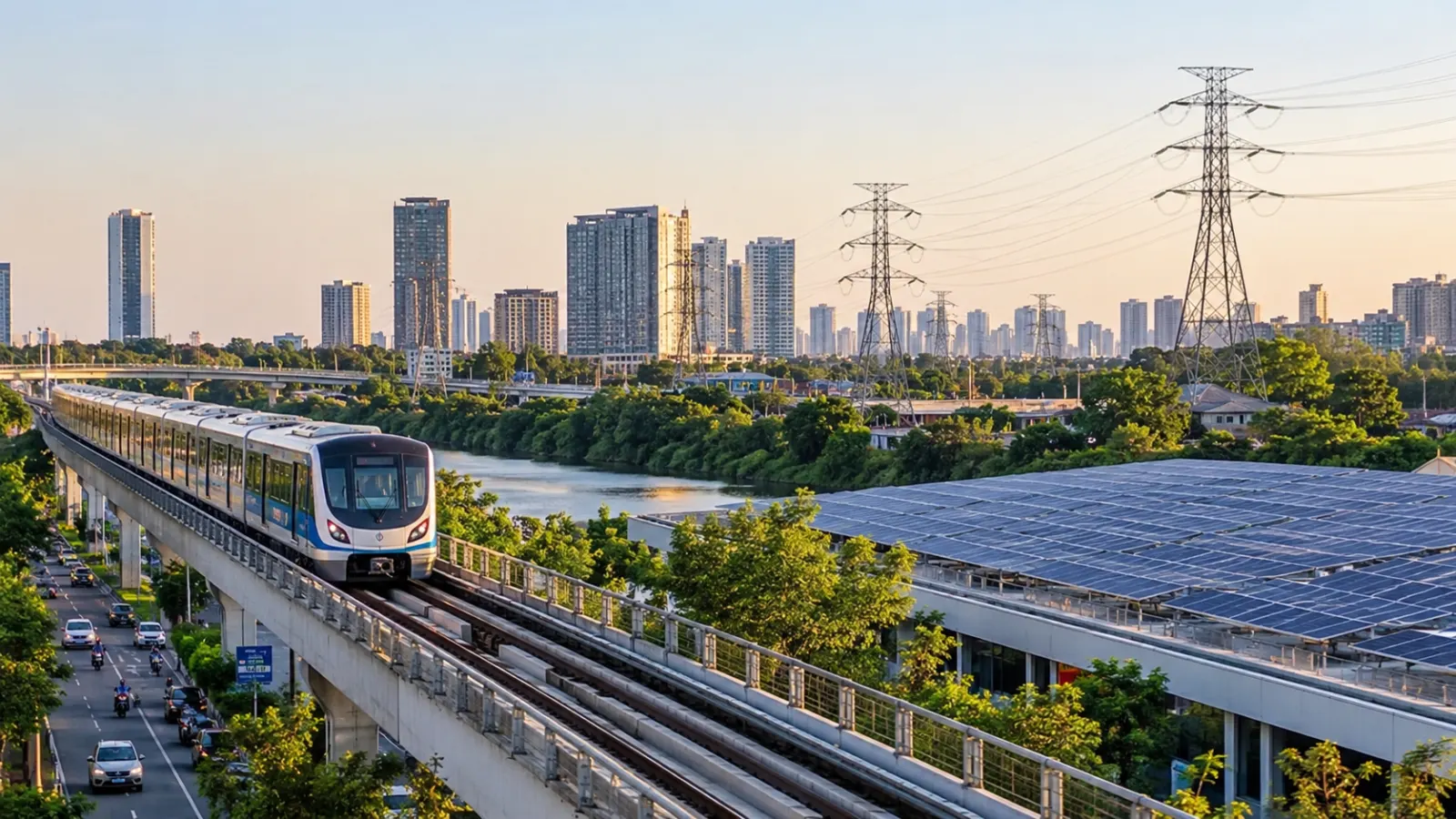
Climate negotiations often sound technical: mitigation, adaptation, nationally determined contributions, Article 9.1, carbon markets, concessional finance, loss and damage, blended capital. But beneath this vocabulary lies a simple political question: who should pay for a crisis that some countries caused more than others, but all countries now suffer from?
That question has become the biggest fault line in global climate politics.
For rich nations, climate finance is often presented as support, partnership and investment. For poor and developing nations, it is not charity. It is responsibility. It is compensation for historical emissions. It is the price of trust. It is also the condition without which many countries cannot realistically transition to cleaner economies while still fighting poverty, building infrastructure and protecting vulnerable communities.
This is why climate finance has become the emotional centre of every major climate summit. The world may agree that climate change is dangerous. It may agree that emissions must fall. It may agree that clean energy should expand. But when the conversation turns to money, the language of cooperation quickly becomes the language of accusation.
The Old Promise Still Haunts the Climate System
The original political wound came from the $100 billion promise. At COP15 in Copenhagen in 2009, developed countries committed to mobilising $100 billion per year by 2020 for climate action in developing countries. That promise became a symbol of whether the developed world could be trusted.
The problem was not only that the target was too small compared with actual needs. The problem was that it was achieved late. OECD’s earlier assessment found that developed countries reached $115.9 billion in climate finance in 2022, meaning the old $100 billion goal was met two years after the original 2020 deadline. OECD’s latest 2026 data says developed countries provided and mobilised $132.8 billion in 2023 and $136.7 billion in 2024, exceeding the $100 billion goal for three consecutive years.
On paper, that sounds like progress. Politically, it has not repaired trust.
Developing countries argue that delayed finance is not a minor administrative failure. In climate terms, delay has consequences. A cyclone does not wait for a pledge cycle. A drought does not wait for a replenishment conference. A coastal village does not wait for a multilateral bank to complete a project pipeline.
Finance that arrives late is still useful, but it cannot undo the damage already done.
COP29 Raised the Number but Not the Trust
At COP29 in Baku, countries agreed to a new climate finance goal. The headline figure was that developed countries would help raise finance for developing countries from the earlier $100 billion annual target to $300 billion annually by 2035. The agreement also called for efforts to scale up finance from public and private sources to $1.3 trillion per year by 2035.
This was a major diplomatic outcome, but it was not a clean victory.
For many developing nations, $300 billion by 2035 was far below what is needed. The number also raised difficult questions: How much will be public finance? How much will be grants? How much will be loans? How much will be truly new money rather than relabelled development assistance? How much will reach the most vulnerable countries rather than middle-income economies with better financial access?
The Baku-to-Belém Roadmap was created to scale finance toward at least $1.3 trillion per year by 2035, with emphasis on grants, concessional finance, non-debt-creating instruments and fiscal space for developing countries.
That language matters. It shows that the fight is no longer only over the size of climate finance. It is also over the quality of climate finance.
The Real Divide: Grants Versus Loans
The deepest dispute is not simply “how much money?” It is “what kind of money?”
A grant helps a vulnerable country build flood defences, strengthen agriculture, restore mangroves or upgrade early-warning systems without increasing debt. A loan may finance the same project, but it can also increase repayment pressure. For countries already facing debt distress, loan-heavy climate finance can feel like being charged interest for surviving a crisis they did not create.
This is why the Global South repeatedly demands more grant-based and concessional finance. Many developing nations are already spending heavily on disaster recovery, food security, health systems, energy access and infrastructure. If climate action becomes another debt burden, it risks producing a cruel contradiction: the countries least responsible for climate change may have to borrow money to protect themselves from its consequences.
This is not a theoretical concern. UNEP’s 2025 Adaptation Gap Report estimated that developing countries need around $310 billion per year for adaptation by 2035 based on modelled costs, or $365 billion per year based on extrapolated needs from national plans. International public adaptation finance flows to developing countries were only $26 billion in 2023, down from $28 billion in 2022.
That means adaptation needs are roughly 12 to 14 times current flows.
This gap explains the anger. The countries facing floods, heatwaves, crop loss, water stress and coastal erosion are being asked to prepare for a climate future with financial tools that are still far below the scale of the threat.
Why Adaptation Finance Is Politically Explosive
Mitigation finance often attracts more private investment because clean energy, electric mobility, green hydrogen, batteries and transmission systems can generate returns. Adaptation is different. A seawall may save lives, but it may not produce a direct revenue stream. A heat-resilient public-health system may prevent deaths, but it does not easily fit into private capital models. Climate-resilient agriculture may protect rural livelihoods, but it may not offer the kind of predictable returns investors prefer.
This is why adaptation finance needs more public money.
Poor countries do not oppose private investment. They oppose the fantasy that private finance alone can solve the adaptation crisis. Markets are useful where there is profit. But climate vulnerability is often greatest where profit is weakest: small islands, least developed countries, drought-hit rural regions, fragile states and low-income coastal communities.
The moral problem is clear. The people who need adaptation most are often the least attractive to private capital.
That is why climate finance remains a justice issue, not merely an investment issue.
Loss and Damage Changed the Debate
For years, vulnerable countries argued that adaptation was not enough. Some climate harms cannot be adapted to. If land disappears under the sea, if homes are destroyed by extreme weather, if crops fail repeatedly, if cultural sites are lost, if communities are displaced, the issue is no longer future preparedness. It is loss and damage.
COP27 agreed to establish a Loss and Damage Fund, and COP29 built on earlier climate finance discussions while recognising the need to protect lives and livelihoods from worsening climate disasters.
But the fund also reflects the larger problem. Creating a fund is easier than filling it. Announcing solidarity is easier than transferring resources at scale. For vulnerable countries, the credibility of loss-and-damage finance will be judged not by speeches but by disbursement.
A country hit by a devastating cyclone does not need sympathy alone. It needs fast liquidity, reconstruction support, debt relief, insurance mechanisms and grants that reach people before the next disaster arrives.
India’s Position: Equity, CBDR and Development Space
India’s climate diplomacy rests on a consistent argument: climate action must be ambitious, but it must also be equitable. Developed countries industrialised first, consumed a large share of the global carbon budget and built wealth through high-emission growth. Developing countries cannot now be asked to bear equal burdens without equal support.
At COP30 in Belém, India welcomed progress on adaptation and the Just Transition Mechanism, while again stressing developed countries’ long-standing obligations to provide climate finance. India also warned that the burden of mitigation should not be shifted onto those with the least responsibility for causing the problem.
This position is rooted in the principle of common but differentiated responsibilities and respective capabilities, commonly called CBDR-RC. In simple terms, all countries have responsibilities, but not all countries have the same historical responsibility, financial capacity or development stage.
India’s concern is also linked to unilateral climate trade measures. When rich economies impose carbon-related trade rules on imports from developing countries, the Global South sees a risk: climate policy may become a new form of protectionism. India raised this issue at COP30, saying such trade-restrictive measures affect developing countries and conflict with equity principles.
This is where climate finance, trade and geopolitics merge.
If the developed world asks poorer countries to decarbonise faster, but does not provide adequate finance and technology, climate ambition becomes unequal. If rich countries then penalise developing-country exports for being carbon-intensive, the climate regime starts looking less like cooperation and more like coercion.
The Rich-Country Counterargument
The developed world has its own argument. Rich countries say public budgets are under pressure. They argue that climate finance cannot come only from governments. They want multilateral development banks, private investors, carbon markets, philanthropies and emerging economies to contribute more. They also point to the latest OECD data showing that the $100 billion goal has now been exceeded for three consecutive years.
This argument is not entirely wrong. The scale of the climate transition is too large for public budgets alone. Emerging markets and developing countries, excluding China, are estimated to need between $2.3 trillion and $2.5 trillion annually by 2030 to meet climate goals.
No realistic pathway can ignore private finance or development-bank reform.
But the counterargument has a weakness: it often treats mobilisation as a substitute for obligation. Developing countries do not reject private capital; they reject counting uncertain, expensive or debt-heavy flows as if they were equivalent to predictable public support.
Climate finance cannot be built on accounting creativity. It must be built on credibility.
The Private Finance Illusion
Private finance is essential, but it has limits.
Private investors seek risk-adjusted returns. Many climate-vulnerable countries carry high currency risk, political risk, project-preparation constraints and weak credit ratings. Even when they have strong climate needs, they may struggle to attract affordable capital. This creates a paradox: the countries most in need of finance often face the highest cost of capital.
That is why climate finance reform must include guarantees, concessional capital, first-loss instruments, debt swaps, currency-risk protection and stronger multilateral development bank lending. But these tools must be designed carefully. They should lower the cost of climate action, not create a new financial architecture where poor countries carry the risk and rich investors capture the upside.
The goal should not be to make climate vulnerability profitable. The goal should be to make climate resilience fundable.
COP30 Showed Progress, but Also the Limits of Diplomacy
COP30 in Belém produced a formal package of decisions, including texts on the Mutirão decision, the global stocktake, just transition, finance-related matters, the Green Climate Fund, the Global Environment Facility, the Loss and Damage Fund and the Adaptation Fund.
But the larger political divide remained. Developing countries continued to demand stronger finance, clearer responsibility and more protection against climate-related trade restrictions. Developed countries continued to emphasise broader sources of finance, private mobilisation and implementation.
This is why COP summits often end with both celebration and disappointment. Diplomacy produces language. The climate crisis demands delivery.
The gap between those two is the climate finance divide.
Why This Matters for the Global Order
Climate finance is not only about climate change. It is about whether the international system can still produce fair bargains.
If developing nations feel that climate rules are written by rich countries, financed inadequately, and enforced through trade pressure, resentment will grow. If rich countries feel that emerging economies want finance without stronger mitigation commitments, frustration will grow. If both sides lose trust, climate cooperation will weaken at precisely the moment the world needs faster action.
The danger is not only ecological. It is geopolitical.
Climate finance will shape alliances, trade negotiations, development models, debt politics, energy transitions and the legitimacy of global institutions. Countries that help finance clean growth in the Global South will gain influence. Countries that use climate rules without climate support will face resistance.
For India, this creates both challenge and opportunity. India can position itself as a voice for climate justice while also becoming a major clean-energy economy. But to do that credibly, it must continue expanding renewables, modernising grids, building green manufacturing, improving climate resilience and negotiating hard for fair finance.
The Editorial Line
The world does not lack climate pledges. It lacks climate trust.
Rich countries say they are paying more. Poor countries say it is late, insufficient, loan-heavy and unfair. Both statements can be partly true. Finance has increased, but needs have increased faster. Targets have improved, but delivery remains uncertain. Private capital is necessary, but public responsibility cannot be outsourced.
The climate crisis was created unequally. Its impacts are being felt unequally. Its solutions cannot be financed equally.
That is the central truth behind the politics of climate finance.
Until the world accepts that fairness is not a slogan but a financial architecture, every COP will repeat the same drama: ambitious speeches, difficult negotiations, partial agreements and lingering mistrust.
The climate fight will not be won only by reducing emissions. It will also be won by rebuilding trust between those who polluted first and those now being asked to develop differently.
Without finance, climate ambition is rhetoric.
With fair finance, it becomes possible policy.
A serious editorial illustration showing two sides of the world divided by a rising flood line: wealthy nations with glass buildings and clean-energy infrastructure on one side, vulnerable developing countries with flooded homes, farmers, heatwaves and coastal erosion on the other. In the centre, a broken financial bridge made of dollar notes, climate documents and COP negotiation papers. Use dark blue, green and muted gold tones. Realistic geopolitical magazine style. No text.
Suggested Internal Links
Climate Change Becomes a Core Foreign Policy Challenge
Energy Security Returns as a Central Question in Global Politics
Critical Minerals Race Could Define the Clean Energy Transition
The Global South Wants Reform, Not Charity