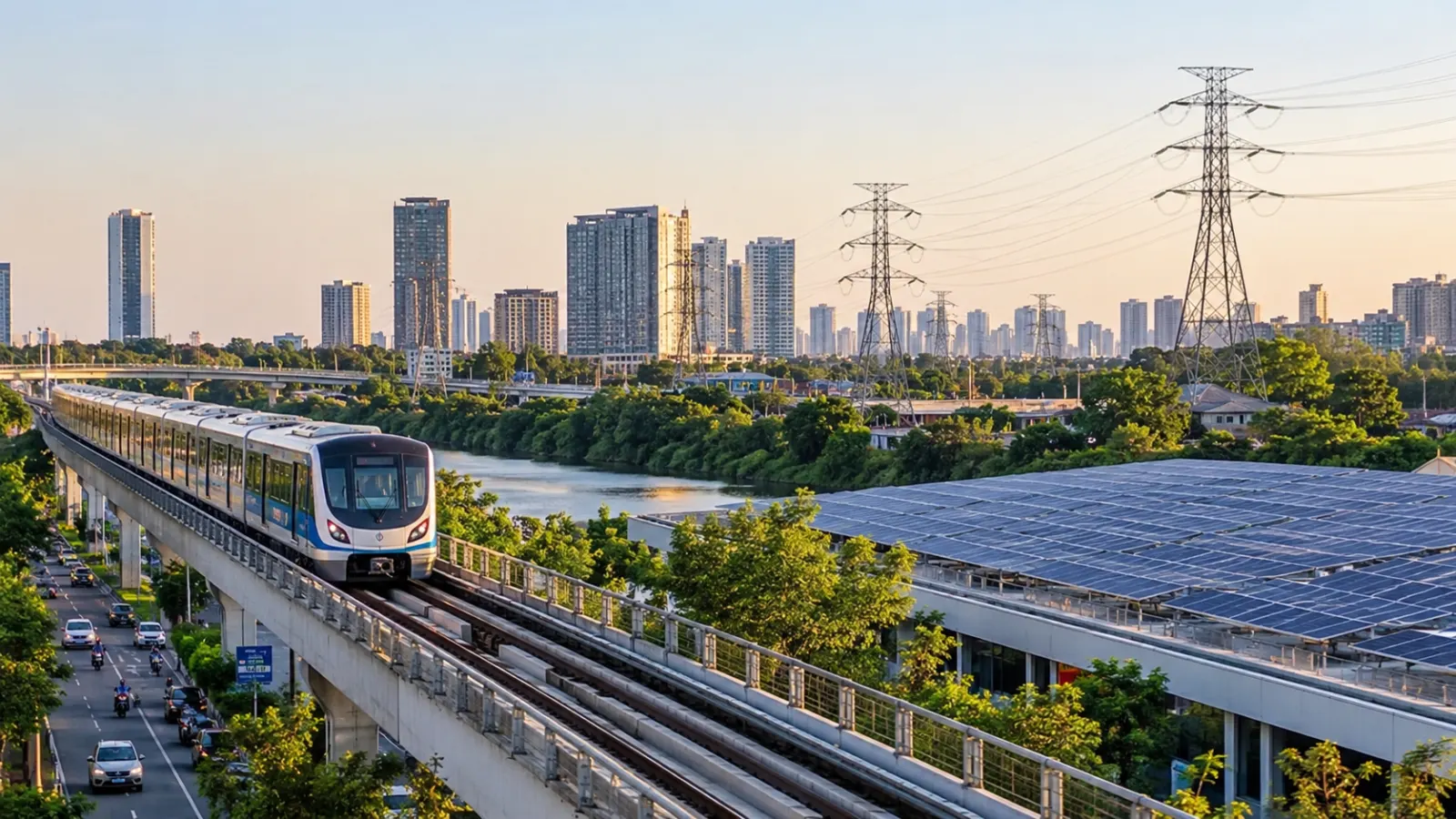
Climate change is no longer only an environmental issue. It is now a question of foreign policy, national security, trade, finance, technology, migration, food systems, energy strategy and global power.
For years, climate diplomacy was treated as a specialist corner of international relations. Environment ministries negotiated emissions targets. Scientists warned about warming. Activists demanded action. Developed and developing countries fought over responsibility. But today, climate change has moved from the margins to the centre of statecraft.
A country’s climate position now affects its trade access, investment flows, industrial competitiveness, diplomatic alliances, energy security and moral standing. Carbon border taxes can reshape exports. Green technology supply chains can decide manufacturing power. Climate finance can determine development pathways. Extreme weather can destabilise societies. Adaptation failures can create humanitarian crises. Energy transition can create new dependencies on critical minerals. Fossil fuel politics can reshape geopolitics.
For India, this shift is especially important.
India is both a climate-vulnerable country and a rising global power. It is both a large emitter and a low per-capita historical emitter compared with developed economies. It needs rapid economic growth but also faces pressure to decarbonise. It wants to lead the Global South but also attract green investment from the developed world. It seeks energy security while expanding renewables. It supports climate ambition but insists on equity, finance and technology transfer.
This dual position makes climate change one of India’s most important foreign policy challenges.
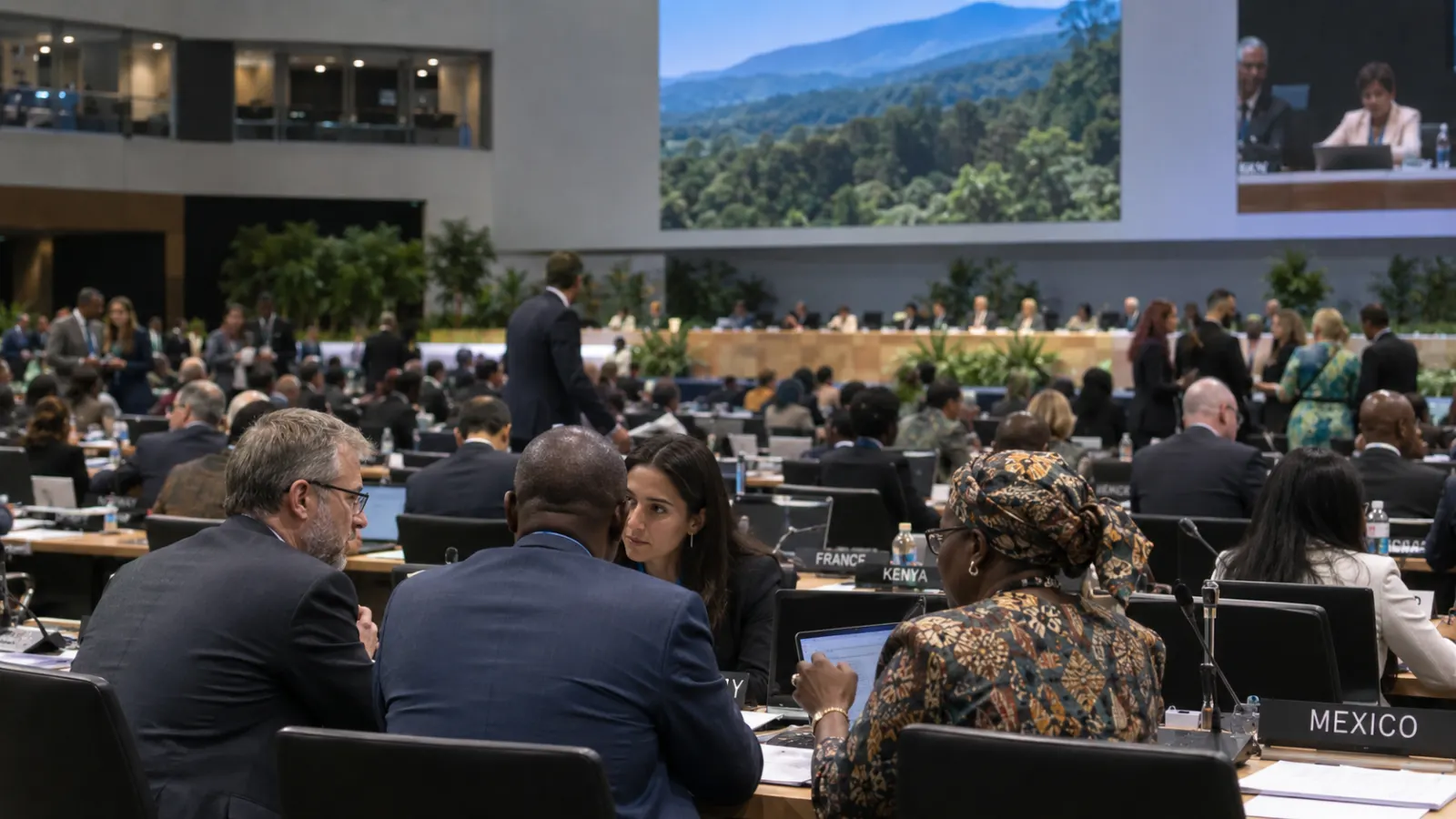
At COP30 in Belém, India again placed climate finance, equity, climate justice and the obligations of developed countries at the centre of its diplomatic position. India welcomed the establishment of a Just Transition Mechanism, supported progress under the Global Goal on Adaptation, and warned against unilateral trade-restrictive climate measures affecting developing countries.
That is the new reality: climate change is no longer a side issue in diplomacy. It is becoming one of the main arenas where global power, justice and development are being contested.
Why Climate Is Now Foreign Policy
Climate change has entered foreign policy because it affects the core interests of states.
First, it affects security. Extreme heat, floods, droughts, cyclones, sea-level rise and crop failures can weaken societies, displace people and strain governments. The IPCC’s Sixth Assessment Report concluded that climate change is already affecting weather and climate extremes across every region of the world, increasing risks to ecosystems, infrastructure, health, food and water security.
Second, it affects trade. Countries are beginning to regulate imports based on carbon intensity. The European Union’s Carbon Border Adjustment Mechanism is an example of how climate policy can become trade policy. For exporters in developing countries, decarbonisation is no longer only a moral issue; it is a market-access issue.
Third, it affects finance. Developing countries need large-scale concessional finance to shift to clean energy, build resilience and protect vulnerable communities. India’s 2026 NITI Aayog-linked analysis noted that studies estimate India’s net-zero investment requirement between USD 10 trillion and USD 20 trillion by 2070, while current climate finance flows remain far below what is needed.
Fourth, it affects technology. Batteries, solar manufacturing, green hydrogen, carbon capture, smart grids, electric vehicles and critical minerals are now strategic sectors. The countries that control green technologies will shape the next phase of global industrial power.
Fifth, it affects geopolitics. Climate negotiations are no longer only about emissions. They are about historical responsibility, development rights, climate justice, loss and damage, finance obligations, fossil fuel phase-downs, technology access and the future of global economic hierarchy.
This is why climate change has become foreign policy. It decides who pays, who adapts, who industrialises, who exports, who loses markets, who controls technology and who leads.
India’s Central Dilemma: Development and Decarbonisation
India’s climate diplomacy begins with one fundamental dilemma: how to decarbonise without sacrificing development.
India still has hundreds of millions of people whose incomes, energy use and consumption levels remain far below advanced economy standards. It needs industrialisation, urbanisation, transport expansion, affordable electricity, housing, manufacturing and jobs. These require energy.
At the same time, India is highly vulnerable to climate impacts. Heatwaves affect workers and cities. Erratic monsoons affect agriculture. Himalayan glacier risks affect rivers and hydropower. Cyclones threaten coastal states. Floods and droughts damage infrastructure and livelihoods.
India therefore cannot follow a simple Western climate template. It cannot shut down growth in the name of emissions reduction. But it also cannot ignore the climate crisis, because the poor will suffer most from climate instability.
This is why India’s diplomatic language repeatedly emphasises “climate justice” and “common but differentiated responsibilities and respective capabilities.” India argues that developed countries created most historical emissions, built wealth through fossil-fuel-intensive industrialisation, and now must provide finance and technology to help developing countries transition.
This is not merely rhetoric. It is the foundation of India’s climate bargaining position.
India wants space to grow. It also wants support to transition. That balance defines its climate foreign policy.
India’s NDC Shows Rising Ambition — But Also Strategic Calculation
India has progressively raised its climate ambition.
In March 2026, the Union Cabinet approved India’s Nationally Determined Contribution for 2031–2035. The new NDC enhanced India’s emissions-intensity target to a 47% reduction by 2035 from 2005 levels and raised the ambition for non-fossil-fuel-based installed electric power capacity to 60% by 2035. The government also stated that India had already achieved 52.57% non-fossil capacity by February 2026, meeting its earlier target ahead of schedule.
These numbers matter diplomatically.
They allow India to argue that it is not blocking climate action. It is acting, expanding renewables, strengthening non-fossil power capacity and aligning long-term policy with net zero by 2070. India’s 2022 updated NDC had already committed to reducing emissions intensity of GDP by 45% by 2030 from 2005 levels and achieving about 50% cumulative electric power installed capacity from non-fossil fuel-based energy resources by 2030.
But India’s targets also reflect strategic caution. India focuses heavily on emissions intensity and installed capacity, rather than absolute emissions cuts in the near term. That allows the economy to continue growing while gradually reducing carbon intensity.
This is a pragmatic developing-country position. India is not saying it will stop emitting quickly. It is saying it will emit more efficiently while expanding clean energy and moving toward net zero over a longer timeline.
The challenge is that global climate politics is becoming less patient. Developed countries, climate-vulnerable island states and environmental groups increasingly demand faster action from all major emitters, including India. India must therefore defend its development space while proving that its transition is real.
That is a difficult diplomatic line to walk.
Climate Finance Is the Main Battleground
The central conflict in global climate diplomacy is finance.
Developing countries argue that ambition without finance is empty. Rich countries ask for stronger emissions targets. Poorer countries ask: with what money, whose technology, and at what cost?
India’s position is clear. Developed countries must provide predictable, affordable and accessible finance. At COP30, India emphasised the long-standing obligations of developed countries to provide climate finance and said promises made decades earlier in Rio must now be fulfilled.
This matters because the scale of the transition is enormous. India’s net-zero journey will require trillions of dollars across power, transport, industry, buildings, agriculture, water and adaptation. The NITI Aayog-linked 2026 financing analysis said India’s transition faces high capital costs, limited access to low-cost foreign capital, and the need for concessional and blended finance to make projects bankable.
For India, climate finance is not aid. It is part of a bargain. If the world wants developing countries to decarbonise faster, the world must make clean development affordable.
This is where India’s Global South leadership becomes important. Many developing countries share India’s complaint: they are being asked to transition without receiving adequate finance. India can speak for this group because it has scale, negotiating power and moral credibility as a developing country.
But India also has to be careful. If it is seen only as demanding finance while expanding coal and industrial emissions, its credibility may weaken. Its diplomatic strength depends on combining equity arguments with visible domestic action.
Climate finance is therefore not only an economic issue. It is the moral and political centre of climate diplomacy.
Climate Trade Measures Are a New Form of Power
Climate policy is increasingly becoming trade policy.
Developed economies are using carbon standards, green industrial subsidies, supply-chain rules and border adjustment mechanisms to protect domestic industries and accelerate decarbonisation. For developing countries, these measures can look like green protectionism.
India’s COP30 statement specifically welcomed the opportunity to discuss unilateral trade-restrictive climate measures and argued that such measures affect developing countries and violate principles of equity and common but differentiated responsibilities.
This issue will become more serious in the coming years.
Indian exports in steel, cement, aluminium, chemicals, fertilisers, textiles and engineering goods could face rising pressure from carbon-linked regulations. If Indian industry does not decarbonise, it may lose competitiveness. If it decarbonises too quickly without support, costs may rise. If developed countries impose standards without finance or technology transfer, India will call it unfair.
This is why climate diplomacy now belongs not only to environment ministries but also to commerce, finance, industry and external affairs ministries.
The future trade order may reward low-carbon production. That means India’s industrial policy and climate policy must align. Green steel, green hydrogen, renewable-powered manufacturing, battery storage, carbon accounting and clean supply chains will no longer be optional branding exercises. They will become conditions of market access.
For India, the diplomatic challenge is to resist unfair climate protectionism while preparing domestic industry for a low-carbon trade regime.
Energy Security Complicates Climate Diplomacy
India cannot discuss climate without discussing energy security.
India’s energy demand is still rising. Economic growth, urbanisation, industrialisation, cooling demand and transport expansion will require large amounts of electricity and fuels. Renewables are growing fast, but coal remains important for grid stability and baseload power.
This creates a diplomatic and domestic dilemma. International climate pressure wants faster reduction of fossil fuel dependence. India’s energy planners worry about affordability, reliability and security. No democratic government can risk blackouts or unaffordable power in the name of diplomatic approval.
India’s 2026 power-sector data show a complex transition: non-fossil installed capacity is rising sharply, but coal still remains a major part of installed capacity and power generation. NITI Aayog’s India Climate and Energy Dashboard shows coal as a large share of installed capacity, even as renewable and non-fossil sources expand.
This is why India resists simplistic demands to abandon fossil fuels immediately. It argues that transition must be just, gradual and nationally determined.
At the same time, India understands that long-term energy security cannot depend only on imported oil, gas and coal. Renewables, green hydrogen, electric mobility and domestic clean manufacturing can reduce import vulnerability.
The National Green Hydrogen Mission, for example, targets 5 million metric tonnes of green hydrogen production annually by 2030. Green hydrogen is not only a climate policy; it is also an industrial and strategic policy. If India succeeds, it can reduce fossil fuel imports, support fertiliser and refinery decarbonisation, and build a new export sector.
Energy transition is therefore not just about emissions. It is about strategic autonomy.
Climate Diplomacy Is Also Technology Diplomacy
The climate transition will be won or lost through technology.
Solar panels, electrolysers, batteries, rare-earth magnets, power electronics, carbon capture systems, smart grids, electric vehicles and green industrial processes are now geopolitical tools. Whoever controls these technologies controls the cost and speed of transition.
India does not want to be merely a market for foreign green technology. It wants to become a manufacturer, innovator and exporter. This is why climate policy is linked to Make in India, production-linked incentives, semiconductor strategy, critical minerals policy and industrial upgrading.
But the challenge is formidable. China dominates many clean technology supply chains, especially solar manufacturing and battery materials. Developed countries have capital and patents. India has demand, talent and scale, but must build manufacturing depth.
Technology transfer has long been part of climate negotiations, but developed countries have often resisted sharing intellectual property on favourable terms. India and other developing countries argue that without affordable technology access, the transition will remain unequal.
This is where climate diplomacy meets industrial diplomacy. India must negotiate technology partnerships with the United States, Europe, Japan, Australia, the Gulf and other partners while reducing overdependence on China.
A green transition that merely replaces oil dependence with battery and mineral dependence will not deliver strategic autonomy. India needs climate technology sovereignty.
Adaptation Is Becoming as Important as Mitigation
Global climate diplomacy has traditionally focused more on mitigation — reducing emissions. But for countries like India, adaptation is just as important.
Adaptation means preparing societies for climate impacts that are already happening: heat action plans, flood-resilient infrastructure, drought-resistant agriculture, coastal protection, water security, resilient health systems and disaster-ready cities.
At COP30, India welcomed progress under the Global Goal on Adaptation and highlighted the overwhelming adaptation needs of developing countries. This is important because developing countries often face the worst impacts of climate change despite contributing less historically to the problem.
India’s own vulnerability gives it credibility on adaptation diplomacy. It faces cyclones on the eastern and western coasts, Himalayan disasters, urban flooding, drought stress, heatwaves and agricultural risks. These are not future scenarios; they are current governance challenges.
Adaptation also has a neighbourhood dimension. South Asia is highly climate-vulnerable. Bangladesh faces flooding and sea-level risks. Nepal and Bhutan face glacial risks. Sri Lanka faces food, water and debt-linked climate vulnerability. Maldives faces existential sea-level threats. Pakistan faces extreme floods and heatwaves.
If India wants to lead the region, it must build climate-resilience partnerships: early warning systems, disaster relief, resilient infrastructure, river-basin cooperation, food security and climate-health planning.
Adaptation is therefore becoming regional diplomacy.
India’s Climate Leadership Platforms Matter
India has tried to move from defensive climate diplomacy to proactive climate leadership.
The International Solar Alliance is one example. It was launched by India and France at COP21 in Paris to promote solar energy cooperation and is headquartered in India. The government describes it as the first international organisation established in India and a symbol of India’s commitment to multilateralism and clean energy.
The Coalition for Disaster Resilient Infrastructure is another example. CDRI describes itself as a global coalition dedicated to enhancing the resilience of infrastructure systems to climate and disaster risks, involving governments, international organisations and the private sector.
Mission LiFE is a third example. India presents it as a global movement to promote sustainable lifestyles and individual/community action for protecting the environment.
These platforms serve a diplomatic purpose. They allow India to say: we are not only negotiating; we are building institutions. We are not only demanding finance; we are creating public goods. We are not only defending development rights; we are shaping global behaviour.
This is important for India’s image. A country seeking global leadership cannot only be reactive. It must propose solutions.
However, these initiatives must deliver measurable outcomes. The International Solar Alliance must help countries access finance and deploy solar. CDRI must support actual resilient infrastructure. Mission LiFE must move beyond slogans into behavioural and policy change.
Climate leadership requires implementation, not branding alone.
Climate Change and the Global South
India’s climate foreign policy is closely tied to its aspiration to lead the Global South.
Many developing countries feel that the global climate regime is unfair. They are asked to reduce emissions, but they did not create most historical emissions. They are asked to adapt, but they lack finance. They are asked to decarbonise, but clean technology remains expensive. They are vulnerable to climate disasters, but loss-and-damage finance remains limited.
India’s message to the Global South is that climate action must be equitable, development-friendly and finance-backed. This message has diplomatic appeal.
But leadership of the Global South also creates responsibility. India cannot only represent grievances. It must help design solutions: climate finance reform, South-South technology cooperation, affordable green infrastructure, disaster-response mechanisms, sustainable agriculture and resilient cities.
India’s credibility will depend on whether smaller developing countries see it as a genuine partner, not merely as a large country using the Global South platform for its own bargaining.
This is especially important for small island developing states and least developed countries. Their climate vulnerability is often more immediate than India’s. If India appears too focused on protecting its coal space and industrial growth, it may lose moral authority among the most vulnerable countries.
India must therefore balance development rights with climate responsibility.
The Climate-Security Link Is Getting Stronger
Climate change can intensify security problems.
Water scarcity can worsen river disputes. Crop failures can create food insecurity. Extreme heat can reduce labour productivity and trigger health crises. Sea-level rise can displace coastal communities. Climate disasters can weaken fragile states. Resource competition can intensify social conflict.
For India, this matters in the neighbourhood.
Bangladesh’s climate vulnerability can interact with migration politics. Nepal and Bhutan’s Himalayan river systems affect hydropower and flood risks. Pakistan’s floods and water stress can deepen instability. Sri Lanka’s food and economic vulnerabilities can worsen debt pressures. Maldives’ survival is linked to sea-level rise. Myanmar’s conflict may interact with environmental degradation and displacement.
Climate change therefore becomes part of regional security planning.
India’s foreign policy must integrate climate risk into diplomacy with neighbours. Water-sharing agreements, power trade, disaster relief, food supply chains, public health cooperation and infrastructure connectivity must all be climate-sensitive.
A climate-unstable South Asia will be harder for India to secure. A climate-resilient South Asia will strengthen India’s regional leadership.
The Counter-View: Is Climate Diplomacy Distracting From Development?
There is a serious counter-argument.
Some argue that climate diplomacy places unfair pressure on countries like India. Developed economies became rich through coal, oil, gas and industrial emissions. Now they are asking developing countries to slow emissions before reaching prosperity. Climate rules, carbon taxes and green standards may become tools to protect Western industries and restrict developing-country exports.
This concern is valid.
India should not accept a climate regime that freezes global inequality. It should resist policies that shift the burden of transition onto the poor. It should demand finance, technology and fair carbon space. It should protect its development rights.
But rejecting unfairness does not mean ignoring climate change.
India’s poor are among the most vulnerable to climate impacts. Heatwaves, floods, droughts and crop failures hurt workers, farmers and informal communities first. Pollution and fossil-fuel dependence also impose health and economic costs. Clean energy can reduce import dependence, create jobs and improve air quality.
Therefore, climate action should not be seen as a Western imposition alone. It is also India’s own developmental necessity.
The real question is not whether India should act. It is how India can act without sacrificing growth, equity and sovereignty.
What India Should Do
India needs a sharper climate foreign policy built on seven pillars.
First, it must continue defending equity and climate justice, but with credible domestic implementation. Stronger targets matter only if they are matched by delivery.
Second, it must make climate finance the centre of its Global South diplomacy. India should push for concessional finance, blended finance, MDB reform, lower cost of capital and easier access for adaptation funding.
Third, it must prepare industry for green trade rules. India should resist unfair carbon barriers, but it should also decarbonise export sectors before market access is threatened.
Fourth, it must build climate technology partnerships. Green hydrogen, batteries, solar manufacturing, grid storage, electric mobility and critical minerals should become core diplomatic priorities.
Fifth, it must make adaptation a regional leadership agenda. South Asia needs shared systems for disaster warning, resilient infrastructure, climate-health planning and river-basin cooperation.
Sixth, it must connect climate policy to energy security. Renewables, storage, nuclear, green hydrogen and grid reform should be framed as strategic autonomy, not only emissions reduction.
Seventh, India must convert platforms like the International Solar Alliance, CDRI and Mission LiFE into measurable public goods.
India’s climate diplomacy should be firm, practical and ambitious.
Editorial View: Climate Is the New Test of Global Leadership
Climate change has become a core foreign policy challenge because it now touches every major question of power.
Who gets to grow? Who pays for transition? Who controls green technology? Who bears historical responsibility? Who protects vulnerable populations? Who writes the rules of green trade? Who leads the Global South? Who adapts first? Who is left behind?
For India, climate diplomacy is not optional. It is central to its rise.
India cannot become a global power if it is seen as obstructing climate action. But it also cannot accept a climate order that punishes development. It must therefore do something harder: lead a fair transition.
That means defending equity without becoming defensive. It means expanding renewables without ignoring energy reliability. It means demanding finance while mobilising domestic capital. It means protecting industry while preparing it for green competition. It means speaking for the Global South while delivering at home.
The climate crisis will not wait for perfect diplomacy. Heatwaves, floods, storms and droughts are already changing the politics of development. The countries that adapt early, industrialise cleanly and negotiate smartly will shape the next century.
India’s advantage is that it understands both sides of the climate debate. It knows the urgency of climate impacts and the reality of development needs. That gives it a unique diplomatic voice.
But voice is not enough.
India must now turn climate diplomacy into climate statecraft.
Because in the 21st century, foreign policy will not be written only in treaties, borders and wars. It will be written in carbon, water, heat, finance, technology and resilience.
Climate change is no longer the background of global politics.
It is becoming one of its central battlegrounds.