Alexander Fleming Biography: Penicillin, Chance and the Medical Revolution
Any serious Alexander Fleming biography has to begin with one of science’s most famous accidents—and then explain why the accident alone was not enough.
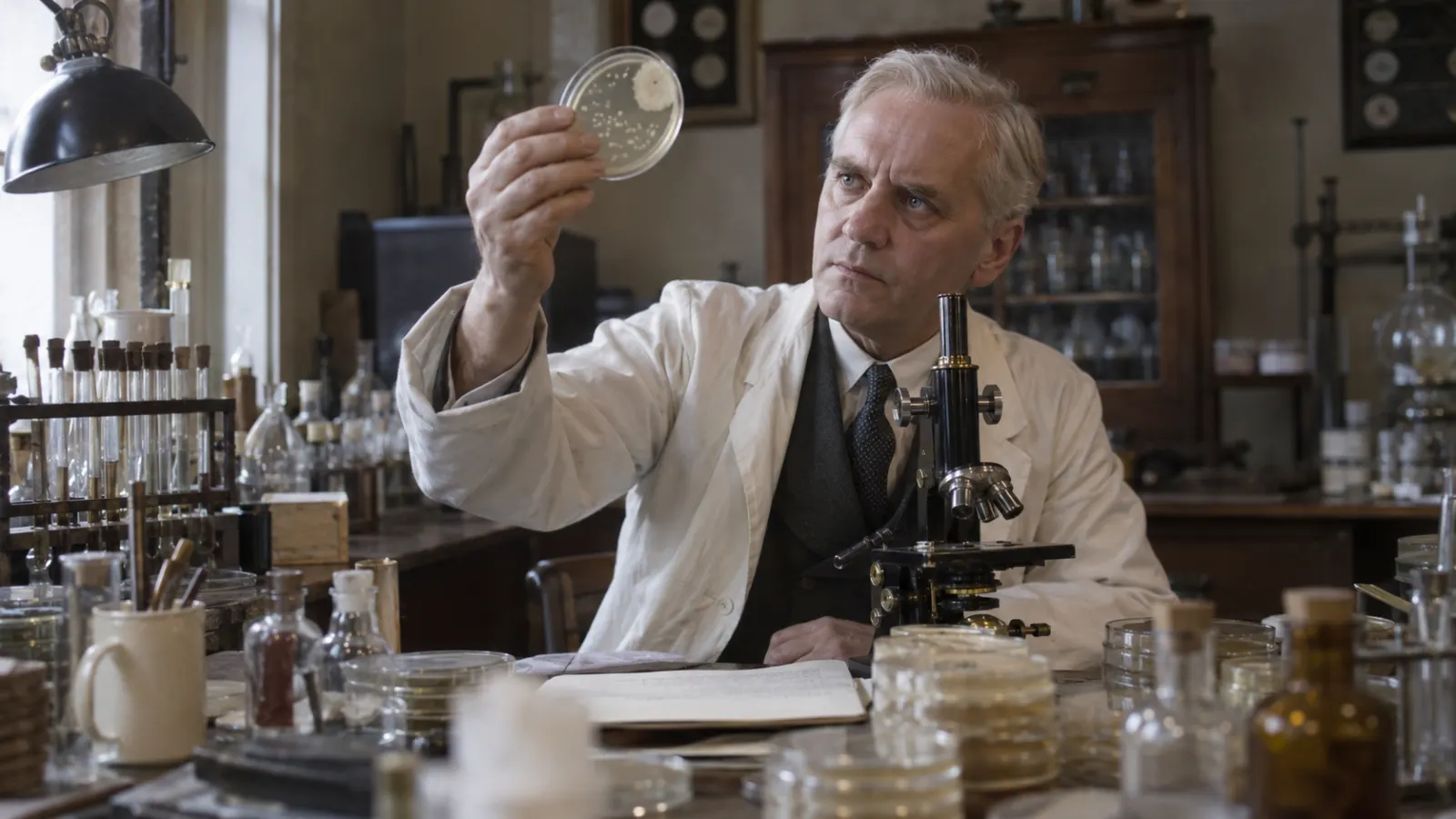
In September 1928, Fleming returned to his laboratory at St Mary’s Hospital in London and noticed something unusual on a culture plate containing Staphylococcus. A mould had contaminated the plate, but immediately around the mould the bacterial colonies had disappeared or failed to grow. Instead of discarding the contaminated culture, Fleming investigated it. He grew the mould separately, tested the antibacterial material it released and gave that substance a name: penicillin.
The observation eventually helped transform medicine. Before effective antibiotics, bacterial pneumonia, infected wounds, puerperal infections, syphilis and postoperative infections could become fatal despite otherwise competent medical care. Penicillin helped make many of those infections treatable and encouraged the search for entire new classes of antibiotics.
But the familiar story—Fleming leaves a dish beside an open window, mould lands on it and modern antibiotics instantly appear—is misleading.
The precise source of the mould remains uncertain. Fleming recognised an important biological phenomenon, but he could not purify penicillin reliably, stabilise it or manufacture enough for systemic treatment. More than a decade later, Howard Florey, Ernst Chain, Norman Heatley and other researchers at Oxford returned to Fleming’s work and transformed penicillin from an unstable laboratory substance into a credible medicine. British and American scientists, government agencies and pharmaceutical companies then solved the manufacturing problems that made mass treatment possible during the Second World War. The American Chemical Society therefore describes penicillin explicitly as a story of both discovery and development, with Fleming’s 1928 observation in Britain followed by the Oxford work and large-scale American production.
Fleming deserves enormous credit.
He does not need to receive everyone else’s credit as well.
That distinction makes his achievement more interesting, because penicillin demonstrates how scientific revolutions actually happen: an anomaly is recognised, published, rediscovered, translated across disciplines, engineered at scale and finally incorporated into medicine.
From a Scottish farm to bacteriology and the problem of infection
Alexander Fleming was born on 6 August 1881 at Lochfield Farm near Darvel in Ayrshire, Scotland. He grew up in a farming family, moved to London as a teenager and spent several years working in a shipping office before entering St Mary’s Hospital Medical School in 1901. He graduated in 1906 and joined the research department under Almroth Wright, an influential bacteriologist and advocate of vaccine therapy. St Mary’s became Fleming’s professional home for almost five decades.
That environment mattered. Fleming’s career developed at the intersection of clinical medicine and laboratory bacteriology, where the practical question was not simply which organisms existed but how infection could actually be controlled inside a patient.
The First World War made that problem brutally visible.
Fleming served as a captain in the Royal Army Medical Corps and worked with Wright’s group on infected battlefield wounds. Surgeons faced injuries contaminated with soil, fragments of clothing and bacteria, often accompanied by extensive tissue damage. Strong antiseptic chemicals were widely used in attempts to kill organisms, but Fleming and colleagues became concerned that agents effective in laboratory tests could behave very differently inside damaged living tissue.
Their work showed that some antiseptic approaches could damage the body’s own protective cells while failing to reach bacteria buried deeply within irregular wounds. Fleming’s wartime research helped reinforce an important principle: an antimicrobial treatment is useful only if it harms the pathogen more effectively than it harms the patient.
This concern with selective toxicity helps explain why his later discoveries mattered to him.
He was not simply waiting for mould to fall onto a plate.
He was already interested in substances capable of inhibiting microbes without producing equivalent injury to human tissue.
That interest produced an important discovery even before penicillin.
In 1922, Fleming and V. D. Allison published work on lysozyme, a naturally occurring antibacterial enzyme found in tissues and secretions such as tears and saliva. Lysozyme could break down certain bacteria, although many important human pathogens were relatively resistant to it. It therefore failed to become the powerful therapeutic agent Fleming hoped for.
Scientifically, however, lysozyme mattered.
It demonstrated that biological systems could contain substances capable of selectively damaging microorganisms. It also reinforced Fleming’s habit of looking carefully at unexpected bacterial inhibition.
That background makes the later penicillin discovery less like a random miracle and more like chance meeting a scientist already prepared to recognise what the anomaly meant.
The 1928 plate was a discovery, not yet a drug
When Fleming examined the contaminated staphylococcal plate in 1928, the striking feature was the clear zone around the mould. Something produced by the fungus was diffusing into the surrounding medium and preventing susceptible bacteria from surviving there.
Fleming isolated the mould, investigated its effects and called the antibacterial substance it released penicillin, after the Penicillium genus.
He tested the material against different bacteria and found that it strongly inhibited a number of organisms while having much less effect on others. His original paper, “On the Antibacterial Action of Cultures of a Penicillium, with Special Reference to Their Use in the Isolation of B. influenzae,” appeared in the British Journal of Experimental Pathology in 1929. The paper established the antibacterial phenomenon but did not announce a finished systemic medicine.
That distinction is central to Fleming’s legacy.
He had discovered that the mould produced something biologically extraordinary.
He had not solved the chemical problem of turning that substance into a pharmaceutical product.
Penicillin existed in low concentrations in culture fluid and was highly unstable. Fleming’s assistants Stuart Craddock and Frederick Ridley attempted to isolate it, but they could obtain only crude preparations. Other researchers also struggled to purify the active material.
This is one reason the discovery did not immediately revolutionise medical practice.
A useful systemic drug requires much more than antibacterial activity on a plate. Doctors need a substance whose identity is sufficiently understood, whose potency can be measured, whose impurities can be controlled, whose stability is predictable and whose dose can be administered safely to patients.
Fleming was primarily a bacteriologist.
The next stage required chemistry, pharmacology and engineering.
The emergence of sulfonamide drugs during the 1930s also changed the research environment. They provided some of the first successful systemic antibacterial chemotherapy and demonstrated that serious bacterial infections could indeed be treated chemically. Penicillin remained scientifically interesting, but it was not yet an obvious route to an industrial medicine.
Popular accounts sometimes turn this period into another myth: Fleming discovered a miracle cure, failed to appreciate it, and abandoned it.
The historical reality is more nuanced.
He investigated penicillin, published it, used crude material experimentally and distributed cultures to interested researchers. But he neither possessed the tools nor assembled the multidisciplinary programme necessary to transform it into a stable therapeutic drug. Imperial College’s historical account similarly notes that Fleming continued to maintain and distribute the mould while the technology needed to isolate and manufacture the antibiotic remained unavailable.
The bottleneck was not simply imagination.
It was translation.
Oxford turned Fleming’s observation into a therapeutic programme
The decisive change came at the Sir William Dunn School of Pathology at Oxford University in the late 1930s.
Howard Florey led a programme studying naturally produced antibacterial substances. Ernst Chain brought biochemical expertise, while Norman Heatley developed highly practical methods for growing, extracting, assaying and recovering penicillin. Edward Abraham and other scientists contributed purification and chemical work, while additional researchers cultivated mould, conducted experiments and organised clinical studies.
Their contribution cannot be reduced to “rediscovering Fleming.”
They changed the nature of the problem.
Fleming had shown that a Penicillium culture produced an antibacterial substance.
The Oxford team asked whether that substance could be produced, purified, quantified and delivered systemically in an infected animal or human being.
That required extraordinary amounts of culture material. The ACS history records that the Oxford operation eventually processed hundreds of litres of mould filtrate each week using an improvised collection of culture vessels. Heatley developed extraction techniques for recovering penicillin from huge volumes of liquid, while other researchers improved purification.
In 1940, the team conducted a crucial experiment in infected mice. Penicillin protected treated animals under conditions in which untreated controls died. The laboratory curiosity had become a serious therapeutic candidate.
Human treatment followed.
In February 1941, Albert Alexander, a policeman suffering from a severe infection, received Oxford penicillin. His condition improved dramatically, but the team possessed so little of the drug that researchers recovered penicillin from his urine in an attempt to reuse it. Their supply eventually ran out, and Alexander died. Later patients could be treated more successfully as production improved.
The case revealed penicillin’s promise and its central limitation at exactly the same time.
The drug could work.
There was nowhere near enough of it.
This is why Norman Heatley deserves much greater prominence in popular accounts. His contribution was not an ornamental detail beside the more famous names. Extraction, assay and production methods were essential to converting an unstable substance into something experimental medicine could actually use.
The same applies to chemistry.
Fleming could observe that bacteria disappeared near the mould without knowing the detailed molecular mechanism. Later researchers established penicillin’s chemical structure and the importance of its beta-lactam ring. Dorothy Crowfoot Hodgkin’s X-ray crystallographic work in the mid-1940s helped settle the molecular structure of penicillin, another example of how many disciplines were required to understand what Fleming had first observed biologically.
Penicillin was becoming not simply a phenomenon but a pharmaceutical technology.
Mass production was as important as laboratory discovery
Even successful clinical trials could not make penicillin historically transformative unless millions of doses could eventually be manufactured.
Britain was already fighting a major war and had limited industrial capacity available for a difficult new fermentation programme. In 1941, Florey and Heatley travelled to the United States seeking help.
That decision connected Oxford’s medical work with American agricultural fermentation expertise, government coordination and industrial chemistry.
At the U.S. Department of Agriculture’s Northern Regional Research Laboratory in Peoria, Illinois, researchers worked on improving culture media and production yields. Andrew Moyer found that lactose and especially corn-steep liquor, a by-product of corn processing, could substantially increase penicillin output. Researchers also searched for better mould strains. A particularly productive strain famously came from a mouldy cantaloupe purchased in Peoria, after which mutation programmes increased yields further.
The next challenge was deep-tank fermentation.
Growing mould on the surface of thousands of small vessels might support an Oxford experiment, but it was not an efficient way to supply armies and hospitals. Industrial production required the organism to grow in large, aerated tanks containing carefully controlled nutrient media.
That apparently straightforward change created major engineering problems.
The mould needed oxygen.
Fermentation mixtures foamed.
Temperature had to be controlled.
The unstable drug had to be extracted without destroying it.
Yield had to remain reliable from one batch to the next.
Companies including Pfizer, Merck, Squibb, Lilly and others helped solve these problems, while U.S. government agencies coordinated wartime production and information sharing. Pfizer opened a commercial large-scale submerged-culture plant in Brooklyn in 1944.
By the time of the Allied invasion of Europe, penicillin supplies had increased enormously, and the drug could be used extensively for military infections. Civilian availability expanded rapidly afterward. NobelPrize.org notes that by 1944 there was sufficient penicillin for widespread battlefield use and that unrestricted civilian availability in the United States followed in 1945.
This industrial phase deserves to be understood as part of the medical breakthrough itself.
A substance that exists only in micrograms on a laboratory bench is not yet a public-health technology.
The ability to make the same active compound reliably, safely and inexpensively at industrial scale changes its historical meaning.
Penicillin therefore represents at least three distinct achievements:
Fleming recognised and published the antibacterial phenomenon.
The Oxford team demonstrated and developed therapeutic use.
Industrial scientists and engineers made treatment available at scale.
Removing any one of those stages changes the outcome.
Nobel fame simplified a much larger collaboration
The 1945 Nobel Prize in Physiology or Medicine was awarded jointly to Alexander Fleming, Howard Florey and Ernst Boris Chain for the discovery of penicillin and its curative effects in infectious disease.
The division captured something important.
It recognised that discovering penicillin and demonstrating its medical usefulness were not the same achievement.
But even three names could not represent the full collaboration.
Norman Heatley did not receive the Nobel Prize despite the importance of his extraction, assay and production work. Neither did Edward Abraham, Dorothy Hodgkin, the Oxford laboratory workers who maintained cultures, the clinicians involved in early treatment, the USDA fermentation scientists or the pharmaceutical chemists and engineers who scaled production.
This is partly a limitation of prizes.
It is also a limitation of storytelling.
“Fleming discovers penicillin” fits naturally into a sentence.
“A Scottish bacteriologist notices an inhibitory mould, another team spends years solving purification and pharmacology, government laboratories optimise fermentation media, industry develops deep-tank manufacturing and clinicians work out practical treatment” does not.
The shorter version wins cultural memory.
Fleming himself became internationally famous. He was knighted in 1944, received honours around the world and spent much of his later life travelling and lecturing. He remained associated almost completely with penicillin even though his scientific career included wound bacteriology, antiseptics, immunology and lysozyme.
Correcting the popular story does not require diminishing him.
There is real scientific skill in recognising that a contaminated plate contains an important experiment.
Laboratories regularly produce unexpected results.
Contamination itself is ordinary.
What was extraordinary was noticing that the contamination generated a structured zone of bacterial inhibition, investigating it, characterising the effect and publishing the result.
Chance created the anomaly. Fleming made the anomaly scientifically legible.
That is a much stronger lesson than the romantic claim that he simply forgot to clean his laboratory and accidentally cured bacterial disease.
The famous open-window story deserves similar caution. Some accounts have suggested that the mould drifted through a window; others have proposed sources inside the building, including neighbouring laboratories where moulds were being studied. The exact route cannot be reconstructed with confidence. Science History Institute explicitly notes that the spore might have entered through a window but may instead have come from elsewhere within the laboratory building.
The uncertain source of the mould does not change the discovery.
It merely removes an unnecessarily neat piece of mythology.
Fleming’s resistance warning makes the story unfinished
Penicillin’s success created another biological problem almost immediately.
Bacteria evolve.
When an antibiotic kills susceptible organisms, resistant variants can survive and multiply. Resistance can exist naturally, emerge through mutation or spread between bacteria through genetic exchange.
Fleming understood the danger surprisingly early.
NobelPrize.org records that he had warned about resistance by 1943, and his 1945 Nobel lecture famously cautioned that exposing microbes to inadequate doses of penicillin could select resistant organisms.
The warning is often turned into an internet prophecy: Fleming discovered antibiotics and simultaneously predicted the modern antimicrobial-resistance crisis.
The reality is more useful.
He recognised a fundamental evolutionary problem—insufficient exposure could favour resistant bacteria.
Modern antimicrobial resistance is much broader.
It involves inappropriate prescribing, poor infection control, inadequate sanitation, agricultural and veterinary use, global movement of resistant organisms, diagnostic limitations, unequal access to effective drugs and weak commercial incentives for development of new antibiotics.
Fleming could identify the biological principle without predicting every institutional dimension that would emerge around it.
That principle nevertheless places his discovery directly inside present-day medicine.
Penicillin was not a permanent victory over bacterial evolution.
It changed the balance of power.
Later generations of penicillins and other antibiotics expanded the medical arsenal, while bacteria continued evolving mechanisms capable of surviving those treatments.
This is why antimicrobial stewardship is not a restriction added to the antibiotic story after the fact.
It is part of the technology’s long-term viability.
The more valuable an antibiotic becomes, the more important it is to preserve the conditions under which it continues to work.
Fleming’s real legacy is a chain of scientific translation
Alexander Fleming died of a heart attack in London on 11 March 1955. His ashes were interred in St Paul’s Cathedral. By then he had become one of the most recognisable scientists in the world, and penicillin had helped redefine what doctors and patients expected medicine to be capable of doing.
The transformation reached far beyond treating obvious infections.
Effective antibiotics helped make increasingly complex surgery safer. They supported intensive care and later cancer chemotherapy, where patients can become highly vulnerable to bacterial infection. Diseases once associated with frightening mortality became routinely treatable in many settings.
Penicillin also stimulated enormous investment in finding other antimicrobial compounds.
But Fleming’s life is most valuable as a scientific biography when it is not forced into a lone-genius template.
His contribution had a particular shape.
He was a gifted observational bacteriologist. His earlier work on wounds and lysozyme prepared him to recognise selective microbial inhibition as meaningful. In 1928 he noticed an unusual interaction between mould and bacteria. He investigated it, named penicillin and published the effect.
What he could not do was equally important to the history.
He could not turn the unstable material into a reliable systemic medicine.
That required another style of science.
Florey supplied programme leadership and pathology.
Chain and other chemists investigated purification and pharmacology.
Heatley turned difficult laboratory processes into workable extraction and assay systems.
Hodgkin and structural chemists helped reveal what the molecule actually was.
Clinical teams established therapeutic effectiveness.
Fermentation scientists found better media and organisms.
Engineers made deep-tank production possible.
Governments coordinated resources.
Manufacturers converted pilot methods into industrial supply.
Penicillin therefore offers a more accurate model of innovation than the heroic discovery story usually told about it:
observation → investigation → publication → rediscovery → purification → experiment → clinical evidence → engineering → production → medical practice → stewardship.
Each stage changes what the discovery is capable of doing.
Without Fleming, the Oxford team might not have had that particular lead.
Without the Oxford team, Fleming’s lead might have remained an unstable bacteriological curiosity.
Without industrial production, the successful Oxford experiments would have helped relatively few patients.
And without responsible antibiotic use, the effectiveness created by all those earlier stages can gradually be eroded.
That is why the accidental plate remains important.
Not because it proves that scientific breakthroughs happen by luck.
It proves something more demanding:
luck matters only when someone recognises that the unexpected result deserves another experiment.
Fleming opened that investigation.
The medical revolution came because many others knew how to continue it.