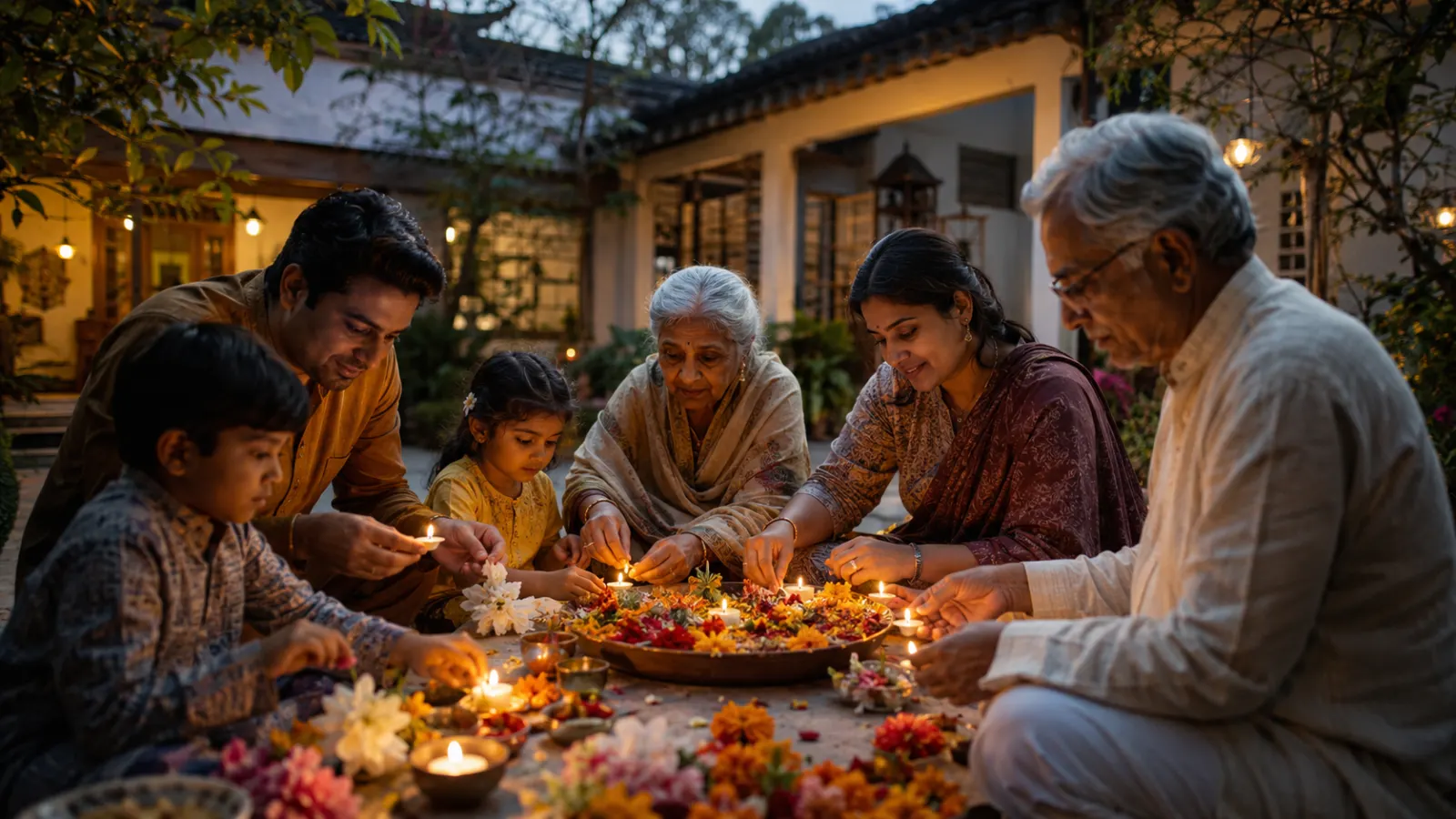
The Body Can Become an Archive
Culture is often imagined as something stored in books, museums or monuments. Dance shows that memory can also be stored in bodies.
A sequence of steps may be learned from parents, teachers, peers or ritual specialists. The dancer remembers through posture, rhythm, spatial relationships and repetition. When the movement is performed again, cultural knowledge becomes visible without needing to be written down.
Dance Is More Than Movement to Music
Dance can be theatrical, social, sacred, competitive, political or recreational. Some forms rely on music; others use voice, clapping, silence or percussion made by the dancers themselves.
UNESCO treats dance as part of the performing arts within intangible cultural heritage, together with traditional music and theatre. The associated instruments, costumes, masks, body decorations and performance spaces may also form part of the cultural practice.
Dance Gives Form to Collective Identity
A dance can identify a community through steps, formations, clothing or rhythm. People recognise who 'we' are partly by recognising how 'we' move.
This does not mean every member of a community knows the dance, or that a tradition has one correct version. Identity can be symbolic as well as participatory. A dance may matter to people who rarely perform it because it represents ancestry, region or shared history.
Movement Can Carry Historical Memory
Dance traditions may preserve traces of occupation, migration, labour, court life, warfare or social hierarchy. A formation that looks purely aesthetic today may once have reflected military organisation, agricultural work or ritual order.
Interpreting such meanings requires evidence. Folk explanations can become romanticised over time. Editors should distinguish documented historical context from later stories about what a movement supposedly 'symbolises'.
Dance Marks Life Transitions
Weddings, initiations, funerals and coming-of-age ceremonies often include dance because transitions are social events. Movement allows the community to recognise that an individual's status has changed.
A wedding dance may introduce two families. An initiation dance may mark entry into adulthood. A funeral dance may express grief, continuity or respect. The movement is part of a public script.
Dance Creates Shared Time
Group dance requires coordination. People adjust pace and position in relation to others. In chain, circle and line dances, the formation itself makes social connection visible.
Research on synchronised movement suggests that moving together can increase feelings of closeness and cooperation. Cultural dances developed long before such experiments, but the research helps explain why coordinated movement can feel socially powerful.
Dance Can Turn Space Into a Cultural Place
A street, courtyard, village square, temple ground or stage changes when dance begins. The performance defines a temporary cultural space.
Some dances are inseparable from particular locations or events. Others migrate and create new spaces in diaspora communities. A dance school in another country can become a small institutional homeland.
Dance Transmits Gender Expectations
Many dance traditions assign different steps, costumes or roles to men and women. These rules can reflect broader expectations about modesty, strength, courtship, age or authority.
They can also change. Women may enter forms once reserved for men; mixed-gender participation may expand; younger dancers may challenge older expectations.
Dance therefore does not simply reflect gender norms. It can become a site where those norms are debated.
Courtship and Social Dance
Social dances have historically provided structured ways for people to meet, interact and display skill. Rules about who may invite whom, how closely partners may stand and what movements are acceptable reveal a society's attitudes toward gender and intimacy.
When new dances appear, they often generate moral anxiety precisely because they change bodily relationships in public.
Dance Can Be Sacred
In some traditions, dance is prayer, offering, possession, meditation or ritual duty. The distinction between performer and audience may be weak or irrelevant.
When sacred dances are moved to a tourist stage, meaning can change. A performance may become shorter, more spectacular or detached from ritual restrictions. This does not automatically destroy the tradition, but it creates questions about context, consent and representation.
Dance Can Also Be Secular and Everyday
Not every culturally important dance is sacred. Club dancing, street dance, ballroom forms and popular choreography can express generation, neighbourhood, class and subculture.
A dance trend can spread globally through film or social media and still acquire local meaning. Contemporary culture produces traditions too.
Performance and Participation Are Different
Some dances are primarily participatory: the point is to join. Others are performed by trained specialists for an audience. Many traditions move between the two.
Professionalisation can preserve technique and create livelihoods, but it may also separate dance from community participation. The healthiest safeguarding strategies often support both expert transmission and ordinary access.
Tourism Can Preserve and Distort
Tourist demand can provide income for performers and increase visibility. It can also reward shortened, standardised or exoticised versions of a dance.
UNESCO warns more broadly that performing arts can be distorted when tourism turns them into cultural commodities. The question is not whether visitors are present, but whether communities retain meaningful control over what is presented.
Dance Is Work and Expertise
Traditional dancers are sometimes described as though they simply reproduce inherited movements naturally. In reality, skilled performance requires memory, physical training, musical awareness and often specialised costume or ritual knowledge.
Recognising dance as expertise matters because safeguarding depends on teachers, rehearsal spaces and economic support.
Migration Changes Dance
When people move, dance travels with them. Steps may be adapted to smaller venues. Musicians may be unavailable. Performances may shift from private rituals to public multicultural festivals.
Diaspora communities often use dance to teach younger generations an embodied connection to ancestry. At the same time, young dancers may blend inherited forms with contemporary styles.
Dance Can Carry Protest
Movement can be political even without slogans. Street performance can reclaim public space. Choreography can respond to violence, censorship or inequality. Traditional forms can be reinterpreted to make modern claims.
This is one reason governments sometimes support dance as heritage while fearing dance as dissent. The body is a public medium.
Dance and Social Hierarchy
Who is allowed to dance where can reveal social hierarchy. Court dances may historically have signalled rank. Some ritual dances are restricted to specialists. Caste, age, gender or religious rules may govern participation.
Cultural respect does not require ignoring these structures. A balanced article asks both what a tradition means to practitioners and how access is organised.
Dance Can Cross Boundaries
Dance travels readily because movement can be imitated before language is understood. Workshops, festivals and schools create intercultural exchange.
But borrowing raises questions similar to music: who is credited, who profits and whether sacred or restricted elements are used without permission.
Technology Changes the Teacher
Video has transformed dance transmission. Learners can replay complex movement, compare versions and access teachers across the world. Social media can revive interest in older forms.
Yet video flattens context. A clip may show steps without explaining when the dance should be performed, what the costume means or who traditionally has authority to teach it.
What Makes a Dance 'Traditional'?
Tradition does not mean unchanged. A dance may be centuries old or relatively recent and still become a powerful marker of identity.
What matters is continuity of recognition: communities inherit, repeat and adapt the practice across generations.
Dance and Health Should Be Discussed Carefully
Dance involves physical activity and can support fitness, coordination and well-being, but cultural significance should not be reduced to health benefits. Traditional dances were not invented as exercise programmes.
Health effects also vary by age, intensity and individual condition. The more defensible point is that dance combines movement with social and expressive participation, which can make physical activity culturally meaningful.
Institutions Can Save a Dance and Change It
Schools, academies, cultural ministries and competition circuits often become important for transmission. They create syllabi, standardise technique and certify teachers.
This can prevent loss when informal transmission weakens. It can also privilege one version over regional variations. What enters a textbook may become treated as the 'correct' form even when community practice was historically more flexible.
Competitions Change Performance Values
Once dance becomes competitive, judges need criteria. Precision, synchrony, costume and difficulty may receive points. Those standards can encourage technical excellence, but they may shift attention away from participation or ritual meaning.
A dance that once valued communal inclusion can gradually become something performed by specialists for evaluation.
The Audience Helps Produce Meaning
Dance is relational. Applause, call-and-response, participation and local knowledge shape the event. A movement that excites insiders may appear ordinary to outsiders because they do not know what is difficult, humorous or symbolically charged.
This is one reason video documentation is incomplete. It records bodies but not always the shared expectations that make the performance intelligible.
Colonial and National Institutions Reclassified Dance
In many societies, colonial authorities, missionaries or reform movements labelled some dances immoral, primitive or backward. Later national governments sometimes reversed course and elevated selected forms as heritage.
These shifts show that the category 'traditional dance' is politically produced as well as culturally inherited.
Urban Dance Is Cultural Heritage in the Making
Street and club dances demonstrate that culturally important movement does not need centuries of history. Styles can emerge in cities, spread through youth networks and become markers of neighbourhood or racial identity within a generation.
The distinction between folk, popular and contemporary dance is therefore historical rather than absolute.
Dance and Disability Expand the Idea of Movement
Dance is sometimes imagined through an idealised athletic body. Inclusive practice challenges that assumption. Wheelchair dance, seated choreography and adaptive performance show that cultural movement is not defined by one physical standard.
This matters socially because representation changes who is recognised as a dancer and who receives access to training and performance.
Dance Can Teach Historical Empathy
Learning an older dance can introduce students to the etiquette, music, clothing and social relations of another period. The body encounters history differently from reading about it.
Yet reconstruction must be careful. Modern performers inevitably bring contemporary bodies and assumptions to historical material.
Ritual Restriction Is Part of Meaning
Some dances are restricted by age, gender, initiation, season or sacred status. Outsiders may view restrictions simply as exclusion, while practitioners may understand them as part of ritual responsibility.
Cultural analysis should document the rule and its consequences without automatically romanticising or dismissing it.
Dance Can Survive Even When Its Original Function Changes
A dance once connected to agriculture, courtship or ritual may continue after those social systems weaken. The practice can acquire new meanings as heritage, performance or recreation.
Continuity therefore does not require preservation of the original social world. It requires enough recognition for people to keep transmitting the movement.
Dance Can Preserve Craft Traditions
Costumes, jewellery, masks, drums and stage objects used in dance often depend on specialist craftspeople. If a dance disappears, associated knowledge about textiles, ornament, instrument making and repair may weaken too.
Safeguarding dance therefore sometimes means supporting an entire network of skills rather than performers alone.
Dance Changes the Observer as Well as the Performer
Audiences learn cultural codes through repetition. They recognise entrances, difficult sequences, humour and ceremonial transitions.
A living dance culture therefore includes knowledgeable spectators. When audiences lose the ability to read a tradition, performance can become detached spectacle.
For that reason, preservation cannot focus only on elite performers. Communities also need occasions where ordinary people can watch, learn and participate without becoming professionals.
Participation, spectatorship and teaching are therefore all parts of the cultural system that keeps a dance meaningful across generations.
Why Dance Matters
Dance matters because it makes social relationships visible in movement. It can show hierarchy or equality, individuality or coordination, sacred obligation or entertainment.
It preserves memory in bodies, turns spaces into cultural places and creates opportunities for intergenerational teaching.
Its significance is therefore not contained in the choreography alone. The same steps can mean different things at a wedding, a ritual, a theatre, a tourist show or a protest.
To understand dance culturally, we have to ask not only 'how do people move?' but 'why here, why now, with whom, and for what purpose?'
Sources / Further Reading
• UNESCO — Performing arts and intangible cultural heritage — https://ich.unesco.org/en/performing-arts-00054
• UNESCO — What is Intangible Cultural Heritage? — https://ich.unesco.org/en/what-is-intangible-heritage-00003
• Reddish, Fischer & Bulbulia — Synchrony, shared intentionality and cooperation — https://pmc.ncbi.nlm.nih.gov/articles/PMC3737148/
• Tunçgenç & Cohen — Movement synchrony and social bonds — https://pmc.ncbi.nlm.nih.gov/articles/PMC4882973/
• UNESCO — Intangible cultural heritage and sustainable development — https://ich.unesco.org/doc/src/34299-EN.pdf
Suggested Internal Links
• Understanding Folk Dances and Their Meaning — Article 34
• Music as Culture — Article 31
• Why Music Brings People Together — Article 32
• What Is the Importance of Rituals — Article 27
• Understanding the Cultural Role of Theatre — Planned internal link