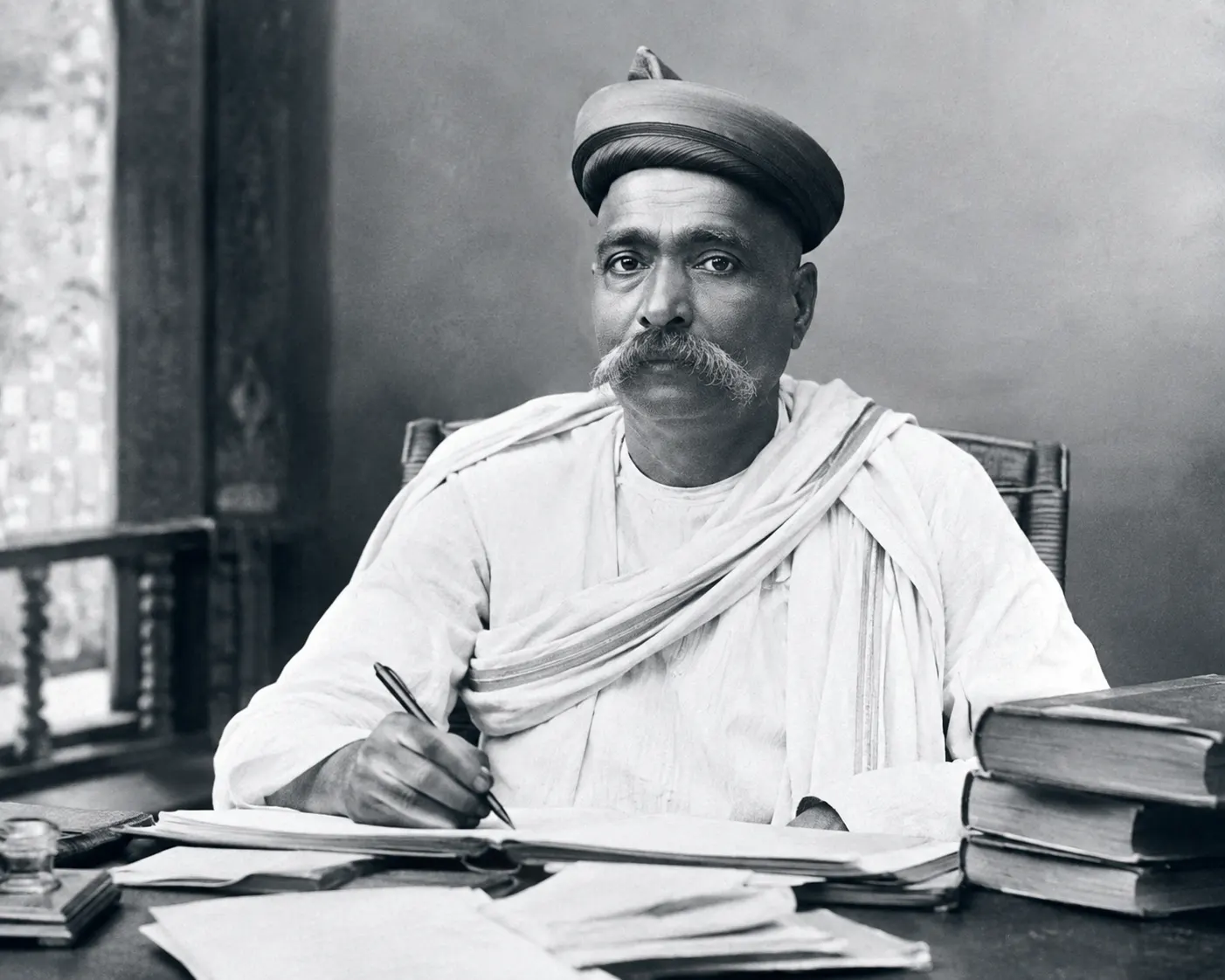
Mirza Ghalib lived long enough to watch one world disappear and another take its place.
He was born when the Mughal emperor still occupied Delhi’s Red Fort, although imperial power had already shrunk dramatically. He spent most of his adult life in that city, writing poetry, pursuing patrons, arguing about pensions, corresponding with friends and cultivating a literary identity at once aristocratic, self-mocking and intellectually restless. Then, in 1857, rebellion and British retribution destroyed much of the social world in which he had lived.
Ghalib survived.
Delhi did too, but not in the same form.
This historical rupture is one reason his writing remains so compelling. His ghazals do not function as a simple diary of political events; their world is more abstract, filled with desire, impossibility, doubt, irony and metaphysical pressure. His letters, however, bring the reader startlingly close to the everyday voice of a man watching friends die, neighbourhoods empty and an old culture lose its institutional centre.
Ghalib’s literary reputation also contains a paradox.
He wrote far more extensively in Persian and regarded that language as central to his achievement. Yet his modern fame rests overwhelmingly on a comparatively compact body of Urdu verse.
A poet who wished to be judged by one part of his work became immortal through another.
From Agra to Delhi
Mirza Asadullah Beg Khan was born in Agra on 27 December 1797. His family belonged to a military-aristocratic milieu with Central Asian connections. His father died when Ghalib was young, and another male guardian also died during his childhood. The result was a life shaped early by unstable patronage and questions of income.
At about thirteen, Ghalib married Umrao Begum and moved to Delhi. The marriage linked him to an established family and placed him permanently within the city that would become inseparable from his literary identity.
Delhi in the early nineteenth century was politically diminished but culturally alive. The Mughal emperor’s territorial authority was restricted, and the British East India Company exercised decisive power. Yet the court, aristocratic households, mosques, madrasas, bazaars and literary gatherings continued to sustain a sophisticated Persian and Urdu intellectual culture.
Ghalib entered this world not as an outsider but as someone intensely conscious of status.
He wanted recognition, titles, patronage and financial security. He also possessed enough humour to make his own failures part of his literary persona.
Asad becomes Ghalib
Ghalib used poetic pen names, or takhallus, including “Asad,” meaning lion, and later “Ghalib,” commonly understood as victorious or dominant.
The adoption of a takhallus was a standard convention in the ghazal tradition, where the poet often inserted the pen name into the final couplet. But Ghalib turned self-reference into an especially flexible device. The poetic “Ghalib” could boast, complain, mock himself, argue with convention or dramatise the distance between aspiration and reality.
This self-consciousness is central to his style.
Ghalib rarely sounds like a poet who has accepted an inherited formula without testing it. Even when working with classical images—wine, the beloved, the tavern, paradise, the lover’s wound—he pushes them toward conceptual puzzles.
The ghazal before Ghalib
Ghalib did not invent the Urdu ghazal.
By his time, the form had a rich history shaped by Persian literary culture and by major Urdu poets including Mir Taqi Mir, Sauda, Dard and others. The ghazal consisted of autonomous yet formally linked couplets sharing metre and rhyme conventions. Its vocabulary could move between earthly love, mystical longing, philosophical uncertainty, social satire and poetic self-reflection.
What Ghalib brought was an extreme density of thought.
A single couplet can imply several relationships at once. The lover may be addressing a human beloved, God, language, fate or the impossibility of fulfilment itself. Grammatical ambiguity and Persianised vocabulary create multiple interpretive routes.
This complexity is part of the pleasure and part of the difficulty.
Ghalib is exceptionally quotable, yet his poetry is often damaged by being reduced to motivational slogans.
A poet of desire without resolution
Desire in Ghalib is rarely satisfied.
The beloved remains inaccessible. Knowledge creates more questions. Religious certainty can be met with wit. Hope and despair coexist. The lover’s ego becomes simultaneously ridiculous and cosmically important.
This is why readers with very different beliefs can find themselves inside the poems.
Ghalib does not usually offer a stable doctrine. He stages thought.
A proposition appears, turns upon itself and becomes uncertain. A claim of confidence contains defeat. A joke becomes metaphysics. A complaint against fate becomes a complaint against language’s inability to describe experience.
The result feels surprisingly modern, although the poetry belongs firmly to the conventions of the Indo-Persian literary world.
Persian: the achievement Ghalib valued most
Modern audiences sometimes describe Ghalib simply as an Urdu poet.
He would have found the description incomplete.
Ghalib wrote extensively in Persian and considered his Persian corpus a major, perhaps superior, part of his literary identity. Persian remained a language of high literary culture across much of South Asia, even as its official position weakened under British rule and Urdu and English gained new institutional importance.
His Persian writings included ghazals, qasidas, prose and historical material. The volume of this work was far larger than his selected Urdu Diwan.
Why, then, did Urdu become the basis of his fame?
Partly because linguistic history changed. Persian ceased to be central to public literary life in India, while Urdu readership expanded through print, education, criticism, music and popular culture. Ghalib’s Urdu verse became embedded in a living language community that continued to reinterpret it.
Literary posterity did not follow the poet’s own ranking of his work.
The pension struggle
Money was a persistent problem.
Ghalib spent years pursuing a pension claim connected to his family’s earlier service arrangements. He petitioned British authorities and travelled to Calcutta in the late 1820s in connection with the dispute.
The journey widened his contact with the rapidly changing institutional world of British India. Calcutta represented a new centre of colonial administration, print culture and intellectual debate unlike the fading aristocratic order of Delhi.
Ghalib did not become an anti-colonial political activist as a result. His relationship with British authority remained practical, ambivalent and shaped by financial dependence.
This is important because later readers sometimes want major literary figures to fit neatly into nationalist categories.
Ghalib did not.
He belonged to a class whose fortunes had been tied to Mughal aristocratic patronage while increasingly depending on a colonial state that had displaced that order.
Debt, wine and the construction of a persona
Ghalib’s financial difficulties were not caused solely by inadequate patronage.
He maintained aristocratic habits without aristocratic wealth. His affection for wine was well known. Debt followed him. Anecdotes about gambling, wit and creditors became part of the Ghalib legend.
Some stories are supported by letters and records; others accumulated through oral retelling.
The distinction matters because Ghalib’s personality has become almost as famous as his poetry.
He is remembered as witty, proud, skeptical, fond of mangoes, dismissive of solemnity and capable of turning poverty into a joke.
The risk is that the charming raconteur replaces the demanding writer.
His humour should be understood as part of his intellect, not as a collection of social-media anecdotes.
The Mughal court in its final phase
By the middle of the nineteenth century, Ghalib had become associated more closely with the court of Bahadur Shah Zafar.
Zafar was himself a poet and presided over a court whose political power was limited but whose cultural significance remained substantial. In 1850 Ghalib received court titles including Dabir-ul-Mulk and Najm-ud-Daula. He was also connected with the writing of Timurid dynastic history and with literary instruction at court.
The Red Fort therefore remained meaningful to him not because it commanded a great empire, but because it preserved a cultural hierarchy in which poetry, lineage and etiquette mattered.
That world was about to be shattered.
1857 arrives in Delhi
In May 1857, soldiers rebelling against the East India Company entered Delhi and proclaimed Bahadur Shah Zafar as their sovereign figurehead.
The uprising turned the city into a major centre of war.
For Ghalib, the crisis was immediate rather than abstract. He lived inside Delhi while control changed hands, violence spread and normal networks of food, communication and patronage broke down.
After British forces recaptured the city in September, retaliation was devastating. Large numbers of residents were killed, expelled or dispossessed. Neighbourhoods were demolished or emptied. The Mughal court was abolished. Zafar was tried and exiled to Rangoon.
The political geography of Delhi changed permanently.
*Dastambu*: a difficult document
Ghalib wrote a Persian account of the uprising and its aftermath known as Dastambu.
The text has to be read carefully.
It was produced in circumstances where survival required political caution. Its treatment of British authority and the rebels cannot simply be taken as a transparent statement of Ghalib’s private feelings.
Scholars have therefore compared Dastambu with his personal letters.
The contrast is revealing. The more official Persian narrative is guarded. The letters convey grief, irritation and a profound sense that the social world of Delhi had been destroyed.
This does not mean the “real Ghalib” was secretly a nationalist revolutionary. That would be another simplification.
It means public and private writing operated under different pressures.
Ghalib’s Delhi after 1857
Ghalib survived the uprising, but many friends and patrons did not.
His letters describe an urban culture hollowed out by death, exile and confiscation. Familiar bazaars and neighbourhoods had changed. The aristocratic networks through which poets circulated lost much of their economic base.
Sahapedia’s discussion of Ghalib’s writings on 1857 highlights this difference between the cautious published Dastambu and the more emotionally direct private correspondence.
For historians, these letters are valuable precisely because they are not formal histories.
They record the scale of loss as experienced by an individual who knew the old city intimately.
Ghalib’s grief was not only political. It was social and spatial.
A city is made from relationships. Once friends, patrons, markets and institutions disappear, the buildings that remain do not restore it.
The letters and a new Urdu prose voice
Ghalib’s letters became a major part of his literary legacy.
Traditional Persianate letter-writing could be highly formal, ornamented and elaborate. Ghalib often preferred a more conversational mode in Urdu. He joked, complained, gossiped, discussed money, illness, poetry, food and friends.
The effect is strikingly immediate.
Readers can feel that the writer is speaking across the page rather than performing bureaucratic elegance.
It would be too strong to say Ghalib single-handedly “invented modern Urdu prose,” but his correspondence helped demonstrate the literary power of direct, colloquial and intimate writing.
This is one reason critical editions of his letters are as important to scholarship as the poems.
Print, revision and the *Diwan*
Ghalib’s Urdu corpus did not remain static.
He revised and selected his poetry, excluding many early verses from the versions of the Diwan that became canonical. The existence of “non-prevalent” or excluded ghazals in modern collections reminds readers that the famous Ghalib was partly created by Ghalib’s own editorial judgment.
Print culture then stabilised and circulated those selections.
Rekhta’s digital archive today shows the extraordinary range of material associated with him: ghazals, rubai, qasida, letters, Persian writings and multiple editions of the Diwan.
For Editors Outlook, this is particularly important for the later companion article on his couplets. Any quotation attributed to Ghalib should be checked against a recognised text rather than copied from social media.
Faith, skepticism and the problem of labels
Ghalib’s poetry contains religious language everywhere.
Paradise, sin, piety, fate, God, the preacher, the mystic and the tavern all appear within the inherited symbolic universe of the ghazal.
Yet his tone can be skeptical, playful or irreverent.
This has encouraged competing claims: Ghalib as Sufi, Ghalib as rationalist, Ghalib as agnostic, Ghalib as heterodox believer.
No single label captures the poetry.
The ghazal is a dramatic form. A poetic speaker need not be identical to the biographical author. Irony allows mutually contradictory positions to coexist.
Ghalib’s power lies partly in refusing to close the argument.
Personal loss
Ghalib and Umrao Begum had several children, none of whom survived infancy.
This repeated bereavement formed part of a life already marked by financial insecurity and the deaths of relatives and friends.
It is tempting to read every melancholy verse as a direct response to these losses. That would ignore the conventions of the ghazal, where sorrow and separation were established literary modes long before Ghalib.
Biography can illuminate poetry, but it should not reduce metaphor to diary entry.
The more defensible conclusion is that Ghalib possessed both a literary tradition of loss and extensive personal experience of it.
Why his poetry survives translation badly—and survives anyway
Ghalib is difficult to translate because so much happens inside compression.
A key Urdu or Persian word may carry several meanings. The grammar can allow multiple relations between phrases. Rhyme and metre create effects that disappear in English. Cultural references open interpretive possibilities that require commentary.
A literal translation can sound flat. A poetic translation may become too free.
Yet Ghalib survives translation because the underlying intellectual tensions remain recognisable: wanting what cannot be possessed, doubting what cannot be disproved, laughing at one’s own suffering, and finding language inadequate to experience.
That is why readers who cannot read Urdu script still encounter him through translations, recitation, film, television and music.
Ghalib after Ghalib
Ghalib died in Delhi on 15 February 1869.
His posthumous reputation grew dramatically.
Critics produced commentaries on his difficult verse. Editors established texts. Singers set ghazals to music. Theatre, cinema and television turned his life into cultural memory. His old Delhi residence became a heritage site. His name moved beyond literary scholarship into everyday speech.
This popularity has a cost.
Thousands of lines circulate online under Ghalib’s name that he never wrote. Famous anecdotes are repeated without sources. Simplified English “translations” replace the ambiguity of the original with inspirational messaging.
The more popular Ghalib becomes, the more necessary textual discipline becomes.
The poet and the end of an age
It is common to call Ghalib the last great poet of the Mughal era.
The phrase is evocative but can be misleading if it implies Urdu literary culture ended with him. It did not. Urdu poetry developed vigorously after 1857 in Delhi, Lucknow, Lahore, Hyderabad and other centres, later producing figures such as Muhammad Iqbal, Firaq Gorakhpuri and Faiz Ahmed Faiz.
What ended was a particular institutional world.
The Mughal court disappeared. Persian lost further ground as a language of power. Delhi’s aristocratic networks were transformed by colonial rule.
Ghalib stands at that transition because his life connected both sides of it.
He sought recognition from the Mughal emperor and pension justice from British officials. He wrote Persian as an elite cosmopolitan language and Urdu letters in an increasingly conversational prose. He belonged emotionally to old Delhi while living under a new political order.
Ghalib’s afterlife also shows how canon formation works. Editors, critics, singers and teachers did not merely preserve him; they continuously selected which poems, meanings and anecdotes new audiences would encounter first. His present fame is therefore both the survival of a remarkable writer and the product of more than a century of interpretation.
Why Mirza Ghalib still matters
Ghalib matters because he makes uncertainty intellectually beautiful.
Many poets give readers answers: faith, patriotism, romance, despair, rebellion.
Ghalib often gives a question that becomes deeper the longer it is considered.
His poems are compact machines for producing ambiguity. His letters do the opposite: they strip away formality and make personality immediate. Together they reveal two complementary talents—the poet who compresses experience until it becomes mysterious and the letter writer who makes distance disappear.
His biography also gives those talents historical weight.
He lived through the decline of Mughal sovereignty, the expansion of British power and the destruction of Delhi in 1857. Yet he cannot be reduced to a political symbol of any side.
He was too self-aware, too dependent, too skeptical and too interested in language for that.
The most faithful way to remember him is not through a single famous couplet.
It is through the tension that runs across his life and work: aristocratic pride without wealth, literary ambition without certainty, attachment to a dying world without the ability to stop history, and a voice that became more alive after the institutions around it disappeared.
That is why Ghalib remains not merely a poet from the nineteenth century, but a contemporary presence in South Asian culture.
Sources / Further Reading
Rekhta Foundation, Mirza Ghalib collections, including the Diwan, letters, Persian writings and bibliographic material; quotations should be checked against recognised editions.
Sahitya Akademi records and catalogues documenting critical editions and major scholarship on Ghalib, including the Akademi-recognised critical edition tradition.
Sahapedia, How Ghalib Mourned the “Loss of Delhi” During the 1857 Revolt, for the contrast between Dastambu and private letters.
Mirza Ghalib, Dastambu and authenticated collections of Khutoot-e-Ghalib, read alongside modern literary scholarship on the late Mughal and early colonial period.
Suggested Internal Links
The Couplets of Mirza Ghalib — Planned companion article
Bahadur Shah Zafar: Poet and the Last Mughal Emperor — Planned internal link
How the Urdu Ghazal Works — Planned internal link
Delhi in 1857: Rebellion, Siege and Retribution — Planned internal link
The Poetry of Mir Taqi Mir — Planned internal link
How Persian Shaped Literary Culture in India — Planned internal link