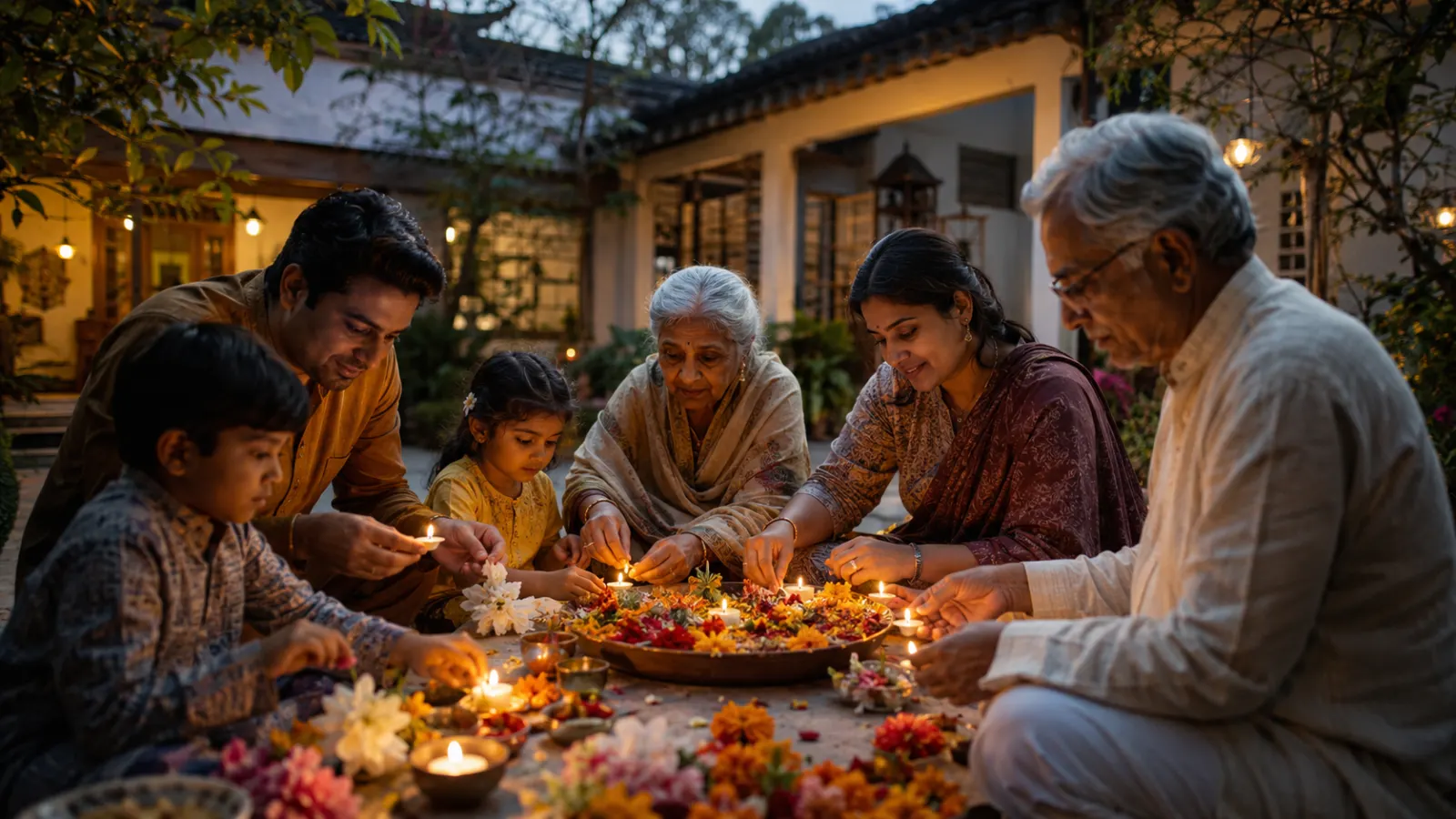
A Society Without Art Is Almost Impossible to Imagine
People decorate bodies, walls, buildings, tools and sacred spaces. They tell stories in images. They make objects whose purpose exceeds practical use. They paint, sculpt, photograph, design, perform and assemble.
This persistence suggests that art is not a luxury societies discover only after basic needs are met. It is one of the recurring ways human beings make meaning.
Art Does Not Have One Job
Attempts to justify art often become too narrow. Art is said to educate, improve mental health, support tourism, strengthen national identity or encourage social change.
All of these may be true in particular cases. None defines art completely.
A painting may exist because an artist wanted to explore colour. A mural may commemorate injustice. A sculpture may become a national symbol. A film installation may make viewers uncomfortable without offering a solution. Art's social importance partly lies in this refusal to perform only one function.
Art Preserves Memory
Visual art can preserve appearances, events, symbols and emotional interpretations of the past. Portraits show how elites wanted to be seen. War art records destruction and heroism. Memorials turn grief into public space.
But art is not a neutral photograph of history. Artists select perspective, subject and emphasis. The work tells us both about an event and about how someone interpreted it.
Art Makes Identity Visible
Communities use art to express religion, ethnicity, region, gender, class, profession and political belonging. Patterns, materials and motifs can become recognisable cultural signatures.
UNESCO's 2005 Convention on cultural expressions recognises that cultural goods and activities carry identities, values and meanings as well as economic value. This is central to understanding why debates over art can become debates over recognition.
Art Creates Shared Symbols
A society needs symbols that can condense complicated histories into visible forms. Flags, monuments, murals, memorials and iconic photographs can do this.
Their power also makes them contested. When political values change, public art and monuments may become sites of conflict. Demands to remove, reinterpret or relocate an object are often arguments about whose memory receives public authority.
Art Can Question Power
Artists can criticise rulers, corporations, religious institutions, war, inequality and social convention. Satire, caricature, performance and public installation can communicate dissent in ways conventional political speech cannot.
This is why artistic freedom matters. UNESCO describes artistic freedom as the freedom to imagine, create and distribute diverse cultural expressions without governmental censorship, political interference or pressure from non-state actors.
Censorship Reveals What Authorities Fear
Governments and other powerful institutions rarely censor art because they believe it is socially irrelevant. They censor because images, stories and performances can challenge legitimacy, morality or identity.
Censorship can take many forms: legal bans, permit refusals, financial pressure, threats, online harassment or self-censorship created by fear.
Defending artistic freedom does not mean every artwork is beyond criticism. It means criticism is different from coercively preventing expression.
Art Can Make Marginalised Experience Visible
Groups excluded from official histories often use art to document their own lives. Photography, literature, murals, film and performance can create archives of experience overlooked by institutions.
Visibility itself can be political. To appear publicly as a subject rather than an object of description changes who controls representation.
Art Can Humanise Without Simplifying
Statistics describe scale. Art can make scale emotionally comprehensible by concentrating attention on particular bodies, places or stories.
A work about migration, war or discrimination cannot replace factual analysis. It can, however, show dimensions of experience that data alone cannot convey.
Art Supports Dialogue
UNESCO's World Art Day frames art as a contributor to curiosity, dialogue and cultural diversity. Art can create a common object around which people with different views argue, interpret and ask questions.
The conversation may not produce agreement. That is not necessarily failure. Democratic culture needs spaces where disagreement can be explored without immediate coercion.
Art Also Entertains
Social analysis sometimes treats entertainment as a lesser function. Yet pleasure matters. Beauty, humour, spectacle and surprise are part of cultural life.
A society in which art had to justify itself only through moral instruction or political usefulness would lose much of what makes creativity valuable.
Art Changes How People See Ordinary Things
Artists often make familiar objects strange. A photograph can change how a street is noticed. A painting can alter perception of colour. Installation can make viewers aware of space.
This perceptual function matters because societies become habitual. Art interrupts habit.
Arts Education Develops More Than Artists
Culture and arts education teaches people to interpret images, experiment, create and engage with cultural difference. UNESCO has increasingly argued that arts education contributes to creativity, critical thinking, belonging and broader educational goals.
The objective is not only to produce professional artists. It is to develop citizens capable of making and interpreting cultural expression.
Public Art Changes Who Has Access
Museums and galleries are important institutions, but art also exists in streets, transit systems, schools, parks and digital spaces.
Public art can expand access beyond audiences who already feel comfortable entering cultural institutions. It can also provoke disputes over public money, taste and representation.
Museums Shape Meaning
Museums do not merely display objects. Selection, classification and exhibition design influence how viewers understand them.
Colonial collections have generated major debates about provenance, ownership and restitution. These debates show that the social role of art includes questions of who has the authority to collect, interpret and possess cultural objects.
Art Is an Economy
Artists, designers, curators, conservators, technicians, galleries, publishers and cultural institutions form labour markets. Creative industries generate economic activity as well as cultural meaning.
UNESCO's cultural-expressions framework explicitly recognises this dual nature: cultural goods have economic value but cannot be treated as ordinary commodities because they also convey identity and meaning.
Markets Influence What Gets Seen
The art market can support artists, but it also creates inequality. Wealthy collectors and institutions may shape attention. Commercial demand can reward certain styles, geographies or identities.
Digital platforms add new gatekeepers. Algorithms influence which creators become visible, while new technologies complicate copyright and remuneration.
Art Reflects Its Time—and Can Outlive It
Every artwork is produced in a historical environment of materials, technologies, institutions and conflicts. Even abstract art is shaped by choices available in its period.
But art can acquire meanings its creator never intended. Later generations reinterpret works through new politics and values. Article 36 will examine this historical relationship in greater depth.
National Art Can Unite and Exclude
States often promote selected artists and styles as national heritage. This can create shared pride and preserve important work.
It can also narrow the national story. Minority, regional or experimental art may receive less recognition because it does not fit official identity.
A diverse cultural policy therefore needs space for both heritage and new expression.
Art During Crisis
In war, disaster and repression, artists may document events, maintain community identity or create emotional space for grief. Art can also be deliberately targeted because cultural destruction attacks collective memory.
UNESCO's work on culture in emergencies recognises the role of cultural and creative professionals in public debate, social transformation and peacebuilding.
Art and Health Claims Need Precision
Creative activity can support well-being and social connection in some settings, but broad claims that 'art heals' can become vague or medically overstated.
A responsible article distinguishes clinical arts interventions from the wider cultural value of participation.
Artificial Intelligence Raises New Questions
Generative systems can produce images and music at enormous scale. This creates opportunities for experimentation but also disputes over training data, authorship, labour, attribution and artistic livelihood.
The deeper issue is familiar: technology changes who can create, who gets paid and who controls distribution.
Artistic Freedom Includes the Freedom Not to Be Useful
Perhaps the most important limit on social-function arguments is that artists should not be required to serve a government, moral programme or economic objective.
Art can contribute to society precisely because creators are able to surprise society, criticise it or pursue questions whose value is not immediately measurable.
Art Can Build Community Without Pretending Everyone Agrees
Community art projects often bring residents together to design murals, performances or exhibitions. The process can create conversation across age or neighbourhood groups.
But successful participation does not require consensus on every issue. Art can provide a shared task through which disagreement becomes visible and negotiable.
Cultural Institutions Decide What Enters the Canon
Museums, academies, critics, publishers and universities influence which artists are studied and remembered. These decisions are not permanent. Artists excluded during their lifetimes may later become central, while once-celebrated figures may be reassessed.
The canon therefore reflects both artistic judgement and institutional power. Expanding representation does not mean abandoning standards; it means examining how standards were formed and whose work was available to evaluators.
Restitution Debates Connect Art to Colonial History
Museums holding objects acquired through conquest, coercion or unequal colonial exchange face growing demands for return. These disputes are not only about legal title. They concern cultural authority, historical repair and whether communities can access their own heritage.
The debate shows that art objects can carry political relationships long after the original transaction.
Artistic Freedom Protects Audiences Too
Freedom to create is often framed as an artist's right, but audiences also benefit. Censorship narrows the range of ideas and experiences citizens are allowed to encounter.
UNESCO's artistic-freedom framework therefore includes public access to diverse cultural expressions as part of a healthy cultural environment.
Economic Measurement Cannot Capture All Cultural Value
Creative industries contribute employment and revenue, and these figures matter for policy. Yet market price is an incomplete measure of cultural significance.
A community mural may have little resale value and still shape neighbourhood identity. A museum collection may be expensive while remaining socially inaccessible. Economic and cultural value overlap but are not identical.
Art Can Become Propaganda
The social power of art is not always emancipatory. States, political movements and corporations use images, film, architecture and design to influence behaviour and manufacture legitimacy.
Propaganda reminds us that artistic skill and moral value are separate questions. A technically powerful work can serve manipulation.
The Right to Offend Is Not Unlimited but Matters
Art frequently tests social boundaries. Works may offend religious, political or moral sensibilities. Democratic societies must balance expression with laws addressing threats, targeted harassment or other genuine harms.
Discomfort alone is usually an insufficient reason for suppression. If art could only repeat accepted values, one of its central social functions—challenging perception—would disappear.
Art Gives Future Generations Evidence of the Present
Contemporary art will become part of the historical record. Everyday photographs, posters, digital works and street art can reveal what institutions ignored.
This future-facing role is difficult to measure now. Societies rarely know which apparently ordinary cultural objects later generations will find indispensable.
Participation Changes the Viewer
Art is not only produced by professional artists. Community workshops, amateur theatre, photography clubs and public-making projects allow people to move from consumer to creator.
That shift can change cultural confidence: people begin to see themselves as participants in culture rather than spectators of somebody else's expertise.
Art Can Slow Public Attention
Digital culture rewards speed, but many artworks require sustained looking or listening. That demand for attention can itself be socially valuable.
Art creates spaces where ambiguity is not immediately resolved into a headline, verdict or metric.
That slower attention can make room for complexity, especially when public debate has reduced an issue to opposing slogans.
Art keeps that space open for future interpretation.
That freedom matters.
Why Art Matters
Art preserves memory, makes identities visible, challenges authority, creates livelihoods, supports education and gives people ways to imagine lives beyond immediate reality.
It can unify or divide. It can comfort or disturb. It can become propaganda, commodity, ritual object or private experiment.
This range is not a weakness in the argument for art. It is the argument.
Societies need art not because every artwork produces a measurable social benefit, but because people need spaces in which meaning can be created, contested and reimagined. Artistic freedom protects that space.
Sources / Further Reading
• UNESCO — World Art Day — https://www.unesco.org/en/days/world-art
• UNESCO — 2005 Convention on the Diversity of Cultural Expressions — https://www.unesco.org/en/legal-affairs/convention-protection-and-promotion-diversity-cultural-expressions
• UNESCO — Diversity of Cultural Expressions — https://www.unesco.org/creativity/en
• UNESCO — Artistic Freedom — https://www.unesco.org/creativity/en/brochures
• UNESCO — Cultural and creative industries in emergencies — https://www.unesco.org/en/emergencies/culture/learning/creative-industries
• UNESCO — Culture and arts education — https://www.unesco.org/en/articles/what-you-need-know-about-culture-and-arts-education
Suggested Internal Links
• Understanding How Art Reflects Its Times — Planned Article 36
• What Is the Importance of Architecture in Culture — Planned internal link
• What Is the Role of Literature in Society — Planned internal link
• What Is the Importance of Cinema in Society — Planned internal link
• What Is Popular Culture — Planned internal link
• Understanding How Museums Preserve Memory — Planned internal link