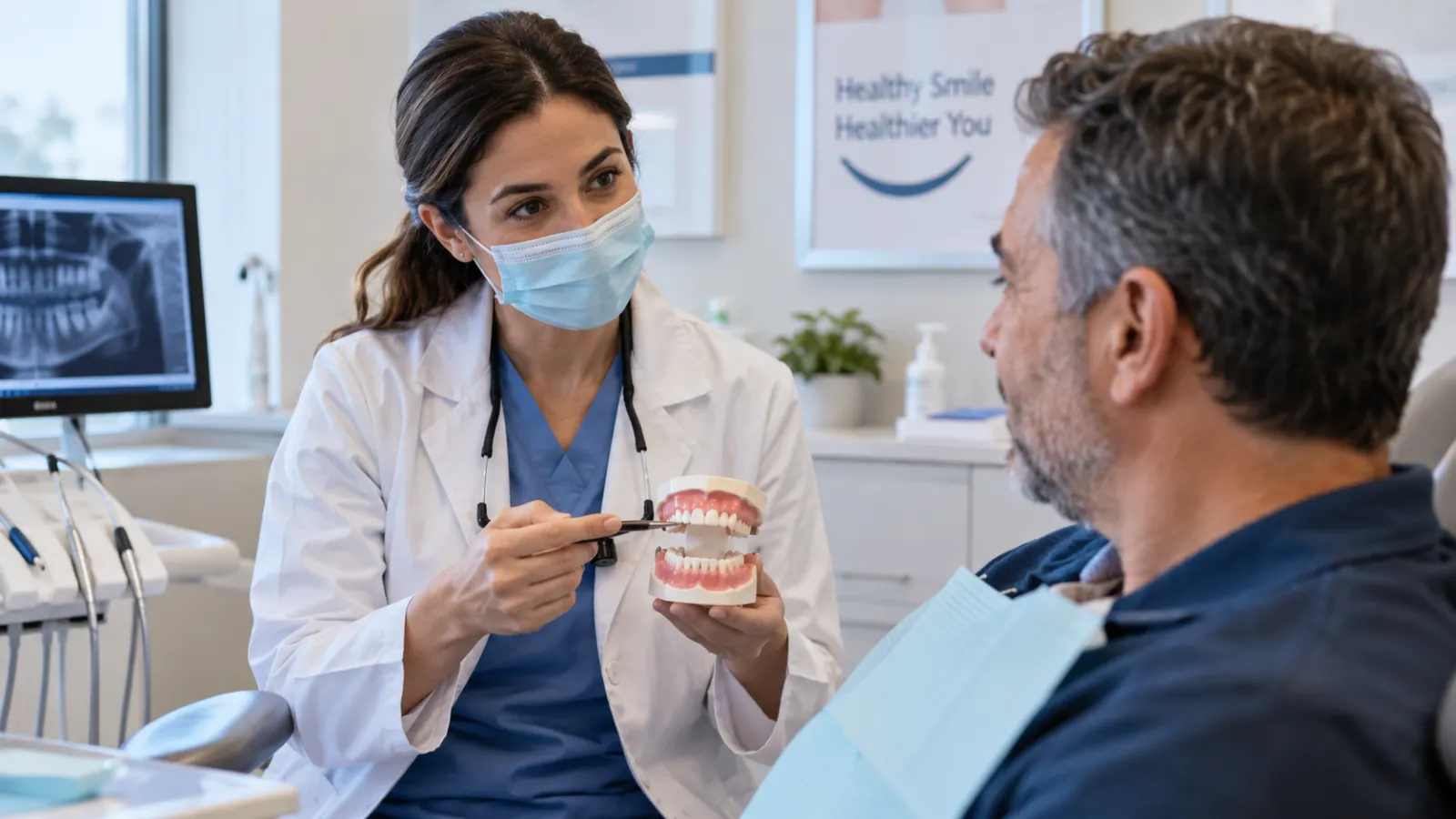
Oral Health and Overall Health: What Science Says About the Connection
The mouth is often treated as though it belongs to a separate branch of the body.
You visit a dentist for teeth and gums, a physician for diabetes or heart disease, and another specialist for problems involving the lungs, immune system or digestive tract.
Healthcare may be organised that way.
Biology is not.
The mouth is supplied by blood vessels and nerves, connected directly with the digestive and respiratory tracts, populated by complex microbial communities and continuously interacting with the immune system. Diseases elsewhere in the body can change the mouth, while oral disease can influence eating, sleep, inflammation, infection risk and quality of life.
Research into oral health and overall health therefore asks an important question: how much does disease in the mouth affect the rest of the body, and how much do systemic conditions affect oral health?
The answer is more nuanced than the slogan “healthy mouth, healthy body.”
Some relationships are well established. Diabetes and periodontal disease, for example, clearly interact. Poor oral health can directly affect eating, pain and daily functioning. Oral microbes can be aspirated into the lungs, which is especially relevant in frail older adults.
Other relationships—including those involving cardiovascular disease, pregnancy complications, dementia and some cancers—are biologically plausible and supported by important associations, but their exact causal pathways remain under investigation.
That distinction matters.
Good oral health is important enough without promising that brushing your teeth will prevent a heart attack.
Oral-systemic health at a glance
| Question | What current evidence supports |
|---|---|
| Is the mouth connected biologically to the rest of the body? | Yes |
| Does diabetes increase gum-disease risk? | Yes, particularly when blood glucose is poorly controlled |
| Can gum disease affect glucose control? | Evidence supports a bidirectional relationship, although treatment effects on long-term diabetes outcomes remain under study |
| Does gum disease cause heart disease? | An association is well established; direct causation and prevention through periodontal treatment are not conclusively established |
| Is gum disease linked with pregnancy complications? | Associations exist, but treating periodontitis has not consistently been shown to prevent those complications |
| Can oral bacteria reach other parts of the body? | Yes, under some circumstances |
| Can oral hygiene influence pneumonia risk? | Particularly relevant where oral secretions may be aspirated, such as in frail or institutionalised older adults |
| Can systemic diseases affect the mouth? | Yes. Diabetes, autoimmune disease, cancer treatment and many medications can alter oral health |
| Does tooth loss affect general wellbeing? | Yes, through eating, speech, comfort, sleep and social functioning |
| Does good dental care prevent every systemic disease linked with oral health? | No |
What does “oral-systemic connection” actually mean?
The term oral-systemic connection describes the relationships between conditions in the mouth and health elsewhere in the body.
That does not imply one single mechanism.
Several different relationships can exist.
A systemic disease can directly affect the mouth.
An oral disease can create consequences elsewhere.
The same risk factor can increase the probability of both conditions.
Inflammation in one part of the body may interact with inflammation elsewhere.
Microorganisms can sometimes move beyond the oral cavity.
Or two diseases can appear together without one directly causing the other.
NIDCR's review of decades of oral-systemic research emphasises exactly this complexity. Associations involving periodontal disease and conditions such as diabetes, cardiovascular disease, stroke and pregnancy complications are well documented, but the underlying causes are not fully resolved.
This means that the scientifically interesting question is no longer simply:
“Are the mouth and body connected?”
They clearly are.
The harder question is:
“What kind of connection exists in each disease, and does changing oral health alter the systemic outcome?”
Association is not causation
Suppose researchers observe that people with severe gum disease experience heart attacks more often than people with healthy gums.
That finding is important.
But several explanations remain possible.
Periodontal disease might contribute biologically to cardiovascular disease.
Cardiovascular inflammation might influence periodontal health.
Both could be partly caused by smoking.
Both could be associated with diabetes.
Diet, obesity, socioeconomic conditions, healthcare access or age could influence both.
Several pathways may operate simultaneously.
This is why epidemiological association is only one part of causal reasoning.
Researchers look for additional evidence:
Is there a plausible biological mechanism?
Does the association remain after adjusting for shared risk factors?
Does the relationship occur consistently across populations?
Does disease severity matter?
Most importantly, does treating one condition change meaningful outcomes in the other?
That final question is especially important in oral-systemic medicine.
If periodontal disease truly contributes materially to heart attacks, for example, sufficiently effective periodontal treatment might be expected to reduce cardiovascular events.
Proving that is much harder than showing that the two conditions commonly occur together.
Periodontal disease is at the centre of much of this research
When people hear “oral health,” they often think mainly about cavities.
But much oral-systemic research focuses on periodontitis, an inflammatory disease affecting the tissues that support the teeth.
Periodontal disease begins with microbial biofilms around the gums interacting with the host immune response.
Early gum inflammation can produce redness, swelling and bleeding.
More advanced periodontitis can damage the tissues and bone supporting teeth, eventually contributing to loose teeth and tooth loss.
NIDCR describes periodontitis as an infectious-inflammatory condition whose treatment aims to control infection and prevent further destruction.
Its relevance to systemic health comes partly from two features:
it can create a significant chronic inflammatory burden;
and inflamed or damaged gum tissue provides opportunities for oral microorganisms and their components to interact with the circulation.
Neither feature automatically proves that periodontal disease causes distant disease.
But both provide plausible biological pathways worth investigating.
How bacteria from the mouth can enter the circulation
The mouth contains extraordinarily complex microbial communities.
Many of these organisms are normal residents and do not ordinarily cause systemic disease.
During periodontal inflammation, however, the tissues surrounding teeth can become damaged and highly vascular.
Activities as ordinary as chewing or brushing—and procedures such as dental treatment—can sometimes allow oral bacteria to enter the bloodstream temporarily.
This phenomenon is called bacteraemia.
In most healthy people, the immune system clears these transient organisms without serious consequence.
But researchers have detected microorganisms associated with periodontal disease at sites elsewhere in the body.
NIDCR notes that periodontal-associated bacteria have been identified in diseased tissues outside the mouth, supporting investigation into whether microbial movement contributes to some systemic conditions.
Finding bacteria somewhere, however, does not by itself prove that the bacteria caused the disease there.
They could contribute to pathology.
They could preferentially colonise tissue already damaged by another process.
Or both things could occur.
Inflammation may provide another biological bridge
Periodontitis does not involve bacteria alone.
Much of the tissue damage results from the body's inflammatory response to microbial challenge.
Immune cells release signalling molecules intended to control infection.
When inflammation becomes chronic, these signals can affect the local tissues supporting teeth.
Researchers have therefore asked whether chronic periodontal inflammation can also influence inflammatory processes elsewhere.
This is plausible because the immune system is not divided into isolated departments.
Inflammatory mediators can circulate.
Systemic inflammatory conditions can also influence periodontal tissues.
This creates the possibility of two-way inflammatory interactions.
Yet mechanism should not be confused with clinical proof.
Showing that an inflammatory pathway could connect two diseases strengthens biological plausibility.
It does not automatically establish how important that pathway is in real patients or whether dental treatment changes the final clinical outcome.
Shared risk factors explain part of the connection
One reason oral-systemic research is difficult is that oral and chronic systemic diseases often share major risk factors.
Smoking is a clear example.
It substantially increases periodontal risk.
It also contributes strongly to cardiovascular and respiratory disease.
Diabetes increases periodontal risk while also increasing cardiovascular risk.
Diet can affect tooth decay, metabolic health and obesity.
Socioeconomic disadvantage can influence nutrition, smoking, chronic stress and access to both medical and dental care.
Age influences numerous chronic conditions at once.
NIDCR specifically identifies shared factors including smoking, poor diet, obesity, high blood pressure and abnormal cholesterol as important when interpreting overlaps between periodontal and cardiovascular disease.
This does not make oral-systemic associations meaningless.
It means good research has to disentangle multiple interacting pathways.
Diabetes has one of the clearest oral-systemic relationships
The relationship between diabetes and periodontal disease is among the best-established examples.
People with diabetes are more likely to develop periodontal disease.
Poorly controlled blood glucose increases the risk further and is associated with more severe oral problems.
NIDCR states that people with poorly controlled diabetes experience gum disease more frequently and more severely than people whose blood glucose is well controlled. Diabetes can also slow healing, making periodontal treatment more difficult.
Several mechanisms may contribute.
High glucose concentrations can alter the oral environment.
Diabetes changes immune and inflammatory responses.
Microvascular changes may affect tissue health and repair.
Impaired healing can allow periodontal damage to progress more easily.
This direction—from diabetes to oral disease—is clinically important and well supported.
Gum disease may also make diabetes harder to control
The relationship may operate in the other direction too.
NIDCR notes that periodontal disease may make blood glucose more difficult to control.
Chronic periodontal inflammation is one plausible explanation.
If inflammatory signals influence insulin sensitivity or metabolic regulation, severe gum disease could contribute modestly to the metabolic burden experienced by someone with diabetes.
Researchers have therefore studied whether periodontal treatment lowers HbA1c, a measure reflecting average blood glucose over the preceding months.
Some trials and meta-analyses report improvements.
But the literature is not perfectly consistent.
A 2024 overview examining 18 systematic reviews and meta-analyses involving more than 16,000 participants found evidence suggesting periodontal and diabetes treatment can improve outcomes in both directions, while also finding important weaknesses in the methodological quality and risk of bias of much of the evidence.
NIDCR similarly describes randomised trials intended to establish direct cause and effect as not yet fully conclusive.
The responsible practical message is therefore:
people with diabetes should take periodontal health seriously, but dental treatment does not replace diabetes treatment.
Glucose monitoring, medication when prescribed, diet, physical activity and medical follow-up remain essential.
Diabetes can cause other oral problems too
Periodontal disease is not the only oral issue associated with diabetes.
People may also experience:
dry mouth;
oral infections such as candidiasis;
slower healing;
soreness;
and altered taste.
Dry mouth itself matters because saliva performs several protective functions.
It helps lubricate tissues.
Supports swallowing.
Neutralises acids.
And contributes to control of microbial growth.
Reduced saliva can therefore increase discomfort and susceptibility to oral disease.
For someone living with diabetes, telling the dentist about the diagnosis and telling the medical team about substantial oral disease can improve coordination.
Cardiovascular disease: an important association, not a proven shortcut
Periodontal disease has repeatedly been associated with cardiovascular disease and stroke.
Studies have found higher rates of cardiovascular events among people with periodontal disease.
Researchers have detected oral bacteria in cardiovascular tissues.
Inflammation offers a plausible biological bridge.
Shared risk factors reinforce the overlap.
NIDCR's historical review describes decades of evidence linking periodontal disease with heart attack, stroke and markers of atherosclerotic disease.
But the clinically important question is not merely whether people with periodontitis experience more heart disease.
It is whether treating periodontal disease prevents cardiovascular events.
Evidence for that stronger claim remains insufficient.
A randomised study described by NIDCR examined periodontal treatment in people who had previously experienced stroke or transient ischaemic attack. Some cardiovascular risk markers improved, but the trial did not conclusively demonstrate that intensive periodontal treatment prevented recurrent stroke.
That is why statements such as:
“Floss every day to prevent a heart attack”
go beyond the evidence.
Flossing and periodontal care are worthwhile.
They should not be marketed as cardiovascular drugs.
Healthy gums still support cardiovascular prevention indirectly
The uncertainty around direct causation does not make oral care irrelevant to people at cardiovascular risk.
Many of the most powerful preventive behaviours overlap.
Stopping smoking improves oral and cardiovascular health.
Managing diabetes supports both.
A balanced diet can reduce risk in both domains.
Regular healthcare makes earlier recognition of disease more likely.
Treating painful or unstable teeth can also improve eating and quality of life.
So oral and cardiovascular health can benefit from a common-risk-factor approach even before every causal pathway is established.
Pregnancy and gum disease: association requires careful communication
Pregnancy produces physiological changes throughout the body, including the gums.
Hormonal changes can make gingival tissues more reactive to plaque, causing swelling or bleeding more easily in some people.
Periodontal disease has also been associated in observational studies with outcomes including:
preterm birth;
low birth weight;
and pre-eclampsia.
Researchers have even identified oral bacteria in placental tissue, raising important questions about microbial movement and inflammation.
But the treatment question remains difficult.
NIDCR states that convincing evidence has not yet emerged showing that periodontal treatment reliably prevents pregnancy complications.
Systematic reviews of randomised trials have similarly produced mixed results. A review of systematic reviews found inconsistent evidence that periodontal therapy reduces adverse pregnancy outcomes, even though periodontal treatment itself remains appropriate for maintaining oral health during pregnancy.
The message to pregnant patients should therefore not be frightening.
Bleeding gums do not mean a pregnancy has automatically been endangered.
Pregnant people should receive appropriate dental care because oral disease deserves treatment—not because one cleaning can guarantee prevention of premature birth.
Dental care during pregnancy should not be unnecessarily avoided
Fear sometimes creates the opposite problem.
A pregnant person notices gum disease or dental pain but postpones treatment because they believe all dental care is unsafe during pregnancy.
That can allow infection or pain to worsen.
The appropriate approach is coordination.
The dental professional should know about the pregnancy and relevant medical history.
The obstetric team should be involved where a medical issue affects treatment decisions.
Oral disease does not become harmless because someone is pregnant.
Respiratory connections can be more direct
Some oral-systemic relationships involve complicated long-term inflammatory pathways.
The connection between oral microbes and some respiratory infections can be more direct.
The mouth sits at the entrance to the respiratory tract.
Saliva containing bacteria can be accidentally aspirated into the lungs.
Healthy people normally have protective reflexes and immune defences that limit this problem.
Risk rises in people who have difficulty swallowing, reduced consciousness, neurological disease, frailty or other conditions that increase aspiration.
That makes oral hygiene particularly important in settings such as:
nursing homes;
long-term-care facilities;
hospitals;
and some intensive-care environments.
A Cochrane review notes that aspiration of bacteria from the mouth and throat is considered an important mechanism in nursing-home-acquired pneumonia and has evaluated oral-care strategies intended to reduce this risk.
This is a good example of why “oral-systemic connection” should not be treated as one single theory.
The pathway from periodontal inflammation to cardiovascular disease is not identical to the pathway by which contaminated oral secretions may enter the lungs.
Oral health can reflect disease elsewhere in the body
The relationship also works from body to mouth.
A person may first notice systemic disease through oral changes.
Diabetes can increase periodontal disease and dry mouth.
Autoimmune diseases can affect salivary glands.
Sjögren's disease, for example, can markedly reduce saliva, producing severe dryness and increasing susceptibility to dental decay and oral discomfort.
Immune disorders can increase susceptibility to oral infections.
Blood disorders can sometimes produce gum, bleeding or mucosal changes.
Nutritional deficiencies can affect oral tissues.
A dentist therefore does more than repair teeth.
Changes observed during an oral examination can sometimes justify referral for broader medical assessment.
The mouth can be a window into systemic health without necessarily being the cause of the systemic problem.
Cancer treatment demonstrates the relationship clearly
Cancer therapy can have profound effects on oral health.
Chemotherapy may increase the risk of mucosal inflammation and infection.
Radiation involving the head and neck can damage salivary glands, producing severe and sometimes long-lasting dry mouth.
Some treatments affect bone healing.
Immunosuppression changes infection risk.
Oral pain can make eating difficult at the exact time adequate nutrition is especially important.
This is why preventive dental evaluation before some forms of cancer treatment can be clinically valuable.
In these situations, medical and dental care cannot sensibly be separated.
Treatment of one part of the body changes risk in another.
What about oral health and dementia?
The association between periodontal disease and cognitive decline or dementia has attracted significant attention.
Observational research has found relationships between poor oral health and dementia.
Scientists have also studied whether inflammatory pathways or oral microorganisms could contribute biologically.
Animal experiments have produced intriguing mechanistic findings.
But this remains an area where public claims can run far ahead of clinical evidence.
NIDCR describes research into periodontal bacteria, brain inflammation and amyloid-related pathways as active investigation rather than settled proof that gum disease causes Alzheimer's disease.
There are also powerful alternative and reverse pathways.
A person developing dementia may:
forget to brush;
lose the ability to clean dentures;
change diet;
become dependent on carers;
or lose access to routine dental care.
Dementia can therefore worsen oral health even if oral disease does not cause the dementia.
Statements such as:
“Flossing prevents Alzheimer's”
are not justified by current evidence.
Oral bacteria and cancer require equally careful interpretation
Certain oral bacteria have also been identified in tumours outside the mouth.
One organism receiving particular research attention is Fusobacterium nucleatum, which normally inhabits the oral cavity but has been detected in colorectal tumours.
Modern research has identified specific F. nucleatum lineages strongly associated with the colorectal-cancer environment.
This is biologically important.
It does not mean ordinary oral bacteria simply “travel from your gums and cause cancer.”
Researchers are still studying whether particular microorganisms help initiate disease, promote tumour progression, exploit an already altered tumour environment or participate through multiple mechanisms.
Again, association, mechanism and clinical prevention are separate questions.
The oral microbiome is not something that should be sterilised
The phrase oral microbiome has become commercially popular.
It can create the impression that the mouth contains good organisms and bad organisms that can simply be eliminated or replaced by a product.
Reality is more complicated.
The healthy mouth naturally contains extensive microbial communities.
NIDCR describes distinct microbial ecosystems associated with different oral surfaces, including the tongue, cheeks, teeth and regions above and below the gumline.
The goal of oral care is therefore not a sterile mouth.
That would be neither realistic nor desirable.
The goal is an oral environment in which microbial communities, host tissues, saliva, hygiene and immune responses remain compatible with health.
Why sweeping commercial claims deserve scepticism
The scientific interest in oral-systemic health has created a marketing opportunity.
Products may claim that changing the oral microbiome can:
protect the heart;
prevent dementia;
improve fertility;
reduce inflammation throughout the body;
strengthen immunity;
or protect several organs simultaneously.
Some products may genuinely improve particular oral-health outcomes.
But the leap from an oral effect to a distant systemic benefit requires evidence.
A toothpaste that reduces plaque has demonstrated an oral outcome.
That does not automatically show that it reduces heart attacks.
A probiotic that changes detectable oral microorganisms has changed a microbiological measurement.
That does not prove improved pregnancy outcomes.
The more sweeping the claim, the stronger the evidence should be.
NIDCR itself characterises oral-systemic connections as an active research field with major unresolved causal questions.
That should make readers particularly cautious when scientific uncertainty disappears from a product advertisement.
Tooth loss creates direct whole-body consequences
Not every relationship between the mouth and general health requires bacteria travelling through blood.
Some pathways are much simpler.
A person with severe tooth pain may avoid eating.
Someone with loose teeth may stop eating harder foods.
Extensive tooth loss can affect chewing efficiency.
Poorly fitting dentures can make meals uncomfortable.
These changes can influence dietary choice and nutritional quality.
The person may prefer softer, highly processed foods because they are easier to chew.
This can matter especially in older adults, people with chronic illness and those already at nutritional risk.
The pathway is direct:
oral function affects eating.
No speculative systemic mechanism is required.
Oral pain can affect sleep, work and mental wellbeing
A severe toothache can prevent sleep.
Chronic gum discomfort can make concentration difficult.
Missing or visibly damaged teeth can affect speech and confidence.
People may avoid smiling, social situations or job interviews.
Dental infection can disrupt work or school.
These effects often receive less publicity than claims connecting gum disease with heart disease.
Yet they are among the most immediate ways oral health affects overall wellbeing.
Good oral care does not require a distant cardiovascular benefit to be worthwhile.
Being able to eat, speak, sleep and live without dental pain is already a major health outcome.
Oral cancer makes routine oral assessment important for another reason
Dentists and other oral-health professionals also inspect soft tissues, not only teeth.
Persistent ulcers, unexplained lumps, red or white patches or other suspicious lesions can require investigation.
Most oral changes are not cancer.
But persistent or concerning abnormalities should not simply be ignored.
This is another example of the mouth contributing to broader health surveillance.
The value of dental care extends beyond filling cavities.
Oral health disparities reflect wider health disparities
Dental disease is not distributed evenly.
Income matters.
Insurance or healthcare financing matters.
Geography matters.
Disability matters.
Education matters.
Availability of dental professionals matters.
Whether a person can take time away from work matters.
These same structural factors influence chronic disease elsewhere in the body.
WHO estimates that oral diseases affect billions of people globally and emphasises that socially disadvantaged populations experience a disproportionate burden. Oral health is closely linked with common risk factors for other noncommunicable diseases, including tobacco use, alcohol consumption and diets high in free sugars. (who.int)
This shared social structure complicates research.
If people with limited access to dental care also have limited access to preventive medical care, poor oral and cardiovascular health may partly reflect the same inequality.
But it also strengthens the public-health argument for integration.
Treating dentistry as an optional luxury can deepen existing health disparities.
Dentistry and medicine need better communication
One of the clearest practical conclusions from oral-systemic research is surprisingly ordinary:
health professionals need to communicate.
A dentist treating severe periodontitis benefits from knowing that a patient has diabetes.
A dentist should know if someone is taking anticoagulants or receiving cancer treatment.
A physician managing diabetes benefits from knowing whether severe gum disease or tooth loss is interfering with eating and glucose management.
Cancer teams may need dental assessment before particular treatments.
Care homes may need oral-health protocols for residents at risk of aspiration.
NIDCR explicitly argues for stronger medical-dental collaboration and supports research into integrating oral and comprehensive healthcare.
The human body does not become less connected because healthcare professions are administratively separated.
What periodontal treatment can definitely do
This is where oral-systemic claims should return to firm ground.
Appropriate periodontal treatment can:
control periodontal infection and inflammation;
reduce bleeding and pocket depth;
help protect tissues supporting teeth;
reduce pain and discomfort;
and help prevent tooth loss.
Those are important clinical outcomes.
NIDCR describes infection control as the main goal of periodontal treatment, which may include professional cleaning, scaling and root planing and, in more advanced disease, additional periodontal treatment.
These benefits alone justify treating periodontitis.
What periodontal treatment cannot yet be promised to do
Current evidence does not justify promising that periodontal treatment will:
prevent a heart attack;
prevent a stroke;
prevent Alzheimer's disease;
prevent preterm birth;
cure diabetes;
or eliminate systemic inflammation throughout the body.
Research may eventually establish stronger causal benefits for particular conditions or patient groups.
But medicine should not promise tomorrow's evidence today.
A scientifically responsible approach distinguishes:
possible mechanism;
observed association;
effect on intermediate biomarkers;
and
proven reduction in clinically important outcomes.
They are not interchangeable.
Good oral care remains worthwhile without systemic promises
Someone does not need to believe that flossing protects every organ before flossing becomes worthwhile.
Oral prevention has clear goals.
Reduce dental plaque.
Prevent tooth decay.
Reduce gum inflammation.
Preserve teeth.
Detect disease earlier.
Maintain comfortable chewing.
Avoid infection and pain.
Support speech and quality of life.
For most people, useful oral-health habits include brushing teeth thoroughly with fluoride toothpaste, cleaning between teeth where appropriate, limiting avoidable frequent sugar exposure, avoiding tobacco and obtaining professional dental care according to individual need.
Someone with periodontal disease requires appropriate professional treatment rather than simply brushing harder at home.
Shared prevention can benefit the mouth and body simultaneously
Some health behaviours have broad benefits because they influence several diseases at once.
Smoking cessation is one of the strongest examples.
Smoking substantially harms periodontal health and contributes to cardiovascular disease, respiratory disease and cancer.
Improving diabetes control can benefit oral health while reducing other diabetes complications.
A nutritionally balanced diet supports metabolic health while reducing some drivers of dental decay.
Reducing harmful alcohol and tobacco exposure also lowers oral-cancer risk.
These overlapping benefits do not require proving that gum disease directly causes every systemic disease.
They arise because several conditions share modifiable risks.
When should oral symptoms be assessed?
Dental evaluation is appropriate for symptoms such as:
persistent gum bleeding;
swollen or painful gums;
loose teeth;
persistent bad breath associated with gum disease;
tooth pain;
persistent dry mouth;
difficulty chewing;
oral sores that do not heal;
or unexplained changes in oral tissues.
Severe facial swelling, rapidly spreading infection, difficulty swallowing or breathing, uncontrolled bleeding or major dental trauma may require urgent medical or dental attention.
People with diabetes, immune suppression, cancer treatment or other significant medical conditions should make sure their dental team knows their health history and medications.
Frequently Asked Questions
Is oral health connected to overall health?
Yes. The mouth is biologically connected with the rest of the body, and oral diseases can interact with systemic conditions through direct functional effects, shared risk factors, inflammation, microorganisms and effects of systemic disease on oral tissues.
Can gum disease cause heart disease?
Periodontal disease is consistently associated with cardiovascular disease, and several plausible biological mechanisms exist. However, current evidence does not establish a simple causal relationship in which gum disease alone causes heart disease or periodontal treatment reliably prevents heart attacks.
Can brushing your teeth prevent a heart attack?
Brushing is important for oral health, but it should not be promoted as a proven method of preventing heart attacks. Established cardiovascular prevention includes measures such as controlling blood pressure, managing cholesterol and diabetes, avoiding smoking, physical activity where appropriate and following medical advice.
Is diabetes related to gum disease?
Yes. People with diabetes, particularly poorly controlled diabetes, have a higher risk of periodontal disease. Gum disease may also make blood glucose harder to control, making the relationship potentially bidirectional.
Can treating gum disease improve diabetes?
Some research reports modest improvements in glucose measures after periodontal treatment, but results vary and methodological limitations remain. Periodontal treatment should be used to treat periodontal disease and complement—not replace—standard diabetes management.
Is gum disease dangerous during pregnancy?
Periodontal disease has been associated with preterm birth, low birth weight and some other pregnancy complications. However, evidence that treating periodontal disease prevents those outcomes is inconsistent. Pregnant people should still receive appropriate dental care.
Can poor oral hygiene cause pneumonia?
Oral microorganisms can be aspirated into the lungs, especially in people with swallowing problems, frailty or institutional care needs. For these groups, oral hygiene may be particularly important in reducing respiratory infection risk.
Does gum disease cause Alzheimer's disease?
Current evidence does not establish that periodontal disease directly causes Alzheimer's disease. Associations and possible biological mechanisms are being studied, but claims that brushing or flossing prevents dementia go beyond current evidence.
Can diseases elsewhere in the body affect oral health?
Yes. Diabetes, autoimmune conditions, immune suppression, medications and cancer treatments can all alter the mouth, saliva, healing and susceptibility to oral disease.
Why is dry mouth important?
Saliva protects and lubricates oral tissues, assists swallowing and helps control acidity and microorganisms. Persistent dry mouth can increase discomfort, decay risk and oral infections and may require assessment of medications or underlying disease.
Is periodontal treatment worth having if systemic benefits are uncertain?
Yes. Periodontitis itself can cause inflammation, tissue destruction, pain and tooth loss. Treating it is worthwhile for those established oral-health reasons even if every proposed systemic benefit has not been proven.
The strongest conclusion is the careful one
The mouth is not separate from the body.
That part is straightforward.
Diabetes clearly influences periodontal health, and the relationship may run in both directions.
Oral microorganisms can sometimes enter the circulation.
Oral secretions can reach the lungs.
Systemic diseases and medical treatments can change saliva, immune function and healing.
Tooth loss can alter eating.
Dental pain can disrupt sleep, work and ordinary life.
Periodontal disease is associated with cardiovascular disease, pregnancy complications and several other systemic conditions.
But not every association has been proven to be directly causal.
And evidence that dental treatment prevents distant systemic outcomes is much less complete than advertising sometimes suggests.
The honest conclusion is therefore stronger than the exaggerated one.
Protect oral health because oral health is health.
Treat dental and periodontal disease because they cause real pain, infection, functional impairment and tooth loss.
Coordinate dental and medical care when conditions overlap.
Address shared risks such as smoking, diabetes and poor diet.
And when research investigates larger systemic effects, distinguish carefully between what is plausible, what is associated and what has actually been shown to improve when treatment is given.
The mouth belongs to the body.
Science does not need to exaggerate that connection to make it important.
Medical note
This article provides general educational information and is not a substitute for personalised diagnosis or treatment from a qualified dentist, physician or other healthcare professional. Persistent, severe or rapidly worsening oral or general-health symptoms should be professionally assessed.