Sarojini Naidu occupies an unusual place in Indian history because two careers that are usually separated—lyric poetry and high politics—were, for her, forms of public voice.
Before she became a major nationalist speaker, a president of the Indian National Congress and a governor after independence, she was known in literary circles in Britain and India for English-language poetry filled with song, colour, market scenes, longing, landscape and stylised images of Indian life.
Her first major collection, The Golden Threshold, appeared in London in 1905. Later collections such as The Bird of Time and The Broken Wing strengthened her reputation.
Then politics increasingly consumed her time.
By the 1920s and 1930s, Naidu had become one of the most visible women in the Indian nationalist movement. She campaigned for political rights, women’s participation and Indian self-government, travelled widely, worked with Gandhi and the Congress, endured imprisonment and eventually entered constitutional office.
The two careers were not as separate as they appear.
The poet learned how language could create emotion. The politician learned how emotion could create political community.
Hyderabad and an intellectual household
Sarojini Chattopadhyay was born on 13 February 1879 in Hyderabad.
Her father, Aghorenath Chattopadhyay, was an educator and scientist associated with Nizam’s College, while her family included several siblings who later became notable in politics, literature and public life.
Biographies frequently present her as a prodigy who wrote from an extraordinarily young age. Some of these accounts have been repeated so often that the boundary between documented detail and family legend is difficult to establish.
What is clear is that she received an unusually rich education for a girl of her period and entered literary life early.
She later studied in Britain, including at King’s College London and Girton College, Cambridge.
This experience placed her within two cultural worlds at once: the literary conventions of late Victorian Britain and the political awakening of colonial India.
Learning to sound “Indian” in English
Naidu’s poetic career developed in conversation with British literary mentors and publishers.
Arthur Symons wrote the introduction to The Golden Threshold, and Edmund Gosse is frequently associated with advice that encouraged her to draw more directly on Indian subjects rather than imitate English models.
The story has often been told as though a British critic “discovered” her authentic Indian voice. That framing should be treated critically.
Naidu was not simply a passive student waiting for permission to become Indian.
Her poetic identity developed within a colonial literary marketplace where English-language Indian writers faced conflicting demands. They had to demonstrate command of English forms while also satisfying metropolitan expectations that Indian literature should appear recognisably “Indian.”
Scholarship on Naidu has shown how she navigated this tension through what can be called cosmopolitan nationalism: using an international literary language while constructing a distinctly Indian public persona.
The Golden Threshold
Published in 1905, The Golden Threshold established Naidu as a significant English-language poet.
Many poems used musical rhythms, compact lyric structures and vivid sensory imagery. Bazaars, palanquin bearers, craftsmen, festivals, lovers and landscapes appeared in a style shaped partly by Romantic and fin-de-siècle English verse.
Modern criticism has sometimes treated the poems as overly decorative or “exotic,” especially when compared with later modernist poetry.
That criticism has force, but it can miss the historical context.
Naidu was writing within a literary system in which Indian subjects were frequently represented by Europeans. To make Indian speakers, markets, songs and landscapes central to English lyric poetry was itself an intervention, even when the forms remained recognisably British.
“In the Bazaars of Hyderabad” and the politics of description
One of Naidu’s best-known poems presents a Hyderabad bazaar through questions and answers: what do merchants sell, what do vendors weigh, what do craftsmen make?
The poem is often taught simply as colourful description.
But its historical resonance is richer.
A marketplace full of Indian-made objects, crafts and ritual goods could also be read within the wider Swadeshi-era valorisation of indigenous production.
It would be too strong to reduce the poem to a political manifesto. Its power lies precisely in not arguing like one.
The bazaar becomes a complete social world without needing colonial mediation.
That aesthetic self-sufficiency can carry political meaning even when the poem does not issue a direct political demand.
Love, marriage and social boundary
Naidu married Govindarajulu Naidu, a physician from southern India, in a marriage that crossed established community boundaries.
Later retellings often present the marriage as a simple act of rebellion against caste orthodoxy.
It was certainly socially unconventional, but biographies should avoid turning every private choice into a perfectly modern political statement.
What the marriage does demonstrate is that Naidu’s personal life already existed outside some of the social expectations placed on women of her class and background.
The couple had children, including Padmaja Naidu, who later became active in public life and eventually served as governor of West Bengal.
From poetry to public speaking
By the early twentieth century, Naidu increasingly devoted herself to public causes.
She became a widely admired speaker, addressing questions of Indian self-government, social reform and women’s participation.
Her speeches show the continuity between poet and politician.
She often used imagery, humour, emotional appeal and dramatic rhythm rather than speaking in the dry administrative language of many constitutional leaders.
This made her especially effective before public audiences.
Political rhetoric is sometimes treated as inferior to policy argument because it appeals to emotion.
Naidu’s career shows why that distinction is too simple.
Movements require information, but they also require people to imagine themselves as part of a collective future.
Oratory helps create that imagination.
Women’s political rights
Naidu became active in campaigns for women’s political participation.
In 1917, she joined a deputation pressing for women’s franchise and political recognition.
Her advocacy developed within a broader network of Indian women reformers and organisations rather than as a solitary achievement.
This is important because famous biographies can erase movements.
Women’s political rights in India emerged through the work of many activists, including Annie Besant, Margaret Cousins, Muthulakshmi Reddy and regional organisations with different social bases.
Naidu’s significance lay partly in her visibility. A nationally known woman demanding public political agency challenged the assumption that nationalist politics was naturally male.
Gandhi and mass nationalism
Naidu became closely associated with Mahatma Gandhi and the politics of non-cooperation and civil disobedience.
Their relationship is often remembered through affectionate anecdotes and her humorous treatment of Gandhi’s austere public image.
The humour matters because it reveals a political culture that was not always solemn.
But Naidu was not merely Gandhi’s witty companion.
She travelled, organised, spoke, negotiated and accepted imprisonment as part of the nationalist struggle.
Her public status also made her useful in representing Indian nationalism internationally, especially before audiences that might otherwise encounter the movement through British official narratives.
Congress president in 1925
Naidu became president of the Indian National Congress at its Kanpur session in 1925.
The distinction requires careful wording.
Annie Besant, an Irish-born theosophist and Home Rule leader, had already served as Congress president in 1917. Naidu was the first Indian woman to preside over the Congress.
This is exactly the kind of historical detail that celebratory writing often gets wrong.
The achievement was nevertheless significant.
Nationalist organisations could call on women as symbols of sacrifice while still keeping leadership male. Naidu’s presidency made female political authority visible at the highest organisational level of the Congress.
Poetry becomes overtly political
Naidu’s later poetry increasingly intersected with national politics.
“The Gift of India,” associated with the First World War, reflects on Indian soldiers who died in imperial warfare.
The poem is neither straightforward anti-war verse nor imperial celebration. It acknowledges sacrifice while insisting that Indian lives should not disappear inside Britain’s story of the war.
This is a recurring feature of Naidu’s political writing: India appears not merely as territory but as a speaking moral subject.
Her poetry therefore helped personalise political claims that might otherwise remain abstract.
Civil disobedience and imprisonment
During the Civil Disobedience movement, Naidu remained active in Congress politics and faced imprisonment.
She is particularly associated with the Dharasana Salt Works episode after Gandhi’s arrest in 1930, when nonviolent volunteers continued the salt campaign.
The event became internationally important because reports of police violence against nonviolent protesters damaged the moral legitimacy of British rule.
Naidu’s presence symbolised the extent to which women had moved into visible positions in mass nationalist politics.
But it is important not to overstate her command role or treat the movement as the work of a few celebrities. Civil disobedience depended on thousands of local activists whose names are far less remembered.
A public figure with an international audience
Naidu travelled internationally and addressed audiences outside India.
Her English fluency, literary reputation and political charisma made her an effective representative of nationalism abroad.
This international role complicates any simple opposition between “Westernised” elites and “authentic” nationalists.
Naidu’s political effectiveness depended partly on precisely the cosmopolitan education that colonial institutions had helped make possible.
She could turn the language of empire into a language of anti-imperial argument.
This was a common feature of Indian nationalism: colonial education produced critics able to challenge empire using its own claims about liberty, representation and justice.
The Constituent Assembly
Naidu was a member of the Constituent Assembly that began meeting in December 1946.
An audio record preserved through Prasar Bharati Archives captures her speech of 11 December 1946 congratulating Rajendra Prasad on his election as permanent chairman of the Assembly. The official Constituent Assembly debates also preserve her participation.
This late phase of her career is important because it places her at the transition from anti-colonial politics to constitution-making.
The skills required were changing.
Nationalist leaders were no longer speaking only against foreign rule. They had to help construct institutions for a sovereign state containing enormous religious, linguistic, regional and social diversity.
Naidu’s public rhetoric increasingly emphasised unity and responsibility in that context.
Governor of the United Provinces
After independence in August 1947, Naidu became governor of the United Provinces, the territory later renamed Uttar Pradesh.
She was the first woman to serve as a governor in independent India.
The appointment carried symbolic weight.
A woman who had spent decades challenging colonial authority now occupied a constitutional office inherited from the colonial state but transformed within the new Dominion of India.
The governorship was not an executive political role equivalent to leading a ministry. Its significance in Naidu’s biography lies in the transition it represented—from agitator against imperial rule to constitutional office-holder in the independent state.
She remained governor until her death on 2 March 1949.
What happened to the poet?
One of the puzzles of Naidu’s career is that her major poetic output was concentrated relatively early.
Politics increasingly displaced literature.
Later critics have sometimes concluded that nationalism “silenced” a promising poet.
That interpretation is too neat.
Naidu did not simply abandon language when she entered politics. She transferred much of her verbal creativity into speeches, letters and public performance.
The archive of her speeches reveals a writerly political voice.
It is therefore better to think of her career as a change of genre.
The lyric poet became an orator.
Literary criticism and the problem of exoticism
Naidu’s reputation as a poet declined during parts of the twentieth century as literary taste shifted toward modernism and as critics questioned the ornate style of late Victorian poetry.
Her writing was also criticised for presenting India through imagery that could satisfy Western expectations of colour, spirituality and exotic difference.
More recent scholarship has complicated that judgement.
Sheshalatha Reddy’s work on Naidu’s “cosmopolitan nationalism,” for example, places her literary self-presentation within the politics of print, empire and nationalist identity.
This approach allows two things to be true simultaneously.
Naidu participated in literary conventions shaped by imperial expectations.
She also used those conventions to claim Indian cultural presence within a global English-language sphere.
The result is more interesting than either celebration or dismissal.
The Nightingale problem
Naidu is routinely called the “Nightingale of India.”
The sobriquet is so familiar that it can replace analysis.
It celebrates musicality while subtly domesticating political seriousness. A nightingale sings; it does not draft legislation, organise movements, negotiate strategy or endure prison.
Naidu herself certainly cultivated performance and lyricism. But reducing her to a melodious national symbol obscures her agency.
The same problem affects many prominent women in nationalist memory. They are praised as mothers, sisters, queens, poets or symbols while the institutional substance of their political work receives less attention.
A mature biography should restore both sides of Naidu’s life.
She was a poet.
She was also a political operator.
Limits and contradictions
Naidu belonged to an educated elite and spoke from a position of social privilege unavailable to most Indian women.
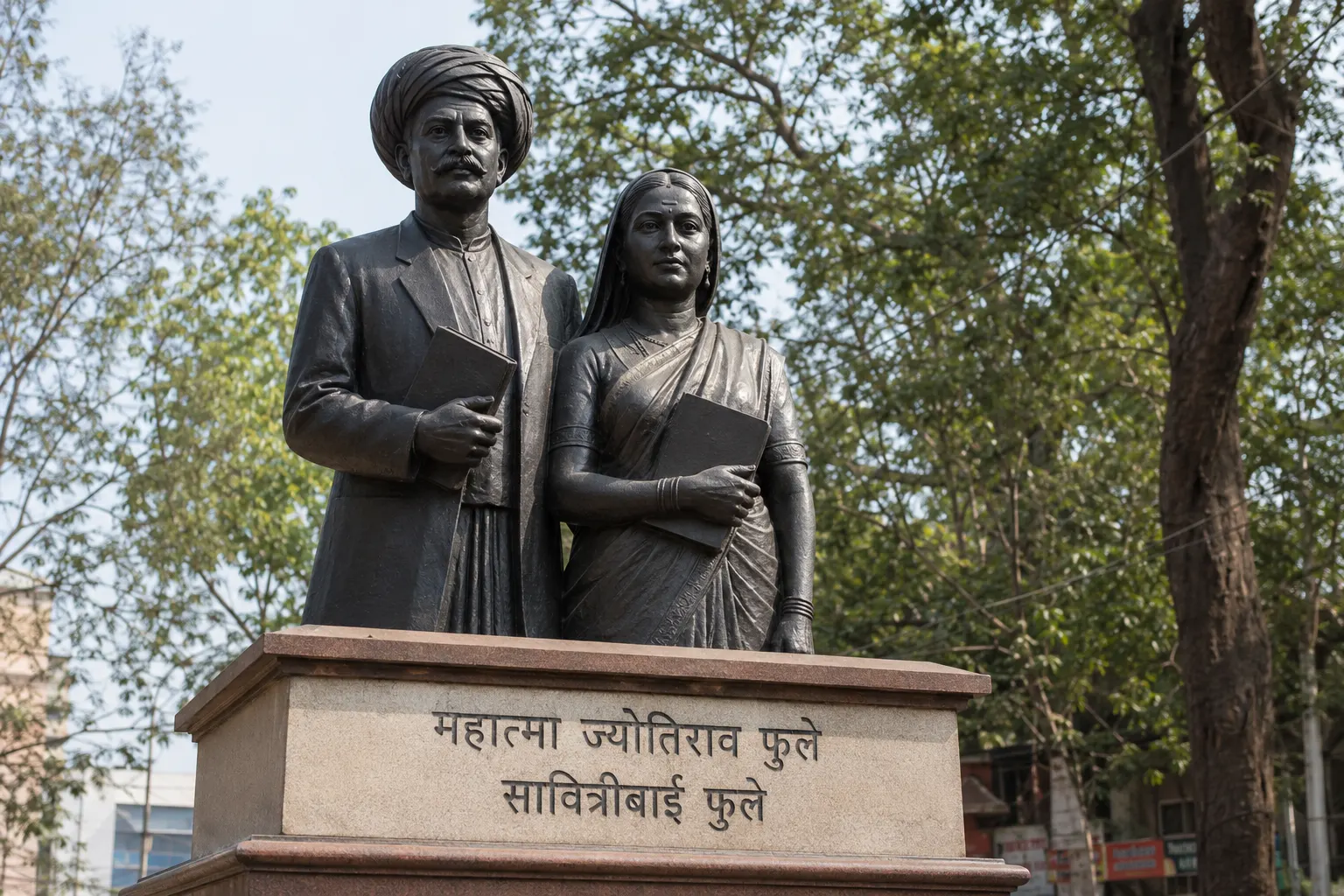
Her feminism did not emerge from the same social location as the anti-caste activism of Savitribai Phule or later Dalit women’s movements.
Her nationalism sometimes relied on idealised imagery of Indian womanhood and civilisational unity that could conceal internal inequalities.
These limits do not erase her achievements. They locate them.
Women’s political history is not one movement progressing smoothly from exclusion to equality. Different women entered public life through different class, caste, regional and ideological routes.
Naidu represented one influential route: cosmopolitan education, literary celebrity, nationalist organisation and constitutional office.
Why Sarojini Naidu still matters
Naidu matters because she refuses the boundaries through which history is usually organised.
She belongs to literature and politics.
To women’s history and nationalist history.
To colonial India and the first years of independence.
To elite English-language culture and mass public speaking.
Her career also offers a lesson about political communication.
Movements are not built by policy documents alone. They require stories, images, humour, songs, memory and persuasive voices.
Naidu understood that instinctively because she had learned it as a poet.
The more complete way to remember her is therefore not as the “Nightingale” who happened to enter politics, nor as the nationalist leader who once wrote decorative verse.
She was a public intellectual whose medium changed with the needs of her time.
In poetry, she tried to make India audible in English.
In politics, she tried to make Indians audible to power.
That continuity—not the contrast between poet and politician—is the core of her historical significance.
Sources / Further Reading
- \n
- Sarojini Naidu, Speeches and Writings of Sarojini Naidu — Digital Library of India / Internet Archive: https://archive.org/details/in.ernet.dli.2015.180542
- Sarojini Naidu, The Golden Threshold — Central Secretariat Library / Internet Archive: https://archive.org/details/dli.csl.5519
- Indian National Congress, Sarojini Naidu: biographical tribute: https://inc.in/congress-sandesh/tribute/sarojini-naidu-13-february-1879-2-march-1949
- Constituent Assembly of India Debates, 11 December 1946 — Parliament of India archival PDF: https://dspstg.sansad.in/uploads/const_Assmbly_Debates_Volume1_11_December1946_4c7e7695a9.pdf
- Constitution of India project / Prasar Bharati Archives, Sarojini Naidu’s Constituent Assembly speech, 11 December 1946: https://www.constitutionofindia.net/museum/1946-dr-sarojini-naidus-constituent-assembly-speech/
- Sheshalatha Reddy, “The Cosmopolitan Nationalism of Sarojini Naidu, Nightingale of India,” Victorian Literature and Culture 38, no. 2 (2010).
Suggested Internal Links
- \n
- Sarojini Naidu: Politics, Public Service and Nationalism — Planned companion article
- The Educator Savitribai Phule — Article 4
- Women in the Indian National Movement — Planned internal link
- The Salt March and Civil Disobedience — Planned internal link
- Indian English Poetry Before Independence — Planned internal link