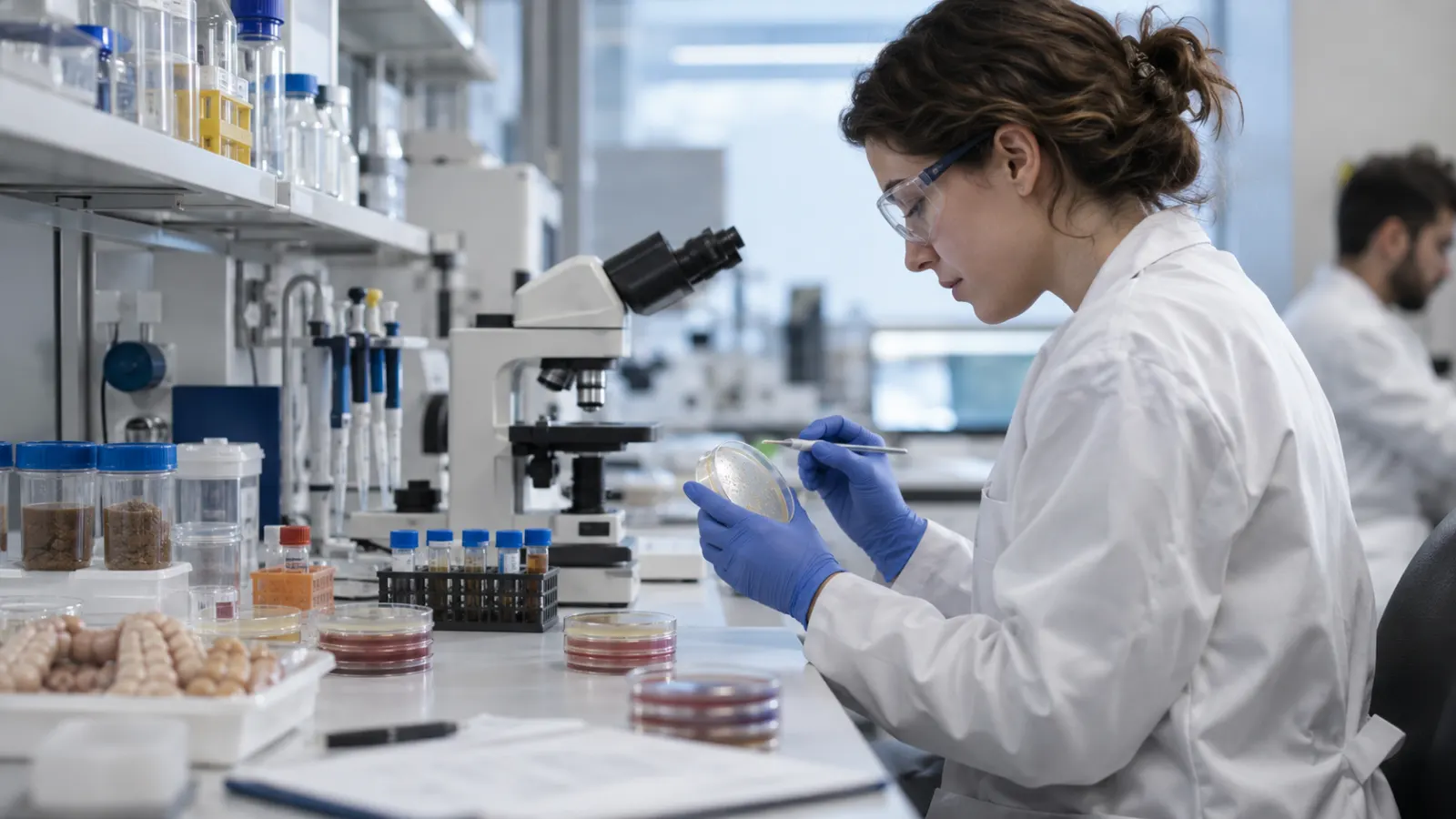
Gut Microbiome: What It Does, What We Know and What Gets Overhyped
The gut microbiome is sometimes marketed as though it were a hidden control panel for the entire human body: fix the bacteria, and digestion, immunity, weight, mood and chronic disease will supposedly fall into place. The underlying science is much more interesting—and much more complicated.
The digestive tract contains enormous communities of microorganisms. Bacteria receive most of the attention, but the ecosystem also contains viruses, fungi and archaea. The term microbiota usually refers to the organisms themselves, while microbiome is often used more broadly to include those organisms, their genes, the molecules they produce and their interactions with the human host.
These organisms are not accidental passengers. The National Institute of Environmental Health Sciences notes that the human microbiome contributes to protection against pathogens, development of the immune system and digestion of food to produce energy. Different parts of the body also contain distinct microbial communities, with the gastrointestinal tract containing one of the largest concentrations.
That makes the microbiome biologically important.
It does not mean every symptom can be explained by “bad gut bacteria”, that every healthy person should have the same microbial composition, or that a commercial stool test can currently reduce overall gut health to one reliable score.
In fact, NIH's current microbiome research priorities make the central scientific limitation explicit: much existing knowledge comes from population-level association studies, while distinguishing correlation from causation remains a persistent challenge because host-microbe interactions are so complex.
The useful position is therefore neither dismissal nor hype. The gut microbiome is a major biological system whose functions are increasingly well established, while many disease claims and consumer applications remain ahead of the evidence.
The Gut Is an Ecosystem With Different Habitats
Microbial communities are not distributed evenly through the digestive tract.
The stomach's acidity, digestive secretions, oxygen exposure and rapid movement through parts of the small intestine create very different conditions from those found in the colon. The large intestine contains especially dense microbial populations and provides a relatively slow, low-oxygen environment in which many anaerobic organisms can thrive.
This matters because the word microbiome can create the false impression of one homogeneous collection of bacteria occupying the entire gut.
In reality, microbial ecology depends on location.
Organisms adapted to one anatomical site may behave very differently somewhere else. A microorganism that lives harmlessly inside the intestinal tract can become dangerous if it crosses tissue barriers or enters the bloodstream or urinary tract.
Health therefore does not mean eliminating microbes.
It depends partly on maintaining appropriate relationships between microbes, body sites and host defences.
This ecological view also helps explain colonisation resistance. Established intestinal communities occupy space, consume nutrients and produce metabolites that can make it harder for invading pathogens to establish themselves. The protective effect does not come from one universally “good” bacterium acting alone; it emerges from interactions among organisms and their environment.
Antibiotics demonstrate what happens when that ecology is disturbed. Antibiotic treatment can reduce susceptible organisms throughout the intestinal community while targeting the infection for which the drug was prescribed. That disruption can sometimes create ecological opportunities for pathogens such as Clostridioides difficile.
The conclusion is not that antibiotics are harmful medicines that should be avoided whenever possible.
Antibiotics can be life-saving and their benefits can greatly exceed microbiome effects when they are clinically necessary.
The more accurate lesson is that an antibiotic acts on an ecosystem as well as on the organism causing disease, which adds another reason to avoid unnecessary use.
Fibre Matters Partly Because Microbes Can Use What We Cannot Digest
Human digestive enzymes cannot completely break down every carbohydrate we eat.
Some dietary fibres and related carbohydrates reach the large intestine, where microorganisms can ferment them. One important group of products created through this fermentation is the short-chain fatty acids, particularly acetate, propionate and butyrate.
These compounds illustrate why gut microbes cannot be understood simply by asking which species are present.
They perform chemistry.
A 2025 review in Nature Reviews Microbiology describes short-chain fatty acids as products of dietary-fibre fermentation by the gut microbiota and highlights their diverse roles in host physiology. Butyrate is particularly important in the colon, where it can serve as a major energy substrate for colon cells.
This is one reason dietary fibre affects more than stool bulk.
Part of fibre's biology occurs through microbial metabolism.
Different fibres can also support different organisms and metabolic pathways, which means the phrase “eat fibre for your microbiome” is directionally useful but biologically incomplete. Fibre types vary substantially, and individual tolerance differs. A person with certain gastrointestinal disorders may not tolerate the same quantity or type of fermentable carbohydrate as someone without symptoms.
Diet is nevertheless one of the most important modifiable influences on gut microbial activity. NIEHS notes that diet can alter microbiome composition, and NIH research increasingly focuses on the relationship among dietary inputs, microbial function and host physiology.
The key word is relationship.
It is much harder to move from “diet changes microbial activity” to “this exact diet will create the ideal microbiome and prevent disease”.
There is no established universal microbiome diet because people differ in genetics, environment, disease, medication use, culture, baseline microbiota and nutritional needs.
There Is No Single Perfect Healthy Microbiome
One of the Human Microbiome Project's most important contributions was showing how much microbial variation exists among healthy people.
NIH's Human Microbiome Project created extensive datasets describing microbial communities in hundreds of healthy participants and demonstrated enormous variation in both microbial composition and functional capacity. The programme's own external review later concluded that defining a single “healthy microbiome” was much more difficult than researchers had initially expected.
This creates a problem for simple wellness language.
A company may tell customers that a particular organism is too low, another is too high and their overall diversity score should be improved. But the biological meaning of such results depends heavily on context.
Two healthy people can carry different microbial species.
Different organisms may sometimes perform overlapping metabolic functions.
A microbial pattern associated with one population may not translate cleanly to another population with different diets, medications, geography or genetics.
Even the popular idea that more microbial diversity is always healthier is too crude.
Lower diversity has been associated with some disease states, but diversity is not a universal diagnostic measure. A healthy ecosystem can sometimes contain relatively strong dominance by particular organisms, while some disease-associated communities do not necessarily produce a simple low-diversity signature.
The question researchers increasingly want to answer is not merely:
Who is there?
It is:
What is the community doing?
Which microbial genes are active?
Which metabolites are being produced?
How stable is the ecosystem?
How does it respond to diet, medication or infection?
How are those microbial products interacting with intestinal cells, immune pathways and the rest of the body?
NIH's 2026 microbiome research priority specifically emphasises mechanistic investigations, molecular interactions, microbial metabolites and functional output because composition alone often cannot establish why an association exists.
The future of microbiome medicine is therefore likely to depend increasingly on function and causation rather than simply producing longer lists of bacterial names.
The Microbiome and the Immune System Develop Together
The intestinal immune system exists in unusually close contact with microorganisms.
It must tolerate enormous numbers of harmless or beneficial organisms and food-derived molecules while remaining capable of responding to pathogens. Microbial signals and metabolites help shape barrier function and immune responses, while immunity in turn influences which organisms are able to persist.
This relationship begins early in life.
NIEHS notes that a person's core microbiome develops during the first years of life and continues to change with influences including diet, medications and environmental exposures.
Delivery mode, feeding patterns, antibiotic exposure, household environment and other early-life factors can all influence microbial composition. Researchers are investigating whether some of these differences contribute to later immune, metabolic or inflammatory outcomes.
This is an area in which scientific findings can easily become parental anxiety.
Observing that babies born in different ways can initially have different microbial communities does not establish that one unavoidable birth circumstance permanently damages a child's future health. Nor does an antibiotic prescribed appropriately in infancy mean that a child's microbiome has been irreversibly “destroyed”.
Microbial communities continue changing.
Host development continues changing.
Numerous environmental and biological influences interact across childhood.
Early life is clearly important, but microbiome development should be treated as dynamic, not as a one-time event after which health has been permanently determined.
The same caution is necessary when discussing allergies, autoimmune disease, inflammatory bowel disease and metabolic conditions. Researchers repeatedly identify microbiome differences between people with and without disease.
Those observations matter.
But disease itself can change diet, medication use, inflammation, intestinal movement and the gut environment—all of which can alter the microbiome.
An association therefore does not automatically reveal which direction causation runs.
Sometimes the microbiome may contribute to disease.
Sometimes disease may reshape the microbiome.
Often both may occur simultaneously.
This is exactly why NIH now emphasises mechanistic research designed to move beyond population correlations.
Probiotics Are Specific Biological Products, Not a Universal Category of “Good Bacteria”
The commercial probiotic market often reduces microbiology to a simple story: bad bacteria cause problems, good bacteria restore balance.
Clinical evidence does not work that way.
Probiotics are live microorganisms intended to provide a health benefit when administered in adequate amounts, but different organisms and strains can behave differently. Evidence supporting one formulation for one condition should not automatically be transferred to every product sold under the word probiotic.
The National Center for Complementary and Integrative Health notes that some probiotic formulations have shown promise for selected uses, but strong evidence for many other claims remains limited. It also emphasises that probiotic products can contain different organisms and produce different effects in different people.
Even within one gastrointestinal condition, results can be difficult to generalise.
For irritable bowel syndrome, for example, NCCIH notes that different strains and combinations have been studied and that current evidence has not been strong enough to identify a broadly recommended probiotic treatment.
This is why advice such as “take a probiotic for gut health” is scientifically underspecified.
Which organism?
Which strain?
What dose?
For which condition?
For how long?
Compared with what treatment?
Those details determine whether evidence from a clinical trial applies to the product being considered.
Safety also matters.
Most healthy people tolerate many commonly used probiotic products without major difficulty, but NCCIH warns that serious infections have occurred in vulnerable populations, including premature infants, and that long-term safety evidence remains incomplete for many products.
The label “natural” or “good bacteria” does not remove the need for product-specific evidence.
Microbiome-Based Treatment Is Already Real Medicine—For Specific Indications
The strongest argument against dismissing microbiome science as hype comes from C. difficile.
Repeated antibiotic exposure can severely disrupt intestinal microbial communities and allow recurrent C. difficile infection to become extraordinarily difficult to eliminate. Restoring microbial ecology can help re-establish resistance to recurrence.
This has moved microbiome treatment beyond experimental wellness claims.
The U.S. Food and Drug Administration currently lists two approved fecal microbiota products: REBYOTA and VOWST. Both are indicated for preventing recurrence of C. difficile infection in adults after antibacterial treatment for recurrent infection. REBYOTA was approved in 2022, while VOWST became the first orally administered fecal microbiota product approved in 2023.
That is an important milestone.
It demonstrates that manipulating a microbial community can become evidence-based clinical medicine when the disease mechanism, patient group, product and outcome are sufficiently well defined.
It also demonstrates why precision matters.
The existence of approved microbiota-based products for recurrent C. difficile does not establish that microbiota transplantation should be used casually for obesity, depression, vague digestive symptoms or general wellness.
A successful therapy in one condition cannot simply be extended to unrelated diseases because microbiome changes have been reported in both.
This is a recurring pattern in medical science.
A biological mechanism becomes clinically useful only after researchers establish who should receive an intervention, what exactly should be administered, what outcome improves and whether the benefits outweigh the risks.
The C. difficile story should therefore increase confidence in rigorous microbiome medicine while making us more demanding about unsupported microbiome claims.
Consumer Microbiome Tests Can Measure Organisms More Easily Than They Can Explain Health
Direct-to-consumer stool testing can sequence microbial DNA and generate detailed reports showing bacteria detected in a sample.
The technical ability to measure microbes is impressive.
The difficult step is translating those measurements into validated medical meaning.
A 2026 study evaluated seven direct-to-consumer gut microbiome testing services using standardized human fecal material developed by the U.S. National Institute of Standards and Technology. Researchers found substantial discrepancies both within and between testing providers; variation among providers was comparable in scale to biological variation among different donors. The authors concluded that methodological variability and insufficient quality control raise questions about analytical validity and the reliability of downstream recommendations.
This does not mean sequencing is scientifically useless.
Microbiome sequencing is enormously valuable in research.
The problem is the jump from measurement to diagnosis.
A report may tell you that DNA from certain organisms was detected. That does not automatically establish that those organisms caused your symptoms, that changing them will improve health or that a proprietary “microbiome score” has validated clinical meaning.
The distinction resembles many other diagnostic technologies.
A laboratory can measure hundreds of variables.
A medically useful test requires evidence showing how the result changes diagnosis, predicts outcome or guides treatment.
This is particularly important when commercial reports use concepts such as dysbiosis.
In research, dysbiosis can describe a microbial pattern associated with disease or ecological disruption.
In ordinary consumer language, the term can become an undefined diagnosis applied to almost any symptom.
Bloating, abdominal pain, constipation and diarrhoea can arise from many recognised causes, including irritable bowel syndrome, coeliac disease, inflammatory bowel disease, infections, medication effects and food intolerances.
Microbiome differences may accompany some of these conditions.
That does not mean persistent gastrointestinal symptoms should be diagnosed as a generic bacterial imbalance without appropriate medical evaluation.
The Gut-Brain Axis Is Real; Simplistic Mood Claims Are Not
Few microbiome topics receive as much popular attention as the gut-brain axis.
The gastrointestinal tract, nervous system, immune system, endocrine signals and microbial metabolites can communicate through several biological pathways. Microbiome research increasingly investigates whether these pathways influence neurological and psychiatric conditions.
NIH's current microbiome research programme explicitly notes links between gastrointestinal microbiome patterns and neuropsychiatric disorders while emphasising that much of the existing evidence remains associative and that mechanistic research is needed to establish causation.
That distinction is crucial.
“The gut communicates with the brain” is biologically defensible.
“Your depression is caused by the wrong gut bacteria” is a much stronger claim that generally cannot be made from current evidence.
Changes in mood can alter sleep, appetite, diet, medication use and stress hormones, all of which can influence gut physiology and the microbiome. Microbial products may simultaneously affect immune or neural signalling.
The relationship can therefore run in both directions.
This is exactly the type of system in which simple causal stories become tempting and unreliable.
Research on the gut-brain axis deserves serious attention.
It does not justify replacing established mental-health care with unvalidated microbiome interventions.
The Next Phase of Microbiome Science Is About Mechanisms
The first era of large-scale microbiome research had an understandable goal: determine which organisms are present.
The Human Microbiome Project helped build the sequencing datasets, reference genomes and computational tools required to answer that question at unprecedented scale. NIH reports that the programme produced comprehensive microbial profiles from more than 300 healthy participants and thousands of reference genomes, laying much of the infrastructure on which contemporary microbiome research depends.
That work revealed extraordinary complexity.
It also revealed the limitations of description.
If people with a disease consistently contain more or less of a particular organism, the association creates a research question.
It does not finish the investigation.
NIH's January 2026 microbiome research priority reflects this transition explicitly. The agency is encouraging multidisciplinary mechanistic studies focused on microbial function, molecular pathways, metabolites, host physiology and microbiome-targeted interventions because distinguishing correlation from causation remains one of the field's central unresolved challenges.
That means the future may depend less on identifying an allegedly ideal list of organisms and more on understanding functions that can be measured and manipulated reliably.
Which microbial pathways produce clinically meaningful metabolites?
Which host signals alter those pathways?
Which patients contain the biological conditions required for a microbiome treatment to work?
Which microbial functions can substitute for one another?
Can a therapeutic intervention restore a missing function without attempting to rebuild an entire ecosystem?
These are harder questions than asking whether one bacterial genus is high or low.
They are also much more likely to produce useful medicine.
The Gut Microbiome Is Important Enough to Demand Better Evidence
Microbiome science has already changed how biology understands the human body.
The gut is not a sterile processing tube.
Its microbial communities contribute to digestion, transform dietary compounds, generate biologically active metabolites, interact with immune systems and help resist invading pathogens.
Diet can alter those communities.
Antibiotics can disrupt them.
Early-life development matters.
Specific microbial interventions can become legitimate therapies, as FDA-approved microbiota products for recurrent C. difficile now demonstrate.
Those facts are substantial enough without turning the microbiome into a universal explanation for health.
There is no single microbial profile that every healthy person needs to achieve.
More diversity is not automatically better in every context.
The presence of one bacterial species does not diagnose disease.
A stool sequencing report is not automatically a clinically validated gut-health assessment.
A probiotic that works in one trial cannot be assumed to work for every digestive complaint.
An association between a microbial pattern and a disease does not establish whether the microbiome caused the disease, resulted from it or changed alongside it because of another factor.
The most scientifically useful question is therefore changing.
Instead of asking only “Which bacteria do I have?”, microbiome medicine increasingly needs to ask:
What is this ecosystem doing, how does that function affect the host, and can changing it reliably improve a defined clinical outcome?
That is a higher evidentiary standard.
It is also the path most likely to turn microbiome science from an exciting collection of associations into reproducible medicine.
The gut microbiome deserves attention precisely because it is biologically important.
It deserves scepticism for the same reason.
Major biological systems should be judged by careful mechanisms, reproducible measurements and clinical outcomes—not by how compellingly they can be marketed.
Medical Note
This article provides general health information and is not a substitute for individual medical advice. Persistent or severe abdominal pain, gastrointestinal bleeding, unexplained weight loss, prolonged diarrhoea, recurrent vomiting, dehydration, persistent changes in bowel habits or other concerning symptoms should be assessed by an appropriately qualified healthcare professional.