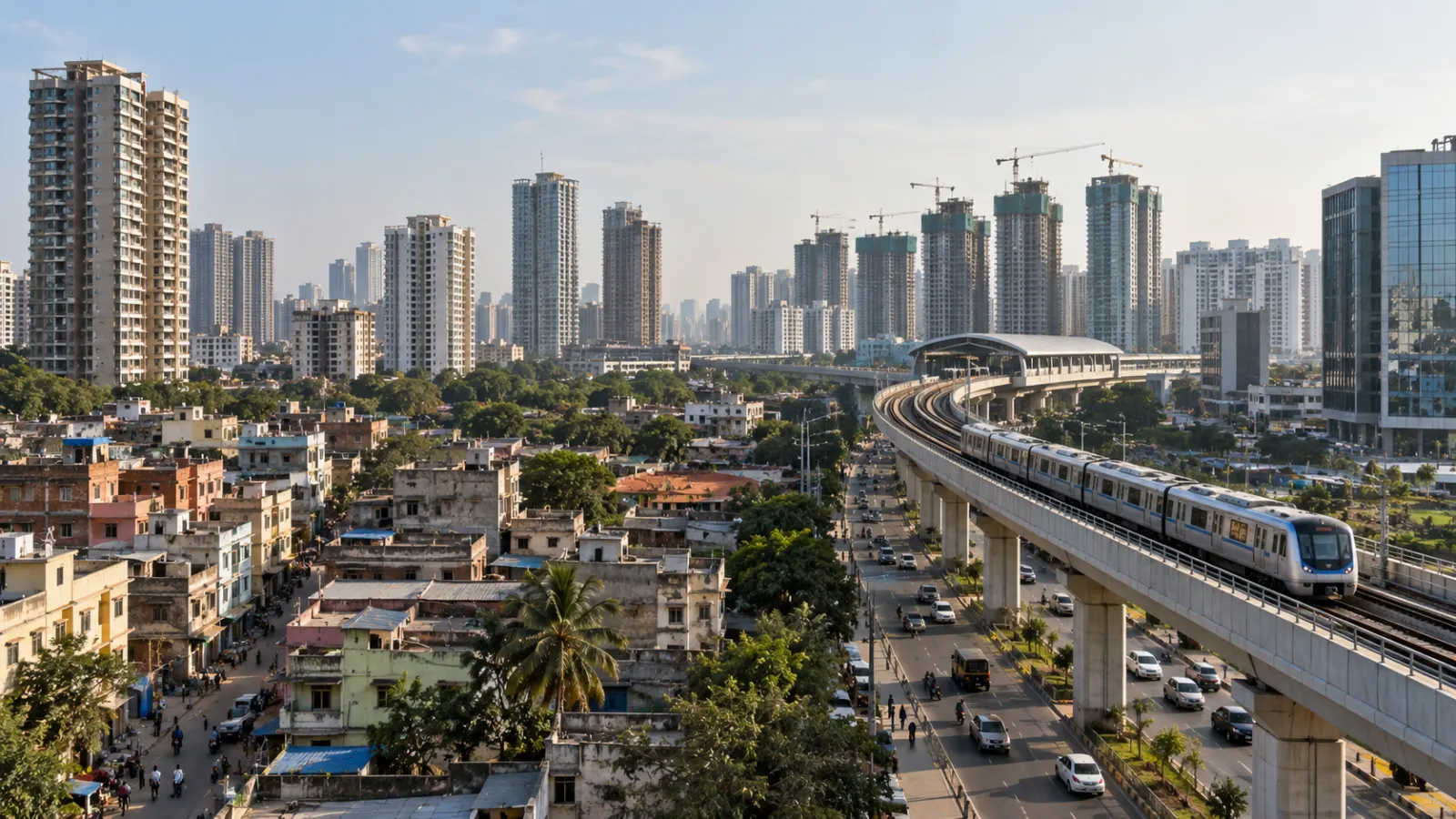
MUMBAI, Aug. 6, 2026 - India's tallest residential skyline is concentrated in Mumbai, where extreme land values, redevelopment policy and demand for luxury housing have combined to make vertical construction economically viable on a scale not seen elsewhere in the country.
The Council on Tall Buildings and Urban Habitat defines a supertall building as one at least 300 metres high. By that standard, the completed Lokhandwala Minerva in Mahalaxmi, at about 301 metres, qualifies. The approximately 320-metre Palais Royale in Worli has topped out but has faced a long construction history. Several other Mumbai residential towers approach the threshold, and lists of India's tallest completed or topped-out buildings are dominated by projects in the city.
Height begins with land economics. Mumbai's narrow geography, established business districts and limited supply of well-connected plots push land prices to levels at which a developer can justify expensive deep foundations, high-speed elevators, wind engineering and long approval processes. Selling a small number of very costly apartments across many floors may generate more value than a lower building with the same footprint.
Redevelopment is the second engine. Large parts of the city contain ageing housing societies, former mill land, informal settlements and public or institutional plots whose renewal can generate additional development rights. Floor Space Index rules determine how much built area is allowed relative to plot size, while transferable development rights and premium FSI can add capacity under specified conditions. Higher FSI does not automatically require a taller tower, but on a constrained site it often makes height the preferred design response.
The resulting buildings are overwhelmingly residential because Mumbai has a deep market of wealthy buyers seeking large homes, views, privacy and amenities close to financial and entertainment districts. Developers can price upper floors at a premium and use branded services, club spaces and security to differentiate projects. India's broader luxury-housing boom has reinforced that model even as affordability worsens for ordinary households.
Engineering capability has also matured. Designers and contractors now have more experience with high-strength concrete, tuned structural systems, facade testing, fire evacuation, vertical transport and foundation work in difficult urban sites. Mumbai's High-Rise Committee reviews very tall proposals, and the municipal corporation has moved to involve independent geotechnical experts in scrutiny of foundations for buildings above specified heights. Such review is essential where excavation occurs close to occupied structures and utilities.
Height, however, is not the same as good urbanism. A tower can house many people on little land while still placing cars, water demand and sewage load on inadequate local infrastructure. Setbacks and podiums can create blank edges that weaken street life. Gated compounds may concentrate private amenities without adding public space. Approval should therefore examine the neighbourhood system, not only whether the structure itself can stand.
Transit is a decisive part of that system. Very tall housing near rail and metro corridors can reduce long commutes if projects include safe walking access and residents actually use public transport. Towers built around large parking podiums can instead add traffic to already narrow roads. Development charges and premium FSI revenue should be transparently linked to footpaths, drainage, schools and transit capacity in the affected area. Otherwise the public absorbs the infrastructure cost while the increase in land value remains private.
Fire and evacuation planning become more demanding above the reach of conventional ladders. Buildings need compartmentation, protected staircases, refuge areas, reliable pumps, smoke control, emergency power and trained management. A design that technically includes these systems can still fail if doors are locked, refuge floors are altered or maintenance is neglected. Periodic occupation-stage audits are as important as plan approval.
Mumbai's coastal environment adds climate risk. Tall, slender buildings face wind loads, driving rain and corrosion, while neighbourhoods below remain exposed to flooding, heat and strained drainage. Backup power and pumps must function during extreme weather. Developers should disclose energy and water performance because a luxury tower with inefficient glass, air conditioning and private facilities can have a large environmental footprint.
The skyline also expresses inequality. Redevelopment can deliver safer replacement homes and finance infrastructure, but it can displace tenants during long construction periods or separate rehabilitation housing from premium towers. Contracts should specify rent, completion deadlines, unit sizes and remedies if work stalls. Residents need independent advice before surrendering possession, and regulators need financial safeguards that survive a developer's failure.
Other Indian cities have land and buyers, but Mumbai's combination is unusually intense: high central land cost, constrained geography, redevelopment incentives, concentrated wealth and an established ecosystem for tall-building approvals. That explains the cluster more convincingly than a simple desire for global prestige.
The next measure of success should not be whether Mumbai adds another record. It should be whether vertical growth produces safe homes, functioning streets, reliable utilities and fair redevelopment. A city can lead a supertall boom and still fail its residents if height becomes the objective rather than one tool for managing scarce urban land.