What Is Volunteering? Why Unpaid Work Matters
Volunteering is often described through generosity, charity or civic spirit. Those ideas capture part of its social meaning, but they can obscure something economically important: volunteering is also a form of productive work.
The International Labour Organization defines volunteer work as unpaid, non-compulsory activity performed to produce goods or provide services for people or organisations outside the volunteer’s own household or family. That definition includes both activity carried out through organisations and direct help given to other households. It excludes compulsory forms of unpaid work such as court-ordered community service or mandatory national service. (ilo.org)
This statistical definition matters because activity without a wage can otherwise disappear from conventional measures of production and employment. Volunteers teach, coach sports, support health programmes, distribute food, protect ecosystems, assist during disasters, maintain community organisations and help neighbours through illness or hardship. Someone still performed those tasks even when no salary was paid.
The scale is much larger than the familiar image of volunteers working through registered charities. New global estimates produced by the ILO and reported in the 2026 State of the World’s Volunteerism Report suggest that approximately 2.1 billion people volunteer in an average month, equivalent to 34.5% of the global working-age population. Informal volunteering is especially important: the estimated monthly participation rate is 25.0% for informal volunteering compared with 11.7% for formal, organisation-based volunteering. (ilostat.ilo.org) (knowledge.unv.org)
These estimates change the picture of what volunteering looks like.
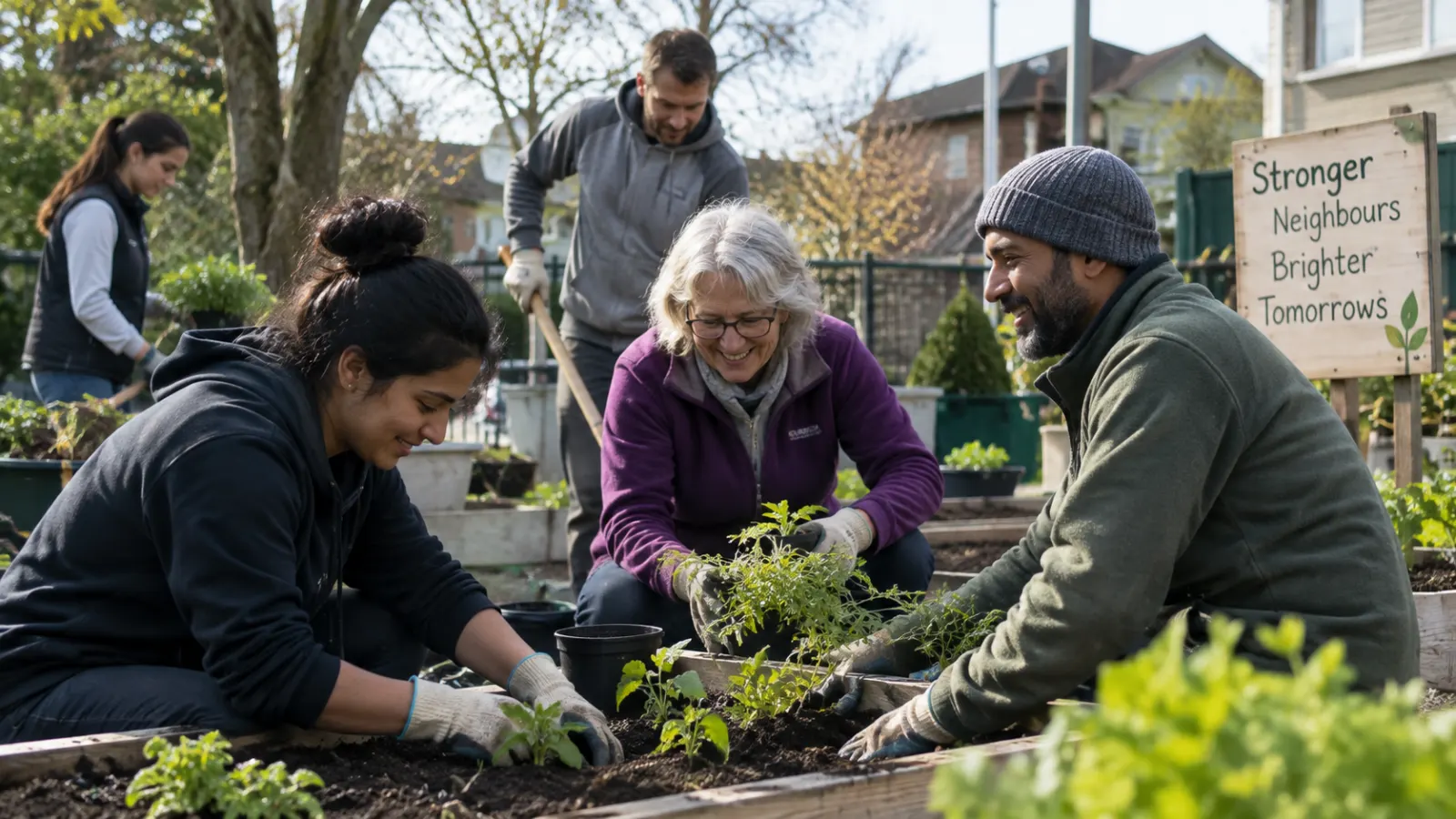
A person helping an older neighbour obtain groceries, organising community assistance after a flood or regularly teaching someone outside their household may be performing volunteer work even without a charity logo, membership card or official volunteer title.
Understanding volunteering therefore requires looking beyond organised charity to the much larger infrastructure of unpaid, freely chosen work through which communities help themselves and one another.
Formal Volunteering Is Only One Part of the Story
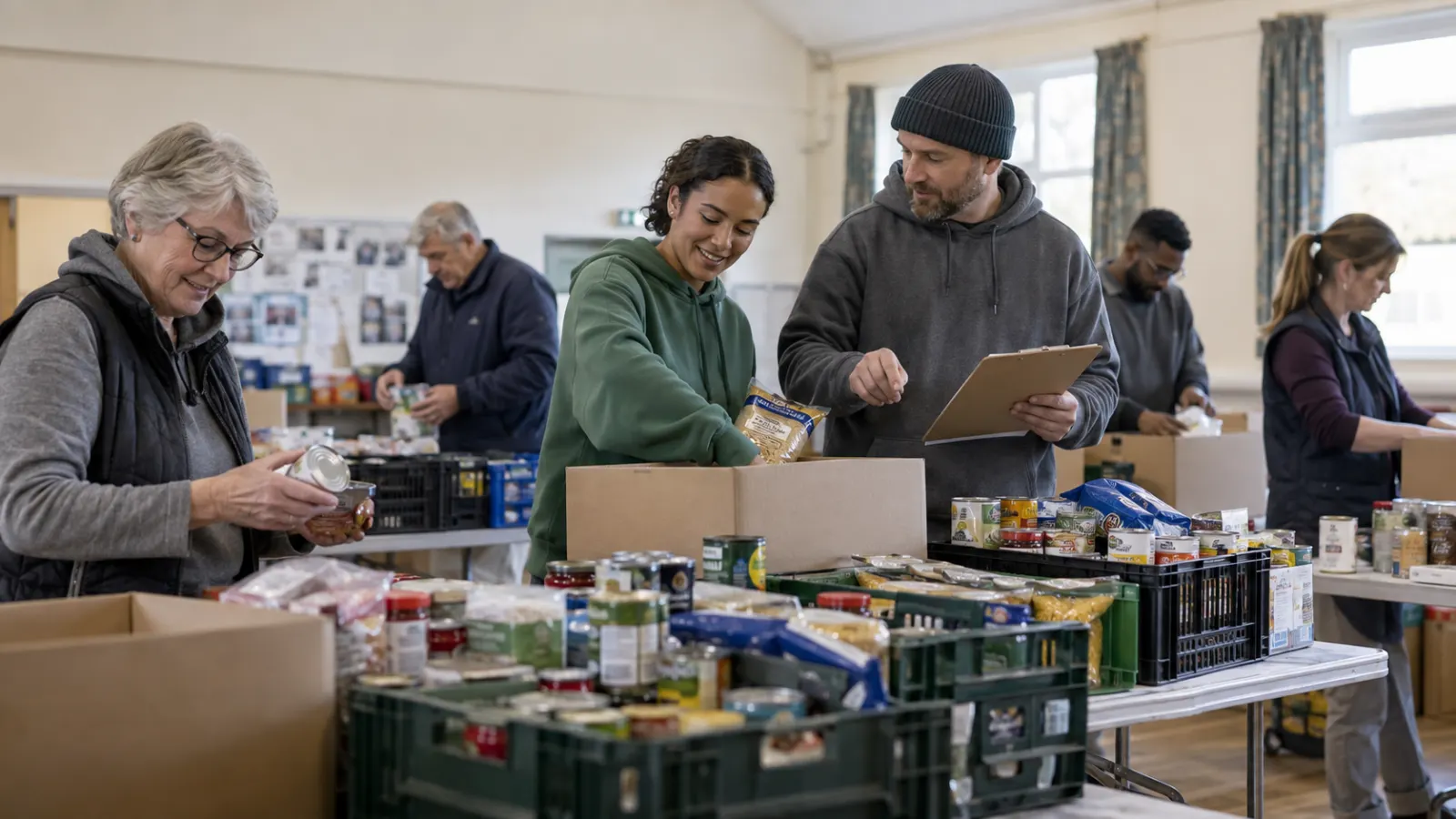
Formal volunteering takes place through an organisation. That might be a charity, religious body, school, sports association, humanitarian organisation, environmental group, hospital, public programme or community organisation.
Formal structures can provide important advantages. Roles can be defined. Volunteers can receive training and supervision. Safeguarding procedures can be established. Insurance, equipment and expense reimbursement can be organised. Responsibilities can continue even when one volunteer leaves.
These structures also make activity easier to observe.
A charity can report that 800 people volunteered 30,000 hours during a year. A sports club can count coaches. A humanitarian organisation can maintain a roster of trained responders.
Informal volunteering is much harder to see.
The ILO distinguishes organisation-based volunteer work from direct volunteering, where unpaid help is provided directly to other households. (ilo.org)
This might include regularly helping an older neighbour, repairing something for a family in the community, tutoring a child outside one's family, organising mutual aid or helping residents recover after a local emergency.
People performing these activities may never describe themselves as volunteers.
They may simply say:
“I was helping.”
That creates a measurement problem.
If a survey asks only whether someone volunteered for an organisation, enormous amounts of community activity disappear. The 2026 global estimates are substantially larger than many earlier pictures partly because improved measurement attempts to capture these less formal forms of volunteer work. UNV emphasises that conventional approaches have often focused disproportionately on formal participation while missing direct community contribution. (knowledge.unv.org)
This does not make formal and informal volunteering interchangeable.
An informal neighbour helping during a crisis cannot necessarily provide the clinical services of a trained humanitarian health team. A formal programme may provide accountability and continuity that spontaneous assistance cannot.
The important point is that both are forms of socially productive activity.
Organisation determines how the work is coordinated.
It does not determine whether the work has value.
Volunteer Work Creates Economic Value—but Its Value Is Not Only Economic
Volunteer labour can be given a monetary estimate.
One approach asks what it would cost to hire workers to perform equivalent tasks. Another may value hours using occupation-specific wages or other replacement-cost methods.
Such estimates are useful because economic statistics normally record transactions more easily than unpaid contribution. Assigning a replacement value can make visible labour that otherwise appears to cost nothing.
But reducing volunteering to a wage equivalent creates another distortion.
A volunteer may help create relationships, trust, local knowledge and community capacity that do not translate neatly into an hourly market price.
A neighbourhood emergency network, for example, may matter not only because volunteers performed a certain number of tasks but because residents now know whom to contact during the next crisis.
A youth volunteer programme may produce a service while simultaneously giving participants practical experience, confidence and connections.
An environmental group may restore a local habitat while also building long-term public involvement in its protection.
The 2026 State of the World’s Volunteerism Report deliberately argues for measurement that extends beyond participation counts, hours and monetary estimates. Its framework examines the value of volunteering for individuals, societies and economies, as well as the conditions that make volunteer activity possible. (knowledge.unv.org)
This broader approach is important because the benefits of volunteering can be indirect.
Repeated cooperation can strengthen social relationships.
Knowledge gained during one project can remain available for another.
People who did not previously know each other can become connected through shared work.
A community can become better able to organise itself.
These effects are difficult to attribute precisely to one volunteer hour.
That does not make them meaningless.
It means the value of volunteering is partly relational and institutional, not simply transactional.
Volunteering Can Build Skills and Social Connection—When the Role Is Designed Well
People volunteer for different reasons.
Some want to contribute to a cause.
Others want professional experience, social connection, religious or civic participation, or simply the satisfaction of being useful. Motivations can also change. Someone who begins volunteering to gain experience may later become committed to the organisation's mission; someone motivated by a cause may discover that friendships keep them involved.
There is little reason to demand one morally pure motive.
What matters more is whether the activity remains genuinely voluntary and produces meaningful value.
OECD research on youth volunteering and civic-service programmes notes potential benefits including skills development, confidence, civic engagement, solidarity, social inclusion and resilience. (oecd.org)
Those benefits are plausible because volunteering can create situations in which people practise real responsibilities.
A volunteer may coordinate an event, speak with members of the public, manage logistics, supervise a team, resolve problems or work with people outside their normal social circle.
But volunteering does not automatically develop valuable skills simply because time was donated.
Role design matters.
Someone who performs repetitive unpaid tasks for months without feedback, responsibility or learning opportunities may gain far less professionally than someone who receives mentoring and progressively more complex work.
The same principle applies to social connection.
Working toward a shared objective can create relationships across differences in age, profession, neighbourhood or social background. These bridging relationships can expand a person's network beyond their immediate family or workplace.
But access to such opportunities is unequal.
A person with secure income, flexible working hours, transport and childcare may find it much easier to join a formal volunteering programme than someone working several jobs or performing large amounts of unpaid care at home.
A national volunteer rate therefore cannot automatically be interpreted as evidence that everyone participates equally.
Who volunteers?
How many hours do different groups contribute?
Which activities receive public recognition?
Who carries informal caring and community responsibilities that statistics previously overlooked?
These questions matter because celebrating a high aggregate volunteering rate can conceal inequality in both opportunity and burden.
Unpaid Does Not Mean Costless
Volunteer labour is unpaid.
Volunteer systems are not free.
A well-run programme may need recruitment, coordination, supervision, safeguarding, training, equipment, insurance, background checks, accessible facilities and information systems.
Volunteers themselves can incur expenses.
Transport costs money.
So do meals, telephone data, specialist clothing and childcare.
If organisations assume volunteers will absorb these costs personally, participation becomes easier for people who can afford to subsidise their volunteering.
Expense reimbursement can therefore be an inclusion measure.
The ILO explicitly recognises that volunteers may receive reimbursements, meals, transport support or small allowances covering costs without the activity necessarily becoming paid employment. The defining question is whether payment is expected as remuneration for the work itself. (ilo.org)
This distinction is important.
Paying someone's train fare does not destroy the voluntary character of their contribution.
It may make the opportunity available to people who could not otherwise afford to participate.
The same logic applies to accessibility.
An organisation cannot credibly say that “everyone is welcome to volunteer” if the application process is inaccessible to people with disabilities, every shift requires private transport or all opportunities assume unrestricted daytime availability.
Inclusive volunteer programmes may need flexible scheduling, accessible venues, alternatives to digital-only applications, reasonable adjustments and different ways to contribute.
Inclusion therefore has a financial and organisational cost.
Treating volunteer work as free can push those costs onto the very people giving their time.
Volunteers Need Protection, Not Romanticisation
Volunteerism is often described through sacrifice.
That framing becomes dangerous when admiration replaces duty of care.
During disasters, conflict and public-health emergencies, volunteers may work under difficult conditions and often possess local language, relationships and geographic knowledge that external organisations do not have.
Local volunteers can therefore be crucial during the earliest stages of a crisis.
But proximity to a disaster also means exposure to danger.
Volunteers may encounter injury, grief, disease, violence or psychological stress. They may be asked to work long hours because the situation appears exceptional. People driven by commitment can themselves accept workloads that are not sustainable.
Good programmes need safety protocols, appropriate training, supervision, protective equipment where necessary, realistic shifts and routes to psychological or professional support.
The 2026 UNV report similarly emphasises that the relationship between volunteering and well-being is complex rather than automatically positive. Volunteer action can support well-being and skills, but demanding environments can also produce stress and burnout. (knowledge.unv.org)
This becomes especially important when volunteers interact with vulnerable people.
Some tasks require clinical judgment, legal expertise, safeguarding authority or specialist technical knowledge.
Goodwill does not replace competence.
A volunteer may support a medical programme without being qualified to make medical decisions.
A community volunteer can help people access legal services without becoming their lawyer.
A disaster volunteer can assist trained emergency personnel without performing hazardous rescue tasks for which they have not been prepared.
Responsible programmes define those boundaries clearly.
Knowing when a volunteer role should end and a qualified professional must take over protects volunteers as well as the people receiving assistance.
Volunteering Should Complement Essential Paid Work, Not Quietly Replace It
The absence of wages creates a structural temptation.
An organisation facing budget pressure may discover that volunteers can perform some activities cheaply.
That can be entirely appropriate when the activity genuinely belongs to voluntary civic participation.
It becomes problematic when organisations begin using unpaid labour to replace essential jobs that require continuity, professional accountability and stable staffing.
A public library may reasonably have volunteers supporting reading groups.
That does not necessarily justify replacing trained librarians with unpaid workers.
A hospital can benefit from volunteers who guide visitors or provide companionship.
Clinical care still requires qualified paid professionals.
A conservation organisation may organise volunteer habitat restoration while maintaining professional staff responsible for scientific design, safety and long-term management.
The distinction is not always simple.
Many tasks can be performed competently by either volunteers or paid workers.
The better test is institutional.
Is the activity supplementary and genuinely voluntary?
Would withdrawing volunteer labour cause an organisation to neglect a core obligation that should be reliably staffed?
Are volunteers carrying professional responsibility without professional authority, training or compensation?
Are paid positions being eliminated because unpaid people can be persuaded to perform the same work indefinitely?
Volunteer programmes are strongest when they expand community capacity rather than allow institutions to retreat from responsibilities requiring stable paid labour.
This also protects the dignity of volunteering itself.
People should not be praised for generosity while simultaneously being used as a low-cost substitute for jobs that an organisation is capable of paying for.
Volunteering Has to Be Voluntary
The word sounds obvious, but it establishes an important boundary.
The ILO's statistical definition requires volunteer work to be non-compulsory. Court-mandated community service, compulsory military or national service, and unpaid work required by law or certain formal obligations are analytically different because the individual does not have the same freedom to refuse. (ilo.org)
This distinction can become complicated around educational programmes.
A student may complete community service because it is required for graduation. The activity may create social value and the student may even enjoy it.
But compulsion means it should not automatically be treated as equivalent to freely chosen volunteer work under the international statistical definition.
The voluntary principle also matters inside programmes that technically allow people to leave.
An organisation can apply social pressure so strongly that participants feel they cannot say no.
Volunteers may be made to feel guilty for missing a shift, pressured to work beyond agreed hours or told that beneficiaries will suffer personally because of them if they stop.
That undermines genuine choice.
Good programmes establish clear expectations before someone starts.
How many hours are involved?
How long will the role last?
What responsibilities belong to the volunteer?
Who provides supervision?
How can concerns be raised?
How does someone stop volunteering?
The ability to withdraw without unreasonable penalty is part of the meaning of voluntariness.
Clear endings matter for beneficiaries as well.
If a project depends heavily on volunteers and suddenly closes, people receiving the service may be left without support. Responsible organisations therefore need handover and exit planning rather than assuming goodwill will continue indefinitely.
Measurement Matters Because Invisible Work Receives Less Recognition
Measuring volunteering is unusually difficult because much of the work does not pass through institutions that maintain records.
Someone who volunteers at a registered organisation may have a schedule and recorded hours.
Someone who repeatedly assists neighbours may leave no administrative trace at all.
Survey questions therefore need to help people remember activities they do not themselves call volunteering.
The ILO's 2021 Volunteer Work Measurement Guide was developed specifically to improve measurement through household surveys, including both direct and organisation-based forms of volunteer work. (ilo.org)
Recall periods matter.
Ask people whether they volunteered “last year” and small, irregular acts may be forgotten.
Ask about activity during a shorter period and estimates may become easier to recall consistently.
Cultural language matters too.
The word volunteer may carry associations with charities or formal organisations, causing respondents to exclude informal mutual aid even when it fits the statistical definition.
The new 2026 estimates demonstrate what happens when measurement changes.
The global picture expands from a familiar organised-volunteering sector to an enormous amount of everyday activity. UNV reports that informal volunteering occurs at more than twice the monthly rate of formal organisation-based volunteering. (knowledge.unv.org)
That visibility can influence policy.
Governments deciding how to support volunteering need to know whether activity occurs mainly through registered organisations or community networks.
Programme designers need to understand which groups participate and which face barriers.
Emergency planners may need to recognise local volunteer systems already operating before external responders arrive.
Volunteer statistics should therefore be disaggregated, not reduced to one national participation number.
Gender, age, disability, income, migration status and geography can affect both opportunities to volunteer and the kinds of unpaid contribution people perform.
The purpose of better measurement is not simply to produce a larger headline number.
It is to understand who contributes, through which mechanisms, under what conditions and with what effects.
The International Year of Volunteers Puts Measurement and Support on the Policy Agenda
The United Nations General Assembly designated 2026 as the International Year of Volunteers for Sustainable Development through Resolution 78/127. The resolution encourages governments and international organisations to strengthen recognition of volunteer action, integrate volunteering into development strategies and improve understanding of its contribution to the Sustainable Development Goals. (un.org)
The designation gives volunteerism additional visibility.
But the most useful outcome would not be a year of ceremonial praise.
Recognition becomes meaningful when it changes the systems around volunteers.
That can include better national statistics, clearer legal frameworks, funding for volunteer infrastructure, improved safeguarding, reimbursement of legitimate expenses, accessibility and mechanisms through which volunteers can influence programme design.
Volunteer voice deserves particular attention.
Volunteers often observe problems that management systems miss because they work directly with communities and services. A functioning programme should therefore provide routes for volunteers to report unsafe practices, inefficient procedures or emerging needs.
They should not be treated merely as interchangeable units of labour.
Listening to volunteers can improve both programme quality and retention.
Respect also means using people's time well.
A poorly organised programme can waste hours through unclear responsibilities, last-minute cancellations or tasks that exist mainly to make volunteers feel occupied.
People are more likely to remain engaged when expectations are realistic, the activity is genuinely useful and their contribution is recognised without creating a hierarchy in which highly visible roles receive all the attention.
Recognition should also extend beyond formal programmes.
If most global volunteering occurs informally, public narratives that celebrate only registered volunteers reproduce the same measurement bias that statistics are now trying to correct.
Mutual aid can be socially valuable without becoming bureaucratised.
The challenge is to make informal contribution visible without assuming every community relationship must become an institution.
What Volunteering Is Worth
The latest global evidence makes one point unusually clear: volunteering is not a marginal activity.
An estimated 2.1 billion people—34.5% of the world's working-age population—engage in volunteer work in an average month. Much of that contribution happens informally, outside registered organisations and beyond the systems that traditionally made volunteering visible. (ilostat.ilo.org)
That scale does not mean every volunteer programme is automatically beneficial.
Volunteer work can create valuable services and strengthen communities.
It can also reproduce inequality when only people with sufficient money and free time can participate.
It can provide skills and confidence.
It can also become repetitive unpaid labour with little development.
It can strengthen emergency response.
It can expose volunteers to physical or psychological harm when organisations fail to protect them.
It can supplement public services.
It can also be misused to substitute for professionals whom governments or employers should be paying.
The value of volunteering therefore depends partly on how it is organised and supported.
At its strongest, volunteering combines genuine choice with useful work, appropriate training, safe conditions, inclusion, clear boundaries and respect for the people giving their time.
It does not require volunteers to prove selflessness by absorbing financial costs or accepting unlimited responsibility.
And its social contribution extends beyond the monetary value that might be assigned to their hours.
Volunteer action can create relationships.
It can move knowledge through communities.
It can give people ways to participate in public life.
It can help communities organise around problems before formal institutions arrive.
It can create skills and social networks that remain after a specific project ends.
Those outcomes are difficult to compress into one economic number.
That is precisely why the 2026 UNV measurement agenda matters.
The question is no longer merely:
How many volunteers are there, and how many hours did they work?
It is increasingly:
Who can participate, what value is created, under what conditions, who bears the costs, and whether volunteer systems strengthen communities without exploiting the people who sustain them.
Volunteering is unpaid work.
Its value should not therefore be confused with having no cost.
The strongest volunteer systems recognise both sides of that distinction: they make voluntary contribution visible while providing enough institutional support that generosity does not become a substitute for protection, fairness or professional responsibility.