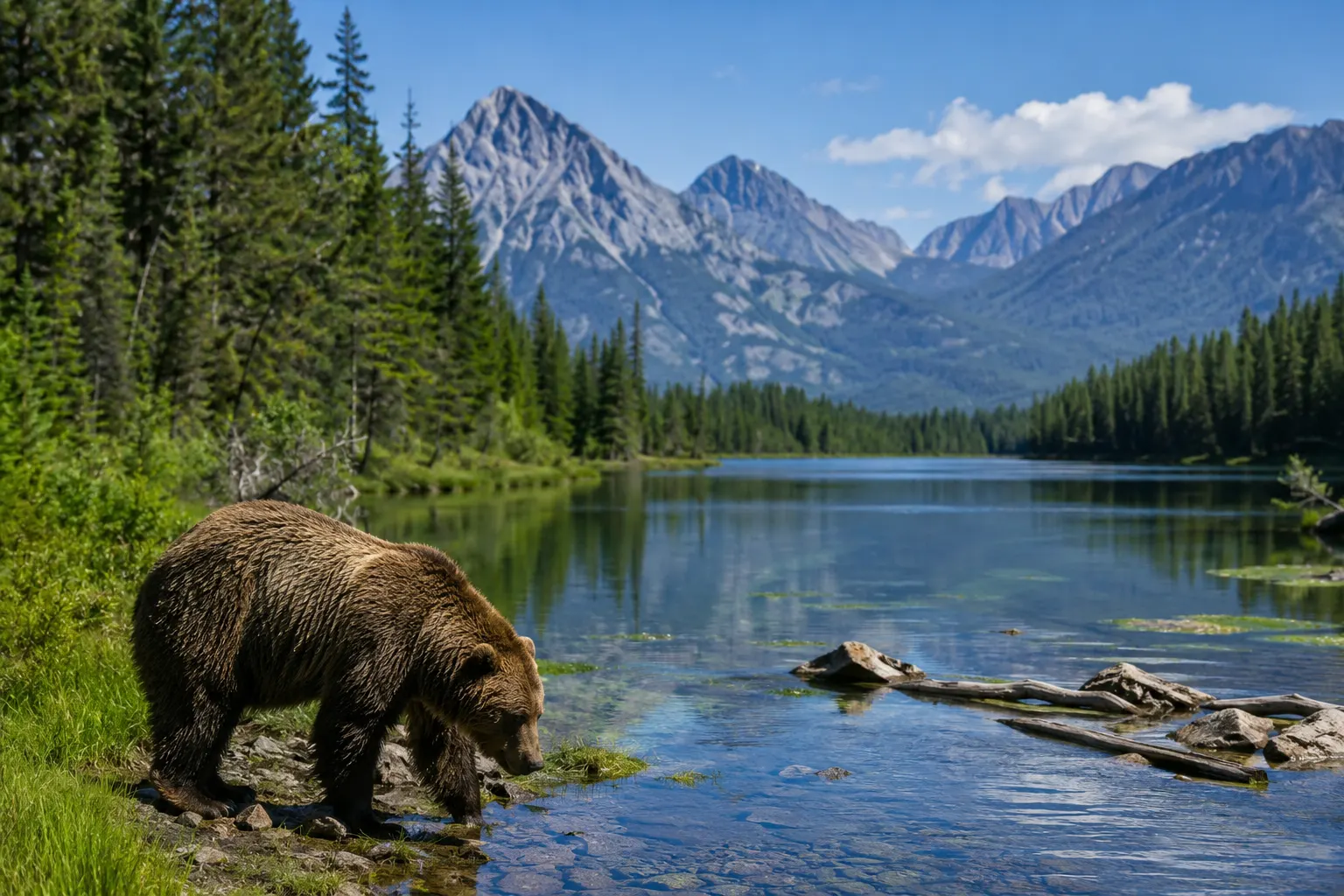
Conservation is bigger than rescuing rare animals
The public face of wildlife conservation is often an endangered tiger, rhino, elephant, whale or bird. Those species can be important conservation priorities, but the underlying task is broader. Wildlife conservation seeks to maintain viable wild populations, the habitats they depend on and the ecological processes that connect species to one another. A population kept alive only through perpetual emergency intervention is not the same as a functioning wild population embedded in a resilient ecosystem.
Biodiversity is part of Earth's life-support system
The Convention on Biological Diversity treats conservation as one of three central objectives alongside sustainable use and the fair and equitable sharing of benefits from genetic resources. Its framework recognises biological diversity at genetic, species and ecosystem levels. Wildlife therefore matters not simply because individual species have aesthetic or cultural value, but because living organisms participate in pollination, seed dispersal, predation, nutrient cycling, soil formation and food webs that help ecosystems function.
Conserving wildlife also preserves ecological relationships
Species do not exist independently. Predators influence prey behaviour and abundance. Herbivores shape vegetation. Pollinators enable reproduction in flowering plants. Scavengers process carcasses. Seed dispersers move plants across landscapes. When populations decline severely, these interactions can disappear from ecosystems before the species becomes globally extinct. Conservation therefore aims to maintain ecological function as well as prevent the last individual from dying.
Genetic diversity is part of conservation
A species can survive numerically while losing genetic diversity. Small, isolated populations may become more vulnerable to inbreeding, disease and environmental change. Maintaining multiple connected populations can preserve a wider range of genetic variation and give species more capacity to adapt. This is why habitat corridors, landscape connectivity and the protection of several populations may matter even when one protected site appears to contain enough individuals in the short term.
Protected areas are important - but design and governance matter
The Convention on Biological Diversity calls on countries to establish protected-area systems, manage biological resources important for conservation, protect ecosystems and natural habitats, maintain viable populations and restore degraded ecosystems. The newer Kunming-Montreal Global Biodiversity Framework goes further by setting a 2030 target to effectively conserve and manage at least 30% of terrestrial, inland-water, coastal and marine areas, especially places important for biodiversity and ecosystem functions.
Thirty percent is not simply a map-colouring exercise
The wording of the global target matters. It calls for areas that are ecologically representative, well connected and equitably governed, and recognises Indigenous and traditional territories where applicable. A protected area that exists only on paper, excludes local rights without effective management or protects isolated fragments while ecological decline continues around them cannot be assumed to deliver the same result as a functioning conservation network.
Modern conservation includes people
Older conservation models sometimes treated human presence as inherently incompatible with nature. Modern international frameworks are more nuanced. The CBD explicitly recognises sustainable use as a conservation objective and protects customary uses compatible with conservation. Its 2030 framework also emphasises the rights, knowledge and participation of Indigenous peoples and local communities. This reflects a practical reality: many high-biodiversity landscapes are lived-in landscapes, and durable conservation often depends on local institutions and incentives.
Sustainable use can be part of conservation
Wild species support food, materials, medicine, livelihoods, recreation and cultural practices around the world. The 2022 IPBES Sustainable Use Assessment treats fishing, gathering, logging, terrestrial animal harvesting and other uses as practices that can be sustainable or unsustainable depending on ecological limits and governance. Conservation therefore does not automatically require eliminating all use. The critical question is whether use causes long-term decline and whether benefits and decision-making are managed fairly.
Species recovery requires addressing causes
When a species becomes threatened, conservation may need to become more targeted. Measures can include removing invasive predators, reducing bycatch, controlling hunting, restoring breeding sites, reconnecting habitat, managing disease or establishing captive populations as insurance. But recovery plans are most effective when they address the processes driving extinction risk. Breeding more individuals cannot compensate indefinitely for a habitat that continues to disappear.
Why conservation matters economically without reducing nature to money
Human economies depend on functioning ecosystems even when those dependencies are poorly priced. Fisheries depend on productive food webs and nursery habitats. Agriculture relies partly on pollination, soils, water regulation and genetic resources. Forests, wetlands and coastal ecosystems can contribute to climate regulation and disaster-risk reduction. Recognising these benefits can strengthen conservation policy, but economic value is not the only argument: species and ecosystems also have cultural, scientific, ethical and intrinsic significance.
Wildlife conservation can reduce future risk
Healthy ecosystems can make landscapes more resilient to disturbance. Mangroves can reduce coastal wave energy, wetlands can store water, predators can influence food-web balance and diverse ecosystems may retain more functional options when conditions change. Conservation cannot prevent every flood, drought, disease outbreak or climate impact, but ecological degradation often removes natural buffers and leaves human communities with fewer options.
Conservation involves trade-offs
Not every conservation decision creates winners everywhere. Protecting predators can generate conflict with livestock owners. Restricting fishing can impose short-term costs on coastal communities. Expanding protected areas can create disputes over land and access. Those conflicts do not make conservation unnecessary; they make governance central. Compensation, participation, locally appropriate rules, alternative livelihoods and transparent decision-making can determine whether conservation is perceived as legitimate or imposed.
Success is possible, but it must be measured carefully
Species have recovered when major threats were reduced, and IUCN assessments can record genuine improvements in extinction risk. Yet counting a rising population at one site may not capture the full picture. Long-term conservation asks whether populations are viable, habitats remain functional, threats are controlled and ecological relationships can persist without constant crisis management. The objective is not simply more animals next year; it is durable coexistence over generations.
In-situ and ex-situ conservation solve different problems
Most conservation aims to keep species functioning in their natural ecosystems - what the Convention on Biological Diversity calls in-situ conservation. Protected habitats, sustainable management and recovery of wild populations belong to this approach. Ex-situ conservation takes organisms or genetic material outside the natural setting through zoos, botanical gardens, seed banks, tissue collections or captive-breeding programmes. These tools can provide insurance for critically small populations, but they preserve only part of what is lost when an ecosystem disappears. A species maintained in captivity no longer performs its full ecological role in the wild, so ex-situ measures are usually complements to habitat conservation rather than substitutes for it.
Monitoring is what separates conservation from good intentions
A protected area or recovery programme can look successful on paper while wildlife continues to decline. Effective conservation therefore depends on monitoring population trends, habitat condition, threats and management outcomes. Camera traps, acoustic sensors, genetic sampling, satellite imagery, mark-recapture studies and community observations can all contribute, depending on the species and landscape. The objective is adaptive management: if evidence shows that a measure is failing, rules and interventions should change. Conservation becomes more credible when success is defined by measurable ecological outcomes rather than by the number of projects announced or hectares nominally designated.
Connectivity matters in a changing climate
A reserve can protect habitat today but still become unsuitable tomorrow as temperature, rainfall or fire regimes shift. Connected landscapes allow species to move between breeding areas, track changing conditions and recolonise places after local losses. This is why modern conservation planning increasingly thinks in networks rather than isolated islands of protected land. Corridors are not universally beneficial and must be designed for particular species and risks, but the general principle is important: persistence often depends on movement across wider landscapes, not only on the quality of one protected patch.
Human-wildlife coexistence is part of conservation policy
As wildlife populations recover or human settlement expands, encounters can increase. Elephants may damage crops, predators may kill livestock and large animals can create direct safety risks. Ignoring those costs can undermine public support for conservation. Coexistence strategies therefore include early-warning systems, livestock protection, crop barriers, compensation or insurance, land-use planning and community participation. The goal is not to pretend conflict can disappear completely. It is to distribute the costs of conservation more fairly and reduce incentives for retaliatory killing, so that wildlife recovery is socially durable as well as biologically possible.
Conservation is ultimately about maintaining options
Every extinction closes an evolutionary branch permanently. Every destroyed habitat narrows the range of ecological responses available to future change. Wildlife conservation keeps more of those options open - for ecosystems, for human societies and for generations that will inherit environmental conditions we cannot fully predict. Protecting wildlife is therefore not a luxury added after development. It is part of managing the biological systems within which development itself takes place.
Sources / Further Reading
Convention on Biological Diversity - Convention text and objectives
Convention on Biological Diversity - Article 8: In-situ Conservation
Convention on Biological Diversity - Article 10: Sustainable Use
CBD - Kunming-Montreal Global Biodiversity Framework
IPBES - Sustainable Use of Wild Species Assessment
Suggested Internal Links
Understanding Biodiversity Loss - Planned internal link
What Is an Endangered Species - Planned internal link
Understanding Human Wildlife Conflict - Planned internal link
Understanding Protected Areas - Planned internal link
Understanding Ecosystem Services - Planned internal link
Understanding the Illegal Wildlife Trade - Planned internal link
What Are Keystone Species - Planned internal link