Lithium, cobalt and rare earths were once specialist words used by geologists, engineers and commodity traders. Today they belong to foreign policy. They are inside batteries, electric vehicles, wind turbines, smartphones, missiles, satellites, motors and advanced electronics. The world is discovering that the energy transition and the technology race depend on materials most citizens never see.
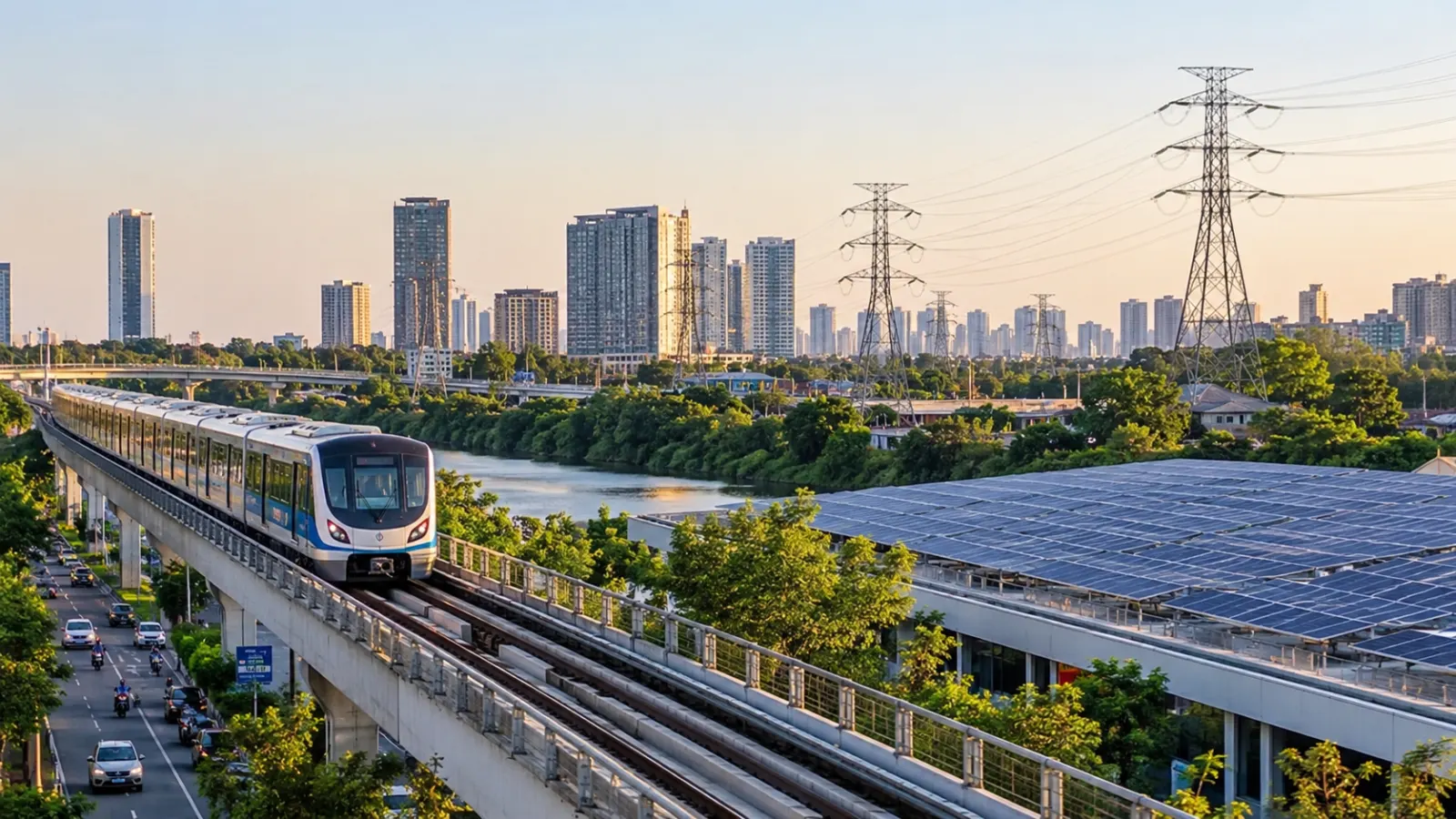
The current trigger is the convergence of three transitions: electrification, digitalisation and militarisation of technology. Electric vehicles need batteries. Renewable grids need storage and copper-heavy transmission. Wind turbines and electric motors need rare earth magnets. Defence systems need advanced materials. As demand rises, minerals become strategic resources. They are no longer just commodities; they are instruments of power.
Lithium is central to many battery chemistries. Cobalt improves performance and stability in several battery types, though companies are trying to reduce dependence on it. Rare earth elements are essential for permanent magnets used in motors, turbines and defence technologies. Graphite, nickel, manganese and copper are also crucial. The mineral story is therefore wider than any single element. But lithium, cobalt and rare earths capture the strategic logic of the age.
The first analytical dimension is supply concentration. Lithium resources are heavily associated with countries such as Australia, Chile and Argentina. Cobalt mining is concentrated in the Democratic Republic of Congo. Rare earth processing is dominated by China. Even when extraction is geographically spread, refining and processing can be highly concentrated. This creates chokepoints. A country may have mineral reserves, but without processing it does not control the usable supply chain.
The second dimension is China's advantage. China spent decades building processing capacity, industrial policy, magnet manufacturing and battery supply chains. It is not dominant by accident. It built scale before others recognised the strategic value. This gives China leverage in moments of tension. Export controls on minerals or processing technologies can affect global manufacturers. For countries like India, the lesson is that industrial ecosystems take time. They cannot be improvised during crisis.
The third dimension is ethical sourcing. Cobalt mining in parts of Central Africa has been associated with labour abuses, unsafe conditions and governance challenges. Rare earth processing can create environmental damage. Lithium extraction can raise water concerns in fragile ecosystems. The green transition cannot be morally credible if it depends on dirty or exploitative supply chains. This is why traceability and responsible sourcing will become strategic requirements, not public relations options.
The fourth dimension is technological substitution. Battery chemistry is evolving. LFP batteries reduce dependence on nickel and cobalt. Sodium-ion technology could reduce pressure on lithium in some use cases. Recycling can recover materials. Motor designs may reduce rare earth intensity. But substitution does not eliminate the strategic issue. It changes which materials matter and how quickly. Countries must invest in technology flexibility.
The India angle is decisive. India wants to become a manufacturing power in electric vehicles, batteries, electronics, defence and renewable energy. Without mineral security, these ambitions remain vulnerable. India's domestic discoveries and exploration efforts are important, but the country cannot rely only on what lies underground at home. It needs overseas acquisition, refining, recycling, research and strategic partnerships.
India's National Critical Mineral Mission is therefore a necessary step. It aims to build self-reliance through exploration, domestic production, overseas mineral assets, recycling and value-chain development. But success will require execution discipline. Exploration must become faster. Environmental approvals must be credible but not endlessly delayed. Private capital must be attracted. Public-sector agencies must coordinate with industry. Universities and labs must support materials science. Diplomats must think like supply-chain strategists.
The global implications are far-reaching. Mineral security will shape alliances. Australia, Canada, Chile, Argentina, Indonesia, African producers, Japan, the EU, the US and India will all become part of new resource diplomacy. Trade agreements may include mineral chapters. Development finance may support processing plants. Strategic stockpiles may return. Export controls may become the mineral equivalent of sanctions.
For the Global South, this is also a bargaining opportunity. Mineral-rich countries should not remain at the bottom of the value chain. They can demand refining, battery manufacturing, training, infrastructure and fairer contracts. But they must also avoid repeating oil-era mistakes: corruption, environmental harm, overdependence and elite capture. The resource curse can return in green clothing.
The counter-view is that strategic anxiety may lead to inefficient policy. Governments may subsidise uneconomic mines, duplicate capacity or hoard minerals unnecessarily. Markets, if allowed to function, can respond to price signals. This warning is valid. But pure market logic ignores geopolitical disruption. A balanced strategy should avoid panic buying and protectionist waste while still building resilience.
India's opportunity lies in combining scale with credibility. It has a large domestic market for EVs, renewables and electronics. It has engineering capability, public-sector experience and growing diplomatic reach. If it builds mineral partnerships with trust and transparency, it can become a serious player. But if it delays, it will import the future from other countries.
What happens next will depend on three variables. First, whether mineral prices stabilise enough to support investment. Second, whether China uses export controls more frequently. Third, whether countries can build responsible supply chains without making clean technologies unaffordable. The next decade will decide whether the mineral race produces cooperation or a new dependency map.
The editorial conclusion is simple: lithium, cobalt and rare earths are not buried in the ground alone. They are buried inside the future balance of power. Countries that control the chain from mine to magnet to machine will shape the clean energy and technology order. India must enter that race with urgency, but also with intelligence.
Rare earths are especially misunderstood. They are not always geologically rare, but they are difficult and often environmentally challenging to separate and process. The strategic bottleneck is not only mining; it is separation, metallisation, alloying and magnet production. China's strength lies in this industrial depth. Any country trying to diversify rare earth supply must build the entire chain, not merely identify deposits.
Lithium has its own complexity. Brine extraction, hard-rock mining and clay-based resources have different economics and environmental impacts. Battery-grade lithium chemicals require refining precision. Price volatility can be extreme. When prices rise, governments fear scarcity. When prices fall, investors abandon projects. India must avoid entering the market only at peaks and losing patience during downturns. Strategic minerals require long time horizons.
Cobalt raises the strongest ethical questions. The Democratic Republic of Congo is central to global cobalt supply, but governance and labour concerns have made sourcing politically sensitive. Battery makers are reducing cobalt intensity partly for cost and partly for ethics. Yet cobalt will not disappear immediately. India must ensure that its supply chains meet responsible sourcing standards, or its products may face scrutiny in advanced markets.
The connection with manufacturing is direct. India wants to build EVs, battery cells, electronics and renewable equipment. If it lacks mineral inputs, factories become assembly points dependent on imported components. True manufacturing power requires control over materials, design, processing and components. Minerals are therefore the upstream foundation of Make in India.
India should also integrate mineral policy with research policy. Universities, national labs and private R&D centres must work on battery chemistry, magnet alternatives, recycling, material efficiency and extraction technology. Strategic autonomy is not achieved only through mines; it is achieved through knowledge. A country that innovates can reduce dependence even when it lacks certain resources.
There is a geopolitical finance challenge. Mineral projects in Latin America, Africa and Australia require large capital, patience and risk appetite. Indian firms are often cautious abroad. The government can support them with credit guarantees, diplomatic risk assessment and partnerships with trusted countries such as Australia, Japan and the US. But commercial discipline is essential. Strategic projects must still be economically sound.
Stockpiling may become necessary for selected materials. India maintains petroleum reserves because oil disruptions can damage the economy. A similar logic may apply to certain critical minerals used in defence, electronics and energy. Stockpiles should be targeted, transparent and periodically reviewed. Hoarding everything is wasteful; securing the most vulnerable inputs is prudent.
The social narrative around mining also needs care. Citizens may support clean energy but oppose mines near their communities. This is not hypocrisy; it is the reality of local costs. India must build a compact where local communities receive visible benefits from strategic mining: roads, schools, health facilities, jobs, royalties and environmental protection. Without local legitimacy, critical mineral projects can become conflict zones.
Global competition could also produce new dependencies. If Western countries secure minerals only from allies and China restricts exports to rivals, the world may fragment into mineral blocs. This would raise costs and slow the transition. India should support diversified but open supply chains. It should avoid being trapped in any single bloc while still building trusted partnerships.
The final strategic point is resilience. India does not need to dominate every mineral. It needs enough diversity, processing capacity, recycling and technology flexibility to survive shocks. The old energy order was about securing oil tankers and refineries. The new order is about securing mines, chemicals, magnets, batteries, data and standards. Lithium, cobalt and rare earths are the vocabulary of that new order.
India's rare earth conversation should also include permanent magnets. Rare earth oxides alone do not power motors. They must be converted into high-performance magnets used in EVs, wind turbines, robotics, electronics and defence systems. The manufacturing know-how is specialised. India's policy push for rare earth permanent magnets is therefore strategically important because it targets a downstream bottleneck.
Battery supply chains require similar depth. Cell manufacturing is not enough if cathode, anode, electrolyte and separator supply chains remain externally dependent. India should identify which parts of the battery chain it can realistically localise and where it should rely on trusted imports. Strategic clarity is better than broad slogans.
Trade policy must be calibrated. High tariffs may encourage local production, but they can also raise costs for EVs and slow adoption. Excessive dependence on imports is risky, but excessive protection can create inefficient domestic champions. India needs phased localisation, not abrupt isolation. The objective should be competitive resilience.
Critical minerals also connect to circular economy law. Battery passports, product labelling, recycling mandates and recovery standards will become common globally. India should align early with emerging standards so its products can move across markets. A domestic recycling industry built to global norms can become an export service in the future.
Another strategic issue is skills. Mining engineers, metallurgists, chemical engineers, battery scientists, environmental auditors and mineral economists will be needed. India should create specialised programmes in universities and technical institutes. Human capital is a supply-chain asset. Without skilled people, even good policy will underperform.
India should also build public-private coordination forums for minerals. Industry knows demand trends; government understands diplomacy and regulation; researchers understand technology. A permanent critical minerals council with real authority could reduce fragmentation. It should publish periodic risk assessments and update strategic priorities as technologies change.
The defence sector should create its own vulnerability map. Which platforms depend on rare earth magnets? Which electronics require imported specialty materials? Which inputs are sourced from potentially hostile supply chains? Without this mapping, strategic autonomy remains rhetorical. A minerals lens should be applied to defence procurement.
There is also an opportunity for India in services around minerals: exploration technology, satellite mapping, mine planning software, environmental auditing and supply-chain traceability platforms. India does not have to be only a buyer or miner. It can provide knowledge services to mineral-rich countries, strengthening partnerships and creating business opportunities.
The international order around minerals will be shaped by trust. Producers fear exploitation. Consumers fear disruption. Processors fear environmental regulation. Communities fear displacement. A successful mineral strategy must address all four fears. India can build a distinctive model if it combines development partnership with responsible sourcing and industrial ambition.
The conclusion is that lithium, cobalt and rare earths are strategic because they sit at the intersection of climate, technology and security. They will decide who manufactures the future and who imports it. India still has time to build capacity, but the window is not unlimited. In critical minerals, delay is dependence in slow motion.
India should prioritise which minerals are most critical for its specific development path. The list for a battery-heavy EV strategy may differ from the list for defence electronics, wind turbines or semiconductor equipment. A generic list of critical minerals is useful, but prioritisation must be dynamic. The country should update its list as technologies, prices and geopolitical risks change.
The environmental regulator also needs capacity. Critical mineral projects can be delayed by weak assessment processes, but they can also cause damage if approvals are careless. India needs faster and better regulation, not simply faster clearance. Scientific assessment, community consultation and post-approval monitoring should improve together. This will reduce litigation and build legitimacy.
Strategic partnerships with resource-rich democracies can help, but India should not ignore the Global South. Latin America and Africa will be central to lithium, cobalt, copper and other minerals. India's development-friendly image gives it an opening. It should offer partnerships that include local processing, training and infrastructure so that producer countries see India as different from extractive powers.
The private sector must become more ambitious. Indian companies often enter strategic resources cautiously. But the mineral race rewards early movers. Government can reduce risk, but industry must build capability. Without corporate appetite, national missions remain paper strategies.
The final insight is that these minerals are not merely inputs for green products. They are inputs for geopolitical autonomy. A country that cannot access them reliably will depend on those who can. India's future as a manufacturing and strategic power will be shaped partly by how seriously it treats the minerals beneath that future.
India's policy conversation must therefore move from discovery headlines to value-chain seriousness. A lithium reserve is not a battery industry. A rare earth deposit is not a magnet industry. A cobalt supply agreement is not ethical security. Each step requires technology, finance, regulation and market design. The countries that understand this chain will shape the future; those that celebrate only the mine will remain dependent.
The strategic opportunity is still open. India has demand, diplomatic reach, scientific talent and a growing clean-energy market. What it needs is coordination. Critical minerals must become a national mission in practice, not merely in name.
The political economy of these resources will also shape state policy within India. Mineral-bearing states will demand revenue, jobs and infrastructure. Manufacturing states will demand stable inputs. Environmental groups will demand safeguards. Consumers will demand affordable EVs and electronics. A national strategy must reconcile these interests rather than privileging only one. Critical minerals are therefore a federal, industrial and diplomatic challenge at the same time.
If handled well, they can support a new manufacturing base. If handled poorly, they can become another import dependence hidden inside green ambition.
The strategic clock is already running, and India must treat time itself as a resource.
The next decade will decide who controls the industrial spine of the green economy.
India must move before global supply chains settle around other powers.