Diversity Is a Description Before It Is a Value
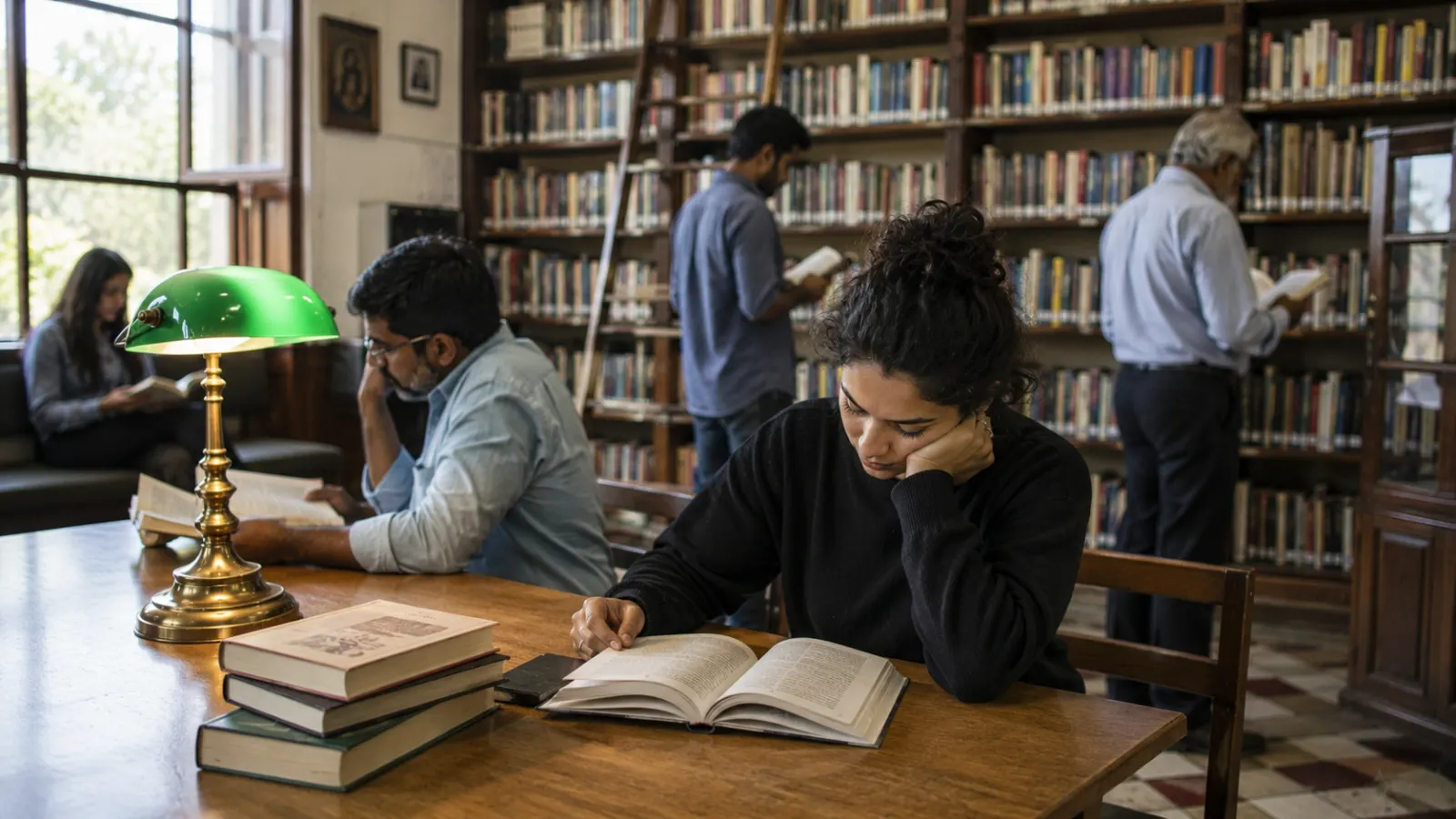
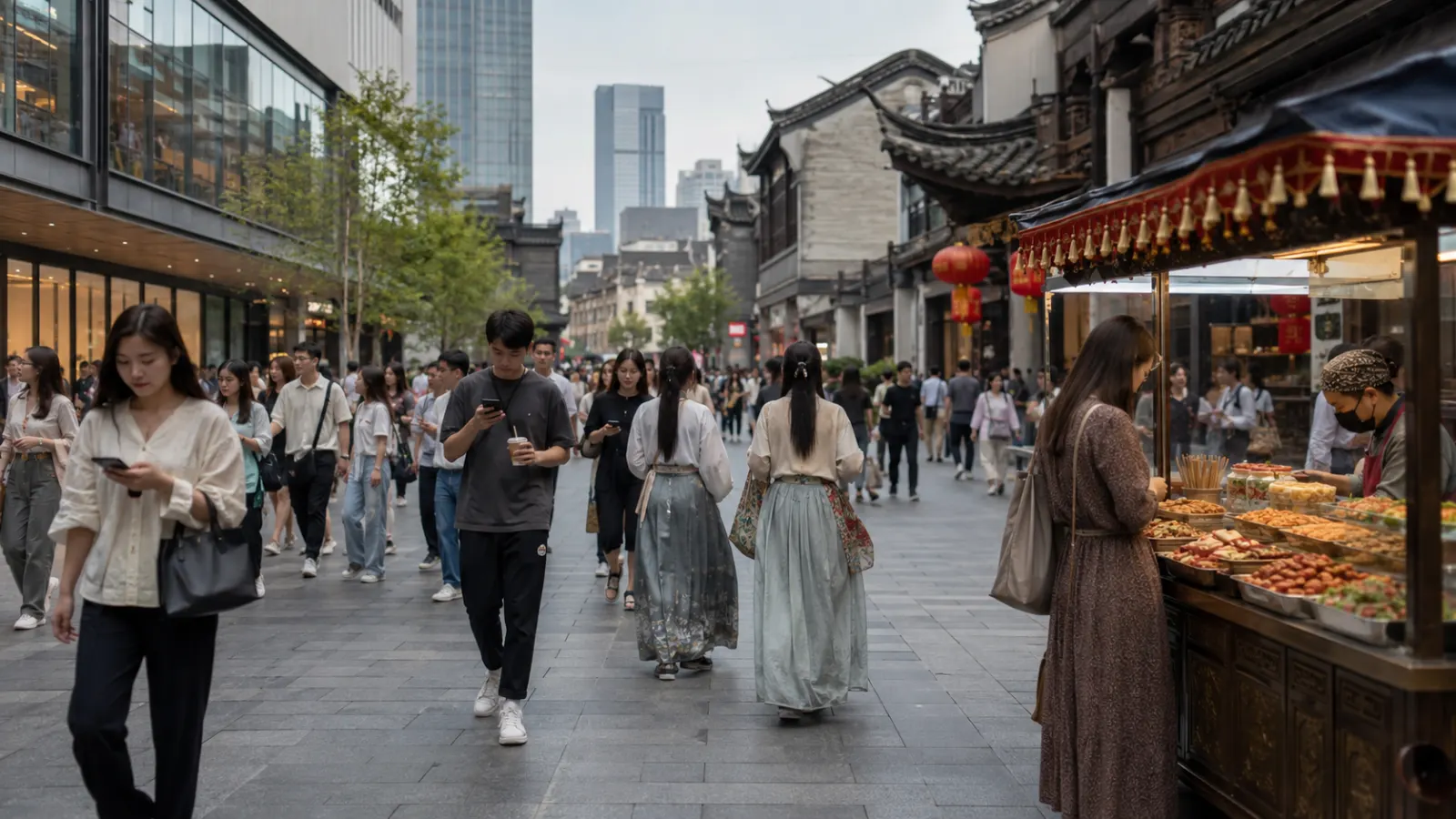
Diversity means variation within a group or society.
The differences may involve culture, language, religion, ethnicity, gender, age, disability, education, profession, class or life experience.
Calling a society diverse does not tell us whether those differences are respected or whether power is shared fairly.
Why Cultural Diversity Matters
UNESCO's Universal Declaration on Cultural Diversity treats cultural diversity as part of humanity's common heritage.
The basic argument is that multiple cultural traditions preserve different forms of expression, memory and knowledge.
Diversity Preserves Cultural Choice
A society with only one dominant language, aesthetic or way of life offers fewer cultural options.
Diversity allows people to inherit, combine or choose among multiple traditions.
It Makes Representation More Accurate
Institutions make decisions about populations they serve.
If decision-makers come from a narrow slice of society, some experiences may remain invisible.
Representation does not guarantee perfect decisions, but it can widen the range of problems that receive attention.
Different Perspectives Can Reveal Blind Spots
People notice different risks because they have different knowledge and experience.
A transport plan may look efficient until someone with mobility limitations tests it. A health campaign may fail because it ignores language. A workplace policy may assume one family structure.
Diversity can therefore function as a source of error detection.
Diversity and Performance Are Not the Same Claim
It is common to say diverse teams always perform better. Research is more complicated.
Reviews of work-group diversity find both positive and negative effects depending on the kind of diversity, the task and group processes.
Difference can provide information while also increasing misunderstanding or conflict.
Inclusion Determines Whether Diversity Is Usable
A team can be demographically diverse while only a few members are taken seriously.
Inclusion concerns participation, voice and access to decision-making.
Without it, diversity can become symbolic representation.
Psychological Safety Matters
People need enough interpersonal safety to raise dissenting information, admit uncertainty and challenge assumptions.
If minority members expect punishment for disagreement, their different perspective may never enter the discussion.
Diversity Can Improve Scrutiny
Some experimental research suggests that social diversity can make group members process information more carefully because they anticipate disagreement.
The possible advantage comes partly from friction, not comfort.
Difference Can Also Create Coordination Costs
Groups with different languages, norms or professional vocabularies may require more effort to communicate.
Those costs are real. The relevant question is whether institutions build processes that allow the informational benefits to outweigh the coordination burden.
Diversity Matters for Legitimacy
A public institution that never reflects the population it governs may struggle to be seen as equally open to everyone.
Representation can signal that leadership and citizenship are not reserved for one social category.
Cultural Diversity Supports Creative Expression
Artists, musicians, filmmakers and writers draw on multiple traditions.
Cultural exchange can produce new forms precisely because creators do not all inherit the same repertoire.
Diversity Supports Language and Knowledge
Languages encode literature, oral history and ways of classifying the world.
When languages disappear, some knowledge may become harder to transmit.
Cultural diversity therefore has an archival dimension.
Education Benefits From Encountering Difference
Students who encounter multiple histories and viewpoints learn that social questions can be interpreted differently.
This does not mean every viewpoint is equally supported by evidence. Diversity of perspective still requires critical evaluation.
Diversity Can Challenge Stereotypes
Regular contact with people who do not fit a simplified category can make stereotypes harder to maintain.
Contact works best under conditions of relative equality and shared goals; mere proximity is not enough.
Diversity Can Increase Social Tension Too
Rapid demographic change can create competition, uncertainty or political mobilisation around identity.
Treating all tension as irrational prejudice misses questions of housing, jobs and public services.
Good policy addresses material pressures while resisting scapegoating.
Human Rights Set Limits
Respect for diversity does not require accepting every practice.
UNESCO explicitly states that cultural diversity cannot be invoked to infringe internationally recognised human rights.
Diversity Is Not the Same as Fragmentation
People can maintain different identities while sharing law, institutions and civic responsibilities.
Pluralism requires enough common ground for disagreement to remain political rather than violent.
Diversity Matters for Democratic Voice
Democracy assumes that people affected by decisions can participate in shaping them.
When entire communities are persistently absent from representative institutions, formal equality can coexist with practical exclusion.
Diversity Protects Against One-Story Institutions
Organisations often develop an internal story about what a normal employee, student, family or citizen looks like.
A wider range of participants makes those hidden assumptions easier to see.
Cultural Diversity Is a Form of Social Memory
Different communities preserve different histories of migration, labour, conflict, faith and place.
A society that loses those traditions loses part of the record through which it understands itself.
Diversity Expands the Range of Future Possibilities
Different languages, techniques and cultural practices provide alternatives that may become useful under new conditions.
The value is similar to maintaining a broad repertoire rather than relying on one solution for every problem.
Representation Can Change What Questions Are Asked
Decision quality depends partly on which problems enter the agenda.
People with different experiences may identify barriers that others never encounter and therefore never think to investigate.
Diversity Without Inclusion Can Increase Cynicism
Visible representation raises expectations of voice.
If people are recruited but ignored, diversity initiatives can appear symbolic and reduce trust rather than increase it.
Inclusion Requires Fair Process
People need transparent access to information, opportunity and decision-making.
Informal networks can reproduce exclusion even when formal rules look neutral.
Diversity Can Strengthen Resilience
Systems with several sources of knowledge and several ways of solving problems are less dependent on one perspective.
This does not mean every diverse institution is resilient, but variation can provide options when familiar approaches fail.
The Ethical Case Is Independent of the Business Case
A person should not need to prove that their presence increases productivity in order to deserve equal opportunity.
Fairness, dignity and non-discrimination are sufficient reasons for inclusion even when performance effects are uncertain.
Diversity Can Be Misused as Branding
Organisations sometimes display diverse faces in advertising while leadership and power remain unchanged.
Meaningful diversity concerns participation and influence, not only appearance.
Difference Requires Shared Rules
Respecting diversity does not mean every group operates under separate law.
Plural societies need common protections for rights, due process and peaceful disagreement.
Dialogue Converts Difference Into Relationship
UNESCO repeatedly links cultural diversity with dialogue because difference alone can remain distant or suspicious.
Interaction allows people to learn where differences are real, where stereotypes are false and where shared interests exist.
Diversity Helps Institutions Learn From More Than One Experience
Policies built around the average user often fail people at the edges.
A broader participant base gives institutions more direct evidence about how rules work in practice.
Diversity Can Broaden Cultural Markets
Different audiences create demand for books, films, food, media and services that a homogeneous market might ignore.
This can support cultural production that would otherwise remain invisible.
Diversity Does Not Mean Every Difference Is Equally Relevant
The value of a perspective depends on the problem being solved.
Good institutions avoid both tokenism and the opposite mistake of pretending background never matters.
Diversity Can Protect Institutions From Overconfidence
When everyone has similar training and social experience, consensus can feel like proof even when the group shares the same blind spot.
Different perspectives can make certainty harder—and sometimes more accurate.
The Value of Diversity Is Often Long-Term
Immediate coordination may become harder while institutional learning improves over time.
This is why judging diversity only by short-term comfort can miss its wider contribution.
That contribution becomes strongest when institutions give people enough security and authority to disagree openly rather than rewarding only surface-level representation.
This is why the strongest case for diversity combines rights and practical design: widen participation, then build conditions in which different knowledge can genuinely influence outcomes.
Difference becomes a public resource only when people have the right, opportunity and institutional access to bring it into common decisions.
It also broadens the set of experiences institutions can learn from before mistakes become embedded.
Why Diversity Matters
Diversity matters because no single group contains all experience, knowledge or cultural possibility.
Its benefits, however, are conditional.
Difference becomes socially valuable when institutions provide equality, voice, interaction and rules that allow disagreement without exclusion.
The goal is not diversity as a photograph. It is diversity as meaningful participation.
Sources / Further Reading
• UNESCO — Universal Declaration on Cultural Diversity — https://www.unesco.org/en/legal-affairs/unesco-universal-declaration-cultural-diversity
• UNESCO — World Day for Cultural Diversity for Dialogue and Development — https://www.unesco.org/en/days/cultural-diversity-dialogue-development
• OECD — All Hands In? Making Diversity Work for All — https://www.oecd.org/en/publications/all-hands-in-making-diversity-work-for-all_efb14583-en.html
• Annual Review of Psychology — Work Group Diversity — https://www.annualreviews.org/doi/10.1146/annurev.psych.58.110405.085546
• PNAS — Ethnic diversity deflates price bubbles — https://www.pnas.org/doi/10.1073/pnas.1407301111
Suggested Internal Links
• Understanding the Strength in Differences — Article 70
• What Is Multiculturalism — Article 63
• Understanding Integration in Society — Article 68
• Pluralism in Society — Article 24