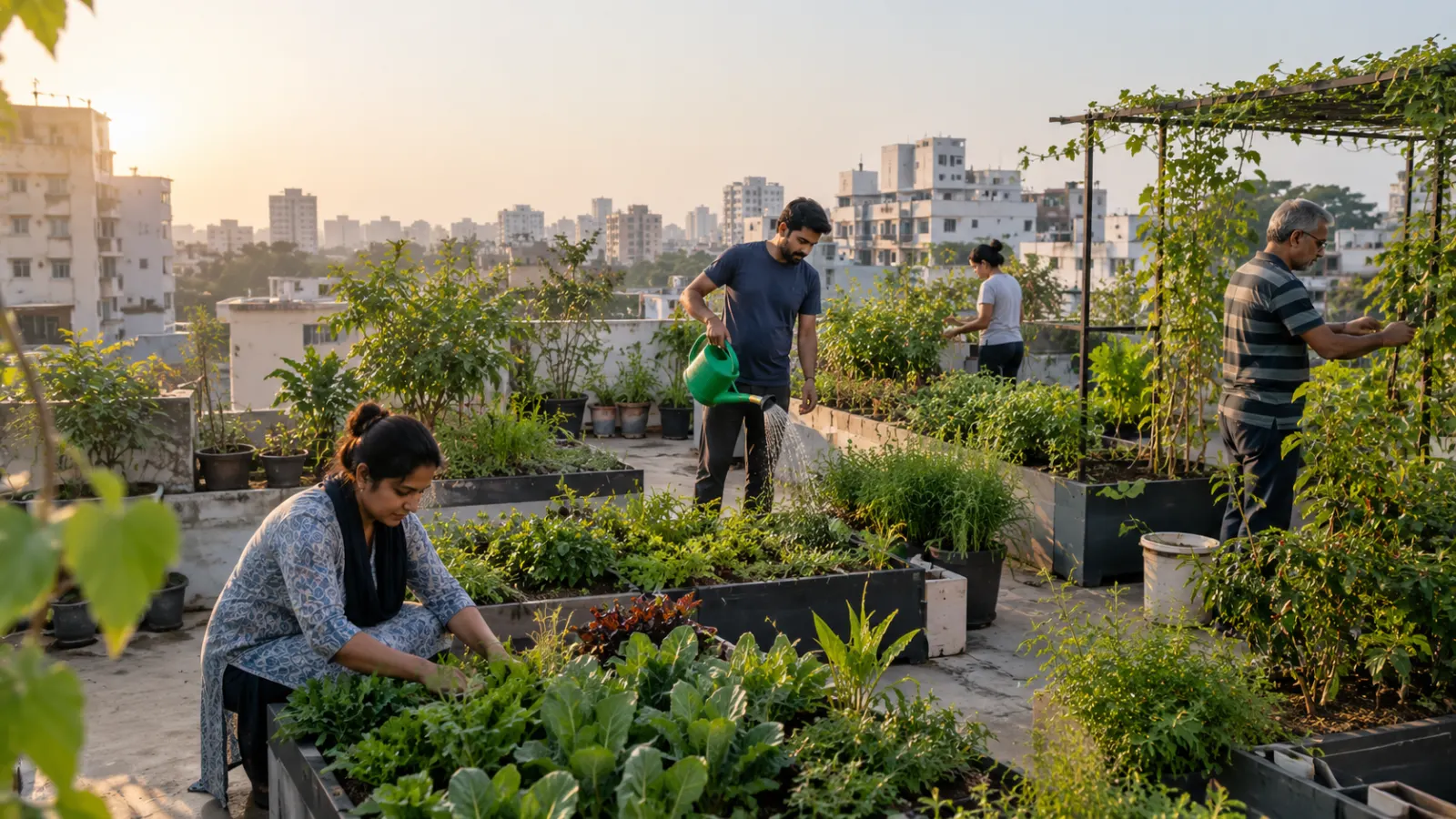
The modern food crisis does not begin only in a field. It may begin in an oil tanker, a gas pipeline, a fertiliser factory, a blocked port, a currency market, or a war room. This is the new strategic reality: food, fertiliser and fuel security have fused into one global challenge. When energy prices rise, fertiliser becomes expensive. When fertiliser becomes expensive, crop yields are threatened. When food prices rise, governments face inflation, unrest and pressure to restrict exports. A shock in one sector now travels quickly into the others.
Why It Matters Now
The world has already seen how fragile this chain can be. The Russia-Ukraine war affected grain, energy and fertiliser flows. Red Sea disruption increased shipping risk. Climate shocks have damaged harvests. The World Food Programme has warned of hundreds of millions facing acute hunger risk in 2026, while the Global Report on Food Crises showed that more than 295 million people across 53 countries and territories experienced acute hunger in 2024. These are not isolated humanitarian figures; they are indicators of a global system under stress.
Historical Context
For decades, globalisation encouraged countries to specialise and depend on international markets. Energy moved through tankers and pipelines, fertilisers were produced where gas was cheaper, grain flowed from export baskets to import-dependent regions, and food security was treated as an affordability question. That model worked when geopolitics was calm and shipping routes were stable. But once sanctions, wars, export bans, pandemic disruptions and climate extremes entered the system together, interdependence became vulnerability.
The First Strategic Dimension: Energy As the Input of Food
Food production is energy-intensive. Diesel powers tractors and transport; natural gas is a key input in nitrogen fertiliser; electricity is needed for irrigation, cold storage and processing. Therefore, fuel price spikes are not merely transport problems. They raise the cost of cultivation, storage and distribution. In poorer countries, this translates into higher food prices. In richer countries, it becomes inflation. In import-dependent states, it becomes a balance-of-payments problem.
The Second Dimension: Fertiliser As a Strategic Commodity
Fertiliser used to be treated as an agricultural input. It is now a strategic commodity. Nitrogen, phosphate and potash supply chains are geographically concentrated and exposed to sanctions, export controls and energy shocks. Farmers cannot always reduce fertiliser use without reducing output. Governments therefore face a harsh choice: subsidise farmers at fiscal cost, allow food prices to rise, or accept lower production. None of these choices is politically easy.
The Third Dimension: Export Restrictions and Food Nationalism
When global food prices rise, governments often protect domestic consumers by restricting exports. This may be politically rational at home but destabilising abroad. If major grain exporters restrict supply, importing countries face panic buying and price escalation. The lesson is clear: food security is not just about production. It is about trust in trade. When that trust breaks, every country tries to protect itself, and the collective result becomes worse.
India Angle
India sits at the centre of this debate because it is both a major producer and a highly sensitive consumer economy. It has large food stocks, a public distribution system, fertiliser subsidies, energy import dependence and a politically important farming sector. This gives India some resilience but also heavy fiscal exposure. A global fertiliser or oil shock can quickly affect the subsidy bill, inflation, rural incomes and the current account. For India, food security is not a welfare issue alone; it is macroeconomic stability.
Global Implications
The fusion of food, fertiliser and fuel security changes foreign policy. Countries will seek long-term energy contracts, fertiliser partnerships, grain reserves, port access, resilient shipping routes and climate adaptation finance. Agricultural diplomacy will become as important as defence diplomacy for many developing economies. The Global South will increasingly argue that food security cannot be separated from energy security, climate justice and fair financing.
Counter-view and Complexity
There is a counter-argument that global markets are more resilient than critics claim. Prices often stabilise after shocks, alternative suppliers emerge, and technology can improve efficiency. This is partly true. But resilience is uneven. Wealthy importers can outbid poorer ones. Countries with fiscal space can subsidise; fragile states cannot. The real issue is not whether markets function eventually, but who suffers while they adjust.
What Happens Next
Three risks need close attention. First, renewed disruption in oil, gas or shipping routes can again raise food costs. Second, climate shocks may hit multiple breadbaskets in the same year. Third, fertiliser affordability may remain a structural pressure for poorer farmers. India and other large developing countries will need more storage, diversified fertiliser sourcing, domestic production, energy transition planning and farmer-level efficiency.
Editorial Insight
The age of treating food, fertiliser and fuel as separate policy boxes is over. They now form one strategic triangle. A country that secures food without energy planning is vulnerable. A country that secures energy without fertiliser resilience is vulnerable. A country that ignores climate risk is vulnerable everywhere. The new measure of national security will include not only borders and weapons, but also whether citizens can afford food when the next global shock arrives.
Policy Choices for Governments
Governments need to stop treating food, fertiliser and fuel as ministries working in parallel. The policy response must be integrated. Energy ministries should model the food inflation effect of oil and gas shocks. Agriculture ministries should map fertiliser import dependence and soil-health alternatives. Finance ministries should estimate subsidy exposure before crises. Trade ministries should prepare rules for export restrictions that protect domestic consumers without creating unnecessary panic in world markets. India, for example, needs a strategic dashboard that tracks crude prices, fertiliser prices, monsoon conditions, grain stocks, shipping costs and currency movements together.
The Political Economy of Subsidies
Subsidies are often criticised as fiscal burdens, but in food and fertiliser systems they are also political shock absorbers. A sudden withdrawal can hurt farmers and consumers. Yet unlimited subsidies can weaken public finances and distort use. The challenge is smarter support: targeted benefits, efficient fertiliser use, direct income support where possible, and investment in alternatives such as nano-urea, organic inputs, green ammonia and precision agriculture. The aim should not be to romanticise self-sufficiency. It should be to reduce panic dependence on volatile imports.
Climate Stress and Food Systems
Climate change adds a structural layer to the crisis. Heat waves reduce wheat output, erratic rainfall affects sowing, floods damage crops, and droughts reduce hydropower and irrigation. Food security is therefore no longer only about seed, fertiliser and procurement. It depends on climate-resilient agriculture, storage, insurance, early-warning systems and water management. Countries that do not adapt agriculture will face recurring inflation and rural distress even if global trade remains open.
Global South Perspective
For the Global South, the food-fertiliser-fuel triangle is a justice issue. Rich countries can absorb price shocks through subsidies, strategic reserves and strong currencies. Poorer countries face debt stress, weaker currencies and social unrest. When fertiliser prices rise, a small farmer in Africa or South Asia may reduce usage, resulting in lower yields and deeper hunger next season. This delayed impact is often missed by markets, which focus on immediate commodity prices. Development diplomacy must therefore include fertiliser finance, climate adaptation and concessional energy support.
Corporate and Supply-Chain Response
Companies are also changing behaviour. Food processors, retailers and exporters are building inventory buffers, diversifying suppliers and paying closer attention to shipping routes. But corporate resilience can conflict with public resilience. When large buyers lock in supplies, smaller countries or firms may be priced out. This makes transparency and anti-hoarding regulation important during crises. A food system that is efficient in normal times can become unequal in emergency times.
Future Scenarios
The optimistic scenario is coordinated diversification: more fertiliser plants in vulnerable regions, better grain reserves, open trade and climate-resilient farming. The middle scenario is recurring price volatility managed by subsidies and export controls. The dangerous scenario is cascading disruption: energy shock, fertiliser shortage, climate-hit harvest and political unrest occurring together. That is the scenario governments must plan for, because it is exactly the type of compound crisis the current global order is producing.
Extended Analysis: The End of Cheap Assumptions
For years, many governments assumed that global markets would provide whatever was missing domestically. If a country lacked energy, it could import fuel. If it lacked fertiliser, it could buy from major producers. If it lacked grain, it could rely on international suppliers. That assumption is now weaker. Markets still matter, but they are increasingly interrupted by sanctions, export controls, shipping disruption, climate shocks and currency stress. The result is not the death of trade. It is the end of naive trade dependence. Governments must now ask a harder question: which imports are acceptable in normal times but dangerous during crisis? Food, fertiliser and fuel sit at the top of that list.
Extended Analysis: India's Fiscal Exposure
India's strength is that it has significant food production, procurement mechanisms and a public distribution system. Its vulnerability is that stabilising food and fertiliser prices can become fiscally expensive. Fertiliser subsidies rise when global input costs rise. Oil imports affect the current account and inflation. Food procurement and distribution require storage, transport and budgetary support. These systems protect citizens, but they also require disciplined management. A global price shock can therefore move quickly into fiscal arithmetic. Policymakers must prepare in advance rather than improvise during crisis.
Extended Analysis: Agriculture Productivity
Long-term resilience cannot come only from import substitution or subsidies. It must come from productivity. Soil health, water efficiency, crop diversification, cold chains, storage and market access are all part of food security. Overuse of certain fertilisers can damage soil balance, while underuse can reduce yields. The goal should be intelligent fertiliser use, not simply more fertiliser or less fertiliser. Digital soil cards, extension services, farmer education and localised nutrient planning can reduce waste and improve output. This is where technology meets food security at the village level.
Extended Analysis: Energy Transition and Farming
The energy transition can reduce vulnerability if it is designed well. Solar pumps, decentralised renewable power, bioenergy, green ammonia and efficient cold storage can reduce dependence on imported fuel and gas-based fertiliser. But transition also has risks. If clean-energy equipment is imported from concentrated supply chains, one dependency may replace another. Therefore, the food-fuel transition must be linked with domestic manufacturing, affordable finance and rural infrastructure. Clean energy should not remain an urban-industrial slogan; it must lower the cost of farming.
Extended Analysis: Export Controls as Political Insurance
Export restrictions are politically tempting because they produce an immediate signal that the government is protecting domestic consumers. But they can damage farmer incentives, hurt trade credibility and worsen global panic. India and other large producers need a transparent framework for when restrictions are used, how long they last and how vulnerable importing partners are treated. A country can protect its citizens while still acting responsibly in global markets. The key is predictability.
Extended Analysis: Food Security as Foreign Policy
Food diplomacy will become more important. Countries that can provide grain, fertiliser, storage technology, irrigation systems or climate-resilient seeds will gain influence. India has an opportunity here. Its experience with public distribution, digital identity, low-cost pharmaceuticals, millets and agricultural science can be shared with other developing countries. But food diplomacy must be backed by domestic stability. A country cannot be a reliable food partner abroad if it faces sudden export bans at home.
Extended Analysis: Social Stability
Food inflation has political consequences. It affects urban workers, rural consumers, school nutrition, health outcomes and public trust. In fragile states, food price spikes can contribute to unrest. Even in stable democracies, they shape elections and policy choices. This is why food-fertiliser-fuel security must be discussed in national security terms. Hunger weakens states from inside. Inflation erodes legitimacy. A government that cannot protect basic consumption during global shocks loses moral authority.
Closing Expansion
The fusion of food, fertiliser and fuel security is one of the clearest signs that the world has entered an age of compound risk. The solution is not isolation. No large economy can or should produce everything alone. The solution is resilient interdependence: diversified suppliers, strategic reserves, domestic capacity, transparent trade rules and climate-smart agriculture. The countries that build this system will manage shocks. Those that wait for markets to rescue them will discover that markets are least generous when everyone is afraid.
Deeper Editorial Lens
The deeper importance of Food, Fertiliser and Fuel Security Become Linked Global Challenges is that it shows how modern power no longer operates through one channel. Military choices, economic exposure, technology systems, climate stress, public opinion and institutional trust now overlap. A reader looking only for a headline will miss this complexity. The real story is not merely that food fertiliser fuel security is important; it is that it links separate policy worlds that governments previously managed in isolation. This is why the issue belongs in a serious editorial section rather than a short news brief.
Why the Issue Cannot Be Treated as Temporary
It is tempting to treat food fertiliser fuel security as a temporary crisis that will fade when the immediate trigger passes. That would be a mistake. The underlying drivers are structural: unequal power, fragile institutions, concentrated supply chains, climate pressure, technological dependence and geopolitical competition. Even if the current news cycle moves on, the conditions that produced the issue will remain. This means policy must move from reaction to preparedness. Governments, businesses and citizens should assume that similar shocks will recur in new forms.
The Institutional Test
Every major strategic issue eventually becomes an institutional test. Speeches can identify danger, but institutions decide whether a country can respond. In the case of food fertiliser fuel security, the relevant institutions include ministries, regulators, intelligence agencies, scientific bodies, local administrations, courts, businesses and international organisations. If these institutions do not share information, the response becomes fragmented. If they do not trust each other, the response becomes slow. If they lack expertise, the response becomes symbolic. The quality of institutions is therefore part of national power.
The Public Communication Challenge
Public communication around food fertiliser fuel security must avoid both complacency and panic. Complacency allows risk to grow quietly. Panic creates pressure for hasty decisions and exaggerated claims. A mature public conversation should explain what is known, what is uncertain, what is being monitored and what choices are available. This matters because strategic issues can be distorted by misinformation, partisan framing or emotional outrage. Citizens do not need to be frightened; they need to be informed well enough to understand trade-offs.
The India Lens
For India, the question is never only external. Every global issue eventually becomes domestic through prices, security planning, trade exposure, technology access, federal governance, public finance or citizen safety. The India angle in Food, Fertiliser and Fuel Security Become Linked Global Challenges should therefore be developed with specificity. What does it mean for Indian households, Indian firms, Indian farmers, Indian soldiers, Indian diplomats and Indian states? A strong article should connect the global map to Indian consequences without reducing the entire issue to nationalism.
The Global South Lens
The Global South often experiences strategic crises differently from powerful states. Wealthy countries may discuss principles, alliances and markets; poorer countries feel the same crisis through debt, inflation, food prices, migration, insecurity and aid cuts. food fertiliser fuel security should be analysed through this unequal exposure. A serious editorial must ask who pays the cost when global systems fail. Very often, the people least responsible for a crisis are the first to lose livelihoods, homes or political stability.
The Business and Market Lens
Markets respond quickly to risk, but they do not always distribute risk fairly. A crisis linked to food fertiliser fuel security can raise insurance costs, delay investment, change commodity prices, disrupt logistics, alter corporate strategy or create sudden winners and losers. Businesses may adapt by diversifying suppliers, building inventories, changing contracts or shifting production. But small firms and poorer consumers usually have fewer buffers. This is why economic resilience cannot be left only to private adjustment. Public policy must create shock absorbers.
The Ethical Dimension
There is also an ethical dimension. Strategy often speaks the language of interest, but public life also requires judgement about harm, responsibility and dignity. In climate, energy and resources, the people most affected are often not the people with the most power over decisions. A persuasive editorial should therefore ask not only what states want, but what their choices do to civilians, workers, future generations and vulnerable communities. Ethics does not weaken analysis; it makes analysis complete.
Final Reader Takeaway
The final takeaway is that Food, Fertiliser and Fuel Security Become Linked Global Challenges should be read as a warning about the kind of world now emerging. It is a world where geography still matters, but data matters too; where military power matters, but supply chains and finance also decide outcomes; where climate and conflict increasingly interact; and where India must build resilience before shocks arrive. The issue is not simply about today's crisis. It is about whether states can govern complexity without losing sight of human consequences.
Editorial Framing for Publication
For publication, Food, Fertiliser and Fuel Security Become Linked Global Challenges should be framed as a long-form explainer with an argument, not as a collection of facts. The argument should be clear from the beginning: food fertiliser fuel security is important because it reveals a structural change in global affairs, not merely a passing controversy. The article should move the reader from immediate trigger to historical background, from background to strategic dimensions, from strategic dimensions to India's stakes, and from India's stakes to future scenarios. This flow matters because serious readers need both clarity and depth. They should finish the piece understanding not only what happened, but why it matters, who is affected, what choices exist and what consequences may follow if leaders fail to act.
Final Strategic Warning
The final warning is that the world is entering an era in which crises compound rather than remain separate. A security issue can become a trade issue; a climate issue can become a migration issue; a technology issue can become a sovereignty issue. Food, Fertiliser and Fuel Security Become Linked Global Challenges belongs to this new pattern. India cannot afford a narrow reading of such developments. It must build knowledge systems, policy coordination, economic buffers and diplomatic options before pressure peaks. The countries that prepare early will shape outcomes. The countries that wait for certainty will respond only after the costs have already arrived.
Internal Links to Add
The Brahmaputra Question Adds a Strategic Layer to India-China Ties | Green Hydrogen Opens a New Front in Global Energy Competition | Loss and Damage Fund Tests the Morality of Climate Diplomacy | Climate Change Becomes a Core Foreign Policy Challenge
Source References to Verify / Cite
• World Food Programme, global hunger crisis: https://www.wfp.org/global-hunger-crisis
• Global Report on Food Crises 2025: https://www.fightfoodcrises.net/report/global-report-food-crises-2025/
• World Bank Food Security Update: https://www.worldbank.org/en/topic/agriculture/brief/food-security-update