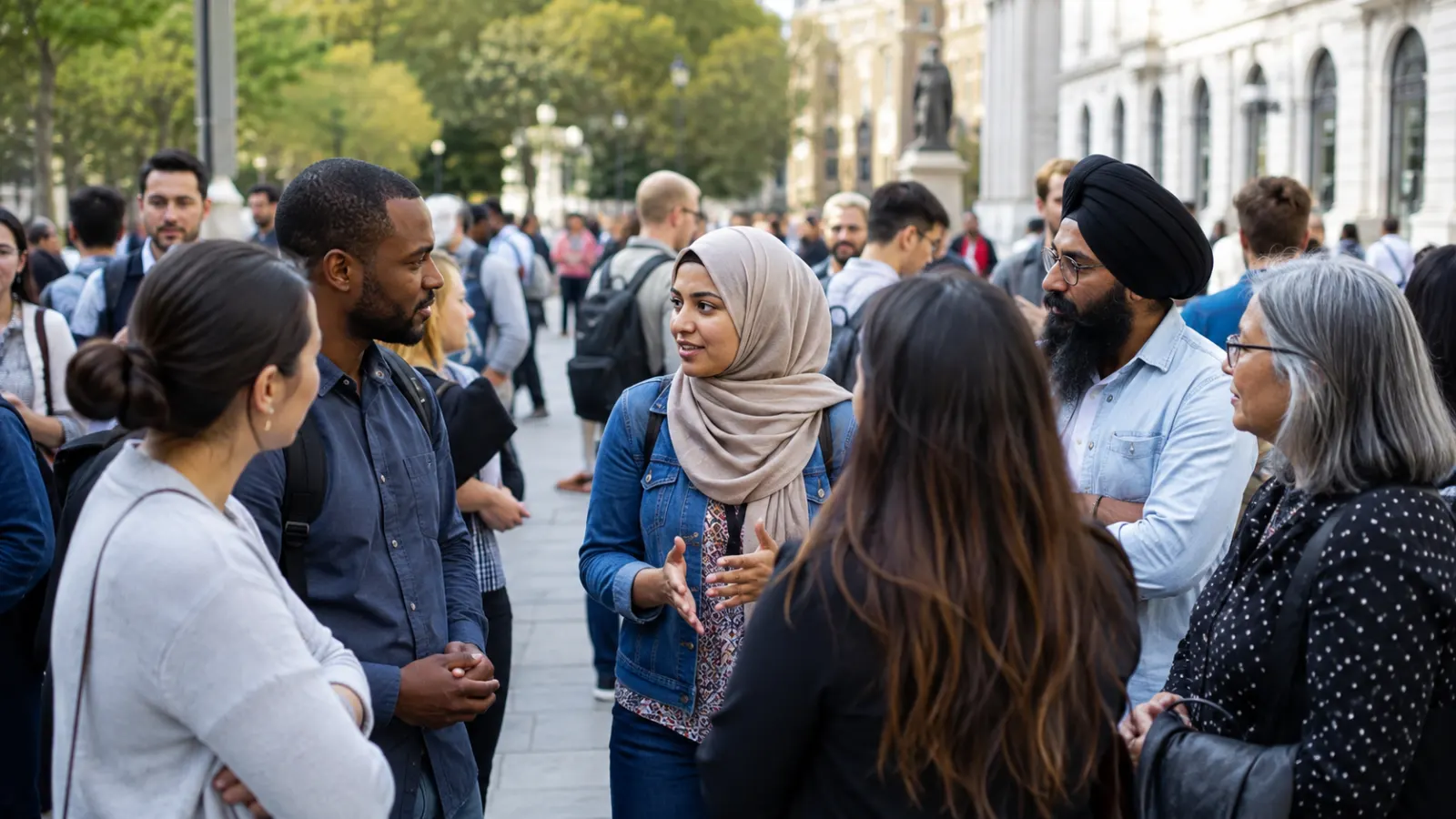
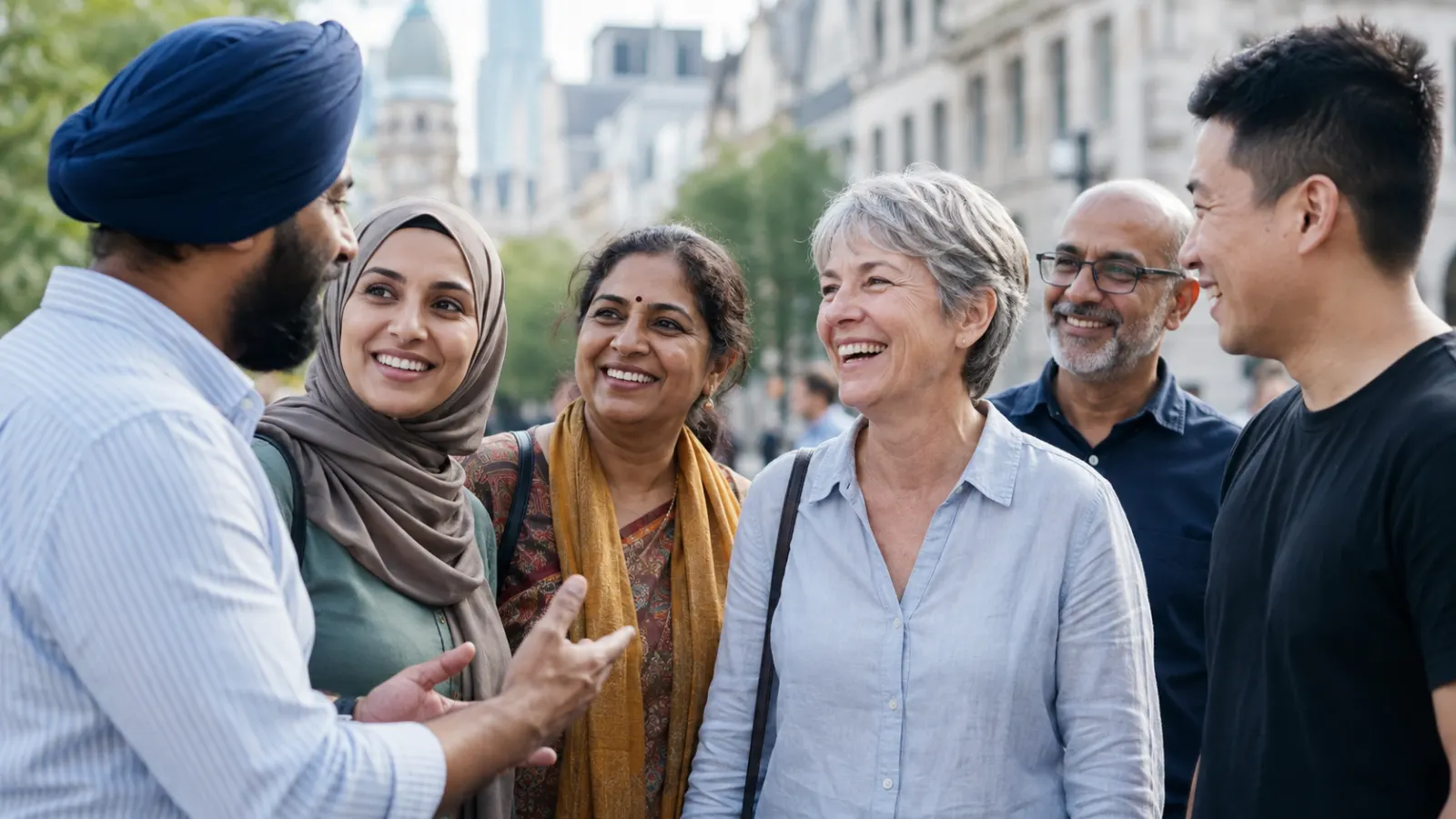
Hearing the Same Beat Is Not the Same as Sharing the Same Experience
A song can be heard alone through headphones or sung by hundreds of people in one room. The acoustic material may be similar, but the social experience is not.
When people make music together, they coordinate timing, attention, breathing, movement and emotion. That coordination helps explain why musical activity has such unusual power to make strangers feel temporarily connected.
Synchrony Changes the Meaning of Movement
One of the strongest research themes concerns synchrony: people doing something at approximately the same time. Clapping, drumming, marching, singing and dancing all create opportunities for coordinated action.
Research reviewed in the music-and-social-bonding literature suggests that synchronous musical behaviour can blur the psychological boundary between self and others and contribute to social closeness. Studies of synchronous movement similarly find that moving together can increase cooperation under some conditions.
Shared Intent Matters, Not Only Shared Timing
Synchrony is not merely a mechanical effect of matching beats. Experiments on music and dance indicate that shared intentionality—knowing that people are trying to coordinate with one another—also matters.
This helps explain why a crowd walking through the same station does not automatically bond, while a crowd intentionally singing the same chorus may feel united.
Group Singing Creates Fast Social Connection
Singing is particularly interesting because it coordinates several systems at once: breath, pitch, rhythm, words and attention. Studies of group singing have found increases in perceived closeness and social connection, including among people who were not previously close.
Some research suggests that large singing groups can produce rapid feelings of inclusion even when participants have had little time to build one-to-one relationships.
Music Creates Shared Emotion
People at a concert often react together. A quiet passage produces collective stillness. A familiar chorus creates anticipation. A sudden rhythmic change produces movement across the room.
Shared emotional timing can reinforce the sense that 'we are experiencing this together'. The effect is not simply that everyone feels the same emotion; it is that people observe others responding in related ways.
Familiar Songs Make Belonging Easier
A familiar song reduces uncertainty. People know when to enter, when the chorus arrives and how the melody resolves. That predictability makes coordinated participation easier.
Research on music, familiarity and synchrony suggests that familiar or liked music can strengthen interpersonal closeness. Culturally shared repertoires therefore function as social resources: people can join without lengthy explanation.
Anthems and Chants Compress Identity
National anthems, religious hymns, football chants and protest songs often contain relatively simple melodies and repeated language. Their power lies partly in repeatability.
Thousands of people can participate at once. The song becomes a compact symbol of membership.
Music Can Bridge Language Differences
Musical coordination does not require participants to share full linguistic fluency. Rhythm and melody allow some forms of joint action before people can hold complex conversation.
This helps explain the use of music in intercultural programmes, classrooms and peacebuilding initiatives. Yet the effect should not be romanticised. Musical collaboration may create an opening for relationship, but it does not by itself resolve political inequality or conflict.
Collective Music Creates Low-Risk Cooperation
Making music with others requires attention and adjustment. A drummer listens to the ensemble. A singer alters volume to blend. A dancer responds to tempo.
These are small acts of cooperation. Participants practise coordination without necessarily negotiating explicit disagreement. That can make musical activity an accessible way to begin social interaction.
Music Can Create Bridging Bonds
Some experimental research suggests synchronous movement can reduce negative attitudes across existing group boundaries. This matters because social bonding is often strongest within already familiar groups.
Music provides a structured activity in which participants can temporarily occupy a shared role—singers, dancers, fans or performers—even when other identities differ.
But Music Can Also Strengthen Boundaries
The same mechanism works in the opposite direction. A song associated with one nation, movement, religion or political group can intensify solidarity among insiders while making outsiders feel excluded.
Military music, partisan songs and hostile stadium chants demonstrate that cohesion is not automatically peaceful. Music can strengthen whatever collective identity it is attached to.
The Audience Can Synchronise Too
People do not need to perform to experience collective rhythm. Audiences clap together, sway, sing refrains and react to musical tension.
Research on live concerts has identified physiological synchrony among audience members, suggesting that shared attention in the same environment can align aspects of bodily response.
Digital Listening Changes but Does Not Eliminate Shared Experience
Livestreams and online fan communities allow people to experience music simultaneously while physically separated. Shared playlists, reaction videos and digital concerts create new forms of coordination.
Yet physical gatherings add elements that online listening cannot fully reproduce: shared acoustics, crowd movement, touch, visual feedback and the awareness of being surrounded by others who have chosen to be present.
Why Festivals Feel Different From Playlists
At a festival, music sits inside a larger social environment. People travel, wait, eat, dance and remember the event together. The bonds may arise as much from the total shared experience as from the sound itself.
This is why a song heard later can instantly reactivate memories of people and place.
Music Helps Communities Recover Shared Space
After conflict, displacement or crisis, public music-making can help restore communal routines. UNESCO has used intangible-cultural-heritage safeguarding as part of social-cohesion work in communities where shared practices cross social divisions.
Again, music is not a substitute for justice or material reconstruction. Its role is narrower but still important: it can create occasions for people to occupy common space and remember relationships that conflict disrupted.
Children Learn Cooperation Through Musical Play
Children's songs, clapping games and group music activities train timing, turn-taking and attention to others. Research on children's synchrony suggests that coordinated musical interaction can be associated with empathy and prosocial behaviour.
The value is not simply musical skill. The activity teaches that successful performance depends on listening.
Repetition Builds Collective Memory
A song performed repeatedly at the same event can become a memory device for the group. School songs, protest anthems, hymns and stadium chants connect present participants with people who sang them before.
The social bond therefore extends through time as well as across a room. Participants may feel linked to absent members, previous generations or a larger imagined community.
Improvisation Creates a Different Kind of Cooperation
Not all bonding comes from everyone doing exactly the same thing. In ensemble improvisation, participants contribute different material while listening closely enough to maintain a shared musical frame.
This form of coordination resembles social cooperation more broadly: people do not need identical roles to feel connected. They need responsive attention.
Music Can Lower the Cost of First Contact
New groups often struggle with silence, status differences and uncertainty. A shared musical task gives participants something to do together before they know what to say to one another.
That is one reason choirs, drumming circles and collaborative music programmes appear in community-building settings. The activity does not guarantee friendship, but it supplies a structured first interaction.
Commercial Music Can Also Create Communities
Fans organise around artists and genres, building friendships through concerts, online forums and shared symbols. These communities may cross national borders and create strong identities among people who never meet offline.
At the same time, commercial fandom can become competitive or hostile. The social mechanism is again neutral: music provides a focus around which people organise, while the norms of the group determine whether that organisation is open or exclusionary.
Shared Taste Can Become Social Identity
People often use musical preference to signal personality, generation or subculture. Knowing the same artists and references makes conversation easier and can create instant affiliation.
But taste can also become status competition. Genres may be labelled sophisticated, commercial, authentic or low-class, revealing that musical bonding is entangled with social hierarchy.
Belonging Can Outlast the Performance
The strongest effects appear when musical interaction connects with relationships that continue afterwards. A choir that rehearses weekly, a religious ensemble, a school band or a neighbourhood music group creates repeated opportunities for trust.
One spectacular concert can create intensity. Durable community usually requires recurrence.
Music is therefore best understood as a social opportunity: it makes coordination easy enough for connection to begin, while the surrounding culture determines what follows.
Why Music Unites People
Music can unite because it creates a rare combination of synchronised action, shared emotion, familiar symbols and low-risk cooperation.
It allows people to feel part of a group before they know every member personally. It provides a common rhythm when conversation is difficult. It can transform an audience into participants.
But the word 'unites' needs care. Music does not erase inequality, ideology or conflict. It can reinforce narrow identities as easily as broad ones.
Its social power lies in something more precise: music gives people a practical way to experience coordinated attention. For a few minutes, many individual bodies can act as though they are part of one event. That temporary experience can become the beginning of belonging.
Sources / Further Reading
• Tarr, Launay & Dunbar — Music and social bonding — https://pmc.ncbi.nlm.nih.gov/articles/PMC4179700/
• Pearce et al. — Group singing, health, well-being and social bonds — https://pmc.ncbi.nlm.nih.gov/articles/PMC5113759/
• Weinstein et al. — Group music performance and social connection — https://pmc.ncbi.nlm.nih.gov/articles/PMC4856205/
• Reddish, Fischer & Bulbulia — Synchrony and shared intentionality in dance — https://pmc.ncbi.nlm.nih.gov/articles/PMC3737148/
• Tunçgenç & Cohen — Movement synchrony across group divides — https://pmc.ncbi.nlm.nih.gov/articles/PMC4882973/
• UNESCO — Safeguarding intangible heritage and social cohesion — https://ich.unesco.org/en/news/promoting-social-cohesion-through-the-safeguarding-of-intangible-cultural-heritage-in-the-kaoma-district-of-zambia-00252
Suggested Internal Links
• Music as Culture — Article 31
• What Is the Significance of Dance in Culture — Article 33
• What Is Social Cohesion — Planned internal link
• Understanding the Value of Belonging — Article 20
• Why Festivals Bring People Together — Article 4