Where You Live Still Shapes What You Can Reach
Digital communication and modern transport can make geography seem less important than it once was.
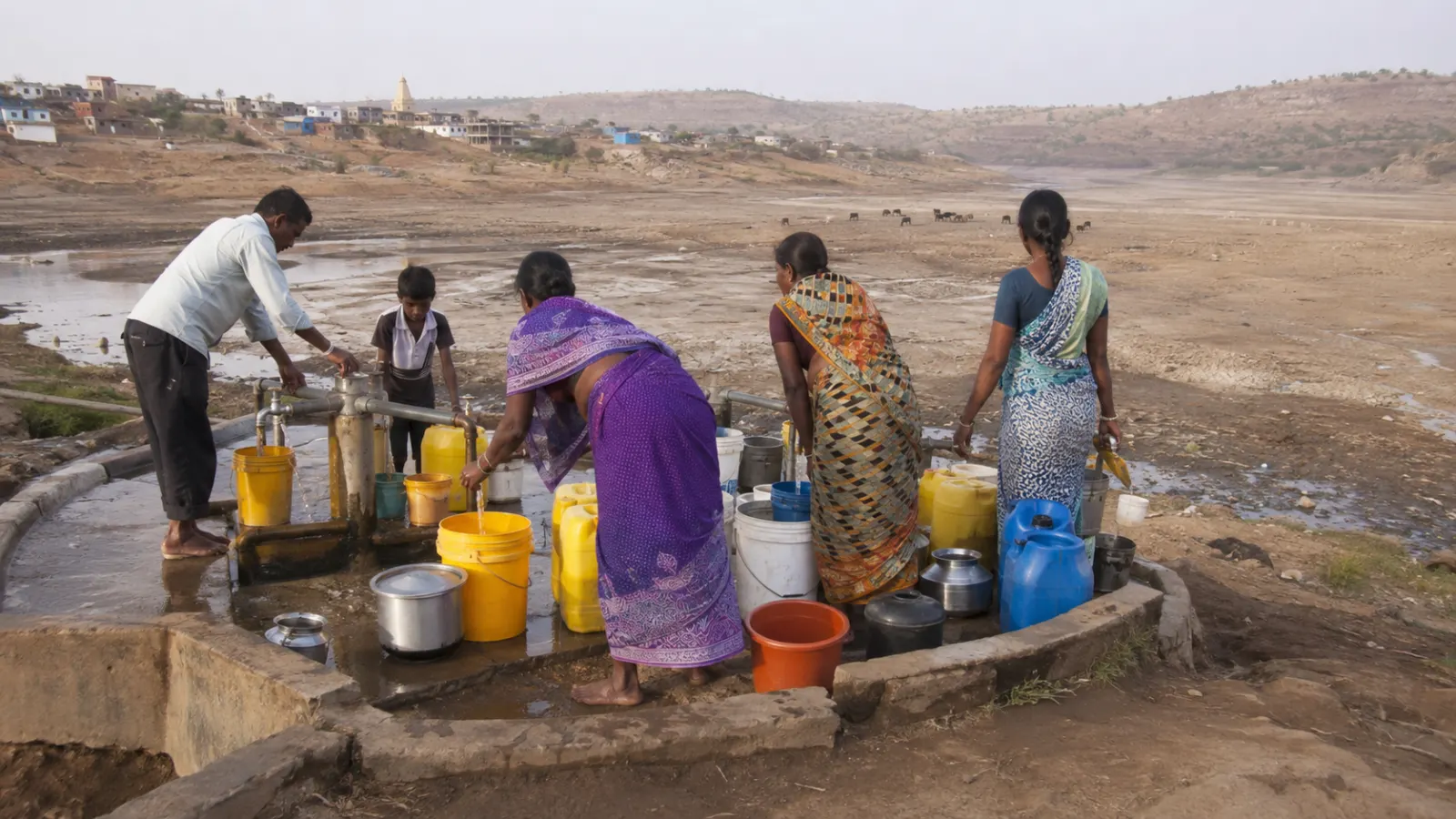
Yet location still affects access to jobs, schools, hospitals, broadband, electricity, markets and government services.
The rural–urban divide describes these spatial differences in opportunity and infrastructure.
It Is Not One Divide
There is no single rural disadvantage that applies everywhere.
A wealthy agricultural region may have excellent roads and internet. An informal urban settlement may lack sanitation. A small town can outperform a remote city district on some services.
The useful concept is a set of spatial gaps rather than a binary hierarchy.
Rural and Urban Are a Continuum
Settlements range from isolated farms to villages, towns, peri-urban zones, secondary cities and large metropolitan areas.
UN World Urbanization Prospects 2025 increasingly uses harmonised spatial categories precisely because national definitions of rural and urban differ.
Jobs Are a Major Difference
Rural employment often depends more heavily on agriculture and natural resources, while cities contain denser labour markets in industry and services.
The difference affects wages, seasonality and the range of occupations available.
Agriculture Still Connects to Modernisation
Rural prosperity is not achieved only by moving people out of farming.
Higher agricultural productivity can support processing, transport, retail and other non-farm jobs in rural areas and small towns.
World Bank research on structural transformation emphasises these rural-urban linkages.
Infrastructure Costs More at Low Density
Providing roads, water pipes, electricity networks and broadband across dispersed populations can cost more per user than serving dense urban neighbourhoods.
Market incentives may therefore underprovide services in remote areas unless public policy compensates.
The Infrastructure Gap Is Real
World Bank data show persistent rural disadvantages in access to services such as clean cooking, water and electricity in many lower-income settings.
The size of the gap varies, and it generally narrows as countries become richer and infrastructure becomes more universal.
Broadband Is the New Spatial Infrastructure
Remote work, digital education, banking and government increasingly require reliable connectivity.
OECD's 2025 report on broadband divides finds persistent differences between rural and urban areas in availability and performance, even in high-income countries.
Rural Broadband Can Be Slower
Across OECD countries, rural regions on average experienced fixed-broadband performance below urban and national benchmarks, with large variation between countries.
The lesson is not that rural connectivity is always poor, but that low-density infrastructure remains a policy challenge even where overall broadband coverage is high.
Digital Services Cannot Fully Compensate for Weak Networks
Telemedicine and online education can reduce the cost of distance only when households have quality connectivity, devices and digital skills.
A digital solution layered onto a weak network can reproduce the same geographic inequality.
Health Access Is Spatial
Specialist hospitals and medical professionals tend to concentrate where population density can support them.
Rural residents may travel farther for care, making transport and primary health systems especially important.
Education Faces Similar Pressures
Small schools can struggle to offer the same range of specialised teachers or courses as large urban schools.
Digital learning can expand choice, but only when connectivity and teaching support are strong.
Distance Raises the Cost of Opportunity
A scholarship or job may formally be open to everyone while effectively inaccessible to someone who must relocate or travel hours to use it.
Spatial equality therefore concerns practical access, not only legal eligibility.
Migration Is One Response
Young adults often move toward cities for education and employment.
Migration can raise individual opportunity and send remittances home, but large outflows can leave rural areas with ageing populations and thinner local markets.
Rural Youth Face a Distinct Transition
IFAD research shows that rural and peri-urban young people participate in both agriculture and non-farm agrifood work, with opportunities changing along the rural-urban gradient.
The policy challenge is not simply to move youth to cities but to create productive livelihoods across regions.
Small Towns Can Bridge the Divide
Small and intermediate towns connect farmers to markets, schools, processing, finance and public services.
Strengthening these centres can reduce the need for every service or job to concentrate in the largest cities.
Roads Change More Than Travel Time
Better transport expands market access, raises the area from which firms can recruit and changes where households can seek education and health care.
Connectivity between places matters as much as conditions inside each place.
Urban Areas Also Depend on Rural Systems
Cities rely on rural and peri-urban areas for food, water, energy, labour and ecosystem services.
Treating rural development as separate from urban prosperity misunderstands this interdependence.
Environmental Risk Is Different Across Space
Rural livelihoods can be highly exposed to drought, crop failure and ecosystem degradation.
Cities face heat, flooding and pollution risks of their own.
Climate policy therefore needs spatially different adaptation strategies.
Political Voice Can Be Uneven
Rural communities may feel distant from national institutions concentrated in capital cities.
At the same time, electoral systems in some countries give rural areas substantial representation.
Political geography does not map neatly onto economic disadvantage.
Culture Shapes Perceptions of the Divide
Public culture often stereotypes rural life as either backward or idyllic and urban life as either sophisticated or alienating.
These images hide the economic diversity within both categories.
Remote Work Could Narrow Some Gaps
High-quality broadband allows some professional work to locate outside major cities.
But remote work is concentrated in occupations that can be digitised and does not replace local health care, transport or physical infrastructure.
Policy Should Connect Places Rather Than Choose Between Them
Investment in rural roads, broadband, schools, health systems and market towns can expand opportunity without requiring everyone to migrate.
Urban investment is also necessary because cities absorb population and drive economic transformation.
The question is how to build complementary regional systems.
The Divide Narrows When Services Become Universal
Clean electricity, broadband, education and health access can become less geographically unequal when policy treats them as basic infrastructure rather than leaving provision entirely to density-based market incentives.
Regional Inequality Can Persist Inside Rich Countries
National prosperity does not guarantee territorial equality. Remote regions can lose population, public transport and specialised services even when national income is high.
OECD's broadband evidence shows that spatial connectivity gaps remain a policy issue across advanced economies as well as developing ones.
Place-Based Policy Tries to Work With Local Assets
A rural region may have strengths in agriculture, tourism, renewable energy, manufacturing or environmental services.
Development is more durable when policy builds on those assets rather than assuming every place should compete for the same urban industries.
The Divide Is Also About Time
Distance often appears as time: longer journeys to work, clinics, schools and administrative offices.
Reducing travel time through roads, digital access or decentralised services can narrow inequality even when settlement patterns remain unchanged.
Rural Areas Can Have Different Cost Structures
Businesses in remote regions may pay more for transport, energy, finance and access to skilled labour.
These costs reduce competitiveness even when local workers are productive.
Public Service Staffing Is a Persistent Challenge
Rural schools and clinics may have buildings but struggle to recruit and retain teachers, doctors or specialised staff.
Closing the divide therefore requires workforce incentives as well as physical infrastructure.
The Divide Can Be Gendered
Women in rural areas may face longer travel for health care, fewer formal jobs and heavier unpaid care burdens, depending on the country and local norms.
Spatial inequality often overlaps with gender and class rather than operating separately.
Population Decline Creates a Feedback Loop
When young adults leave, local demand falls. Shops close, transport becomes less viable and public services serve fewer people at higher cost.
These losses can encourage further migration, creating a cycle that is difficult to reverse.
Regional Universities and Training Can Anchor Opportunity
Education outside major cities can retain young people and connect local firms to skilled workers.
Place-based development therefore includes institutions that allow people to build careers without relocating permanently.
What the Rural–Urban Divide Means
The rural–urban divide is a pattern of spatial inequality in access to opportunity, infrastructure and services.
It persists because distance, density, labour markets and public investment differ across territory.
But rural and urban places are economically interdependent, and the boundary between them is increasingly fluid.
The strongest development strategy is therefore not to make rural areas imitate cities. It is to ensure that geography does not determine whether people can reach the basic capabilities needed to build a secure life.
Sources / Further Reading
• UN DESA — World Urbanization Prospects 2025 — https://www.un.org/development/desa/pd/world-urbanization-prospects-2025
• OECD — Closing Broadband Connectivity Divides for All, 2025 — https://www.oecd.org/en/publications/closing-broadband-connectivity-divides-for-all_d5ea99b2-en.html
• World Bank — Rural–urban infrastructure gap in seven charts — https://blogs.worldbank.org/en/opendata/from-water-to-electricity--the-rural-urban-infrastructure-gap-in
• World Bank — Agriculture and Rural Development research — https://www.worldbank.org/en/programs/knowledge-for-change/brief/agriculture-and-rural-development
• IFAD — Economic participation of rural youth — https://www.ifad.org/en/w/publications/research-series-issue-46-economic-participation-of-rural-youth-what-matters-
Suggested Internal Links
• Effects of Urbanisation — Article 84
• Modernisation Explained — Article 83
• How Societies Evolve — Article 82