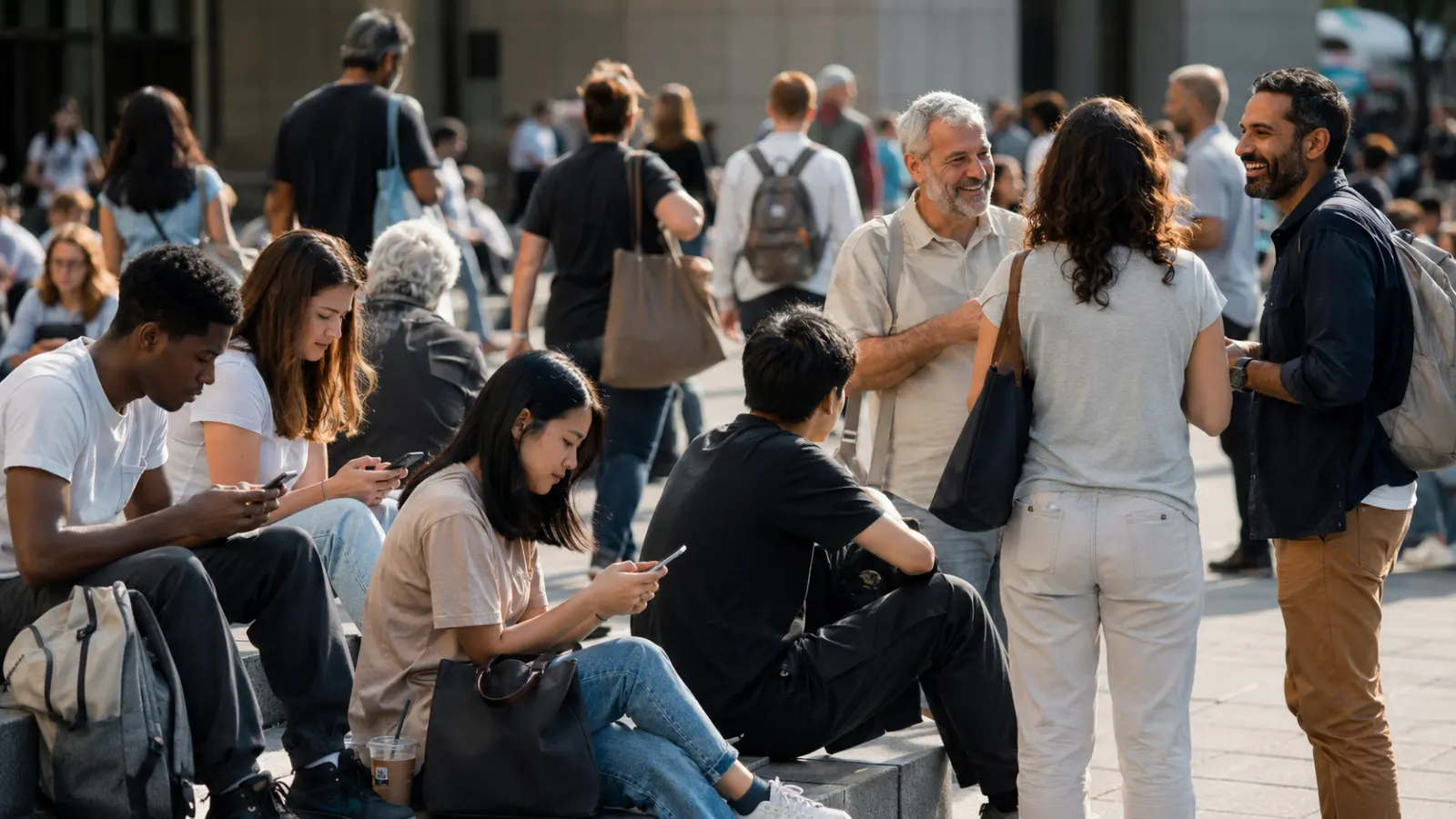
Education Is a Social Institution Before It Is a Personal Achievement
People experience education individually—as lessons, examinations, qualifications and memories of teachers—but societies organise education for collective reasons.
Schools and other learning institutions preserve knowledge, prepare workers, create citizens, transmit culture and distribute opportunity. They can also reproduce inequality. Education therefore sits at the intersection of personal development and social structure.
Education Transmits Accumulated Knowledge
No generation begins from zero. Mathematics, scientific methods, historical records, literature, law and technical knowledge have to be transmitted if societies are to build on previous learning.
Formal education creates structured time and specialised institutions for this transfer.
Literacy Expands Participation
Reading and writing are not only school subjects. They determine whether people can use contracts, health information, public services, political material and digital systems.
Literacy therefore affects how independently people can participate in modern institutions.
Numeracy Makes Complex Economies Possible
Numeracy supports personal finance, measurement, science, engineering and administration.
A society with widespread foundational skills can distribute complex tasks across far more people than one in which specialised knowledge is confined to a small elite.
Education Builds Skills for Work
Economies require workers who can read instructions, solve problems, use technologies and acquire new skills as occupations change.
Education therefore has an economic function often described through human capital: investment in knowledge and capabilities that improve productive capacity.
But Education Is Not Only Job Training
Reducing education to employability understates its social role.
People also need the ability to interpret evidence, communicate, understand institutions, care for others, participate politically and make choices outside employment.
Education Can Increase Social Mobility
Qualifications can give people access to occupations and incomes unavailable to previous generations.
For this reason, mass schooling has often been linked to the promise that ability and effort can matter more than family background.
Education Can Also Reproduce Advantage
The mobility promise is incomplete when wealthy families have better schools, tutoring, technology, safer neighbourhoods and stronger networks.
Education can widen opportunity while simultaneously reproducing inequality through unequal access to high-quality learning.
School Systems Allocate Credentials
Degrees and certificates signal competence to employers and institutions, but they also ration access to occupations.
Credentials can protect standards where specialised knowledge matters. They can also become barriers when qualifications expand faster than actual skill requirements.
Education Socialises People Into Institutions
Students learn more than the formal curriculum. They learn schedules, deadlines, turn-taking, rules, cooperation, competition and how authority operates.
Sociologists describe this wider process as socialisation. Article 75 examines it directly.
Education Helps Form Citizens
Citizenship requires more than the right to vote. People need enough knowledge and skill to understand institutions, evaluate claims and participate in public life.
UNESCO’s global citizenship education framework emphasises knowledge, values, attitudes and skills for living responsibly in an interdependent world.
Civic Education Can Be Formal and Informal
Students learn citizenship through civics classes, but also through school councils, classroom discussion, volunteering, rules and how disagreements are handled.
The institution teaches democracy partly through what it practises.
Education Can Build Social Cohesion
Schools bring children from different families into shared institutions and can create common language, knowledge and routines.
UNESCO’s work on education for peace and global citizenship treats education as one route to dialogue, inclusion and resilience.
Education Can Also Deepen Division
Segregated schools, unequal resources or curricula that erase minority histories can reinforce social boundaries.
Education contributes to cohesion only when common schooling is sufficiently fair and inclusive to be experienced as a shared institution rather than a hierarchy.
Schools Transmit Culture
Literature, language, history, art, ceremonies and school traditions communicate what a society considers worth remembering.
Curriculum choices therefore shape cultural memory.
Curriculum Is Never Entirely Neutral
Choosing which historical events to teach, which authors to read and which languages to support involves judgments about significance.
A strong curriculum makes these choices evidence-based and open to revision rather than pretending selection does not occur.
Education Can Challenge Inherited Culture
The same institution that transmits tradition can give students tools to question it.
Scientific reasoning, historical evidence and ethical debate allow learners to test claims inherited from family, media or authority.
Critical Thinking Is a Civic Skill
Modern citizens encounter political advertising, misinformation, statistical claims and algorithmically selected content.
Education can teach students to distinguish assertion from evidence and confidence from knowledge.
Schools Shape Social Networks
Students meet peers outside the family and form relationships that can influence identity, language and aspiration.
Educational institutions therefore produce social capital as well as academic learning.
Belonging Affects Learning
OECD work on school belonging stresses that students’ sense of acceptance and support is related to academic and social development.
A school that teaches effectively but makes some students feel permanently outside the community is performing only part of its social function.
Education Influences Health
Education affects the ability to understand health information and navigate institutions. It is also associated with employment, income and living conditions that shape health across the life course.
The relationship is complex because family background and other factors influence both education and health.
Education Supports Innovation
Research systems, universities and vocational institutions create and diffuse technical knowledge.
Innovation depends not only on a small number of scientists but on widespread foundational skills that allow new technologies to be adopted and maintained.
Vocational Education Has a Distinct Social Role
Societies need technicians, craftspeople, health workers and skilled trades as much as academic professionals.
Education systems become distorted when status hierarchies treat university as the only respectable route to expertise.
Early Childhood Education Shapes Later Opportunity
Early learning supports language, social development and readiness for school.
Because children begin with unequal family resources, access to high-quality early education can influence later educational inequality.
Higher Education Creates Specialist Knowledge
Universities train professionals, conduct research and provide institutions in which ideas can be tested beyond immediate market demand.
Academic freedom matters because societies need spaces where accepted beliefs can be questioned through disciplined inquiry.
Lifelong Learning Matters More in Fast-Changing Economies
People increasingly need to learn after formal schooling ends because technology, labour markets and public systems change.
Education therefore extends through workplaces, adult programmes, libraries, online courses and informal learning.
Digital Technology Expanded Access and Created New Gaps
Online resources allow people to learn from distant institutions and at flexible times.
But devices, connectivity, language, accessibility and digital literacy remain unequally distributed. Digital education can widen access and widen gaps at the same time.
Teachers Are Institutional Interpreters
Curriculum exists on paper; teachers turn it into lived experience.
Their expectations, feedback, classroom norms and capacity to manage disagreement shape learning far beyond the textbook.
Education Can Be Used for Indoctrination
Because education shapes memory and citizenship, states and movements can use schools to promote propaganda, nationalism or obedience.
This risk is why civic education should include evidence, rights, open inquiry and the ability to question authority rather than merely memorising approved conclusions.
Education Cannot Solve Every Social Problem
Schools are often asked to fix inequality, unemployment, prejudice, health, civic distrust and technological disruption simultaneously.
Education can influence all of these, but it cannot compensate fully for housing inequality, discrimination, weak labour markets or dysfunctional institutions.
The Social Value of Education Depends on Fair Access
An excellent system serving only a privileged minority can increase national expertise while deepening social hierarchy.
Public value depends on who can enter, who can succeed and whether credentials translate into meaningful opportunity.
Education Creates a Common Reference Base
People cannot deliberate about public problems if they share no basic vocabulary of science, history, law or evidence.
Common schooling can provide reference points that allow citizens from different backgrounds to participate in the same debates.
Assessment Shapes What Schools Value
What systems test influences what teachers and students prioritise.
If assessment rewards memorisation alone, critical inquiry and collaboration may be pushed aside even when curriculum documents praise them.
Education Policy Is Also Population Policy
School location, language of instruction, funding formulas and admissions rules influence where families live and which communities encounter one another.
Education systems therefore shape social geography as well as learning.
Libraries Extend the Educational Institution
Public libraries provide learning outside enrolment, preserving access for adults, job seekers, children and people unable to purchase books or subscriptions.
They show that education is broader than the school system.
Education Organises Childhood and Family Life
Mass schooling does more than teach children. It structures the day, allows caregivers to work, creates schedules for meals and transport and connects families to health and welfare systems.
This organisational role became especially visible when school closures disrupted entire communities.
Public Funding Makes Education a Distributional Institution
Who pays for schools and how money is allocated determines whether children inherit large differences in educational opportunity from neighbourhood wealth.
Funding formulas, teacher distribution and infrastructure are therefore social-policy decisions, not administrative details.
Teacher Quality Is Unequally Distributed
Schools serving disadvantaged communities often face greater difficulty recruiting and retaining experienced staff.
If the students with the greatest needs systematically receive the least stable teaching conditions, education can reproduce inequality even under universal enrolment.
Disability Inclusion Tests the Meaning of Equal Education
Access requires more than a place on the enrolment register. Buildings, materials, assessment and teaching methods must be usable by students with different disabilities.
Inclusive design improves the institution by forcing it to consider learners who do not fit an assumed average.
Education Can Expand Women’s Agency
Access to education can delay exclusion from public life, expand employment options and increase knowledge of rights and health.
The effects depend on whether labour markets and families allow women to convert education into real choices.
Adult Education Protects People From Obsolescence
Automation, digital public services and economic restructuring can make skills outdated long after formal schooling ends.
Adult education and retraining reduce the risk that technological change divides society into people who can adapt and people permanently excluded from new systems.
Education Is Also an Institution of Selection
Examinations, admissions and credentials decide who advances to scarce opportunities.
Selection can reward preparation and competence, but it also magnifies unequal starting conditions unless systems deliberately widen access.
International Education Changes Cultural Exchange
Student mobility, international universities and online learning spread ideas and professional norms across borders.
This can enrich institutions while also encouraging talent to concentrate in already powerful educational centres.
Education Creates Professional Standards
Medicine, engineering, teaching, law and other professions depend on organised education to define bodies of knowledge and minimum competence.
This protects the public when specialised work carries serious consequences, although professional gatekeeping must remain open to scrutiny.
Education Can Reduce Information Inequality
People with stronger foundational skills are better able to compare sources, understand contracts and navigate digital services.
As more economic and political activity moves online, unequal educational capacity can become unequal bargaining power.
The Institution Must Learn Too
Education systems cannot only demand adaptation from students. They need mechanisms for evaluating curriculum, teaching and inequality and for changing when evidence shows that established practice is failing.
A learning society therefore requires learning institutions.
Education Also Shapes Time Horizons
Learning asks people to invest effort now for benefits that may arrive years later. Societies that make credible long-term educational promises encourage families and students to plan beyond immediate survival.
When schooling is unreliable, unsafe or disconnected from opportunity, that future-oriented bargain weakens. Educational trust therefore depends on institutions linking present effort to believable future possibilities.
Education also gives societies a way to renew expertise as knowledge changes. Curricula, professional training and teacher development have to be revised when science, technology or public needs change. An education system that only preserves yesterday’s knowledge eventually becomes an obstacle to adaptation rather than a vehicle for it.
What Education Does for Society
Education stores and transmits knowledge, builds skills, creates civic capacity, shapes identity and distributes opportunity.
It can reproduce existing power or give people tools to challenge it.
Its deepest social function is therefore not simply producing workers or examination results. It is expanding the number of people capable of participating intelligently and independently in a complex shared world.
Sources / Further Reading
• UNESCO — Global citizenship and peace education — https://www.unesco.org/en/global-citizenship-peace-education
• UNESCO — Recommendation on Education for Peace, Human Rights and Sustainable Development — https://www.unesco.org/en/legal-affairs/recommendation-education-peace-and-human-rights-international-understanding-cooperation-fundamental
• IEA — ICCS 2022 — https://www.iea.nl/studies/iea/iccs/2022
• OECD — Value for Money in School Education — https://www.oecd.org/en/publications/value-for-money-in-school-education_f6de8710-en/full-report/component-6.html
• OECD — Have students feelings of belonging at school waned over time? — https://www.oecd.org/en/publications/have-students-feelings-of-belonging-at-school-waned-over-time_bdde89fb-en.html
• UNICEF — Why early childhood education and care matter — https://www.unicef.org/eca/stories/why-early-childhood-education-and-care-matter
Suggested Internal Links
• Understanding How Schools Shape Citizens — Article 74
• What Is Socialisation — Article 75
• Understanding What Holds a Society Together — Article 72
• What Is Social Cohesion — Article 71
• Understanding the Strength in Differences — Article 70