Prediabetes is a risk state, not a countdown
Prediabetes means blood glucose is higher than normal but not yet high enough to meet diagnostic criteria for diabetes.
The word can sound as though type 2 diabetes is inevitable. It is not.
Some people progress, some remain in the prediabetes range for years and some return to glucose values below the diagnostic threshold. What prediabetes does reliably indicate is that glucose regulation is already impaired and future diabetes risk is higher.
That makes it valuable as an opportunity for prevention rather than as a prediction.
What is happening biologically
Prediabetes commonly develops in the setting of insulin resistance.
Muscle, fat and liver cells respond less effectively to insulin. The pancreas compensates by producing more. For a period, that extra insulin may keep glucose near normal.
As the system becomes less able to compensate, fasting or post-meal glucose rises.
Prediabetes therefore reflects a metabolic process that often begins before the diagnostic threshold is crossed.
How prediabetes is diagnosed
NIDDK lists three commonly used laboratory pathways.
An A1C of 5.7% to 6.4% is in the prediabetes range.
A fasting plasma glucose of 100 to 125 mg/dL is in the prediabetes range.
A two-hour oral glucose tolerance test result of 140 to 199 mg/dL is also in the prediabetes range.
These tests measure different aspects of glucose regulation, so they do not always identify exactly the same people.
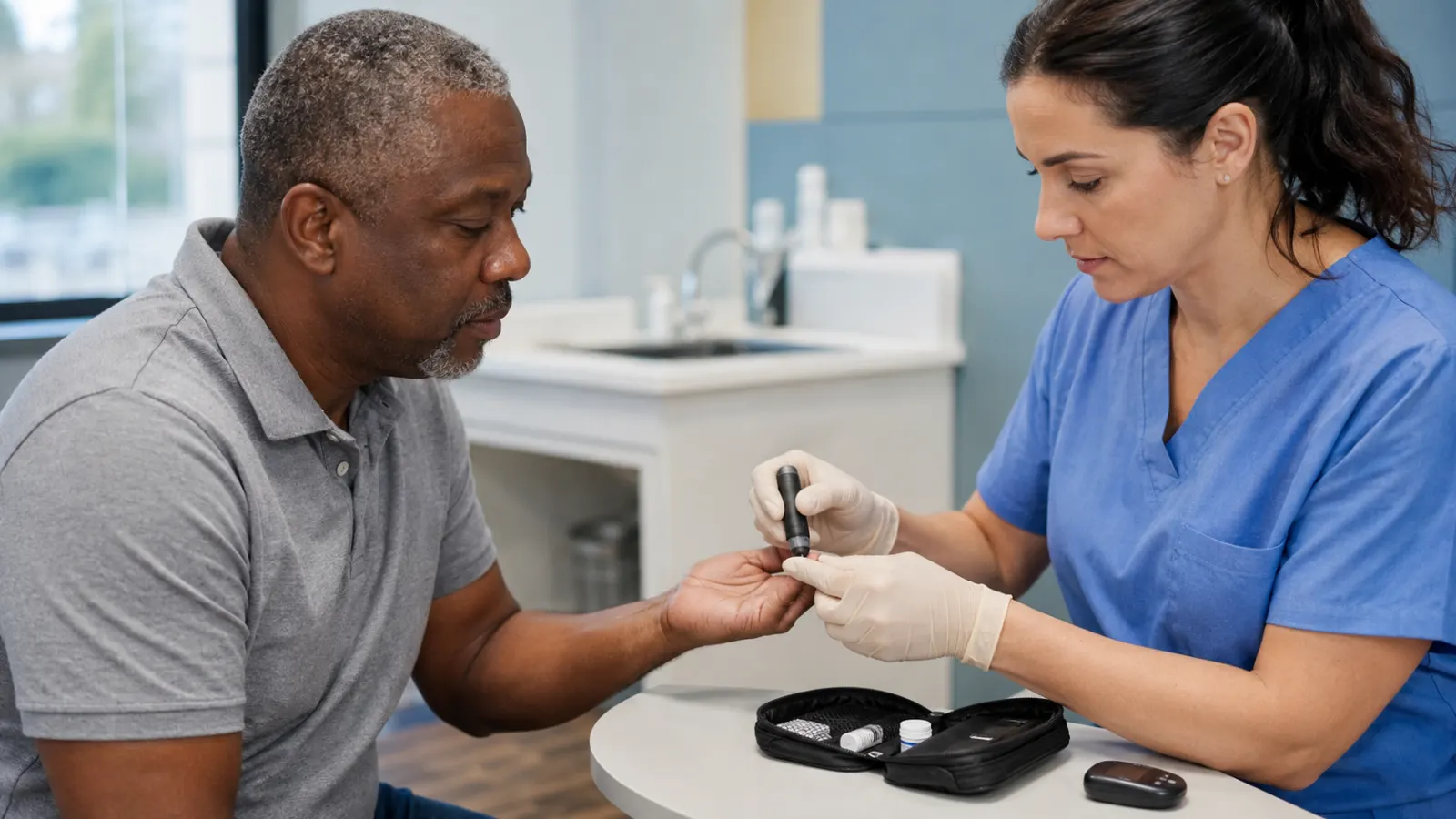
Home glucose meters cannot diagnose prediabetes. Testing should be performed and interpreted through appropriate clinical care.
Prediabetes usually causes no symptoms
Most people with prediabetes feel normal.
That is one reason risk-based screening matters. Waiting for thirst, frequent urination or weight loss means waiting for symptoms that may not appear until glucose is substantially higher.
NIDDK notes that people with type 2 diabetes risk factors may need periodic testing and that people diagnosed with prediabetes should generally be re-evaluated for progression.
Who is at higher risk
Risk rises with a combination of factors.
These include family history of type 2 diabetes, increasing age, physical inactivity, overweight or obesity, previous gestational diabetes and certain medical conditions. Risk also varies across populations because of genetics, social determinants, healthcare access and environmental factors.
Not every risk factor can be modified.
The prevention strategy is therefore not to blame people for age, ancestry or family history. It is to identify the modifiable exposures that can reduce total risk.
The strongest prevention evidence comes from a major randomised trial
The NIH-funded Diabetes Prevention Program enrolled adults at high risk of type 2 diabetes and compared intensive lifestyle intervention, metformin and placebo.
After roughly three years, the lifestyle intervention reduced the incidence of type 2 diabetes by 58% compared with placebo. Metformin reduced incidence by 31%.
The lifestyle programme targeted at least 7% weight loss and at least 150 minutes of physical activity per week.
Those numbers are frequently quoted as though any generic advice to ‘eat better and exercise’ automatically produces a 58% reduction. That is not what the trial showed. It showed the benefit of a structured, intensive programme in a defined high-risk population.
Weight loss can be powerful, but prevention is not only about the scale
For people with overweight or obesity in the DPP, modest weight loss was a major part of the intervention. NIDDK commonly describes a goal of about 5% to 7% of starting body weight as beneficial for diabetes prevention.
Physical activity also matters independently because it improves insulin sensitivity.
Food quality, sleep, smoking status and other metabolic factors contribute as well.
The practical goal is not to reach a culturally ideal body size. It is to improve the metabolic conditions that determine whether insulin can keep glucose controlled.
Exercise improves the system the diagnosis is measuring
Muscle is a major site of glucose disposal.
When muscle contracts during physical activity, glucose uptake increases, and regular exercise improves insulin sensitivity. That is why activity is central to diabetes prevention rather than merely a tool for burning calories.
A brisk walk, cycling, swimming and other aerobic activities can help. Resistance training can add benefits by maintaining or increasing muscle.
The best programme is the one a person can sustain safely.
Metformin can be appropriate for some people
Lifestyle intervention is not the only evidence-based prevention strategy.
In the DPP, metformin reduced diabetes progression overall and was particularly effective in some groups, including younger adults, people with higher BMI and women with previous gestational diabetes.
Whether to use metformin for prediabetes is a clinical decision. It depends on risk, age, kidney function, pregnancy considerations and other factors.
Medication should not be framed as evidence that lifestyle has ‘failed.’ It is another tool for reducing risk.
Prediabetes is also a cardiovascular warning
Prediabetes does not only matter because of future diabetes.
Insulin resistance often clusters with high blood pressure, abnormal triglycerides, excess visceral fat and other cardiovascular risks.
This means a useful prediabetes consultation should look beyond glucose. Blood pressure, lipids, smoking, activity, sleep and overall cardiovascular risk may all deserve attention.
‘Reversing’ prediabetes needs careful wording
People often say prediabetes has been reversed when glucose tests return below the diagnostic range.
That can be a useful shorthand, but it should not imply that underlying susceptibility has vanished permanently.
Weight regain, ageing, illness, medication changes or reduced activity can push glucose upward again.
A better interpretation is that glucose regulation has improved enough that the person no longer meets the current laboratory definition of prediabetes. Continued prevention still matters.
The diagnosis is useful because risk is continuous
The boundaries between normal glucose, prediabetes and diabetes are clinical thresholds placed on a continuous biological spectrum.
Someone just below a threshold is not metabolically transformed compared with someone just above it. Risk generally increases as glucose regulation worsens.
The value of the category is practical: it identifies people whose probability of future type 2 diabetes is high enough that structured prevention is worthwhile.
Sleep and smoking deserve more attention
Diabetes prevention conversations often focus almost entirely on weight, diet and exercise.
NIDDK also includes adequate sleep and smoking cessation within healthy-living strategies for insulin resistance and prediabetes. Poor sleep can worsen insulin sensitivity, while smoking is associated with higher type 2 diabetes and cardiovascular risk.
These factors do not replace the evidence for physical activity and weight management. They complete the prevention picture.
Prevention programmes work by supporting behaviour, not issuing instructions
The Diabetes Prevention Program was intensive. Participants did not simply receive a leaflet telling them to lose weight.
The intervention used coaching, frequent contact, goal setting, problem solving, self-monitoring and support for physical activity and dietary change.
That distinction helps explain why structured prevention programmes can outperform generic advice. Knowing what to do and being able to sustain it are different problems.
Progression is influenced by the whole metabolic picture
Prediabetes rarely exists in isolation. High triglycerides, elevated blood pressure, fatty liver disease, sleep apnoea and central adiposity may coexist because they share metabolic drivers.
Addressing those conditions can improve more than glucose. Treating sleep apnoea may improve daytime function; controlling blood pressure lowers cardiovascular risk; improving physical activity benefits fitness and insulin sensitivity.
This is another reason prevention should not be reduced to one A1C number. The aim is broader metabolic health while lowering the probability that glucose regulation deteriorates further.
Prediabetes is most useful when it changes what happens next
A diagnosis is valuable only if it leads to action.
For many people, that means a structured lifestyle programme, more physical activity, sustainable dietary change and modest weight reduction where appropriate. For some, medication may be added.
The message should be neither complacent nor fatalistic.
Prediabetes is serious because it signals elevated risk. It is hopeful because one of the strongest prevention trials in modern medicine showed that progression can often be delayed or prevented.
The opportunity is real precisely because diabetes has not yet become inevitable.
Medical Note
This article provides general health information and is not a substitute for individual medical advice. Diabetes screening, diagnosis, glucose targets and treatment should be determined with an appropriately qualified healthcare professional.
Sources / Further Reading
NIDDK — Insulin Resistance & Prediabetes
NIDDK — Diabetes Prevention Program (DPP)
Diabetes Prevention Program Research Group — randomized trial
NIDDK — Diabetes Tests & Diagnosis
CDC — Prediabetes: Your Chance to Prevent Type 2 Diabetes
Suggested Internal Links
Diabetes and Blood Sugar — This batch
Type 1 vs Type 2 Diabetes — This batch
Blood Sugar Spikes — This batch
The Science of Healthy Weight Loss — Batch 2
Approximate article body word count: 1,315