Integration Is About Membership
Integration is often discussed as though it means teaching newcomers how to fit into a society.
That is only part of the process.
Modern integration frameworks increasingly treat integration as the capacity of people with different backgrounds to participate on fair terms in shared institutions.
It Is a Two-Sided Process
The Council of Europe's intercultural model explicitly rejects a one-sided view in which all responsibility falls on minorities.
Newcomers may need language skills and knowledge of institutions. Governments and established communities must also remove discrimination, provide fair access and create opportunities for interaction.
Integration Is Multidimensional
A person can be well integrated economically and isolated socially, or politically active while facing labour-market exclusion.
OECD integration indicators therefore cover employment, skills, housing, health, civic engagement, discrimination, social interaction and belonging.
Employment Matters—but Is Not Everything
Work provides income, routine, social contact and a route into institutions.
OECD research treats labour-market integration as central, but job quality matters too. A highly qualified migrant trapped in insecure low-skilled work may be employed without being fully incorporated into the economic structure.
Recognition of Qualifications Is Crucial
Migrants can arrive with education and professional experience that employers or regulators do not recognise.
This wastes skills and can slow economic mobility.
Integration policy therefore often includes credential assessment, bridging programmes and language training linked to professions.
Language Creates Access
A shared public language helps people use schools, health systems, courts and workplaces.
Language learning is therefore one of the most practical integration tools.
But language policy can respect multilingualism while still ensuring access to common institutions.
Children Integrate Through Schools
Schools are often the first major public institution encountered by migrant families.
They teach language, curriculum and social expectations while connecting parents to the wider community.
Segregated or unequal schools can reproduce social division across generations.
Education Is Also About Expectations
Teachers may unconsciously hold lower expectations for some minority students.
Integration requires not only access to classrooms but equal opportunity to progress through them.
Housing Shapes Everyday Contact
Where people live determines schools, transport, neighbours and access to jobs.
Residential concentration can support community networks, but severe segregation can reduce interaction and reinforce unequal access to services.
Affordable Housing Is an Integration Policy
When newcomers can live only in the least connected neighbourhoods, integration problems may be produced by housing markets rather than cultural unwillingness.
Urban planning therefore belongs in the integration debate.
Legal Status Shapes Security
People with uncertain or temporary status may hesitate to invest in language, education or community ties if they do not know whether they can remain.
Stable residence and clear pathways to rights can change long-term behaviour.
Citizenship Deepens Political Membership
Citizenship can provide voting rights, eligibility for public office and stronger security of residence.
OECD indicators show that political participation is an important dimension of integration, though citizenship alone does not guarantee equal influence.
Voting Is One Measure of Civic Integration
OECD data show that immigrants with host-country nationality often vote at lower rates than native-born citizens on average, though the size of the gap varies widely by country.
Participation depends on political trust, mobilisation, language, socioeconomic status and whether parties engage minority voters.
Voluntary Associations Build Social Capital
Sports clubs, unions, religious organisations, neighbourhood associations and civic groups connect people outside family and work.
Participation creates networks through which information and trust can circulate.
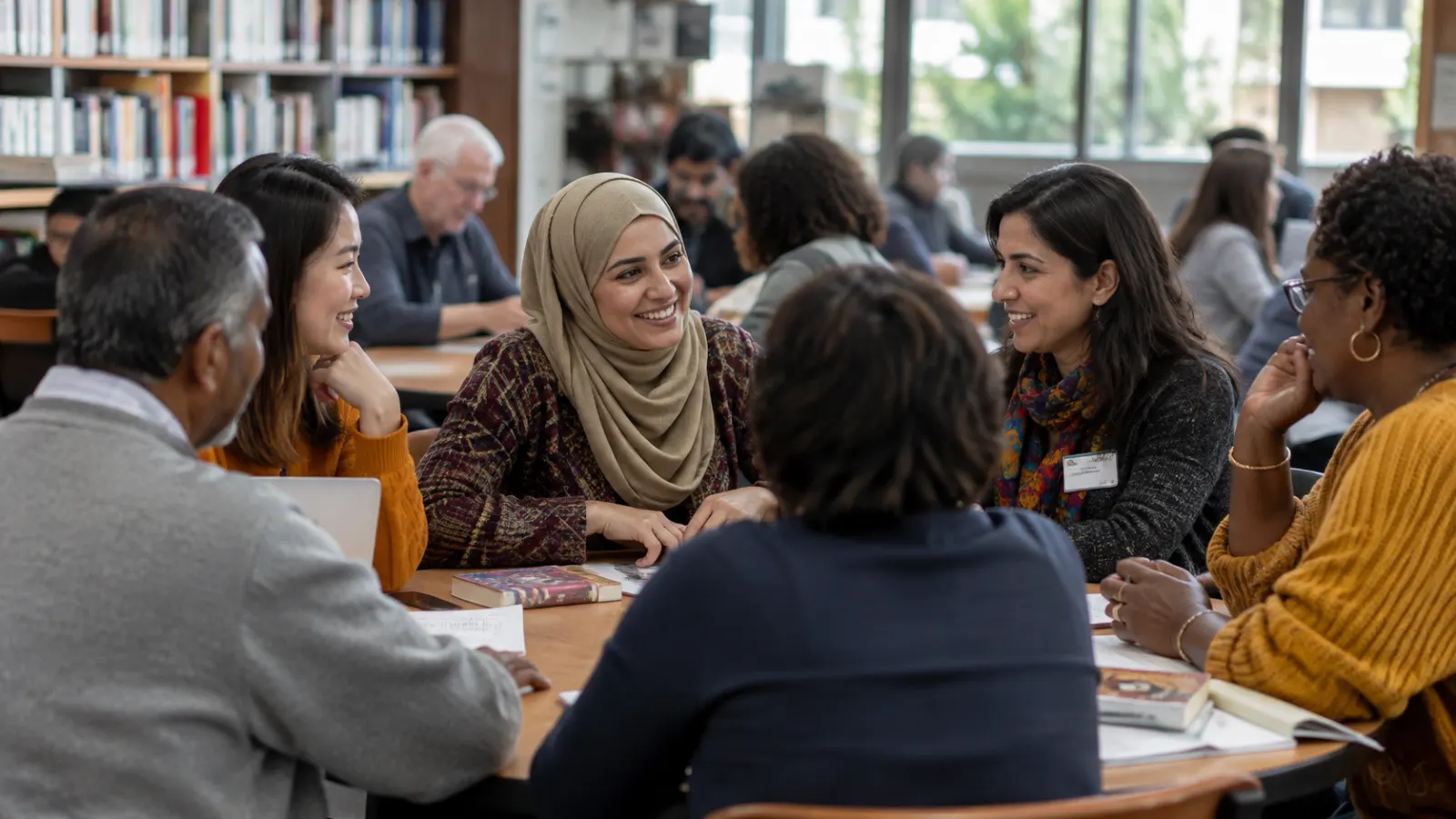
Interaction Matters
A city can be demographically diverse while communities remain socially distant.
The Council of Europe's intercultural model therefore places meaningful interaction alongside equality and diversity.
Contact is most valuable when people meet as relative equals around shared tasks rather than through hierarchical or hostile encounters.
Discrimination Is an Integration Barrier
A migrant can learn the language, obtain qualifications and follow every institutional expectation yet still face discrimination because of name, religion, race or origin.
When that happens, describing the problem as a failure to integrate shifts responsibility away from exclusionary institutions.
Perceived Discrimination Remains Significant
OECD/European Commission data report substantial minorities of foreign-born residents in several countries saying they experience discrimination based on ethnicity, nationality or race.
The exact levels vary, but the policy implication is stable: integration cannot succeed through adaptation alone.
Belonging Is Harder to Measure
People may participate economically and politically while still feeling that the wider society does not accept them.
Belonging concerns identity, recognition and whether a person expects to be treated as a legitimate member.
The Host Society Has Attitudes Too
Integration research increasingly measures not only migrants but how established residents view immigration and interact with newcomers.
This reflects the two-sided model: social distance is produced by both sides.
Local Integration Can Feel More Successful Than National Debate
OECD findings show that people in several countries assess integration more positively in their local area than at national level.
Daily contact may create a more concrete picture than national political narratives.
Media Shape Expectations
News and entertainment affect how communities imagine one another.
If migrants are represented mainly through crime, crisis or welfare, ordinary participation becomes less visible.
Media literacy and diverse representation are therefore relevant to social integration.
Integration Does Not Require Cultural Disappearance
A person can speak a heritage language, practise a religion and maintain family traditions while participating fully in public institutions.
The test of integration is not cultural sameness. It is effective and equal membership.
But Common Rules Are Necessary
Plural societies still require common law, public institutions and procedures for resolving conflict.
Cultural accommodation cannot override fundamental rights simply because a practice is traditional.
Human Rights Set the Boundary
UNESCO's Universal Declaration on Cultural Diversity explicitly links diversity to human rights and states that cultural diversity cannot be invoked to limit internationally guaranteed rights.
This principle helps distinguish pluralism from relativism.
Integration Is Different From Assimilation
Assimilation asks whether minorities become more similar to the mainstream.
Integration asks whether people can participate across institutions and relationships.
The concepts can overlap, but integration does not require complete cultural convergence.
Integration Is Different From Inclusion Too
Inclusion is a broader normative goal: institutions should enable everyone to participate and belong.
Integration is often used more specifically for migrants and minorities entering or navigating an existing social structure.
Contemporary policy increasingly tries to make the structure itself more inclusive.
Economic Integration Has Intergenerational Effects
Parents' employment, income and housing influence children's education and opportunities.
A disadvantage that persists across generations suggests that barriers are structural rather than temporary adjustment costs.
Second Generations Reveal Whether Systems Work
Children born or raised in the host society often speak the national language fluently and complete local schooling.
If major gaps remain despite those advantages, discrimination, neighbourhood inequality or institutional exclusion deserve closer attention.
Women Can Face Distinct Integration Barriers
Care responsibilities, language access, recognition of qualifications and community norms can affect women's participation differently from men's.
Policies designed around an assumed male worker can miss these barriers.
Age Matters
Children often adapt linguistically faster than older adults, while elderly migrants may depend more strongly on family and community networks.
One integration policy cannot fit every life stage.
Refugees Face Different Starting Conditions
Refugees may arrive after trauma, interrupted education and sudden displacement.
Their integration needs can differ from those of students, family migrants or recruited professionals.
Digital Access Is Now Part of Integration
Job applications, government services, education and banking increasingly require digital skills.
A person can be linguistically capable and still excluded by lack of devices, connectivity or digital literacy.
Integration Policy Can Fail Through Fragmentation
Employment agencies, schools, housing departments and municipalities may each address one problem without coordinating.
Because integration is multidimensional, fragmented policy can shift people from one barrier to another.
Cities Are Central
National governments control immigration status and many legal rights, but daily integration happens locally.
Municipalities manage schools, libraries, transport, public space, housing and community programmes.
This is why the Council of Europe's Intercultural Cities programme focuses strongly on local governance.
Integration Requires Time
Language, employment mobility, political trust and cross-group friendships develop at different rates.
Expecting complete outcomes immediately after arrival confuses integration with instant adaptation.
How Integration Should Be Measured
A serious assessment asks multiple questions: Can people work at their skill level? Can children progress in school? Is housing secure? Are people protected from discrimination? Do they participate civically? Do they interact across groups? Do they feel they belong?
No single indicator can answer all of them.
Health Access Is an Integration Issue
People who cannot understand medical instructions, register for care or navigate insurance and public systems face practical exclusion.
Interpretation, culturally competent communication and clear information can matter as much as formal entitlement.
Transport Connects Opportunity
A person may technically have access to jobs or education while living too far away to reach them affordably.
Transport policy therefore influences whether housing segregation becomes economic exclusion.
Public Administration Can Build or Destroy Trust
Routine encounters with police, schools, municipal offices and immigration authorities shape whether people believe institutions treat them fairly.
Transparent procedures, language access and appeal mechanisms help turn legal rights into usable rights.
Integration Requires Reliable Information
New residents need clear information about taxes, schools, health care, labour rights and legal obligations.
When information is fragmented or available only in unfamiliar language, dependence on informal intermediaries increases.
Employers Are Integration Institutions
Hiring practices, recognition of foreign experience, mentoring and promotion determine whether migrants can convert skills into mobility.
A society can invest heavily in language classes while workplace discrimination quietly blocks advancement.
Trade Unions and Professional Bodies Matter
Unions can protect migrant workers from exploitation and connect them to wider labour institutions.
Professional associations can help with credential recognition and networks, but they can also reproduce exclusion if entry rules are opaque.
Religious Institutions Can Support Integration
Places of worship often provide language classes, childcare, social networks and emergency assistance.
They can help newcomers navigate society while preserving identity. Integration does not require weakening every community institution.
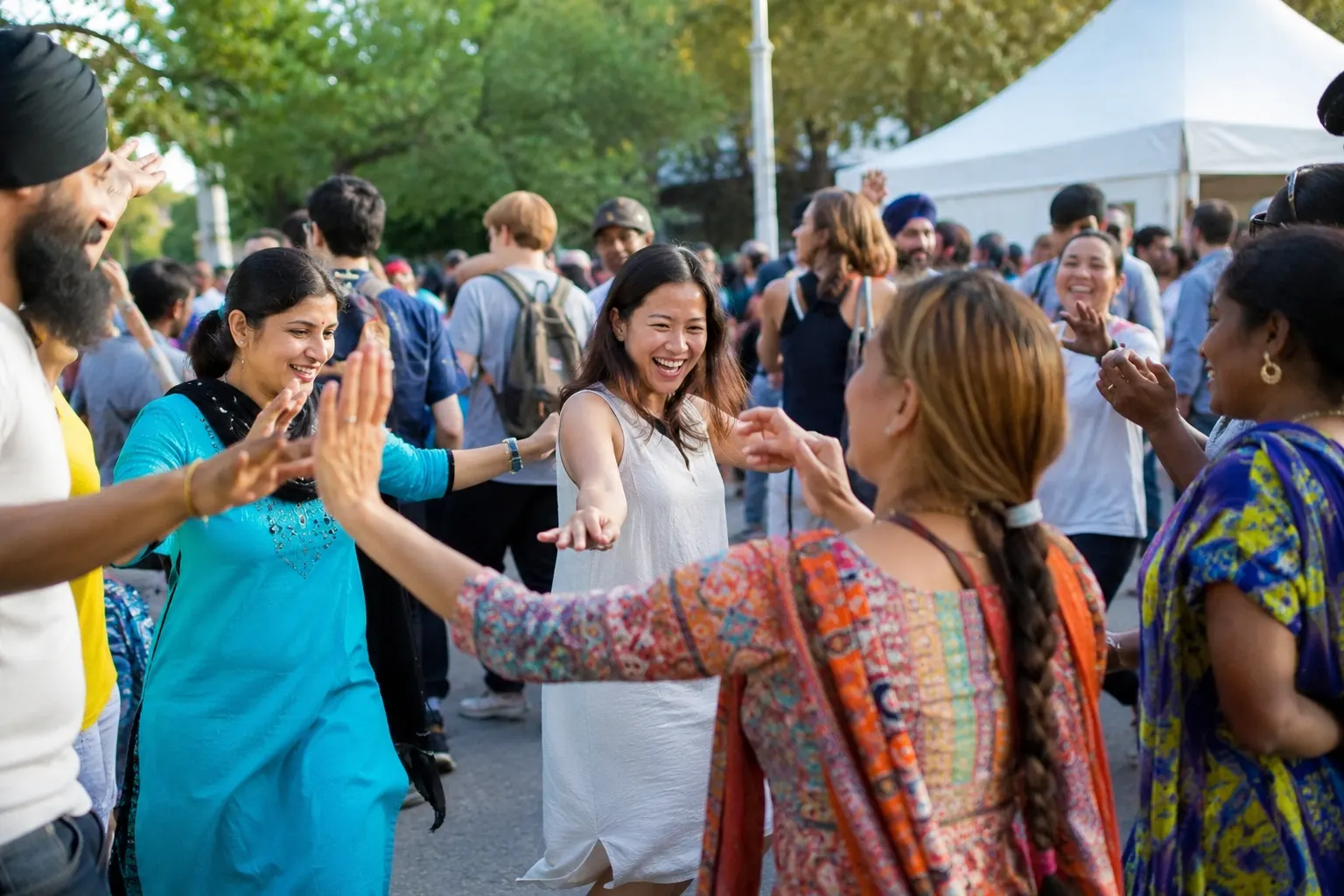
Sports and Culture Create Low-Stakes Contact
Teams, arts groups and public festivals can create repeated interaction outside formal political debate.
These spaces are not substitutes for equal rights, but they can build familiarity across groups.
Integration Can Fail Through Over-Expectation
Newcomers are sometimes judged against an idealised image of national culture that native-born citizens themselves do not uniformly follow.
Expectations should focus on law, participation and workable communication rather than cultural perfection.
Integration Can Also Fail Through Neglect
At the opposite extreme, governments may assume integration happens automatically if people are left alone.
Without language access, credential recognition, fair housing and anti-discrimination enforcement, disadvantages can become entrenched.
Data Should Be Disaggregated
Average outcomes can hide large differences by gender, age, origin, reason for migration and years since arrival.
Good policy needs to know which groups face which barriers rather than treating migrants as one population.
Integration Is Intergenerational
The first generation may focus on stability and work. Their children often face questions of identity, schooling and equal recognition more sharply.
A society that regards locally born children as permanent outsiders has not solved the political problem of integration.
Belonging Is Reinforced by Recognition
People are more likely to invest in common institutions when they believe those institutions recognise them as legitimate members.
This does not mean institutions must endorse every cultural claim. It means identity should not automatically downgrade citizenship.
Integration Policy Needs Public Communication
Governments can undermine their own programmes if public messaging describes migrants mainly as burdens or security problems.
Policy works better when expectations, rights and evidence about outcomes are communicated honestly to both newcomers and established residents.
Integration Is a Long-Term Institutional Capacity
Migration flows rise and fall, but schools, employers, municipalities and courts need permanent capacity to manage diversity.
Treating integration as a temporary emergency produces repeated cycles of improvisation.
Integration Must Include Established Minorities
Policy discussions often focus on recent migrants, but groups that have lived in a country for generations may still face exclusion.
Integration is incomplete when citizenship is long established but institutions continue to treat certain populations as outsiders.
Crisis Can Test Integration
Economic downturns, pandemics and security crises can expose whether solidarity extends across group boundaries.
Scapegoating during crisis is a warning that formal participation has not necessarily produced equal belonging.
Integration Can Be Undermined by Administrative Complexity
People may have formal rights but be unable to use them because procedures are confusing, appointments inaccessible or documentation requirements excessive.
Simpler administration can therefore improve integration without changing cultural behaviour at all.
The strongest systems therefore combine rights, accessible institutions, fair opportunity and repeated opportunities for people from different backgrounds to cooperate as ordinary members of the same society.
Integration is therefore best understood as institutional capacity: the ability of a society to convert legal membership into practical access, participation, interaction and credible belonging over time.
That capacity must survive political change, economic stress and generational transition rather than depending on temporary goodwill.
What Successful Integration Looks Like
Successful integration does not produce a society in which nobody can tell where anyone's family came from.
It produces a society in which origin does not determine access to rights, opportunity or respect.
People can remain different while sharing institutions, responsibilities and a credible sense that the public realm belongs to them too.
Sources / Further Reading
• Council of Europe — Understanding intercultural integration — https://www.coe.int/en/web/interculturalcities/module-2
• Council of Europe — Inclusive societies, minorities and migrants — https://www.coe.int/en/web/inclusion-and-antidiscrimination/inclusive-societies-minorities-and-migrants
• OECD/European Commission — Indicators of Immigrant Integration 2023 — https://www.oecd.org/en/publications/indicators-of-immigrant-integration-2023_1d5020a6-en.html
• OECD — Recent developments in migrant integration policy, International Migration Outlook 2024 — https://www.oecd.org/en/publications/international-migration-outlook-2024_50b0353e-en/full-report/recent-developments-in-migrant-integration-policy_994ef46a.html
• UN Migration Network — GCM Objective 16: Inclusion and social cohesion — https://migrationnetwork.un.org/taxonomy/term/294
• UNESCO — Universal Declaration on Cultural Diversity — https://www.unesco.org/en/legal-affairs/unesco-universal-declaration-cultural-diversity
Suggested Internal Links
• What Is Assimilation — Article 67
• The Salad Bowl Model — Article 66
• What Is Multiculturalism — Article 63