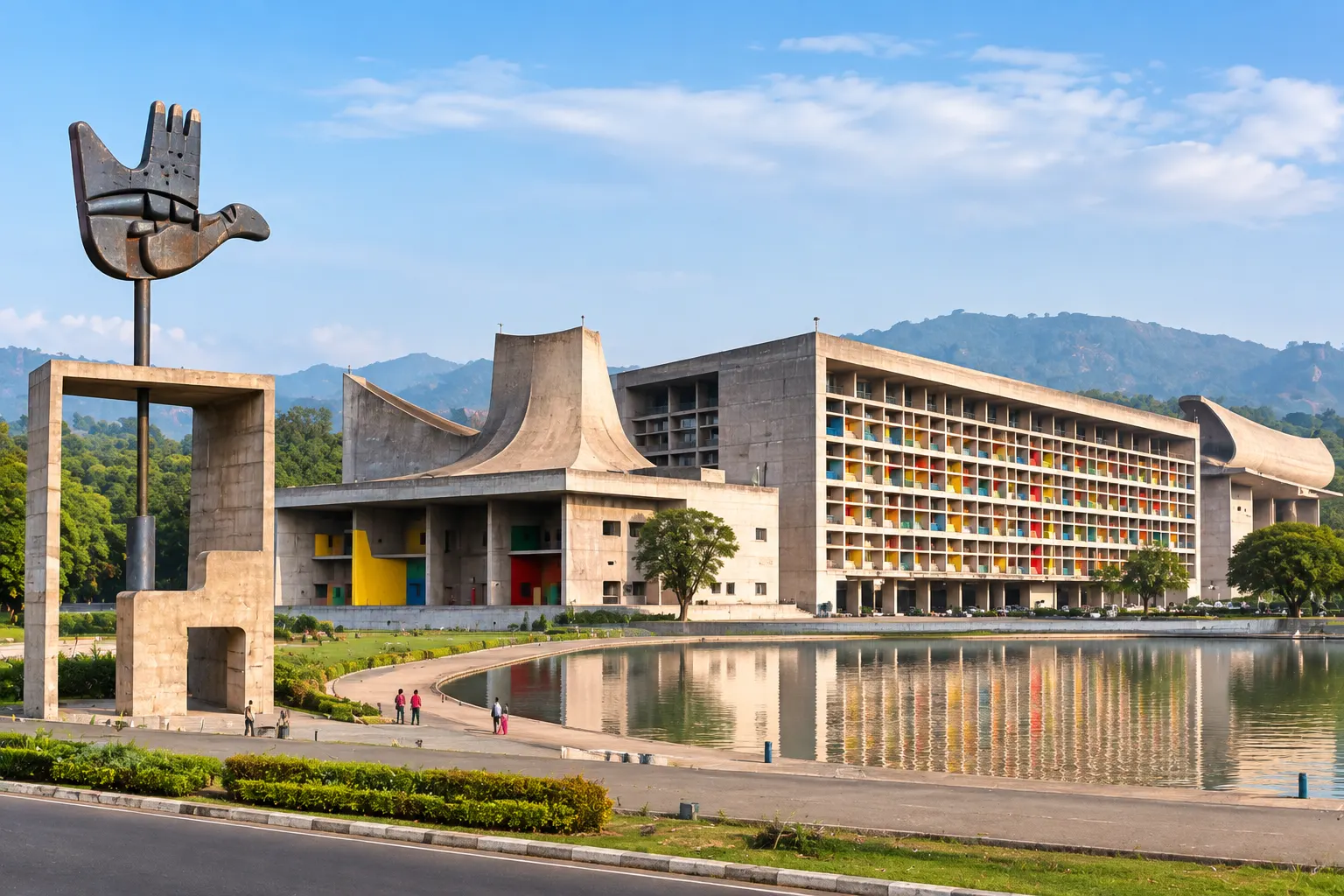
Architecture Is Culture You Can Walk Through
A building looks solid and practical. It has walls, openings, a roof and a structural system. But those choices are never purely technical.
Why is one room public and another private? Why is a place of worship oriented in a particular direction? Why does a courthouse have a monumental staircase? Why are some streets narrow and shaded while others are broad and ceremonial?
Architecture turns social assumptions into physical space.
Shelter Becomes Culture Through Choice
Human beings everywhere need protection from heat, cold, rain and danger. Yet the solutions differ enormously. Materials, building forms and settlement patterns respond to climate and resources, but they also reflect custom, labour, technology and ideas about family.
A courtyard house, stilt house, apartment tower and pastoral dwelling solve different social as well as environmental problems.
Vernacular Architecture Records Local Knowledge
Architectural history often centres famous designers, but much of the world's built environment was created without architects in the modern professional sense.
Vernacular architecture emerges from accumulated local knowledge: which materials survive weather, how roofs drain rain, how walls store or release heat, how spaces support livestock, cooking, craft or extended families.
The U.S. National Park Service emphasises that historic significance can lie in utilitarian and vernacular structures as well as monumental, architect-designed buildings.
Climate Is Built Into Form
Architecture is an environmental record. Thick walls can respond to heat. Steep roofs respond to snow or rainfall. Courtyards create shade and ventilation. Raised structures respond to flooding or airflow.
Modern mechanical systems can reduce dependence on passive design, but they also create energy demands. Renewed interest in climate-responsive architecture has therefore led designers to reconsider traditional techniques.
Materials Carry Geography
Stone, timber, mud, brick, bamboo and concrete do more than produce different appearances. Their use reflects local geology, trade networks, skills and technology.
A region's architecture can change rapidly when new materials become cheap or infrastructure allows imported components. Corrugated metal, cement and glass can transform landscapes within a generation.
Architecture Organises Family Life
Domestic architecture reveals assumptions about privacy, gender, age and kinship. The number of rooms, location of kitchens, relationship between generations and treatment of guests all turn social expectations into floor plans.
As family structures change, houses change. Smaller households, home working, migration and ageing populations create new spatial needs.
Religious Architecture Makes Cosmology Physical
Sacred buildings often encode belief through orientation, hierarchy, light, sound, imagery and ritual movement.
Architecture can separate sacred and ordinary zones, guide processions, control access or focus attention toward a shrine, altar or other sacred element.
The building becomes a theological argument made in space.
Political Power Uses Scale
Palaces, government buildings, triumphal arches and ceremonial avenues communicate authority through size, material and location.
A ruler who occupies the highest point in a city or approaches a palace through enormous courtyards is using space to produce social hierarchy.
Modern democracies also use monumental architecture, often substituting ideas of civic permanence and openness for dynastic power.
Architecture Can Express Ideology
Architectural movements often carry social programmes. The National Park Service notes, for example, associations between Greek Revival architecture and democratic ideals in the nineteenth-century United States.
Modernism later promoted new materials, functional planning and a break from historical ornament. In different political systems, modern architecture became associated variously with social housing, state power, corporate efficiency and technological progress.
Public Space Defines Who Belongs
Architecture does not end at a building's walls. Squares, parks, pavements, markets and transit spaces structure encounters among strangers.
A city with accessible public space offers different possibilities for social interaction than one organised mainly around private compounds and vehicles.
Design therefore affects citizenship at the level of everyday movement.
Architecture Can Exclude
Steps exclude wheelchair users. Gated developments separate populations. Poor lighting can make public space feel unsafe. Segregated housing can reproduce inequality.
Accessibility standards and inclusive design show that architecture is not neutral. Decisions about bodies are embedded in dimensions, entrances, circulation and services.
Workplaces Encode Labour Relations
Factories, offices and warehouses show how work is organised. Assembly lines require linear movement. Open-plan offices reflect different management philosophies from private cellular offices.
Industrial architecture is historically important because it records production systems, not because it is necessarily ornate.
Schools Express Ideas About Learning
A classroom facing one teacher supports a different pedagogy from flexible group spaces. Corridors, playgrounds and assembly halls also shape interaction.
Educational architecture therefore records changing beliefs about discipline, childhood and collaboration.
Cities Are Layers Rather Than Single Designs
UNESCO's Historic Urban Landscape Recommendation describes urban heritage as an accumulation of values produced by successive cultures and experiences.
A city centre may contain medieval street patterns, colonial buildings, industrial infrastructure, modern towers and contemporary transit. The significance lies partly in how these layers coexist.
New Architecture Changes Old Places
Historic cities cannot be frozen. People need housing, infrastructure, accessibility and economic activity.
The challenge is integration. UNESCO's Historic Urban Landscape approach argues for balancing contemporary interventions with inherited values rather than treating conservation and development as automatic opposites.
Architecture Stores Memory
People remember through places. A childhood home, school, factory, cinema or street corner can hold emotional significance far beyond architectural merit.
Collective memory works similarly. Sites of protest, migration, labour or disaster may matter because of what happened there.
Buildings Become Symbols
Some structures become shorthand for cities or nations. Their silhouettes appear on currency, tourism material and political imagery.
This symbolic role can make alteration politically sensitive. People may defend a building because it represents continuity even when they rarely use it.
Architecture Shapes Tourism and Economy
Historic districts and distinctive architecture attract visitors, businesses and investment. Adaptive reuse can give old buildings new functions.
But success creates pressure. Rising property values may displace residents, while tourism can turn living neighbourhoods into visitor economies.
Heritage management therefore has to protect community life, not only facades.
Adaptive Reuse Gives Buildings New Lives
A warehouse can become housing. A railway station can become a museum. A factory can become offices or cultural space.
Adaptive reuse can conserve embodied materials and historical character while meeting new needs. ICOMOS's Venice Charter recognised that socially useful use can support conservation provided it does not destroy essential character.
Preservation Is Also an Environmental Question
Demolishing and rebuilding consumes materials and energy. Reusing viable structures can reduce some of those impacts, although old buildings may require upgrades for energy performance and safety.
The environmental argument for preservation should therefore be assessed case by case rather than used as a slogan.
Architecture Records Inequality
Grand houses and workers' quarters, formal boulevards and informal settlements, segregated institutions and infrastructure all reveal unequal access to land and resources.
Preserving only elite buildings produces a distorted architectural history. NPS documentation programmes explicitly include utilitarian and vernacular structures because ordinary environments tell important stories.
Colonial Architecture Has Multiple Meanings
Colonial buildings may represent technological exchange, local craft and urban history while also embodying conquest and unequal power.
Communities may choose preservation, adaptation, reinterpretation or removal of particular symbols. There is no universal answer because meaning depends on context.
Architecture Changes Behaviour Gradually
Design rarely determines human behaviour completely. People adapt spaces in unexpected ways.
But architecture sets possibilities and frictions: where people can gather, who can enter, what is visible, how far one must travel and which activities fit comfortably.
Over time these small spatial conditions influence social life.
Digital Technology Is Changing Architecture
Building-information modelling, digital fabrication and 3D scanning alter both design and preservation. UNESCO notes the growing use of digital recording for complex vernacular and built heritage.
Digital copies cannot replace buildings, but they can document details, support restoration and preserve information after disaster.
Architecture Is Never Only About the Architect
Every building depends on clients, regulations, craftspeople, engineers, labourers, materials, finance and users.
Treating architecture as the biography of a famous designer misses the social system that made the building possible.
Infrastructure Is Cultural Architecture Too
Bridges, canals, railway stations, reservoirs and transit networks shape settlement and collective experience. They determine which places are connected and which remain peripheral.
Infrastructure often becomes invisible because people experience it as necessity. Historians recover its cultural role by asking whose mobility it enabled and whose land it transformed.
Building Codes Record Social Priorities
Fire regulations, sanitation rules, seismic standards and accessibility requirements leave physical traces in buildings.
Codes are technical documents, but they also show what risks a society has learned to recognise and which bodies public design is expected to accommodate.
Architecture Can Be a Form of Cultural Diplomacy
Embassies, world's fairs, museums and national pavilions are frequently designed to represent a country to outsiders.
The resulting architecture is carefully symbolic: it may emphasise technological modernity, historical continuity or distinctive materials.
Informal Settlements Also Produce Architecture
Large populations build outside formal planning systems, adapting limited land and materials to immediate needs. These environments contain ingenuity as well as vulnerability.
Treating only formally designed buildings as architecture excludes a major part of urban cultural life.
Demolition Can Destroy Social Networks
Redevelopment is usually evaluated through housing numbers, traffic or land value. But demolishing a neighbourhood can also break local support networks, businesses and place-based memory.
This does not mean old fabric must always survive. It means social loss belongs in the calculation.
Architecture Shapes Health and Comfort
Ventilation, daylight, crowding, sanitation and thermal comfort affect daily well-being. Historical epidemics influenced street planning, sewage systems and housing regulation, while contemporary design must respond to air quality, heat and ageing populations.
These concerns are cultural because standards of acceptable domestic and public space change as societies learn more about health and as expectations rise.
Housing Policy Becomes Visible in Buildings
Mass housing, social housing, company towns and informal settlements reveal how governments and markets respond to the basic need for shelter.
Standardised blocks can represent welfare ambition, cost control or social engineering. Their later reputation depends not only on design but on maintenance, location, employment and public services.
Architecture Can Preserve Minority Identity
Religious centres, community halls, ethnic commercial streets and distinctive domestic forms can help minority groups maintain cultural continuity.
When redevelopment removes these places, communities may lose institutions that supported language, ritual and social networks.
Beauty Is Historically Variable
Buildings once condemned as ugly can become beloved heritage, while styles once celebrated can fall from favour.
Architectural value therefore changes with taste. Preservation decisions should not depend only on current aesthetic preference, especially when a structure has historical or social significance.
The Built Environment Shapes Memory Before We Notice It
People learn a city through repeated routes, landmarks and spatial habits. A demolished building can create a sense of disorientation even when residents never considered it architecturally important.
This everyday attachment is one reason urban conservation increasingly includes community perceptions alongside expert evaluation.
Why Architecture Matters
Architecture matters because it is where abstract cultural values become physical constraints and opportunities.
It tells us how people understood privacy, hierarchy, worship, work, climate, technology and citizenship. It shapes daily routines while carrying evidence of previous generations.
A building is therefore both an object and a relationship: between people, materials, institutions and place.
That is why architecture belongs at the centre of cultural history rather than at its decorative edge.
Sources / Further Reading
• UNESCO — Recommendation on the Historic Urban Landscape — https://www.unesco.org/en/legal-affairs/recommendation-historic-urban-landscape-including-glossary-definitions
• UNESCO World Heritage Centre — Historic Urban Landscape — https://whc.unesco.org/en/hul/
• U.S. National Park Service — Historic Structure Reports — https://www.nps.gov/articles/000/phscl-collection-spotlight-historic-structure-reports.htm
• U.S. National Park Service — Historic American Buildings Survey — https://www.nps.gov/subjects/heritagedocumentation/habs.htm
• ICOMOS — Venice Charter — https://www.icomos.org/images/DOCUMENTS/Charters/Venice_Charter_EN_2023.pdf
• UNESCO — Culture — https://www.unesco.org/en/culture
Suggested Internal Links
• How Buildings Tell Stories — Article 38
• What Is Heritage and Why We Preserve It — Article 39
• Understanding the Value of Historical Monuments — Article 40
• How Art Reflects Its Times — Article 36
• Understanding How Communities Form Identity — Article 18