Order Alone Is Not the Same as Social Unity
A society can be quiet because people trust one another, because institutions are legitimate, because routines are predictable—or because people are afraid.
Those conditions may look similar from a distance, but they are not equally durable. Force can produce obedience. It cannot by itself create the countless voluntary acts of cooperation on which ordinary social life depends.
Large Societies Depend on Invisible Cooperation
Most people buy food from strangers, travel beside strangers, accept money from institutions they do not personally control and depend on professionals they will never know.
Modern society works because people assume that many unknown others will follow enough shared rules to make these interactions possible.
Norms Make Behaviour Predictable
Social norms are informal expectations about behaviour: queuing, keeping promises, caring for children, respecting personal space, reciprocating favours or showing up when expected.
Norms reduce uncertainty. They allow people to coordinate without negotiating every detail from the beginning.
Norms Are Learned Before They Are Debated
Families, schools, peers, workplaces, religious communities and media teach people what behaviour appears normal.
This process of socialisation gives societies continuity, although norms can also preserve injustice and therefore remain open to criticism.
Trust Lets People Take Social Risks
Cooperation requires vulnerability. A buyer pays because they trust a product will be delivered. A citizen supplies information because they trust an institution not to misuse it. A neighbour lends a tool because they expect it to return.
Trust makes social life less costly. When it collapses, people spend more effort protecting themselves from one another.
Interpersonal and Institutional Trust Are Different
A person may trust family and neighbours while distrusting government. Another may trust courts and banks while knowing little about neighbours.
Stable societies need workable relationships at several levels: within groups, across groups and between citizens and institutions.
Law Makes Some Expectations Public and Enforceable
Informal norms are not enough for complex societies. Law defines rights, duties, contracts, crimes, property, political procedures and standards for public authority.
The power of law comes partly from enforcement, but also from predictability. People organise their lives around the expectation that rules will continue to apply tomorrow.
The Rule of Law Limits Power
A legal system holds society together more effectively when rules constrain authorities as well as citizens.
If powerful people can ignore law without consequence, compliance begins to look like submission rather than membership in a common order.
Legitimacy Is What Turns Power Into Authority
Institutions cannot police every interaction. They depend on enough people accepting that their authority is broadly rightful even when individual decisions are unpopular.
Legitimacy comes from many sources: democratic consent, constitutional continuity, competent performance, fairness, tradition or combinations of them.
Fair Procedure Can Sustain Legitimacy
People are more likely to accept losses when they believe the process was transparent, consistent and open to challenge.
This does not make outcomes irrelevant. Persistent unfair outcomes eventually damage confidence in procedure too.
The Social Contract Is a Useful Metaphor
Political thinkers have long used the social contract to describe expectations linking citizens and governing institutions.
Modern policy uses the term more broadly for shared expectations about taxes, public services, social protection, opportunity, regulation and responsibility.
The contract is not usually a literal document. It is a pattern of reciprocal expectations: what people believe institutions owe them and what they owe one another.
Public Goods Create Shared Dependence
Roads, sanitation, public health, education, policing, clean air and disaster protection are difficult to organise through purely private relationships.
Shared public goods make interdependence visible. They also create conflict about who pays, who benefits and what level of provision is fair.
Taxation Is a Social Relationship
Tax systems are not merely financial machinery. They depend on beliefs about fairness, reciprocity and state competence.
People are more willing to contribute when they believe others also contribute and that resources are not simply captured by corruption or privilege.
Economic Security Reduces Zero-Sum Politics
Economic insecurity can make social cooperation harder because each policy change appears to threaten survival.
The UN World Social Report 2025 argues that insecurity, inequality and distrust are destabilising societies and calls for equity, economic security and solidarity as foundations for social progress.
Inequality Matters Through Perceived Fairness
People do not compare only absolute income. They ask whether opportunities, burdens and respect are distributed fairly across groups.
Persistent group-based inequality can corrode cohesion because it signals that the common system is not genuinely common.
Solidarity Extends Obligation Beyond Personal Ties
Solidarity is the willingness to accept some responsibility for people outside one's immediate family or group.
Welfare systems, disaster relief and public health all depend on the idea that strangers can have legitimate claims on shared resources.
Families Provide the First Layer of Social Support
Families provide care, identity, socialisation and material support. They are often the first institutions through which people learn reciprocity and responsibility.
But families cannot provide every form of security, and unequal family resources can reproduce inequality. Public institutions exist partly because private support is uneven.
Communities Create Everyday Reciprocity
Neighbourhood groups, religious organisations, clubs, cooperatives and voluntary associations create repeated interaction among people who are not relatives.
These networks generate social capital: relationships that help information, trust and cooperation travel.
Markets Also Require Social Foundations
Markets are sometimes imagined as alternatives to social ties, but contracts, money and exchange depend on trust, legal enforcement, information and predictable institutions.
Economic life therefore rests on social foundations that markets alone do not create.
Education Reproduces and Revises the Social Order
Schools transmit literacy and technical knowledge, but they also teach schedules, rules, cooperation, civic narratives and expectations about authority.
Education can strengthen common institutions while also giving students tools to question inherited norms.
Shared Stories Help Strangers Imagine Membership
Nations, cities, religions and movements use stories about origins, sacrifices, achievements and future goals to create collective identity.
These stories can build solidarity, but they become exclusionary when only one group is allowed to represent the whole society.
Collective Memory Can Unite and Divide
Public memory provides reference points for shared meaning. Commemorations and monuments tell people which events matter.
Contested memory is normal in plural societies. The challenge is creating institutions capable of revising public narratives without treating revision as social betrayal.
Rituals Turn Abstract Membership Into Experience
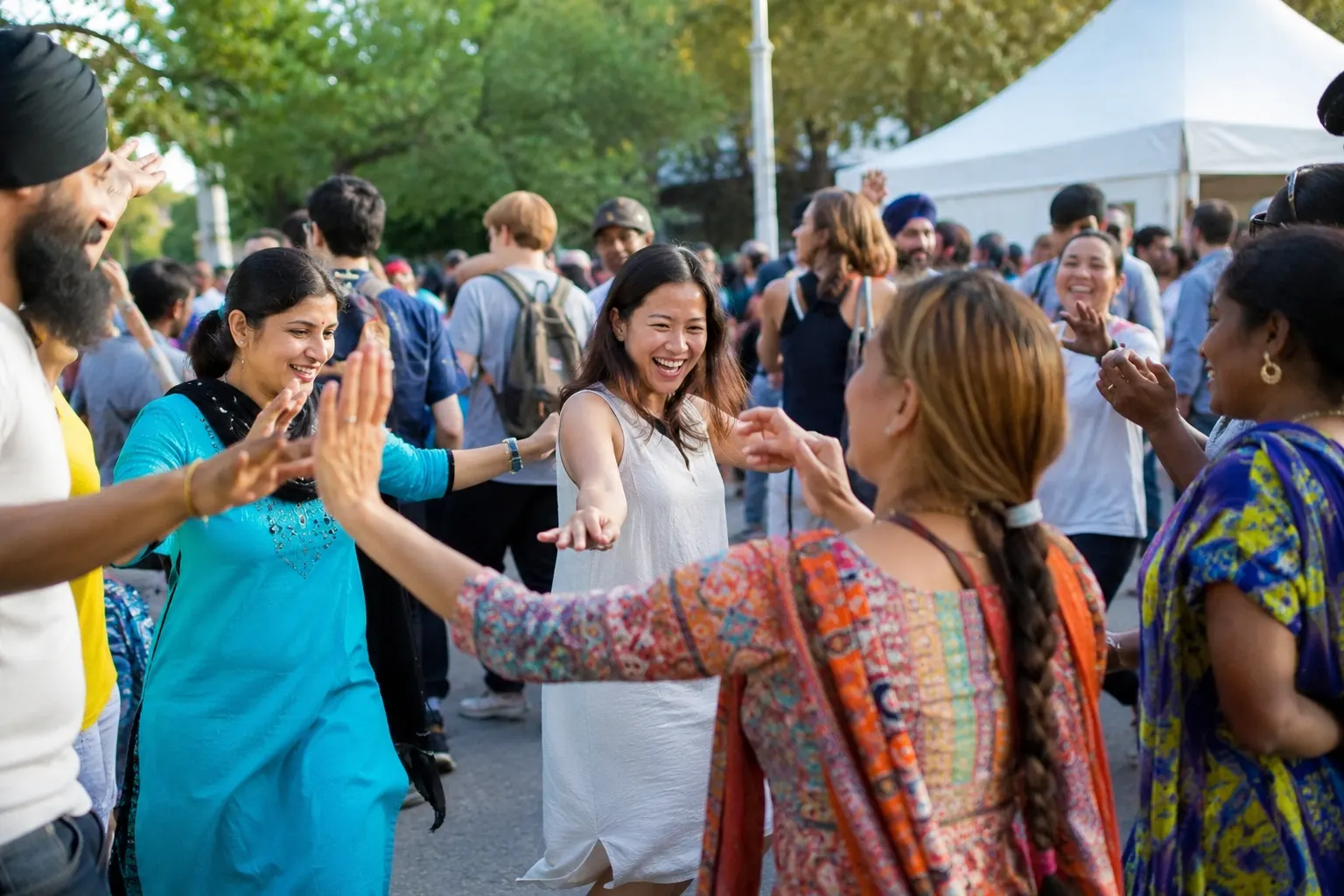
Elections, public ceremonies, festivals, school assemblies, sporting events and civic commemorations create moments in which people experience collective membership.
Ritual alone cannot repair injustice, but repeated shared practices can reinforce social connection.
Media Create a Shared—or Fragmented—Public Sphere
Societies need some channels through which citizens learn about common problems and hear arguments outside private networks.
When information environments become completely separate, groups can lose the factual basis needed for disagreement to remain productive.
Pluralism Requires Rules for Living With Deep Difference
Modern societies rarely agree on one religion, morality or lifestyle. Stability therefore depends less on one shared worldview and more on shared procedures for protecting rights and resolving conflict.
Pluralism is held together by constitutional rules, civic restraint and the willingness to recognise opponents as legitimate members.
Conflict Is Not a Failure of Society
Conflict can expose neglected grievances and produce reform. The danger arises when there are no credible channels through which conflict can be negotiated.
Courts, elections, collective bargaining, protest, journalism and public consultation give disagreement institutional form.
State Capacity Matters
A government may have excellent constitutional principles and still lose legitimacy if it cannot deliver basic services or enforce rules consistently.
Competence is therefore part of the social bond. Institutions earn trust partly by working.
Corruption Damages More Than Budgets
Corruption signals that formal rules are not the real rules. It tells citizens that access depends on private connections rather than equal procedures.
The damage is cultural as well as financial because it teaches people not to trust common institutions.
A Shared Future Can Matter More Than a Shared Past
Societies with different historical memories can still cooperate if people believe their futures are linked.
Housing, climate resilience, education, economic opportunity and public safety can become forward-looking sources of common purpose.
Crisis Tests Every Layer at Once
During war, disaster or economic shock, societies need trust, capable institutions, reliable information, community networks and willingness to share burdens.
Failure in one layer can place enormous pressure on the others.
Social Order Needs Expectations About the Future
Cooperation becomes difficult when people believe rules, currency, borders or institutions may change unpredictably tomorrow.
Stability is partly temporal: citizens and businesses need enough confidence in the future to make commitments that only pay off later.
Generational Reciprocity Matters
Pensions, schools, debt, infrastructure and climate policy distribute costs across generations.
A society holds together over time when younger and older citizens believe obligations are not permanently tilted toward one age group.
Security Must Be Legitimate
Public order requires institutions capable of preventing violence, but coercive capacity alone cannot produce consent.
Security institutions strengthen the social bond when people believe protection is distributed fairly and abuse can be investigated.
Informal Institutions Fill Gaps
Where formal institutions are weak, communities rely more heavily on customary authorities, kinship networks and informal dispute resolution.
These systems can provide order, but they may also exclude people who lack the right connections or status.
Shared Standards of Truth Matter
Societies can tolerate strong disagreement about values more easily than total disagreement about how evidence is established.
Courts, science, journalism and audit institutions provide procedures for testing claims even when conclusions remain contested.
Coercion Has Limits
States need legitimate coercive capacity to enforce law, but policing every obligation would be impossible.
Most people usually comply with most rules because habits, legitimacy and social expectations support enforcement. A society that requires constant force to produce ordinary compliance is already paying the price of weak trust.
Public Services Are Everyday Evidence of the Social Contract
Citizens experience government through schools, clinics, permits, transport, utilities and emergency response more often than through constitutional theory.
Competent service delivery makes the state tangible. Repeated failure teaches the opposite lesson: formal membership does not reliably produce common provision.
Civic Associations Connect Private Life to Public Life
Unions, charities, clubs, professional bodies and neighbourhood organisations allow people to practise cooperation outside the family and the state.
They can aggregate interests, train leaders and create relationships across social divisions. They can also become exclusionary, so the quality of association matters as much as its quantity.
Status Equality Matters Alongside Income
People care about recognition as well as material resources. A group may gain income while still being treated as socially inferior or politically suspect.
Durable social order therefore requires dignity and equal standing, not only redistribution.
A Common Public Language Helps Coordination
Large societies need ways for people to communicate across communities, whether through one shared language or multilingual institutions with reliable translation.
Common communication reduces friction, but forcing linguistic uniformity can weaken belonging when it is used to erase minority identity.
Constitutions Turn Conflict Into Procedure
Constitutions define who may decide, what rights remain protected and how power changes hands.
Their social value lies partly in making political conflict predictable. Opponents can fight hard over policy while agreeing on the rules governing the fight.
Collective Action Needs Confidence That Others Will Participate
Public problems such as vaccination, climate adaptation, taxation or neighbourhood safety require people to act on the assumption that others will also contribute.
If citizens expect widespread free-riding, even cooperative people may withdraw. Institutions help by making contribution visible, rules credible and cheating costly.
The Strongest Societies Can Reform Themselves
Rigid order can look stable until pressure becomes unbearable.
Durable societies provide mechanisms for reform—elections, courts, bargaining, protest, journalism and administrative review—so grievances can change institutions without requiring social rupture.
Status Hierarchies Can Undermine Common Membership
Societies often tolerate inequality more easily than humiliation. When some groups are routinely treated as less respectable, less credible or less entitled to public space, the symbolic basis of equal membership weakens.
Dignity therefore belongs alongside income, rights and services in any account of social order.
Predictable Succession Prevents Power From Becoming Existential
Political systems are more stable when leaders can leave office without collapsing the state and opponents can take power without destroying the rules that allowed them to win.
Regular succession turns political competition into an institution rather than a struggle for permanent control.
Shared Membership Requires Limits on Exclusion
Every society draws boundaries around membership, but cohesion is weakened when groups can be pushed outside ordinary rights by temporary political majorities.
Constitutional protections, due process and equal citizenship create a floor beneath political conflict: people may lose an election or argument without losing their status as members of the society.
Stable societies also need citizens to believe that losing one dispute does not end their future claim to voice, protection or participation.
What Holds a Society Together
No single force holds society together. Social order is layered.
Norms make behaviour predictable. Trust lowers the cost of cooperation. Law and institutions make obligations enforceable. Legitimacy turns power into accepted authority. Solidarity creates obligations among strangers. Communities provide relationships. Public goods create shared dependence. Education and media reproduce common knowledge.
A society is most durable when these layers reinforce one another—and when people who disagree still believe the system leaves them a meaningful place inside it.
Sources / Further Reading
• United Nations — World Social Report 2025 — https://desapublications.un.org/publications/world-social-report-2025-new-policy-consensus-accelerate-social-progress
• World Bank Group — Social Cohesion and Resilience — https://www.worldbank.org/ext/en/topic/social-development/social-cohesion-and-resilience
• World Bank — Social Contract Role — https://www.worldbank.org/en/programs/futureofgovernment/social-contract-role
• OECD — Survey on Drivers of Trust in Public Institutions 2024 — https://www.oecd.org/en/publications/oecd-survey-on-drivers-of-trust-in-public-institutions-2024-results_9a20554b-en.html
• OECD — Trust and social capital — https://www.oecd.org/en/publications/for-good-measure_9789264307278-en/full-report/component-13.html
Suggested Internal Links
• Social Cohesion Explained — Article 71
• Social Capital Explained — Article 19
• Pluralism in Society — Article 24
• The Role of Education in Society — Article 73
• Why Community Matters — Article 17