The Science of Healthy Weight Loss: What Actually Helps — and Why Maintenance Is the Hard Part
Weight loss is often described as though the science has only two camps. One says it is simple: eat less and move more. The other says calories are irrelevant because hormones, metabolism or food quality control everything.
Neither description is adequate.
Body fat cannot be lost indefinitely without the body drawing on stored energy, so a sustained energy deficit matters. But creating and maintaining that deficit happens inside a living system shaped by appetite, hormones, body composition, sleep, medications, genetics, food availability, culture, mental health and physical environment.
That is why a mathematically simple principle can become a difficult long-term clinical problem.
Healthy weight loss is not the fastest route from one scale number to another. It is a process that improves health while preserving nutrition, muscle and function — and that has some chance of being maintained when the initial motivation fades.
First: not everyone should be trying to lose weight
Weight loss is not a universal health prescription.
A person’s body weight should be interpreted alongside age, growth, pregnancy status, medical history, body composition, waist distribution, laboratory findings, physical function and psychological health. Children and adolescents require growth-based assessment rather than adult dieting rules. Pregnancy is not a time for unsupervised intentional weight loss. People with eating disorders or significant unintentional weight loss need different care.
Even among adults, BMI is a screening measure rather than a complete diagnosis. CDC notes that BMI does not distinguish fat mass from muscle or bone and cannot show where body fat is located.
For people with overweight or obesity who have weight-related health risk, however, modest loss can be clinically meaningful. CDC notes that even about a 5% reduction can improve measures such as blood pressure, cholesterol and blood glucose. NIDDK gives losing about 5% over six months as one possible initial goal for adults who need weight reduction.
The objective is health improvement, not achieving the smallest possible body.
Obesity is more than a failure of willpower
WHO describes obesity as a chronic, complex disease. NIDDK likewise identifies genes, sleep, medicines, health conditions, lifestyle and environmental factors as influences on weight.
This matters because the moral model of obesity produces poor medicine. If treatment assumes that every person simply lacks discipline, it ignores biological variation in appetite, the effect of medications, poverty, shift work, chronic stress, disability, neighbourhood design and the modern food environment.
Recognising complexity does not invalidate energy balance. It explains why different people find the same behavioural prescription dramatically different in difficulty.
The energy deficit is necessary — but it does not tell you how to create one
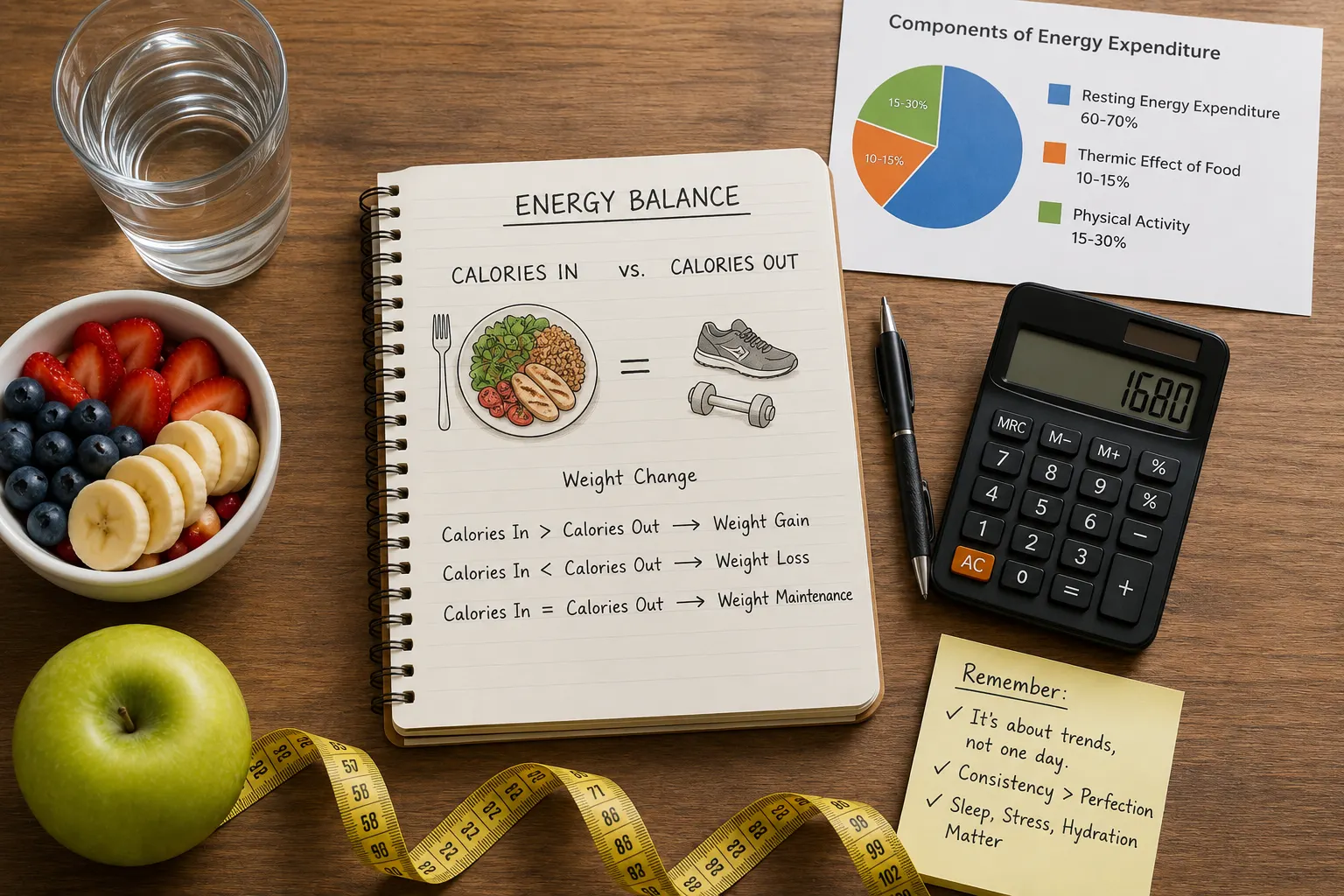
When average energy intake remains below average energy expenditure, stored energy is mobilised and body weight tends to fall. This is the physical foundation of weight loss.
But “eat fewer calories” is not yet a treatment plan.
A lower-calorie pattern can be produced by changing portions, reducing frequent energy-dense foods, changing beverages, increasing lower-energy-density foods, altering meal structure or using a more formal dietary pattern. Some people benefit from tracking intake; others do better with environmental and portion-based strategies.
The best approach is not the one with the cleverest metabolic story. It is the one that is nutritionally adequate, produces an appropriate deficit and can be followed safely enough to matter over time.
Food quality still matters
A calorie measures energy, not nutritional quality.
WHO’s 2026 healthy-diet guidance emphasises a varied diet largely based on minimally processed or unprocessed foods, with vegetables, fruits, pulses, whole grains and appropriate sources of protein and fats. These recommendations matter even when weight is the immediate goal because health outcomes depend on more than body mass.
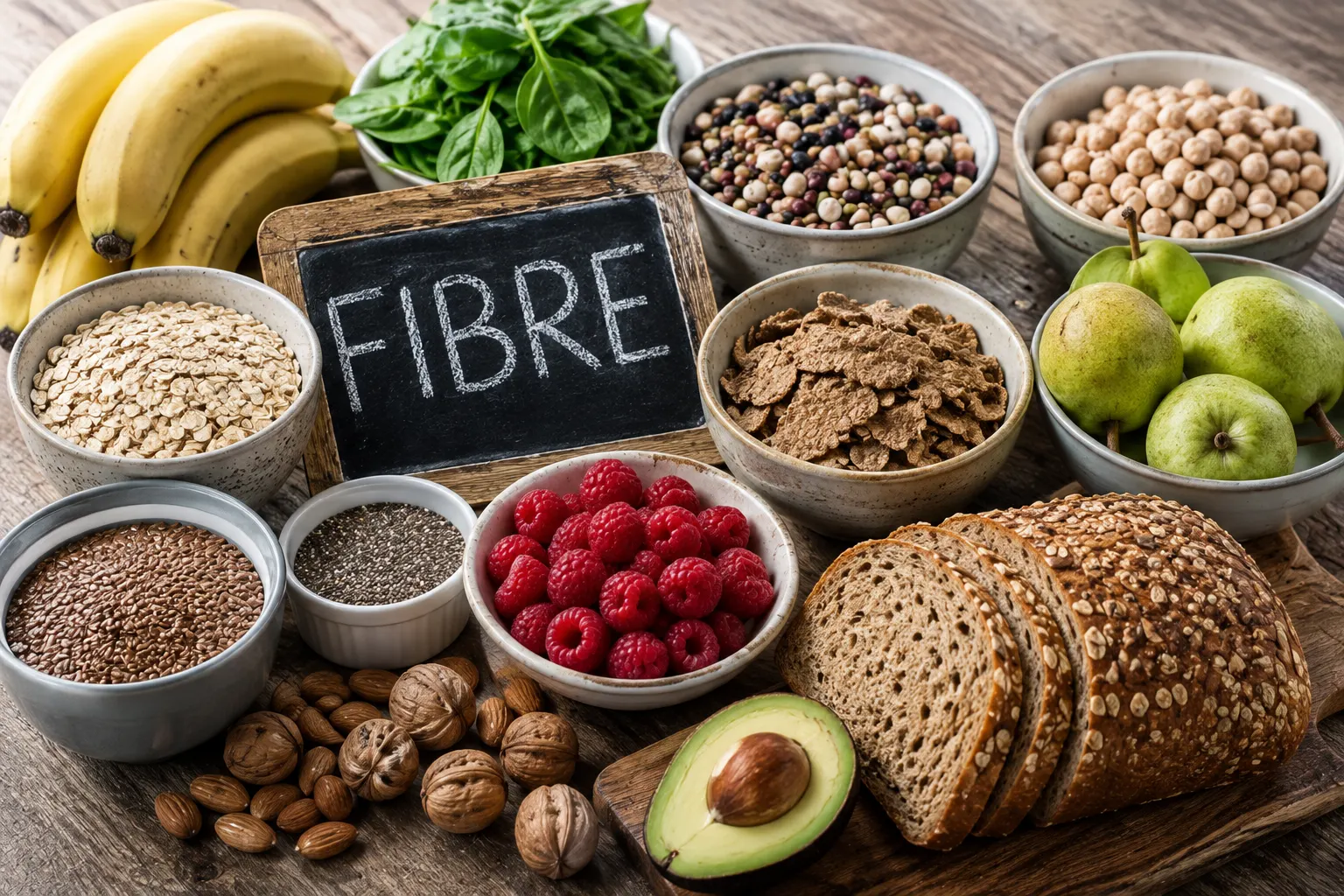
Food quality also influences the experience of calorie reduction. Fibre-rich foods and adequate protein can support satiety for many people. Foods with high water content can increase meal volume for relatively fewer calories. Replacing sugary beverages with water can reduce intake without reducing solid food portions.
None of these strategies violate energy balance. They are ways of making a lower average energy intake easier to sustain while improving diet quality.
There is no single perfect weight-loss diet
Low-fat, low-carbohydrate, Mediterranean-style, plant-forward and other structured eating patterns can all be designed to produce weight loss.
When diets are compared in trials, adherence often matters as much as the advertised macronutrient ratio. A diet that works metabolically on paper but is abandoned after three weeks has limited practical value.
This is why extreme exclusion rules deserve scepticism unless there is a medical reason for them. A successful dietary pattern must fit the person’s food preferences, culture, budget, cooking facilities, schedule and health conditions.
The question is not “Which diet wins the internet?” It is “Which nutritionally sound pattern can this person sustain while creating the required deficit?”
How fast should weight loss be?
CDC commonly advises gradual loss of about 1 to 2 pounds per week because people losing at a steady pace are more likely to maintain the loss than those losing faster.
That is sensible general guidance, not an absolute law.
Starting body size, medical treatment and the size of the prescribed energy deficit can produce different rates. Some evidence-based, medically supervised programmes intentionally use low-energy diets and can produce faster initial loss. Bariatric surgery and effective obesity medicines can also change weight more rapidly than ordinary lifestyle treatment.
The better safety questions are whether the rate is appropriate for the individual, whether nutrients and protein are adequate, whether lean tissue and function are being protected, and whether complications are being monitored.
Very rapid loss can increase gallstone risk, which is one reason unsupervised severe restriction is different from clinical treatment.
Why the first weeks are misleading
Early weight loss often contains a large water component.
When food intake — particularly carbohydrate intake — changes sharply, glycogen stores and their associated water can change. Sodium intake and bowel contents also move the scale.
A person may therefore lose several kilograms quickly at the beginning and then believe the diet has “stopped working” when the rate slows. In reality, the first phase contained water changes that cannot continue indefinitely.
Healthy interpretation relies on trends over weeks, not emotional reactions to daily fluctuations.
Metabolism changes during weight loss
A smaller body generally uses less energy than a larger version of the same body. That alone means calorie requirements decline as weight is lost.
NIDDK also notes that metabolism slows during weight loss. Research describes adaptive thermogenesis — an additional reduction in energy expenditure beyond what would be expected from body-composition change alone — although its size varies.
This helps explain the common plateau. The intake that once produced a large deficit may eventually produce a small deficit or approximate maintenance.
The plateau is not evidence that calories stopped mattering. It is evidence that the system adapted.
Appetite can push in the opposite direction
The energy-expenditure side receives much attention, but appetite may be equally important.
Weight loss can alter hormonal and neural signals involved in hunger and satiety. A person may therefore be trying to maintain a lower intake at the same time that biological appetite is becoming more persistent.
That is one reason weight regain should not be reduced to laziness. The post-weight-loss environment may look the same while the biological experience of that environment has changed.
Effective maintenance often requires continued structure rather than assuming the body will automatically defend the new weight.
Exercise is valuable even when the scale moves slowly
Most weight loss is usually produced by reducing calorie intake because it is easier to remove several hundred calories from the diet than to expend the same amount through exercise every day.
That does not make exercise optional for health.
CDC notes that physical activity helps create a calorie deficit and is particularly important for weight maintenance. Federal physical-activity guidance recommends at least 150 minutes per week of moderate-intensity aerobic activity for adults, plus muscle-strengthening activity on two or more days per week.
Exercise improves cardiovascular fitness, blood pressure, glucose regulation, mood, sleep, physical function and other health outcomes even when body weight changes little.
The scale is therefore a poor way to judge the total value of becoming more active.
Resistance training protects something dieting can take away
Weight lost during calorie restriction includes both fat and some lean tissue. The proportions vary.
Preserving skeletal muscle matters because muscle contributes to strength, mobility, glucose metabolism and function. Resistance training is one of the most useful tools for protecting lean mass during weight reduction. Adequate dietary protein also matters, particularly in older adults and during substantial weight loss.
This is one reason “lose as much weight as possible” is an inferior goal to improving body composition and health.
A person who loses less total scale weight while preserving more muscle may achieve a better functional result than someone who produces a larger number by losing both fat and substantial lean tissue.
Sleep belongs in a weight-management plan
Sleep does not replace energy balance, but it can influence the behaviours and physiology that determine it.
NIDDK lists sleep among factors affecting weight, while CDC’s current healthy-weight framework includes healthy eating, physical activity, optimal sleep and stress reduction.
Poor sleep can make appetite regulation, food choices, recovery and physical activity more difficult. Shift work can add circadian disruption and irregular eating opportunities.
This is another example of why telling someone simply to “have more willpower” is inadequate. A person repeatedly sleeping five hours may be trying to manage appetite and activity under very different conditions from someone consistently sleeping well.
Stress matters, but not because cortisol magically creates fat from nothing
Chronic stress can alter sleep, appetite, alcohol use, food choices and activity. Some people eat less under stress; others eat more. Stress can also complicate diabetes, blood pressure and mental health.
Claims that “cortisol is the reason you cannot lose weight” are usually too simplistic. Hormones influence energy regulation, but they do not abolish basic physiology.
Stress management belongs in a comprehensive health plan because it affects behaviour and wellbeing, not because one relaxation technique directly melts abdominal fat.
Measuring progress beyond kilograms
Scale weight is useful because it is inexpensive and easy to measure, but it is not the only outcome that matters.
Depending on the person, useful markers may include:
waist circumference;
blood pressure;
blood glucose or HbA1c;
blood lipids;
medication requirements;
walking endurance or cardiovascular fitness;
strength and physical function;
sleep quality;
ability to perform everyday activities;
consistency of eating and activity habits.
Body-composition methods such as DEXA can provide more detail but are not necessary for everyone.
The goal is to connect treatment to health, not to turn every person into a laboratory project.
What happens when lifestyle change is not enough?
Lifestyle treatment remains foundational, but obesity care now includes additional evidence-based options.
Prescription weight-management medicines can be appropriate for selected adults when lifestyle interventions alone have not produced sufficient improvement. These medicines work through biological pathways involved in appetite, satiety and metabolism and must be prescribed according to clinical indications and contraindications.
In December 2025, WHO issued its first global guideline on GLP-1 therapies for obesity, describing obesity as a chronic, relapsing disease and recommending that medicines be used as part of comprehensive care that includes healthy diet, physical activity and professional support.
Metabolic and bariatric surgery is another evidence-based treatment for appropriately selected patients with severe obesity or significant obesity-related disease. NIDDK documents substantial weight loss and health benefits from bariatric procedures, alongside operative and nutritional risks that require long-term follow-up.
These treatments should neither be trivialised as shortcuts nor marketed as effortless cures. They are medical tools within chronic-disease management.
Why maintenance is the real treatment phase
Many commercial programmes are built around weight loss as an event. Biology treats it as a state that has to be defended.
At the lower weight, calorie needs are usually lower. Hunger may remain higher. The environment still contains the same convenient foods, social pressures and time constraints. Physical activity may decline when structured programmes end.
Maintenance therefore needs its own behaviours:
regular self-monitoring that does not become obsessive;
continued physical activity;
a stable meal structure or other dietary routine;
early response to small regain rather than waiting for a large relapse;
continuing medical follow-up when medications or surgery are involved;
realistic expectations about holidays, illness, travel and life disruptions.
Regain is common enough that it should be planned for, not treated as a moral collapse.
Why “motivation” is not a long-term strategy
Motivation is useful for starting. Systems are more useful for continuing.
A home stocked with convenient nutritious food requires less decision-making than one that demands daily resistance to highly palatable options. A scheduled walking partner reduces reliance on mood. A repeatable breakfast can remove a recurring choice. Regular weigh-ins may help some people detect trends before they become large, while people with a history of disordered eating may require a different monitoring strategy.
Successful programmes often convert intentions into environments and routines.
This is behavioural science, not lack of discipline.
Common claims that deserve caution
“Carbohydrates prevent fat loss.”
Carbohydrate intake affects insulin and glycogen, but people can lose body fat on diets containing substantial carbohydrate when overall energy intake is appropriately reduced. Carbohydrate quality still matters for nutrition.
“You must eat every few hours to keep metabolism running.”
Meal frequency can be organised around preference, hunger, medical needs and adherence. There is no requirement to feed the metabolism every two or three hours to prevent it shutting down.
“Exercise is useless for weight loss.”
Exercise alone often produces modest scale loss, but it contributes to energy expenditure, helps maintain lost weight and produces major health benefits independent of weight.
“If the scale stops, your metabolism is broken.”
Plateaus are expected in a dynamic system. Lower body mass, metabolic adaptation, changes in activity and imperfect adherence can all narrow the deficit.
“The best diet is the one that produces the fastest loss.”
Speed is only one outcome. Nutritional adequacy, muscle preservation, safety, quality of life and maintenance matter more over the long term.
A practical evidence-based framework
For an adult who has been advised that weight loss would improve health, a sensible process looks something like this:
1. Define the health reason. Is the goal better blood pressure, diabetes control, mobility, sleep apnoea risk, fertility, fatty liver disease or another measurable outcome?
2. Set a realistic initial target. For many adults with overweight or obesity, 5% of starting weight can be clinically meaningful. Larger losses may be appropriate depending on the condition and treatment.
3. Create a sustainable energy deficit. Use portions, food substitutions, meal structure or tracking in a way that fits the person rather than chasing the most extreme deficit.
4. Protect diet quality. Prioritise vegetables, fruits, pulses, whole grains, adequate protein and appropriate fats while limiting foods that make it easy to consume large amounts of energy without much nutritional value.
5. Move for health, not punishment. Build aerobic activity and muscle-strengthening work gradually according to ability and medical status.
6. Protect muscle. Include resistance exercise and adequate protein where appropriate, especially during larger losses and in older adults.
7. Address sleep, medications and health conditions. These can materially change the difficulty of weight management.
8. Review progress over weeks and months. Expect water fluctuations and plateaus.
9. Escalate treatment when appropriate. Lifestyle intervention, medicines and surgery are not opposing moral choices; they are different levels of evidence-based care.
10. Begin maintenance before reaching the goal. The habits that preserve the result cannot be an afterthought.
What healthy weight loss really means
The science does not support a single miracle diet, a universal calorie prescription or a metabolism hack.
It supports something less dramatic and more durable: an appropriate energy deficit created through a nutritionally sound pattern, regular physical activity, attention to muscle and sleep, realistic behavioural systems, and medical treatment when clinically indicated.
Most importantly, the endpoint is not the day the target weight appears on the scale.
The endpoint is a state of health that a person can continue living in.
That is why maintenance is not what happens after weight-loss treatment.
Maintenance is part of the treatment itself.
Medical note
Intentional weight loss should be individualised. Children and adolescents, pregnant or breastfeeding people, people with eating disorders, frailty, significant chronic disease or unexplained weight loss need professional assessment rather than generic dieting advice. Prescription weight-loss medicines and bariatric surgery require qualified clinical care.
Sources / Further Reading
World Health Organization — Healthy diet (26 January 2026) — https://www.who.int/news-room/fact-sheets/detail/healthy-diet
World Health Organization — Obesity and overweight (8 December 2025) — https://www.who.int/news-room/fact-sheets/detail/obesity-and-overweight
WHO — Global guideline on GLP-1 medicines in treating obesity (1 December 2025) — https://www.who.int/news/item/01-12-2025-who-issues-global-guideline-on-the-use-of-glp-1-medicines-in-treating-obesity
CDC — Steps for Losing Weight — https://www.cdc.gov/healthy-weight-growth/losing-weight/index.html
CDC — Physical Activity and Your Weight and Health (7 April 2026) — https://www.cdc.gov/healthy-weight-growth/physical-activity/index.html
NIDDK — Treatment for Overweight & Obesity — https://www.niddk.nih.gov/health-information/weight-management/adult-overweight-obesity/treatment
NIDDK — Eating & Physical Activity to Lose or Maintain Weight — https://www.niddk.nih.gov/health-information/weight-management/adult-overweight-obesity/eating-physical-activity
NIDDK — About the Body Weight Planner — https://www.niddk.nih.gov/health-information/weight-management/body-weight-planner
Office of Disease Prevention and Health Promotion — Physical Activity Guidelines for Americans — https://odphp.health.gov/our-work/nutrition-physical-activity/physical-activity-guidelines
NIDDK — Prescription Medications to Treat Overweight & Obesity — https://www.niddk.nih.gov/health-information/weight-management/prescription-medications-treat-overweight-obesity
Suggested Internal Links
Calories and Energy Balance — Article 6 in this batch.
Why Crash Diets Fail — Article 7 in this batch.
Metabolism Explained — Article 8 in this batch.
Why Muscle Matters More Than the Scale Can Show — Article 10 in this batch.
Understanding Body Mass Index and Its Limits — Planned internal link.