Water Contamination: Where It Comes From and How Drinking Water Becomes Unsafe
Opening
A glass of water can be colourless, odourless and apparently clean while still being unsafe to drink. Many of the hazards that matter most in drinking water are invisible: disease-causing microorganisms, dissolved metals, excessive salts, pesticides, industrial chemicals or contaminants picked up from plumbing. This is why appearance alone is a poor test of water safety.
The World Health Organization's drinking-water framework treats safety as a chain of risk management from the catchment where water originates to treatment, distribution and the point where people finally consume it. That approach reflects a basic fact: contamination does not have one source. It can enter water in the environment, during supply, or even after treated water reaches a household.
What water contamination means
Water contamination means the presence of biological, chemical, radiological or other agents that can make water unsafe or unsuitable for its intended use. The existence of a substance in water does not automatically mean it is dangerous; health risk depends on the contaminant, its concentration, the duration of exposure and the vulnerability of the exposed population.
WHO's drinking-water guidelines therefore do not reduce safety to a single laboratory number. They combine health-based targets, preventive risk management and independent surveillance. The objective is to identify hazards early and control them before people are exposed.
1. Human waste and failing sanitation
Faecal contamination is the most important immediate drinking-water hazard in many settings. Human and animal faeces can carry bacteria, viruses, protozoa and parasites capable of causing diarrhoeal disease, cholera, typhoid and other infections.
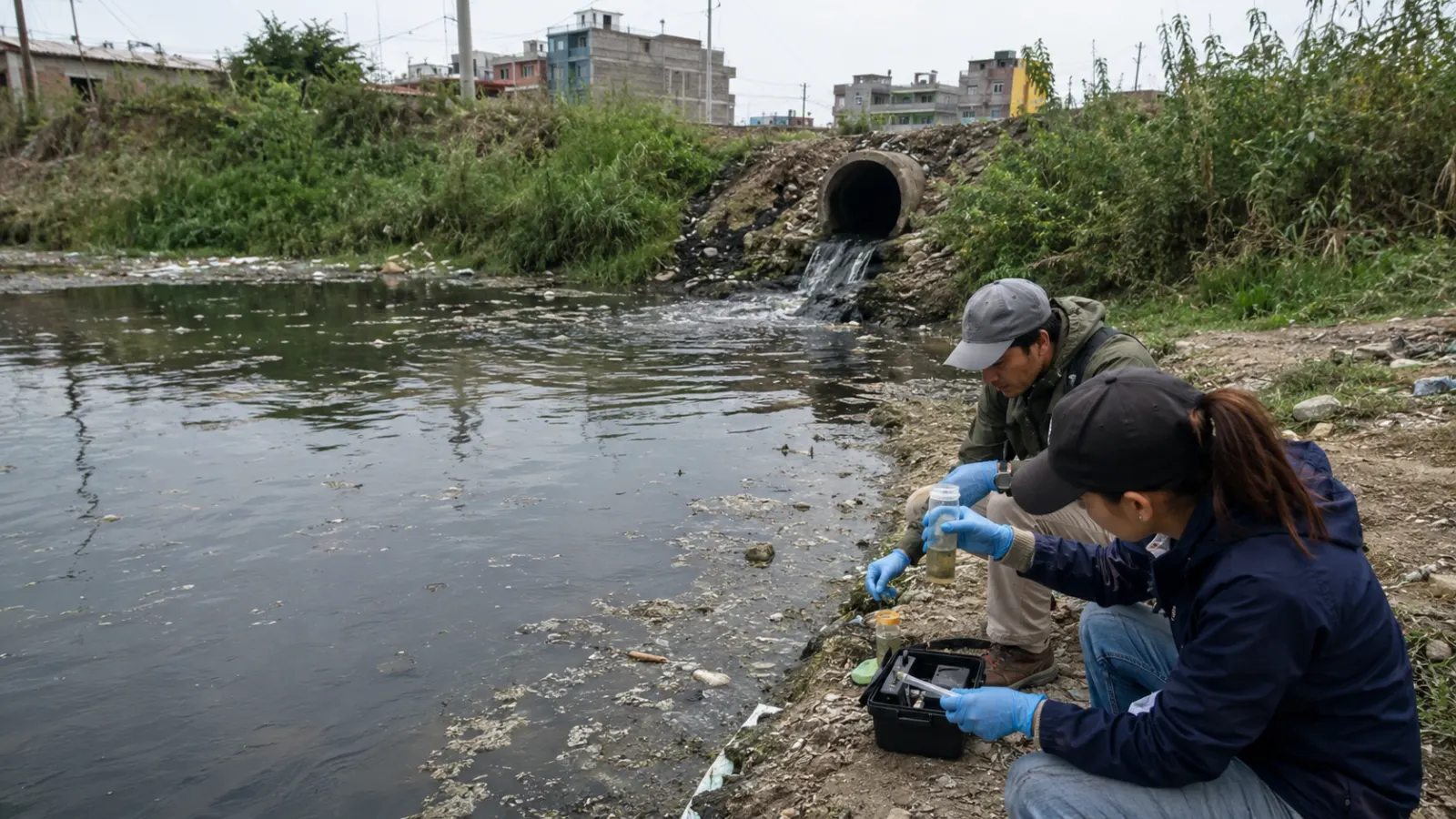
Contamination can occur when sewage is discharged untreated into rivers, when sewer pipes leak, when latrines or septic systems are poorly sited near wells, or when floods wash human waste into water sources. WHO has repeatedly identified faecal contamination as the greatest microbial risk to drinking-water safety.
The pathway can be surprisingly short. A shallow well may be only metres from a poorly constructed pit latrine. During heavy rain, contaminated water can move through soil or over the surface into the well. In dense settlements, damaged sanitation and water infrastructure may exist side by side, creating opportunities for sewage to enter drinking-water pipes when pressure falls.
2. Agriculture and livestock
Agriculture can affect water quality through both biological and chemical routes. Manure from livestock can introduce pathogens into streams, reservoirs and groundwater. Fertilisers can contribute nitrates and nutrients. Pesticides may move away from fields through runoff, erosion or leaching.
Nutrient pollution also changes aquatic ecosystems. Excess nitrogen and phosphorus can stimulate algal or cyanobacterial growth, creating treatment problems and, in some circumstances, toxins. Agricultural contamination is often diffuse rather than coming from one identifiable pipe, which makes prevention more difficult. The risk depends on farming practices, soil, rainfall, drainage and the distance between agricultural activity and water sources.
3. Industry, mining and urban activity
Industrial wastewater can contain solvents, metals, acids, salts and many other chemicals depending on the process involved. Mining can expose naturally occurring metals or produce drainage that alters water chemistry. Urban runoff can wash fuel residues, metals, litter and other pollutants from roads and built surfaces into waterways.
The important point is not that every industrial area contaminates drinking water. Modern regulation, treatment and containment can greatly reduce risk. The problem arises when hazardous materials are poorly managed, treatment is absent or inadequate, storage fails, or accidental releases reach surface water or aquifers.
4. Natural geology can contaminate water
Not all unsafe water has been polluted by human activity. Groundwater naturally interacts with rock and soil, dissolving minerals as it moves. In some regions, this can produce harmful concentrations of arsenic or fluoride even where there is no nearby factory, farm or sewage discharge.
WHO highlights naturally occurring arsenic and fluoride as important groundwater hazards. This is one reason a protected-looking well cannot automatically be assumed safe. Geological contamination may be persistent, widespread and impossible to detect without testing.
Natural hazards complicate the language of pollution. A community may have pristine surroundings and still need treatment or an alternative source because the aquifer itself contains unsafe levels of a chemical.
5. The distribution system can introduce new risks
Water can leave a treatment plant in safe condition and deteriorate before it reaches the tap. Distribution networks contain kilometres of pipes, valves, tanks and connections. Breaks, pressure losses and poor maintenance can allow contaminated water to enter. Biofilms can develop inside pipes. Ageing plumbing can release metals.
Lead is a well-known example of a contaminant that may enter drinking water from materials in contact with water rather than from the original river or groundwater source. Corrosion control and the replacement of problematic plumbing materials are therefore part of water safety.
Intermittent water supply can increase risk because empty or low-pressure pipes may draw in contaminated water from surrounding soil or drains through leaks.
6. Household storage can recontaminate treated water
The final metres of the water chain matter too. Where households must collect and store water, a safe source does not guarantee safe consumption. Dirty containers, uncovered storage, hands, cups or ladles can introduce contamination after collection.
WHO's sanitary-inspection guidance includes household practices for precisely this reason. Narrow-necked, covered containers, hygienic handling and regular cleaning reduce the opportunity for recontamination. In settings where water is delivered intermittently, storage design becomes part of public health rather than merely a matter of convenience.
7. Floods, droughts and disasters change contamination pathways
Extreme weather can rapidly alter water quality. Floods may overwhelm sewers, inundate wells, damage treatment plants and wash waste into reservoirs. Drought can concentrate contaminants as water volumes fall and may push communities toward lower-quality alternative sources.
After earthquakes, storms or conflict, damaged infrastructure can interrupt treatment and distribution. Emergency water safety therefore requires more than finding water; it requires protecting the source, treating it appropriately and preventing contamination during transport and storage.
Surface water and groundwater face different risks
Rivers, lakes and reservoirs are directly exposed to runoff and discharges, so their quality can change quickly after rainfall, spills or upstream activity. Groundwater is often better protected from short-term surface contamination because soil and rock provide a barrier, but it is not invulnerable.
Pollutants can seep into aquifers, especially shallow ones, and groundwater contamination may persist for years because underground water moves slowly. Over-pumping can also draw saline or contaminated water into freshwater aquifers. The correct source therefore depends on local geology, land use, water quantity and treatment capacity rather than a universal rule that groundwater is always safer.
Why testing alone is not enough
Testing is essential, but a system that relies only on occasional samples can miss contamination between tests. WHO's 2026 drinking-water guidelines emphasise preventive risk management through water safety plans: identify hazards across the entire supply chain, put controls in place and verify that those controls work.
This might mean protecting a reservoir catchment from sewage, maintaining treatment barriers, monitoring disinfectant, controlling pipe pressure, preventing illegal connections and inspecting storage tanks. The safest system is one designed to prevent contamination rather than merely discover it after exposure has occurred.
Why different contaminants require different controls
A treatment process that works well for one hazard may do little for another. Disinfection can inactivate many microorganisms but will not remove dissolved arsenic or lead. Filtration can remove particles and some microorganisms but does not automatically eliminate every dissolved chemical. Chemical treatment may be designed around a specific contaminant and require careful operation.
This is why source-specific hazard identification matters. A utility drawing from a protected upland reservoir faces a different risk profile from a shallow agricultural well or a groundwater source affected by natural arsenic. Effective water safety begins by understanding the actual hazards rather than assuming that one standard treatment train can solve every problem.
Conclusion
Water contamination is not a single environmental problem with a single cure. It can come from faecal waste, farms, factories, mines, natural geology, damaged pipes, household storage and extreme weather. Some risks are acute and infectious; others develop after long-term chemical exposure.
The practical lesson is that safe drinking water depends on a chain of protection. Source protection, treatment, secure distribution, monitoring and hygienic household handling all matter. Clean-looking water is not necessarily safe water, and water safety is strongest when contamination is prevented at every stage rather than treated as a problem only at the tap.
Approximate article body word count: 1312
Sources / Further Reading
World Health Organization - Guidelines for drinking-water quality: fourth edition incorporating the first, second and third addenda (2026): https://www.who.int/publications/i/item/9789240121225
World Health Organization - Drinking-water fact sheet: https://www.who.int/news-room/fact-sheets/detail/drinking-water
World Health Organization - Sanitary inspection package: surface water source and intake (2026): https://www.who.int/publications/m/item/sanitary-inspection-package-%28drinking-water%29--surface-water-source-and-intake
World Health Organization - Sanitary inspection package: household practices (2026): https://www.who.int/publications/m/item/sanitary-inspection-package-%28drinking-water%29--household-practices
World Health Organization - Drinking-water quality: a roadmap to supporting resources (2026): https://www.who.int/publications/m/item/drinking-water-quality--a-roadmap-to-supporting-resources
Suggested Internal Links
Understanding Water Pollution - Planned internal link
Understanding the Importance of Clean Water - Planned internal link
What Is Water Scarcity - Planned internal link
What Is Rainwater Harvesting - Planned internal link
What Is Groundwater Recharge - Planned internal link