Why Clean Water Matters: Health, Dignity and the Foundations of Daily Life
Opening
Clean water is easy to underestimate when it arrives every day through a tap. It becomes visible as infrastructure only when the supply stops, pressure collapses, contamination is detected or a family has to spend hours finding enough water for drinking, cooking and washing.
The modern public-health concept of safe water is broader than a source that looks clean. A safely managed drinking-water service must come from an improved source, be located on premises, be available when needed and be free from relevant contamination. That combination of safety, reliability and accessibility explains why clean water is one of the foundations on which health and social life depend.
The global gap remains enormous
WHO's 2026 water, sanitation, hygiene and waste strategy reports that about 2.1 billion people - roughly one person in four - still lack safely managed drinking water. It also notes that 106 million people drink directly from untreated surface sources.
Those numbers describe more than inconvenience. They indicate households that may rely on distant sources, intermittent supply, water of uncertain quality or sources that expose people to disease. The same WHO strategy estimates that unsafe water, sanitation and hygiene contribute to at least 1.4 million preventable deaths each year.
Progress has been substantial over recent decades, but universal access remains unfinished and uneven.
Clean water interrupts disease transmission
The most immediate reason clean water matters is health. Water contaminated with human or animal faeces can transmit pathogens responsible for diarrhoeal disease, cholera, dysentery, typhoid and other infections. Safe water breaks that transmission route.
But drinking is only one pathway. Water is also needed for handwashing, cleaning utensils, preparing food, bathing and maintaining sanitation. A household may technically have a drinking-water source but still face health risks if there is too little water for hygiene.
This is why public-health agencies discuss water, sanitation and hygiene together as WASH. Toilets without water may be difficult to keep hygienic. Handwashing campaigns fail if water is unreliable. Safe drinking water therefore works most effectively as part of a functioning sanitation and hygiene system.
Health facilities cannot be safe without water
The importance of water becomes even clearer inside clinics and hospitals. Hand hygiene, cleaning, sterilisation, laundry, toilets, food preparation and many medical procedures depend on adequate water.
When water supplies are unreliable or contaminated, infection prevention becomes harder precisely where sick and vulnerable people are concentrated. A resilient health system therefore requires reliable WASH services as basic infrastructure, not an optional environmental add-on.
Water affects nutrition as well as infection
Water and nutrition are linked in several ways. Unsafe water can cause repeated diarrhoeal illness, which can interfere with nutrient absorption and contribute to undernutrition, especially in children. Water is also needed to prepare food safely and maintain household hygiene.
At a broader level, agriculture depends on water, so scarcity and unreliable rainfall can affect food production and prices. The importance of clean household water should therefore be understood alongside the importance of sustainable water resources for food systems.
The time cost of water collection
For millions of households, water has to be collected rather than delivered. The 2026 United Nations World Water Development Report estimates that women and girls spend around 250 million hours every day collecting water.
That time has an opportunity cost. A long walk to a source can replace time that might otherwise be spent in school, paid work, rest or caregiving. Carrying water also imposes a physical burden, and journeys may expose people to safety risks.
Improving water access therefore changes more than disease statistics. It changes how a household allocates time and who bears unpaid work.
Education depends on reliable WASH
Children are more likely to attend and benefit from school when they are healthy and when schools have usable water and sanitation. A school without sufficient water struggles to maintain toilets, handwashing facilities and basic cleanliness.
The relationship is particularly important for girls when inadequate sanitation and menstrual-health facilities create barriers to attendance. Water access is therefore connected to education both at home - by reducing collection time and illness - and at school through safe facilities.
Clean water supports livelihoods and economic activity
Water is embedded in almost every economy. Restaurants, farms, factories, construction sites, offices and markets need it. At household level, reliable supply reduces time spent collecting water and can reduce medical expenses linked to waterborne disease.
At city scale, reliable water systems support productivity and investment. At the same time, poorly maintained networks waste both water and money. WHO's 2026 GLAAS update reported average non-revenue water of 39 per cent among participating countries with data - water that enters a distribution system but does not generate billed revenue, often because of leaks, theft or metering problems.
Safe water is therefore both a health service and economic infrastructure.
Water is a matter of dignity and rights
In 2010, the United Nations General Assembly explicitly recognised the human right to water and sanitation. The principle reflects the fact that people cannot maintain health, personal hygiene and basic dignity without adequate water.
The right is not satisfied merely by placing a source somewhere within a country. Water must be sufficient, safe, acceptable, physically accessible and affordable for personal and domestic uses.
This rights-based framing is important because water shortages often affect people unequally. Informal settlements, remote rural areas, displaced communities and low-income households can remain underserved even when national averages improve.
Clean is not enough if water is unreliable
A water supply that is safe on Monday but unavailable for the rest of the week creates new risks. Families may store water in unsafe containers or turn to lower-quality alternatives. Intermittent networks can also be vulnerable to contamination when pressure drops.
Reliability therefore belongs inside the definition of safe service. WHO and UNICEF's “safely managed” indicator explicitly includes availability when needed.
This is a crucial shift from older infrastructure measures. Counting pipes or wells is not the same as measuring whether people consistently receive safe water.
Climate change raises the standard for resilience
Water systems are increasingly exposed to drought, floods, storms, heat and changing rainfall. A flood can contaminate wells and overwhelm treatment systems. Drought can reduce source quantity and concentrate pollutants. Sea-level rise can worsen salinity in some coastal aquifers.
Climate resilience therefore requires diversified sources, protected catchments, robust treatment, emergency planning and infrastructure designed for more variable conditions. WHO's 2026 WASH strategy explicitly identifies climate shocks and ageing infrastructure as major challenges to safe services.
What universal clean water requires
There is no single technology that can deliver safe water everywhere. Large cities may rely on reservoirs, treatment plants and extensive networks. Rural communities may use boreholes, springs, small piped schemes or rainwater systems.
The common requirements are stronger than the hardware itself: source protection, treatment appropriate to local hazards, trained operators, maintenance, financing, water-quality surveillance and institutions that can respond when risks are detected.
WHO's current drinking-water guidelines emphasise preventive management from catchment to consumer. That principle matters because treatment plants cannot compensate indefinitely for badly polluted sources, leaking networks or unsafe household storage.
Affordability is part of access
A household can live beside excellent infrastructure and still be water-insecure if the service is unaffordable. Tariffs are needed to operate, maintain and expand water systems, but pricing structures also have to protect essential household use for people with low incomes.
When formal service is absent or unreliable, poorer households may paradoxically pay more per litre to private vendors while receiving lower-quality water. Universal clean-water access therefore requires financing models that keep systems viable without excluding the people they are designed to serve. Public investment, targeted subsidies, transparent tariffs and strong regulation can all be part of that balance.
Monitoring turns a promise into a service
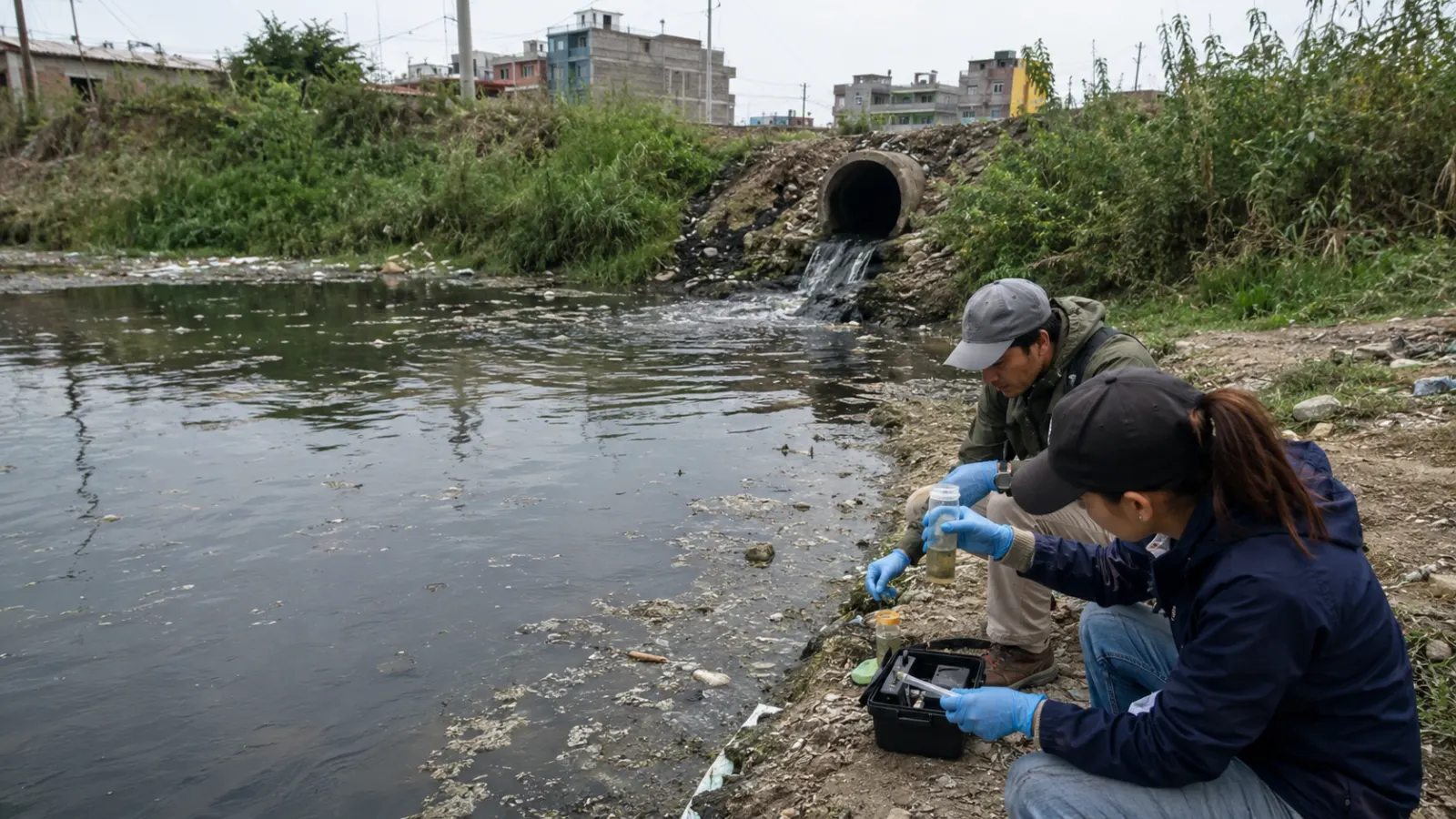
Safe water cannot be guaranteed only when a system is commissioned. Sources change, equipment fails, pipes break and contamination events occur. Water-quality surveillance, operational monitoring and public reporting are what turn an infrastructure project into a continuing service.
The 2026 GLAAS findings show that regulatory and surveillance capacity remains uneven. That gap matters because the value of a water system lies not in having been built once, but in being operated safely every day. Long-term maintenance budgets and trained staff are therefore as important as the initial capital cost.
Trust matters too
A water service also depends on public trust. When utilities do not communicate test results or explain disruptions, households may abandon safe supplies for expensive bottled or informal alternatives. Transparent monitoring and prompt public advice during contamination events help people make safer choices and make accountability part of water quality.
Conclusion
Clean water is often described as a basic need, but the phrase can sound smaller than the reality. Safe and reliable water prevents infection, makes hygiene possible, enables schools and hospitals to function, saves time, supports livelihoods and protects dignity.
The global challenge is no longer simply to build more water points. It is to provide services that remain safe, affordable and dependable over time. A tap is valuable because of the entire system behind it: the protected source, treatment, pipes, maintenance, monitoring and governance that allow people to turn it on without having to question whether the water will harm them.
Approximate article body word count: 1441
Sources / Further Reading
World Health Organization - WHO water, sanitation, hygiene and waste strategy 2026-2035: https://www.who.int/publications/i/item/B09661
WHO/UNICEF - Progress on household drinking water, sanitation and hygiene 2000-2024 (2025): https://www.who.int/publications/b/80981
UN-Water / UNESCO - United Nations World Water Development Report 2026: https://www.unwater.org/publications/un-world-water-development-report-2026
World Health Organization - Drinking-water fact sheet: https://www.who.int/news-room/fact-sheets/detail/drinking-water
WHO and UNICEF - State of systems for drinking-water, sanitation and hygiene: global update 2025: https://www.who.int/publications/i/item/9789240118980
Suggested Internal Links
What Are the Sources of Water Contamination - Planned internal link
Understanding the Global Water Crisis - Planned internal link
What Is Water Scarcity - Planned internal link
Understanding How to Save Water at Home - Planned internal link
What Is Water Conservation - Planned internal link