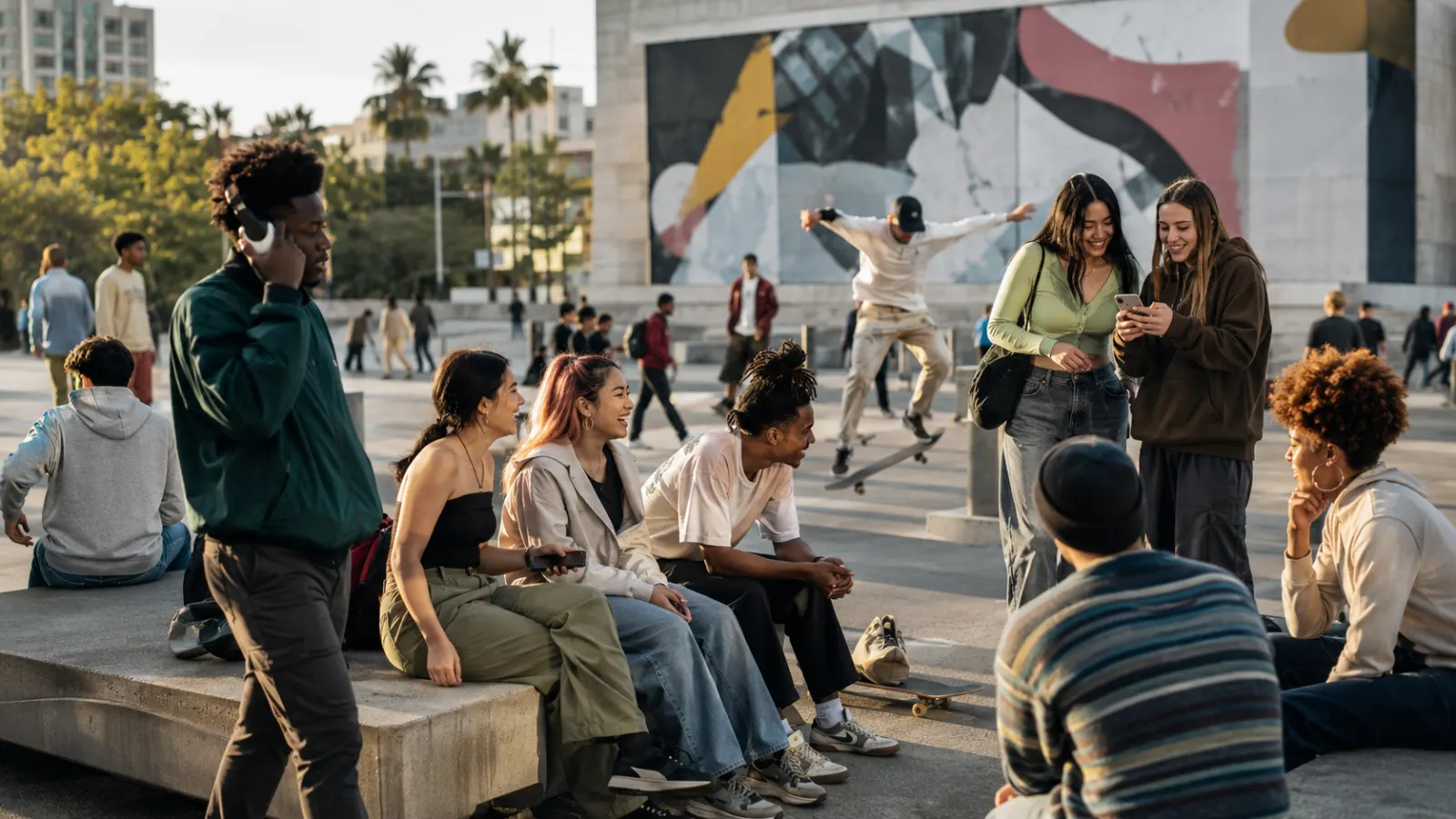
Cultures Have Always Borrowed
No society develops in complete isolation. Languages absorb words, musicians borrow instruments, cooks adopt ingredients, designers reinterpret forms and religious traditions influence one another across trade, migration and conquest.
If every act of cultural borrowing were treated as wrongdoing, much of human cultural history would become impossible to explain.
The debate over cultural appropriation therefore begins with a narrower question: when does borrowing become exploitative, disrespectful or unfair?
A Working Definition
Cultural appropriation generally refers to the adoption or use of cultural elements by people outside the originating community in circumstances viewed as exploitative, disrespectful, stereotypical or disconnected from the community's own rights and meanings.
The concept is not a single universally agreed legal category. It is used in ethics, cultural criticism, Indigenous-rights debates, fashion, music, sport, museums and intellectual-property policy.
Why Power Matters
Borrowing between communities with relatively equal social power is often experienced differently from borrowing in a context of conquest, discrimination or exclusion.
The central complaint is frequently asymmetry: members of a marginalised community may be mocked, punished or commercially excluded for a cultural expression, while outsiders are praised or rewarded for adopting a similar expression.
The issue is therefore not only who used what, but who had the power to define its value.
Traditional Cultural Expressions Are Not Just Decorations
The World Intellectual Property Organization uses the term traditional cultural expressions for forms through which traditional culture is expressed, including music, dance, art, symbols, designs, ceremonies and other expressions linked to community identity and heritage.
WIPO notes that many Indigenous and local communities seek stronger protection because conventional intellectual-property systems often do not fit collectively created and intergenerational culture.
Indigenous Rights Make Some Cases More Concrete
The United Nations Declaration on the Rights of Indigenous Peoples recognises the right of Indigenous peoples to maintain, control, protect and develop their cultural heritage, traditional knowledge and traditional cultural expressions.
That does not create a universal rule for every cultural borrowing dispute. It does show that some communities possess internationally recognised collective interests in controlling cultural expressions, particularly sacred, traditional or communally governed material.
Context Can Change the Meaning of the Same Object
A pattern used in a community ceremony may carry religious or social restrictions. The same pattern printed on a novelty product can lose those restrictions and become merely decorative.
To an outsider, the visual form may look unchanged. To the originating community, the meaning may have been stripped away.
Cultural appropriation debates therefore often concern decontextualisation rather than physical copying alone.
Sacred and Restricted Practices Are Different From Everyday Culture
Some cultural elements are openly shared: common foods, widely taught art forms, commercial music and public festivals.
Others may be restricted by initiation, kinship, ritual role, gender, season or community law.
Using a restricted ceremonial object as fashion is ethically different from learning a publicly taught dance style.
Consent Is Useful but Not Always Simple
People often ask whether the source culture gave permission. That question can help, but cultures rarely have one person authorised to approve every use.
A community may disagree internally. Artists may welcome collaboration while elders object. A government may endorse commercialisation that practitioners dislike.
Consent therefore has to be evaluated through actual community structures rather than imaginary unanimous ownership.
Credit Matters
Attribution can correct one major form of erasure. Naming the source tradition, artist or community helps audiences understand where an expression came from.
Credit is not always sufficient. A company can accurately identify a community while still using sacred material without permission or keeping all commercial benefit.
Commercial Benefit Raises the Stakes
Cultural borrowing becomes more contentious when money or status flows strongly toward outsiders.
A fashion brand may turn a traditional motif into a premium product while the original craft community struggles to sustain the technique. A viral dance may produce sponsorship for a popular creator while the original choreographer receives little recognition.
The ethical concern is not that outsiders can never profit. It is whether recognition, partnership and benefit are distributed fairly.
Misrepresentation Can Be Harmful Even Without Profit
A cultural costume used as a joke can reinforce stereotypes. An inaccurate imitation of religious practice can turn a living tradition into entertainment.
In these cases, the concern is dignity and representation rather than money.
Museums Have Their Own Appropriation History
Museums contain objects acquired through trade, excavation, donation, colonial rule, military conquest and unequal exchange.
Contemporary provenance and restitution debates show that cultural possession has institutional history. The question is not only whether an object is appreciated in a museum, but how it was acquired and whether source communities retain rights or claims.
Music Demonstrates How Complicated Borrowing Can Be
Music has always developed through exchange. Genres cross racial, national and class boundaries.
Problems arise when industries erase originators, rename borrowed innovations as somebody else's invention or reward performers from dominant groups while excluding source communities from equivalent opportunity.
The history of exchange cannot be reduced to a simple rule that influence is either pure appreciation or pure theft.
Food Is Usually a Weak Example of Cultural Ownership
Recipes travel constantly through migration, trade and intermarriage. Claiming that outsiders may never cook another community's food would misunderstand how cuisines develop.
Yet restaurants and media can still erase origins, stereotype cuisines or present long-established dishes as discoveries by outsiders.
The useful question is often attribution and representation rather than permission to cook.
Fashion Creates Repeated Conflict
Fashion moves quickly and relies heavily on visual borrowing. Traditional patterns, jewellery, ceremonial dress and hairstyles can be detached from their history and marketed globally.
WIPO has specifically discussed cultural appropriation in fashion because traditional cultural expressions often fall awkwardly between customary community rules and conventional intellectual-property law.
Cultural Exchange Is Not the Enemy
UNESCO's cultural-diversity framework explicitly treats cultural diversity as strengthened through exchange and interaction.
Respectful exchange can produce new art, friendship, learning and hybrid culture.
A fear of appropriation should not become a demand for cultural segregation.
Intent Is Relevant but Not Decisive
A person may sincerely admire a tradition and still reproduce a stereotype or violate a restriction they did not understand.
Good intention can make dialogue easier, but it does not erase impact.
Conversely, accidental resemblance is not automatically appropriation. Similar forms can emerge independently.
Not Every Offence Proves Appropriation
Social media often compresses difficult cultural disputes into quick accusations.
Discomfort is evidence that a conversation may be needed, not proof that one interpretation is automatically correct.
Strong analysis asks about history, power, source-community views, restrictions, representation and benefit.
The Law Protects Some Things Better Than Others
Copyright and trademark law can protect identifiable works, brands and creators, but traditional expressions may be centuries old, collectively created or legally treated as public-domain material.
This gap is one reason WIPO has spent decades developing international work on traditional knowledge and traditional cultural expressions.
Customary Community Rules May Matter Even When State Law Is Silent
Some communities maintain internal rules about who may reproduce a design, sing a ceremonial song or use a sacred object. National intellectual-property law may not recognise those rules fully.
The ethical gap matters because legal permission and cultural permission are not always the same thing. A company may be legally free to reproduce a traditional motif and still disregard the community's own norms.
Cultural Appropriation Is Also About Who Gets to Define Authenticity
Outsiders with strong marketing power can sometimes become more visible representatives of a cultural form than source-community practitioners.
That can distort public understanding. Audiences may learn an altered commercial version first and later treat the community's own practice as unusual or less authentic.
A Better Way to Ask the Question
Instead of asking only, 'Am I allowed to use this?', ask: What does this element mean? Is it sacred or restricted? Who created it? Is the source acknowledged? Who gains from the use? Are community members involved? Does the presentation stereotype or distort?
No checklist can mechanically settle every dispute, but those questions expose the ethical structure.
The hardest cases are precisely those where law, community norms, commercial practice and public opinion do not point in the same direction.
What Cultural Appropriation Means
Cultural appropriation is best understood as a problem of relationship rather than cultural contact itself.
Borrowing becomes ethically troubling when unequal power combines with erasure, disrespect, restricted use, stereotyping or one-sided commercial benefit.
Culture remains alive through exchange. The challenge is to make exchange more informed, reciprocal and fair rather than pretending cultures can—or should—remain sealed from one another.
Sources / Further Reading
• WIPO — Traditional Cultural Expressions — https://www.wipo.int/en/web/traditional-knowledge/traditional-cultural-expressions/index
• WIPO Magazine — Curbing cultural appropriation in fashion with intellectual property — https://www.wipo.int/en/web/wipo-magazine/articles/curbing-cultural-appropriation-in-the-fashion-industry-with-intellectual-property-40880
• United Nations — Declaration on the Rights of Indigenous Peoples, Article 31 — https://www.un.org/esa/socdev/unpfii/documents/DRIPS_en.pdf
• UNESCO — Convention on the Protection and Promotion of the Diversity of Cultural Expressions — https://www.unesco.org/en/legal-affairs/convention-protection-and-promotion-diversity-cultural-expressions
• UNESCO — Diversity of Cultural Expression — https://www.unesco.org/en/diversity-cultural-expression
Suggested Internal Links
• Appreciation or Appropriation? — Article 62
• Why Local Traditions Disappear — Article 60
• Folk Dance Explained — Article 34
• What Heritage Really Means — Article 39