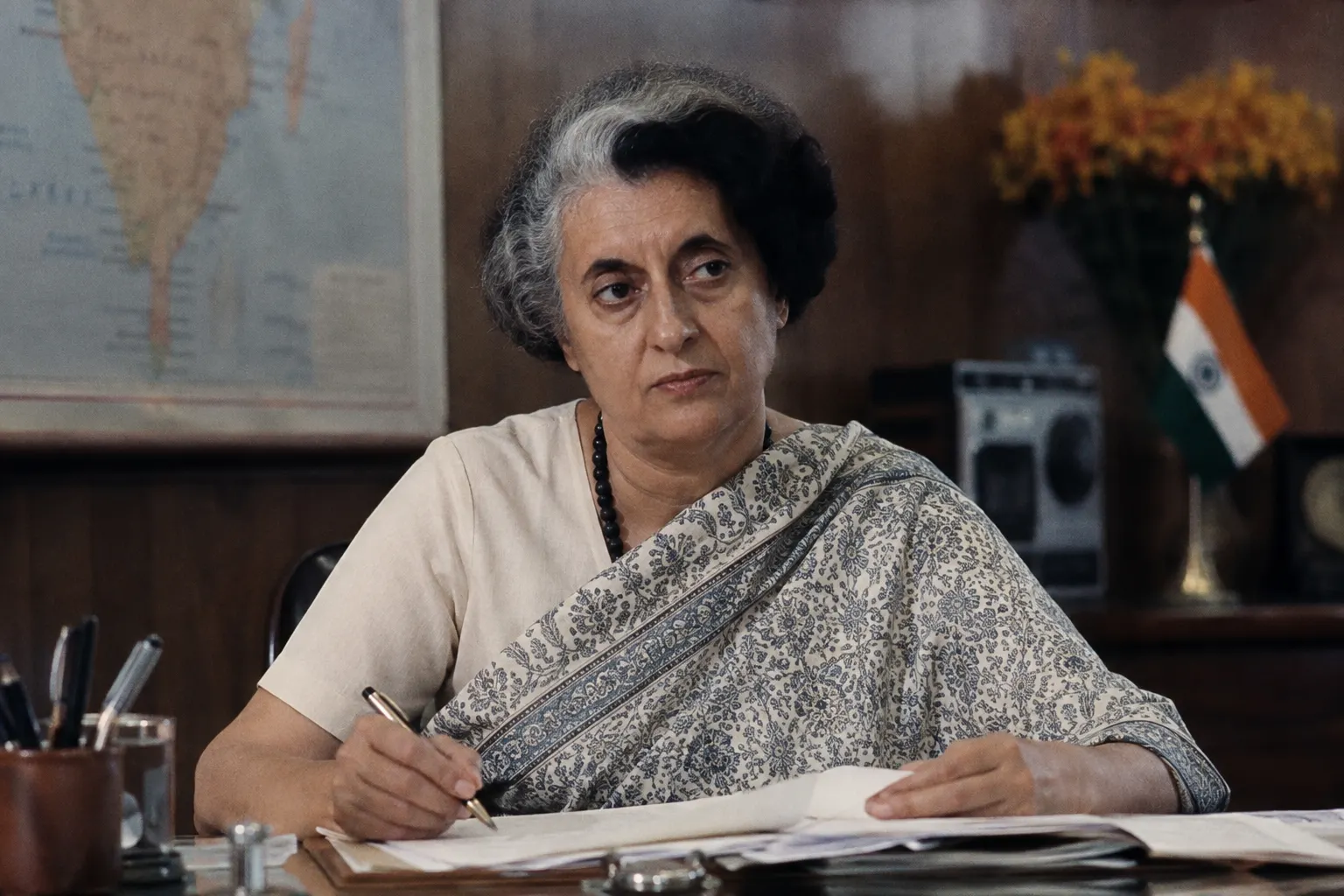
The Maratha Queen Ahilyabai Holkar
Ahilyabai Holkar is one of those historical rulers whose reputation has become almost too perfect. In public memory she is the compassionate queen, the builder of temples and ghats, the protector of pilgrims, the patron of weavers and the ruler who listened personally to the grievances of ordinary people. Modern commemorations frequently call her an exemplar of good governance. Across India, buildings and institutions bear her name, while Maheshwar on the Narmada still presents itself through the architectural world associated with her reign.
The admiration is not invented. Ahilyabai did rule for nearly three decades in an age of political instability, and she left a visible landscape of patronage from central India to major pilgrimage centres. But history becomes less useful when praise replaces explanation.
What made her rule remarkable was not simply personal goodness. It was her ability to convert an insecure dynastic position into durable authority. She had to survive family deaths, succession crises, the military politics of the Maratha confederacy, the demands of revenue collection and the vulnerability of a state whose power depended on both cavalry and commerce. Her capital at Maheshwar was not merely a picturesque royal residence. It was a political choice: a place from which court, administration, religious patronage and economic activity could be organised.
The more revealing Ahilyabai is therefore not the flawless queen of legend but the eighteenth-century ruler who understood that legitimacy had to be built repeatedly—through justice, religious charity, infrastructure, patronage, military preparedness and careful relationships with powerful men who might otherwise have treated a widow as politically expendable.
From Chondi to the Holkar household
Ahilyabai was born on 31 May 1725 at Chondi, in what is now Maharashtra. Government and regional historical accounts identify her father as Mankoji Shinde, a local official or village head. The details of her childhood are less securely documented than later popular narratives suggest. A famous story says Malhar Rao Holkar noticed the young Ahilya during worship at a village temple and, impressed by her character, arranged her marriage to his son. Like many polished origin stories attached to rulers, the episode should be treated cautiously unless tied to contemporary evidence.
What is firm is that she married Khanderao Holkar, son of Malhar Rao Holkar, whose military career had made the Holkars one of the important Maratha houses operating in Malwa. The Holkars did not rule an isolated hereditary kingdom in the modern sense. Their power developed within the expanding Maratha political system, in which military commanders acquired revenue rights, territories and increasingly dynastic authority while remaining connected to the Peshwa-centred order.
This context matters because it shaped the political world Ahilyabai would later inherit. Authority depended on military service, fiscal extraction, alliances, family networks and recognition from larger Maratha institutions. A ruler could not survive on ceremonial status alone.
Widowhood did not end her political life
Khanderao was killed in 1754 during the siege of Kumbher. Later tradition often presents this as the decisive moral turning point of Ahilyabai’s life. Accounts also say she intended to perform sati but was persuaded by Malhar Rao not to do so. The story is deeply embedded in Holkar memory, though, as with many personal episodes, historians should distinguish later narratives from fully contemporary documentation.
Whatever the precise details, widowhood did not remove Ahilyabai from the political household. Malhar Rao appears to have trusted her with administrative responsibilities, and she gained experience in estate and state affairs during his lifetime.
The family succession then became increasingly fragile. Malhar Rao died in 1766. Ahilyabai’s son Male Rao inherited authority but died in 1767 after a very short reign. The combination of deaths created exactly the kind of situation in which a dynastic household could be absorbed, manipulated or divided by stronger political actors.
Ahilyabai instead asserted her right to govern.
Her accession was not simply a personal triumph over prejudice. It required political recognition and a workable military arrangement. Tukoji Rao Holkar, an experienced commander connected with Malhar Rao, became a crucial military partner. Ahilyabai concentrated on governance and dynastic authority while Tukoji handled much of the state’s military activity. This division should not be mistaken for evidence that she was only a ceremonial ruler. It was a practical political architecture: civil administration and military command were coordinated without requiring the queen herself to perform every role.
Maheshwar as a capital
Ahilyabai made Maheshwar, on the banks of the Narmada, the principal seat of her rule. Official district and tourism histories continue to associate the fort complex, the royal residence and the riverfront development with her reign. The decision had political, economic and symbolic dimensions.
Maheshwar occupied an old sacred landscape connected with the Narmada and with traditions far older than the Holkars. By locating her court there, Ahilyabai could position herself within a geography of religious legitimacy while also developing an administrative centre distinct from the later prominence of Indore.
The surviving riverfront is perhaps the most immediate physical argument for her historical importance. Fortifications, royal spaces, temples, ghats and later memorials create a layered landscape in which state power and sacred patronage meet. Yet even here caution is needed: not every structure tourists encounter today was necessarily commissioned personally by Ahilyabai, and buildings were altered by later rulers. Historical attribution should follow inscriptions, architectural studies and documentary records rather than modern guidebook habit.
Maheshwar also became associated with textile production. Government craft histories credit Ahilyabai with encouraging weaving and inviting skilled artisans to the town, contributing to the later fame of Maheshwari textiles. The precise origin stories of any craft tradition are difficult to reduce to one founder, but her patronage fits the larger economic logic of an eighteenth-century court. Artisans, merchants and specialised producers were not decorative additions to a capital. They generated employment, prestige, taxable commerce and networks of exchange.
Governing Malwa in a violent century
Ahilyabai’s reign is often described as peaceful. That description is meaningful only if placed beside the instability of eighteenth-century India.
The Mughal imperial structure had weakened substantially. Maratha power had expanded but was internally distributed among several houses. The catastrophic Maratha defeat at Panipat in 1761 remained a recent memory. Regional chiefs, revenue contractors, military commanders and competing dynasties operated in an environment where sovereignty was layered rather than absolute.
Ahilyabai therefore did not preside over a modern bureaucratic state insulated from war. The Holkar domain required troops, revenue, negotiated loyalties and constant awareness of wider Maratha politics. Tukoji Rao’s military role was central to that system.
Her reputation for administration appears to rest partly on her ability to maintain relative internal stability while the larger political environment remained unsettled. Historical accounts describe regular attention to revenue matters, justice and petitions. Later biographies often depict her holding open audiences and personally hearing complaints. Such scenes fit a wider South Asian ideal of the accessible ruler, and some may be grounded in administrative practice, but the exact anecdotes should not automatically be read as stenographic records.
The important point is institutional rather than sentimental: a ruler’s legitimacy depended on being seen as an arbiter capable of restraining officials, protecting property and responding to grievances. Ahilyabai’s enduring reputation suggests that this political image was unusually successful.
Revenue, merchants and the practical side of legitimacy
Temples dominate popular memory of Ahilyabai, but no eighteenth-century state could live on piety alone. Revenue from agriculture and commerce supported troops, officials, the court and charitable construction.
A stable agrarian base therefore mattered. So did the treatment of merchants. Central India sat across important routes connecting northern and western India with the Deccan. Commercial security could strengthen a ruler without requiring territorial conquest on the scale pursued by more militaristic contemporaries.
Ahilyabai’s reign has been associated with support for trade, crafts and urban development. Maheshwar’s textile tradition is the most famous example, but the broader principle is more important: royal patronage could attract specialised communities and create local economic ecosystems.
It is tempting to translate these policies into modern language and call her an industrial strategist or development economist. That would be anachronistic. She operated within premodern political economy, where court patronage, hereditary occupations, merchant credit, religious endowments and agrarian revenue overlapped. Her achievement was not modern capitalism. It was the creation of conditions in which a relatively small court could be fiscally viable and politically respected.
The architecture of charity
Ahilyabai’s most geographically extensive legacy lies in religious and public works.
She funded or restored temples, ghats, wells, rest houses and other facilities at sacred centres across the subcontinent. Varanasi occupies a prominent place in this legacy. Government accounts of the Kashi Vishwanath complex credit her with rebuilding the temple in the eighteenth century after earlier destruction. Ahilyabai Ghat in Varanasi preserves her name in the city’s riverfront geography.
Her patronage extended well beyond one centre. Later lists attribute works to her at major pilgrimage sites in north, west and central India. Some of those lists have grown through repetition, so each individual claim requires verification. But the overall pattern is historically credible and significant: she used the resources of the Holkar state to create a network of sacred and charitable infrastructure far outside her immediate territory.
This was devotion, but it was also politics.
A ruler who endowed facilities at distant pilgrimage centres projected reputation across regions that she did not govern directly. Pilgrims, priests, merchants and religious institutions carried memory. A ghat or dharamshala could function as both charity and durable political communication.
The practice was not unique to Ahilyabai. Premodern South Asian rulers of different religions used endowment and sacred patronage to create legitimacy. What distinguished her was the breadth and persistence of the programme and the strength of the memory it produced.
Religious patronage and the question of tolerance
Ahilyabai was a devout Hindu ruler, and much of her surviving public image rests on Hindu religious patronage. Modern accounts sometimes extend this into sweeping claims that she practised a fully articulated policy of religious tolerance in a modern secular sense.
That wording should be used carefully.
The eighteenth century did not operate with the constitutional categories of a modern republic. A ruler could be intensely committed to one religious tradition while still governing subjects of varied communities and protecting their commercial or civic interests. The correct historical question is not whether Ahilyabai was “secular” by contemporary standards, but how her government treated diverse populations and how religious identity interacted with political order.
Her known patronage was strongly Hindu, but there is little reason to reduce her rule to sectarian mobilisation. The Holkar state required the cooperation of merchants, soldiers, officials and cultivators in a plural society. Administrative pragmatism and devotional commitment could coexist.
A woman ruling through, not outside, patriarchy
Ahilyabai’s gender is central to her historical importance, but it should not be narrated as if she simply stepped outside eighteenth-century social structures.
She ruled through a dynastic system in which her legitimacy came partly from marriage into the Holkar family, motherhood, widowhood and her relationship with Malhar Rao. She did not abolish patriarchy. Nor did her personal authority automatically transform the lives of ordinary women.
What she did demonstrate was that political capacity could override assumptions that a widowed woman should disappear from sovereign power. Her accession required negotiation precisely because female rulership was exceptional enough to provoke resistance.
Modern claims that she was a systematic pioneer of women’s empowerment should therefore be stated with evidence rather than projected backward. Her own life undeniably widened the historical repertoire of female political authority. That is significant without pretending she governed according to a twenty-first-century gender programme.
The military queen who is remembered as peaceful
One reason Ahilyabai’s image differs from many Maratha rulers is that public memory emphasises administration and construction more than battlefield conquest.
This can create a false contrast between her as a peaceful civilian ruler and the supposedly military world around her. The Holkar state remained a military power. Tukoji Rao commanded forces and participated in Maratha campaigns. State revenue and military capacity were inseparable.
Ahilyabai’s political skill lay partly in not needing to make personal battlefield heroism the foundation of her legitimacy. She could delegate command while preserving sovereign authority. In an era when dynastic power often depended on military reputation, that was not weakness. It was institutional intelligence.
The manufacture of the ideal queen
After her death in 1795, Ahilyabai’s reputation continued to grow.
Colonial-era writers, regional historians, religious communities, nationalist authors and modern governments have all participated in constructing the image of the ideal ruler. Admiration often focuses on simplicity of personal life, accessibility, justice, piety and public works.
Some of these qualities are supported by the broad historical record. Others come to us through stories polished by repeated retelling.
The historian’s task is not to destroy reverence for its own sake. It is to ask why certain virtues became attached to the ruler and what evidence sustains them.
Ahilyabai’s reputation is itself a historical fact. The persistence of that reputation across very different political periods suggests that her style of legitimacy—moral kingship combined with visible public patronage—proved extraordinarily durable.
What her buildings tell us
Architecture provides a useful corrective to biography.
A flattering anecdote can be invented. A riverfront, fort complex or temple endowment requires labour, money, administrative coordination and long-term maintenance. Surviving physical and documentary traces therefore help move discussion from moral praise to state capacity.
The built landscape associated with Ahilyabai shows a ruler who understood infrastructure as a form of sovereignty. Ghats managed access to rivers. Rest houses supported mobility. Temples linked patron and sacred institution. Urban construction concentrated activity around the court. Textile patronage helped create an economic identity for Maheshwar.
Each intervention had religious, social and economic dimensions at once.
Why Ahilyabai Holkar still matters
Ahilyabai’s modern appeal is easy to understand. She offers an alternative model of power to the conqueror. Her reputation rests on listening, building, endowing and administering rather than on an ever-expanding list of victories.
But the strongest case for her importance is not that she was morally perfect.
It is that she converted vulnerability into governance.
She entered political life through a military dynasty but ruled without making personal warfare the centre of sovereignty. She operated within patriarchal structures yet established durable authority as a widow. She governed a regional state but projected her reputation across India through religious and public works. She used Maheshwar as both court and economic centre. She depended on military commanders while preserving civilian authority over the state.
That combination is historically more interesting than the halo.
A useful biography of Ahilyabai Holkar therefore ends not with the claim that she was India’s “greatest queen,” a judgment history cannot measure objectively, but with something more concrete. In a fragmented eighteenth-century political world, she made a relatively small state memorable not mainly for the territory it conquered, but for the institutions, settlements, sacred infrastructure and administrative reputation it left behind.
That is why the buildings outlasted the battles—and why her name still survives wherever those buildings became part of everyday life.
Letters, petitions and the documentary ruler
One reason Ahilyabai is unusually valuable for historians of rulership is that her reputation is not preserved only through monuments and legend. Administrative correspondence attributed to the Holkar court reveals the practical language of sovereignty: instructions about officials, revenue, security, endowments and the conduct expected of those exercising authority in her name. The documentary world is less dramatic than stories of a queen sitting beneath a tree to hear every petitioner, but it is more revealing.
Premodern governments were built from communication. Orders had to travel from court to district officers; revenue had to be assessed and remitted; local disputes had to be escalated; military commanders had to be supplied; religious grants had to be recorded. A ruler who became known for justice therefore depended on a chain of scribes, accountants, agents and local intermediaries.
This helps correct another heroic distortion. Ahilyabai could not personally inspect every village or decide every dispute. What she could do was establish expectations about how officials should behave, intervene in important cases and cultivate a political reputation that made subjects believe appeal to the sovereign might matter.
The distinction is essential when modern writers compare her with contemporary democratic governance. Her court was not a modern public-service bureaucracy, and subjects did not possess constitutional rights in the present sense. But within the political vocabulary of her time, restraint on arbitrary extraction, attention to petitions and protection of commerce were meaningful measures of competent rule.
A networked legacy rather than a single capital
Ahilyabai’s patronage also suggests that she understood power geographically. Maheshwar was the centre of her court, but her reputation was distributed through projects at pilgrimage and trading centres far beyond Malwa. Each endowment connected the Holkar name to priests, pilgrims, merchants and local custodians.
This networked form of legitimacy is easy to miss because modern political maps encourage us to think of rulers only inside fixed borders. Eighteenth-century sovereignty worked differently. Influence could travel through military service, tax rights, marriage, credit, pilgrimage and religious patronage. A queen in Maheshwar could therefore acquire symbolic presence in Varanasi without governing Varanasi.
Her public works should be read within that political geography. They were acts of faith, charity and reputation at the same time.
Sources / Further Reading
Press Information Bureau, Government of India, feature on the 300th birth anniversary of Lokmata Devi Ahilyabai Holkar (2025).
District Khargone, Government of Madhya Pradesh — official history of Ahilya Fort and Maheshwar.
Kashi portal, Government of Uttar Pradesh — Ahilyabai Ghat and Ahilyabai’s patronage in Varanasi.
Ministry of Micro, Small and Medium Enterprises — district industrial history discussing Maheshwar and textile patronage.
Census of India and Government of India craft surveys concerning Maheshwar and Maheshwari weaving traditions.
Stewart Gordon, scholarship on the Marathas and eighteenth-century political structures.
Suggested Internal Links
The Warrior Chhatrapati Shivaji Maharaj — Article 26
How the Maratha Confederacy Worked — Planned internal link
Maheshwar and the History of Maheshwari Textiles — Planned internal link
Women Rulers in Indian History — Planned internal link
The Builder Shah Jahan — Article 29
How Pilgrimage Networks Shaped Premodern Indian Economy — Planned internal link