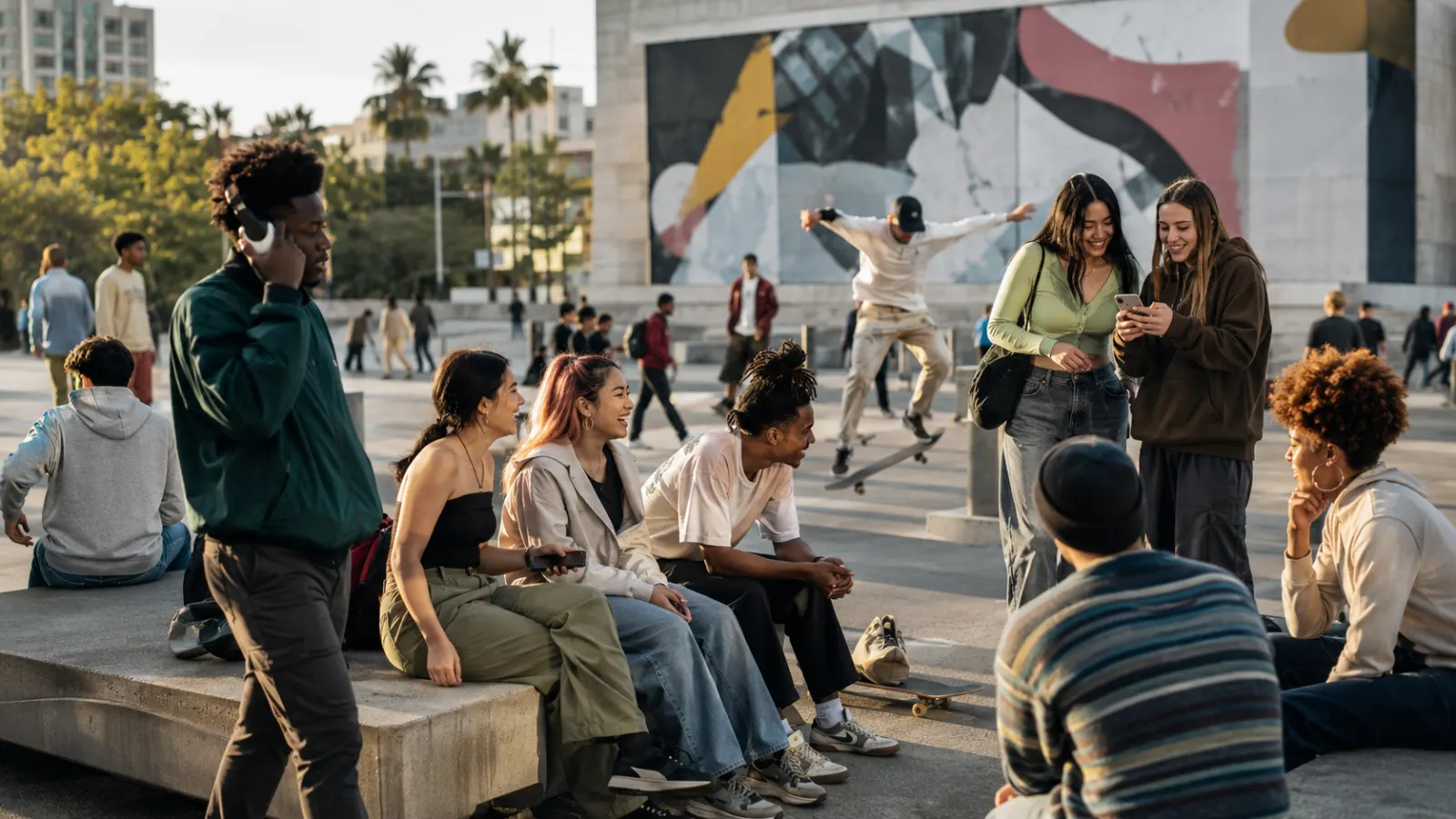
Change Is Normal; Stability Is the Achievement
Societies often feel permanent from inside everyday life. Schools open on schedule, families repeat routines, governments use familiar procedures and people inherit habits from earlier generations. Yet beneath that continuity, social relationships are constantly changing.
Social change refers to significant alteration over time in institutions, norms, relationships, roles or patterned behaviour. It can affect how people work, form families, communicate, govern, worship, learn, move and understand what is acceptable.
The crucial point is that social change is not the same as progress. A society can become richer while more unequal, more connected while less trusting, or more technologically capable while creating new forms of exclusion.
Change Happens at Different Scales
Some changes are intimate. A new expectation about marriage or parenting alters family life. Others are institutional: compulsory schooling, universal suffrage or digital government can reorganise the relationship between citizens and the state.
The largest transformations connect several systems at once. Industrialisation changed production, settlement, family roles, education, class structure and politics together.
Technology Is a Powerful Driver
Technologies change what people can do and how cheaply they can do it. Printing expanded the circulation of texts; railways changed mobility; electricity reorganised work and domestic life; digital networks reduced the cost of communication.
UN DESA's World Social Report 2020 treats technological innovation as one of the megatrends reshaping inequality. New technology can raise productivity and expand access to health, education and information while also displacing workers or widening gaps when access and skills are unequal.
Technology Does Not Determine Society by Itself
The same technology can produce different outcomes under different laws and institutions. A digital identity system can make public services easier to access or become a tool of exclusion. Automation can raise productivity while workers benefit through higher wages, or it can concentrate gains among owners.
Social outcomes therefore depend on regulation, labour institutions, public investment, ownership and political choices.
Demographic Change Alters Social Structure
Falling fertility, longer life expectancy, migration and changing household size affect schools, pensions, housing and care.
An ageing society may need more health and care workers. A youthful society needs education and jobs at scale. Migration can change languages, neighbourhoods and political identities.
Demography changes slowly compared with a political revolution, but its institutional consequences can last for decades.
Economic Change Reorganises Roles
When employment shifts from agriculture toward industry and services, people move, acquire new skills and enter different kinds of organisations.
Paid employment can alter gender roles and family bargaining. Formal labour markets can create new middle classes, while insecure work can create new forms of vulnerability.
Economic growth is therefore never only an increase in output. It changes social relationships.
Urbanisation Changes Everyday Contact
Cities bring strangers into repeated interaction through workplaces, markets, schools, transport and public space.
Urban life can weaken some traditional forms of social control while creating new associations and identities. It can expand opportunity and cultural exchange, yet also intensify housing pressure, segregation and inequality.
Ideas and Values Can Move Before Institutions
People may change attitudes about gender, sexuality, authority or the environment before law catches up.
At other times, law changes first and everyday norms adjust gradually. Social change therefore involves feedback between beliefs and institutions rather than a simple one-way sequence.
Social Movements Accelerate Change
Movements organise people around grievances that institutions have ignored or normalised. Labour movements, civil-rights campaigns, women's movements, anti-colonial struggles and environmental activism have all changed law and public norms.
Movements matter partly because they make private experiences visible as public problems.
States Can Deliberately Engineer Change
Governments alter society through taxation, education, welfare, infrastructure, health policy, family law and regulation.
Compulsory schooling can transform literacy and childhood. Public pensions can change dependence between generations. Transport networks can rearrange where people live and work.
Planned reforms, however, produce unintended consequences because societies are complex systems.
War and Crisis Can Compress Decades Into Years
Wars, pandemics, financial crises and natural disasters disrupt routines so sharply that institutions adapt rapidly.
Crisis can accelerate technology adoption, expand state capacity, reshape labour markets or harden social divisions. Emergency change can persist after the original crisis ends.
Climate Change Is Becoming a Social Driver
Climate change affects livelihoods, migration, food systems, insurance, infrastructure and political conflict over resources.
Its social effects are unequal because poorer communities often have less capacity to adapt. Environmental change therefore interacts with existing class, regional and institutional inequalities.
Globalisation Connects Local Change to Distant Events
Trade, migration, finance and communication link societies more tightly. A technological shift in one country can affect employment elsewhere; a cultural trend can become global within days.
Interdependence means local institutions increasingly respond to forces generated beyond national borders.
Change Can Be Gradual
Many important transformations are difficult to notice while they happen. Household sizes shrink over decades. Educational attainment rises generation by generation. A language gradually loses speakers.
Because gradual change lacks a single dramatic moment, it can be politically underestimated.
Change Can Also Be Nonlinear
A system may appear stable until accumulated pressure crosses a threshold. A technology becomes affordable, a movement gains enough support or institutional trust suddenly collapses.
This is why prediction is difficult: slow underlying shifts can produce abrupt visible outcomes.
Institutions Resist Change
Rules create expectations and organisations invest in existing systems. People also develop identities around institutions.
Resistance is not always irrational. Stable rules make coordination possible. The problem arises when institutions remain fixed after the conditions that justified them have changed.
Power Shapes Which Change Happens
Groups benefiting from an existing arrangement may resist reform, while people bearing its costs demand change.
Social change is therefore partly a conflict over resources, recognition and authority.
The Costs of Change Are Unequal
A new industry can create high-paying jobs while destroying older livelihoods. Urban redevelopment can improve infrastructure while displacing low-income residents. Digital services can increase efficiency while excluding people without connectivity.
Averages can hide these distributional effects.
The UN's Current Warning: Change Can Fragment as Well as Advance
The World Social Report 2025 describes a global environment shaped by economic insecurity, persistent inequality, declining trust and social fragmentation, while rapid technological shifts deepen some divides.
This is a reminder that societies can change rapidly without becoming more cohesive.
How Do We Know Social Change Has Occurred?
Researchers look for patterns across time: employment, family structure, education, fertility, migration, voting, attitudes, inequality, residential patterns and institutional rules.
One viral trend is not necessarily social change. The concept usually requires change that is sustained or sufficiently widespread to alter patterned social life.
Change Is Interconnected
A change in one domain often affects several others. Women's access to education can influence employment, fertility, family bargaining and political participation. Broadband can affect schooling, commerce, media and migration decisions.
Single-cause explanations therefore miss much of how societies transform.
Generations Experience the Same Change Differently
A technology introduced during adulthood can feel disruptive to one generation and ordinary to children who grow up with it. The same applies to family norms, political institutions and labour markets.
This is why social change often produces generation gaps without proving that one generation is inherently more progressive or conservative.
Measurement Changes Can Look Like Social Change
Sometimes institutions begin recording identities or behaviours that were previously hidden. Better data can make a problem appear to increase even when part of the change is improved visibility.
Researchers therefore distinguish real behavioural change from changes in definitions, reporting and measurement.
Change Can Be Cultural Without Immediate Institutional Reform
New attitudes can spread through media, education and generational replacement before laws or organisations change. People may increasingly reject a norm while still living under institutions built around it.
This lag helps explain why societies can contain old rules and new expectations at the same time.
Institutional Reform Can Also Lead Culture
The reverse occurs when law changes first. Anti-discrimination rules, compulsory education or new family law can alter incentives and public expectations even when opinion remains divided.
Social change therefore moves through a repeated feedback loop between rules, behaviour and values.
What Social Change Means
Social change is the alteration of the organised patterns through which people live together.
Its drivers include technology, demography, economic transformation, ideas, movements, policy, crisis, urbanisation and environmental pressure.
The most important question is not whether society will change. It will. The serious questions are who can shape the change, who gains, who bears the cost and whether institutions can adapt without abandoning fairness and social trust.
Sources / Further Reading
• UN DESA — World Social Report 2025 — https://desapublications.un.org/publications/world-social-report-2025-new-policy-consensus-accelerate-social-progress
• UN DESA — World Social Report 2020 — https://social.desa.un.org/publications/world-social-report-2020
• UNDP — Governance for Systemic and Transformational Change — https://hdr.undp.org/content/governance-systemic-and-transformational-change
• UNDP — Human Development Report 2025 — https://hdr.undp.org/content/human-development-report-2025
• UN DESA — Information and digital technologies for advancing social development — https://social.desa.un.org/publications/information-and-digital-technologies-for-advancing-social-development-opportunities
Suggested Internal Links
• Changing Values Across Generations — Article 80
• How Societies Evolve — Article 82
• Modernisation Explained — Article 83
• Effects of Urbanisation — Article 84
• The Rural-Urban Divide — Article 85