The battlefield moved into the factory
The most important battles of the twenty-first century may not begin with tanks crossing borders. They may begin when a shipment of chips is delayed, when a mineral export is restricted, when a port is blocked, when a shipping lane becomes unsafe, when a battery supply chain is captured, or when a country discovers that the medicine, machine tool or semiconductor it needs is controlled somewhere else. Supply chains have become the hidden nervous system of power.
For three decades, globalisation rewarded efficiency. Firms were told to produce where it was cheapest, store as little inventory as possible and rely on open trade routes. That model delivered lower prices and massive growth, but it also produced deep dependencies. The pandemic exposed fragility. The Russia-Ukraine war exposed energy dependence. US-China rivalry exposed technology dependence. Red Sea disruptions exposed maritime vulnerability. Climate shocks exposed food and commodity risks. The new lesson is blunt: a cheap supply chain is not always a secure supply chain.
This is why supply chains have moved from boardrooms to national security councils. Governments now ask where critical inputs come from, who controls chokepoints, which countries can impose export controls, which firms dominate advanced technologies and how quickly production can be shifted in a crisis. Trade is no longer a neutral market process. It is strategic terrain.
The current trigger: from just-in-time to just-in-case
The current trigger is the convergence of geopolitical rivalry and economic fragility. The WTO's recent trade outlook shows that world merchandise trade grew strongly in 2025 partly because AI-related goods and frontloaded imports offset tariff uncertainty, but it also warns that 2026 trade growth remains vulnerable to tariffs, transport disruption and regional conflict. That is the new global trade story: growth exists, but it sits on a foundation of political risk.
Companies have responded by moving from 'just-in-time' to 'just-in-case'. They still care about cost, but they now also care about redundancy, location risk, political trust, logistics resilience and regulatory certainty. Governments are reinforcing this shift through subsidies, industrial policy, export controls, screening of foreign investment and strategic stockpiles.
The result is not the end of globalisation. It is the militarisation of interdependence. Countries are not cutting all ties; they are trying to decide which ties are safe, which are risky and which must be controlled.
How supply chains became instruments of power
Supply chains create power in five ways. First, they create dependency. A country that dominates a critical input can influence the choices of countries that need it. Second, they create chokepoints. A narrow shipping route, a specialised machine or a rare mineral refinery can become a strategic pressure point. Third, they create standards. Whoever sets technical and regulatory standards shapes market access. Fourth, they create data. Digital supply chains reveal flows, customers and vulnerabilities. Fifth, they create political influence. Investment decisions can shift jobs, technology and bargaining power.
The semiconductor industry illustrates the point. Design, fabrication, lithography equipment, chemicals, packaging and talent are spread across different jurisdictions. No single country controls everything, but some countries control indispensable links. That is why chips became central to US-China rivalry and why countries such as India are trying to enter the semiconductor ecosystem.
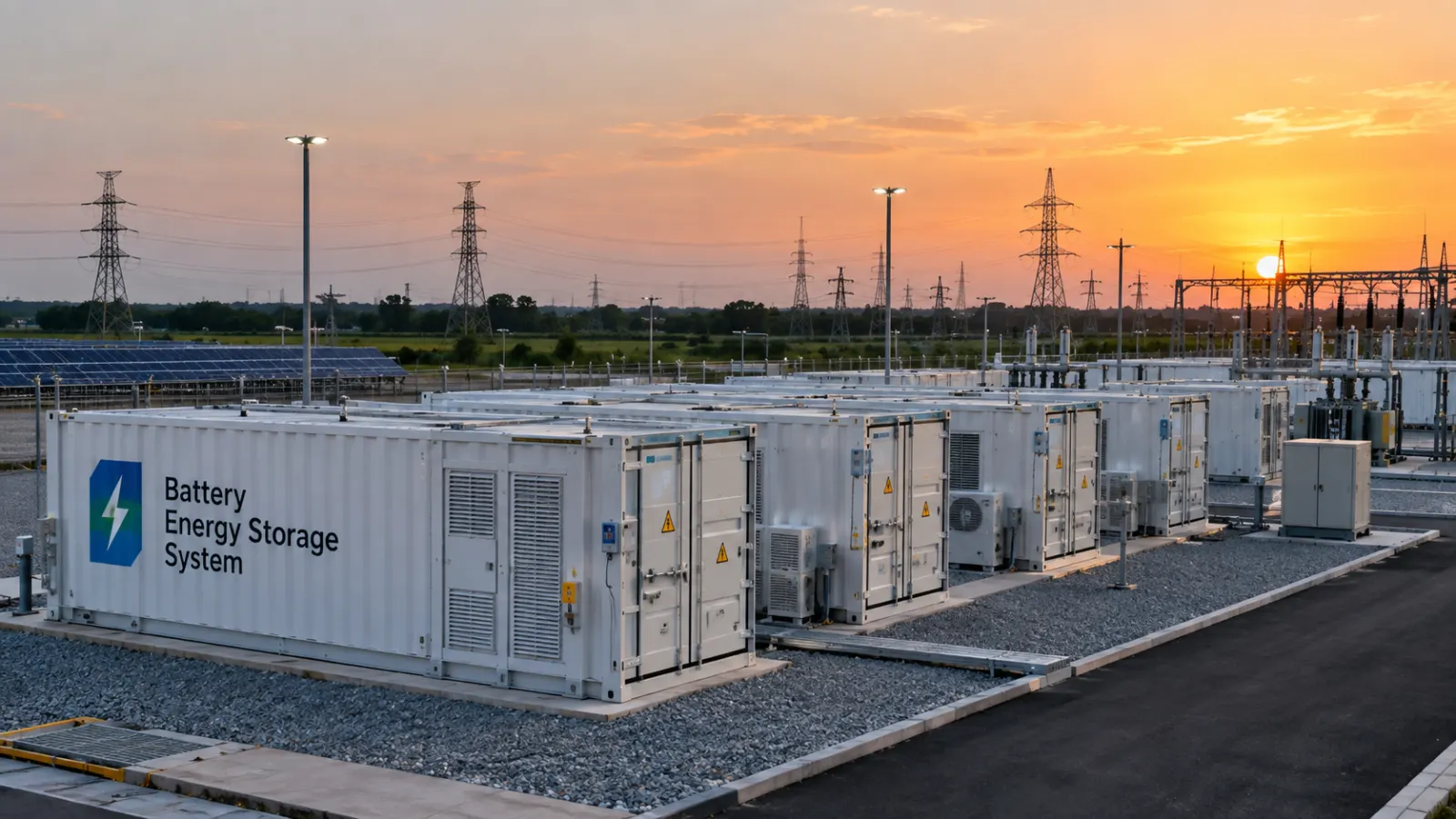
Critical minerals follow the same pattern. Lithium, cobalt, nickel, graphite and rare earths are essential for batteries, electric vehicles, defence systems and renewable energy. But extraction, processing and refining are geographically concentrated. A green transition built on concentrated mineral dependence simply replaces one strategic vulnerability with another.
India angle: opportunity and exposure
For India, supply-chain realignment is both an opportunity and a warning. The opportunity is clear. Companies seeking China-plus-one options need scale, labour, a large domestic market and political stability. India can offer these, especially in electronics, pharmaceuticals, automotive components, renewable energy equipment, defence manufacturing, textiles, chemicals and digital services.
But exposure is equally clear. India's goods trade deficit remains large. The World Bank's WITS snapshot shows India's merchandise trade is sizable but still marked by import dependence in several strategic sectors. India imports energy, electronics components, machinery, fertilisers, critical minerals and advanced technology inputs. Services exports are a strength, but services cannot fully substitute for manufacturing depth in a world where industrial capacity is becoming strategic.
India's supply-chain strategy must therefore be more sophisticated than inviting firms to relocate. It needs reliable power, ports, customs efficiency, contract enforcement, skilled labour, quality certification, deep supplier networks and predictable taxation. Global firms do not shift supply chains because a country is geopolitically attractive; they shift when the operating economics work.
The China-plus-one test
China-plus-one is often described as India's historic opening. That is true, but incomplete. China remains deeply embedded in global manufacturing because it combines scale, supplier depth, infrastructure, speed and state capacity. Moving final assembly is easier than moving entire ecosystems. Many firms diversify at the margin while continuing to depend on Chinese inputs.
This means India's goal should not be to copy China overnight. It should be to build specific areas of competitive depth. Electronics assembly can lead to component manufacturing. Auto components can lead to EV platforms. Pharmaceuticals can move from generics to active ingredients and complex biologics. Defence offsets can lead to domestic design. Renewable energy assembly can lead to cell, wafer, battery and storage ecosystems.
Supply-chain power is cumulative. It is built cluster by cluster, standard by standard, supplier by supplier. The countries that win are not those with the loudest slogans but those with the most disciplined industrial execution.
Global implications: blocs, corridors and trusted production
The new supply-chain order will reshape alliances. Countries will increasingly classify partners as trusted, risky or unavoidable. This is why terms like friendshoring, nearshoring and resilience have become central to trade policy. Western firms want alternatives to China, but not all alternatives are equal. They want political trust, legal reliability and infrastructure competence.
Trade corridors will matter more. Ports, railways, inland logistics, digital cables and energy pipelines are now geopolitical assets. The India-Middle East-Europe Economic Corridor is an example of how connectivity is being recast as strategic architecture. It is not just about moving goods; it is about building trusted routes across regions.
The danger is fragmentation. If every major power builds closed supply ecosystems, the world may face higher costs, duplicated capacity and slower innovation. Poorer countries could be left out if they cannot meet standards or attract investment. Resilience can become exclusion if not managed carefully.
Counter-view: markets still matter
A serious counter-view is that governments may overstate their ability to redesign supply chains. Firms still chase cost, capability and customers. Industrial policy can attract investment, but it cannot ignore economics. A supply chain shifted only for political reasons may become expensive and inefficient. Consumers may resist higher prices. Companies may hedge publicly while continuing business as usual privately.
There is also the risk of subsidy wars. Rich countries can spend heavily to attract strategic industries. Developing countries may struggle to compete. If resilience becomes a race of fiscal firepower, the system will favour those with deep pockets.
Still, the market-only view is outdated. Political risk now has a price. The central question is no longer whether economics or security will dominate. The real question is how countries will price security into economic decisions.
What happens next
India should watch five indicators over the next two years: semiconductor investment moving from announcements to production, critical mineral partnerships turning into processing capacity, logistics costs falling, export growth in high-value manufacturing, and the ability of Indian suppliers to meet global quality standards. The supply-chain battlefield will not be won by rhetoric. It will be won by execution.
The editorial conclusion is sharp: supply chains are the new map of power. Nations that control critical links will shape the choices of others. Nations that remain dependent on fragile links will discover that sovereignty can be interrupted by a delayed shipment.
Internal Links to Add
• Global Trade Faces a New Age of Protectionism
• Tariffs Return as the New Weapon of Global Politics
• China+1 Strategy Gives India a Historic Manufacturing Opportunity
• Critical Minerals Become the New Oil of the Global Economy