In August 2025, the United States imposed a fifty per cent tariff on Indian goods, the steepest rate levied on any major trading partner, and a stunning low point for two countries that had spent twenty years calling each other natural partners. Six months later, in February 2026, President Donald Trump and Prime Minister Narendra Modi announced a deal over the telephone that cut the rate to eighteen per cent, in exchange for Indian commitments to buy hundreds of billions of dollars of American energy, technology and farm goods and to wind down purchases of Russian oil. In the space of a single year, the India-US relationship had swung from crisis to bargain. The whiplash captured something fundamental: the partnership has moved from the language of friendship to the harder logic of transactional bargaining.
This is not the relationship of warm summits and soaring rhetoric that defined the previous two decades. It is colder, more conditional and more explicitly about leverage. For India, accustomed to being courted by Washington as a strategic prize, the new mood is a sharp adjustment. But it may also be a more durable foundation, because it rests on interests rather than sentiment.
Two Decades of Convergence
It is worth remembering how far the two countries had travelled. For much of the Cold War, India and the United States were estranged, divided by India's non-alignment, its closeness to the Soviet Union and Washington's tilt toward Pakistan. The turn began around the year 2000 and accelerated with the landmark civil nuclear agreement of 2008, which ended India's nuclear isolation and signalled a strategic bet by both capitals. In the years that followed came a cascade of defence agreements, India's designation as a major defence partner, joint military exercises, and the Initiative on Critical and Emerging Technology launched to bind the two countries together in semiconductors, space, artificial intelligence and clean energy. Trade in goods and services climbed past two hundred billion dollars. The convergence was real, and it was driven above all by a shared wariness of China's rise.
What Changed
The deterioration of 2025 had several sources, and understanding them explains the new transactionalism. The first was trade itself. The Trump administration's global tariff campaign treated allies and rivals alike as sources of unfair deficits, and India, with its protected markets and large surplus in goods with the United States, was an obvious target. The second was Russian oil: Washington tied punitive tariffs directly to India's energy purchases, insisting that Indian money was helping finance the war in Ukraine. The third was a diplomatic rupture over the India-Pakistan military clash of May 2025, during which differences over American statements and mediation strained trust at the highest levels.
For a time these irritants overwhelmed the strategic logic that had held the relationship together. The lesson both sides absorbed is that shared interests do not guarantee smooth relations, and that the partnership now has to be negotiated, transaction by transaction, rather than assumed.
The New Architecture of the Relationship
Several dimensions now define the engagement. Trade and investment have become a site of hard bargaining: the February 2026 framework lowered tariffs but left a long list of issues, from agriculture to digital rules to intellectual property, for further negotiation. Defence and technology remain the strongest pillar, with continued cooperation on co-production, jet engines, drones and emerging technologies that neither side wants to sacrifice to a trade dispute. The China factor remains the deepest glue: whatever their frictions, both capitals understand that a strong India is indispensable to balancing Beijing in the Indo-Pacific.
The defence and technology relationship is worth examining closely, because it is the ballast that keeps the partnership steady even when trade storms blow. Over two decades the United States has gone from selling India almost no major weaponry to becoming one of its leading defence partners, supplying transport and maritime patrol aircraft, helicopters and artillery, and signing the foundational agreements that allow deep military interoperability. More significant than any single sale is the shift toward co-production and technology sharing: agreements to jointly produce jet engines on Indian soil, to collaborate on drones, undersea systems and munitions, and to bind the two defence industries together. The Initiative on Critical and Emerging Technology extended that logic into semiconductors, space, artificial intelligence, quantum computing and biotechnology, the commanding heights of future power. Neither government wants to sacrifice this architecture to a tariff dispute, which is precisely why defence cooperation continued to advance even as the trade relationship deteriorated through 2025.
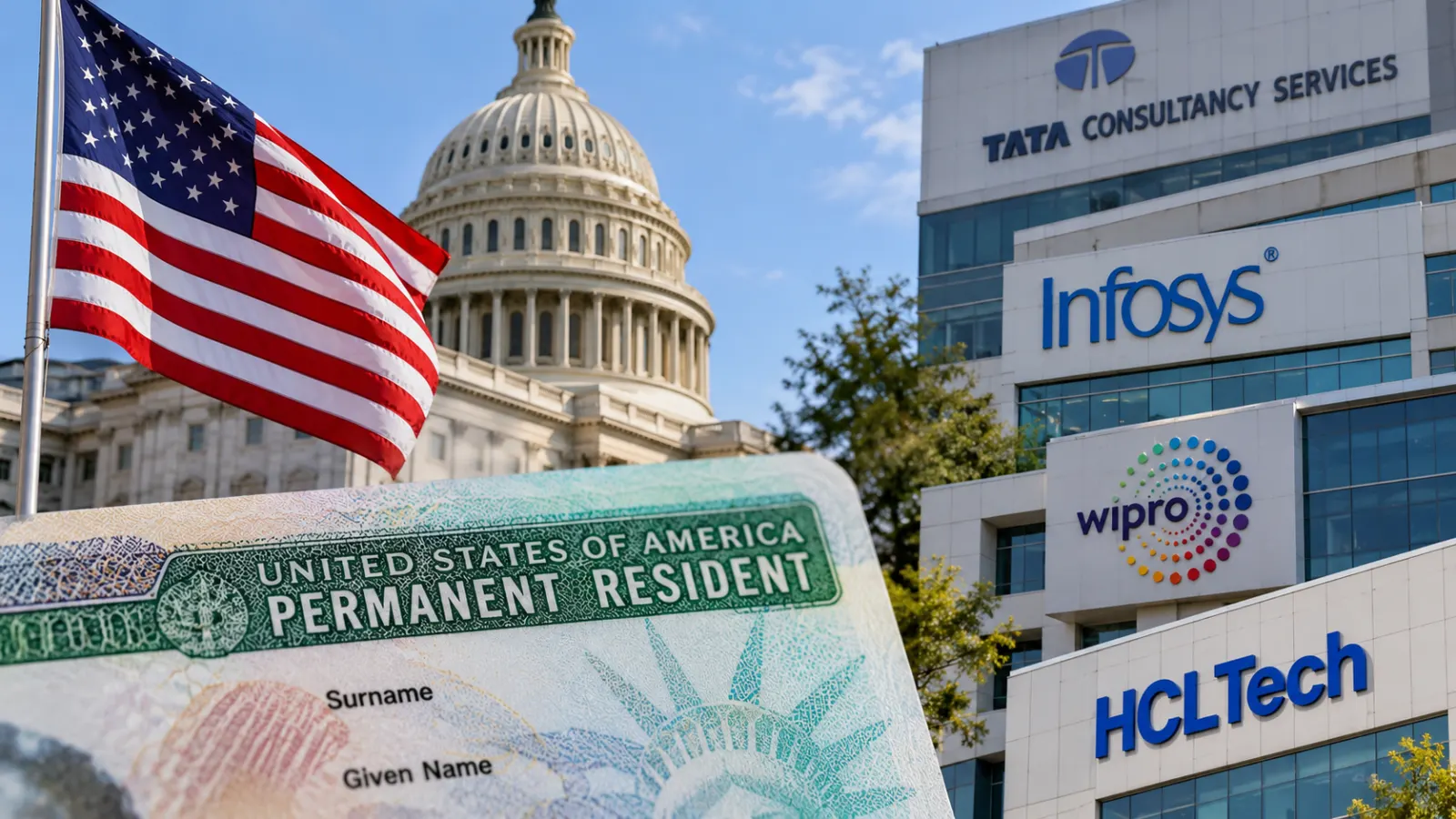
The human dimension is equally important and often underrated. The Indian American community has become one of the most prosperous and influential immigrant groups in the United States, prominent in technology, medicine, finance and increasingly politics, and it forms a living bridge between the two societies. Indian students are among the largest foreign cohorts at American universities, and the flow of skilled workers has powered Silicon Valley and the wider American technology economy for a generation. This is also a point of friction: visa regimes and the politics of immigration sit awkwardly within an "America First" agenda, and any tightening of skilled-worker pathways strikes directly at one of India's most valued links to the United States. The relationship is carried not only by governments but by millions of personal and professional ties, which give it a resilience that survives the quarrels between capitals.
Trade itself remains the most contested terrain. The two countries do enormous business in services and information technology, where Indian firms supply software and back-office capacity to American companies, and in pharmaceuticals, where Indian generics supply a large share of the American market. The friction concentrates in goods, where India's protected markets in agriculture, its tariffs on industrial products, and its rules on data and digital commerce clash with American demands for access. The February 2026 framework addressed the headline tariff rate but deferred this long list of structural issues to further negotiation, which guarantees that trade will remain a recurring source of tension. The pattern is now clear: cooperation on the strategic and technological frontier, hard bargaining on the commercial one, and a constant effort to keep the two from contaminating each other.
The Strategic Glue: China and the Indo-Pacific
Beneath every trade quarrel lies the single fact that holds the relationship together: both countries see a rising China as the defining challenge of the era, and neither can balance it alone. For the United States, India is the indispensable anchor of any strategy to maintain a favourable balance of power in Asia, a large, capable democracy astride the Indian Ocean and the approaches to the Pacific. For India, the United States offers the technology, capital and strategic weight that accelerate its own rise and complicate any Chinese attempt at dominance. This shared imperative is why the partnership has survived disappointments that might have sunk a relationship built on sentiment alone.
The clearest expression of this convergence is the Quad, the grouping of the United States, India, Japan and Australia that has evolved from an occasional dialogue into a standing forum for cooperation on maritime security, technology, supply chains and regional infrastructure. Alongside it runs a dense web of military exercises, intelligence sharing and maritime-domain awareness initiatives aimed at keeping the Indo-Pacific open and contested rather than dominated by any single power. India is careful to insist that the Quad is not an alliance and not directed at any country by name, preserving its autonomy even as it deepens the cooperation. But no one mistakes the strategic logic.
This is why the trade frictions, however sharp, are unlikely to derail the relationship entirely. The structural pressure of China's rise is a force more powerful than any tariff schedule, and it pushes the two democracies together even when their commercial interests collide. The hard bargaining over trade takes place within a strategic partnership that both sides regard as essential. That is the paradox of the relationship in the present moment: contentious on commerce, convergent on the largest question of all.
Two further dimensions add complexity. Immigration and the movement of skilled workers, long a source of irritation given Indian dependence on visa regimes for its technology talent, sits uneasily within an "America First" politics. And the Russia question lingers: India's commitment to reduce Russian oil purchases eased the immediate crisis, but New Delhi's determination to preserve some independent relationship with Moscow will continue to test American patience.
The India Angle
For India, the United States is simultaneously its most important strategic partner and a source of real pressure on its autonomy. Washington offers what India needs most for its rise: advanced technology, defence cooperation, capital, a vast market for its services and a diaspora that forms a powerful bridge between the two societies. Yet the events of 2025 showed that this partner is also willing to wield economic coercion to bend Indian choices on energy, trade and foreign policy.
India's response is characteristic. It will deepen the relationship where the gains are clear, in defence, technology and investment, while resisting any expectation that closeness with Washington requires abandoning its independence elsewhere. New Delhi wants the benefits of partnership without the constraints of dependence, and the transactional turn, uncomfortable as it is, may suit that goal. A relationship of explicit bargains is one in which India can extract concessions as well as offer them.
Global Implications
The India-US relationship is among the most consequential bilateral ties of the era. A close and confident partnership anchors the Indo-Pacific balance and reassures other democracies wary of Chinese power. Friction between the two, by contrast, creates openings that Beijing and Moscow are quick to exploit, as the prolonged distrust of 2025 demonstrated. For the wider world, the health of this relationship is a barometer of whether the democratic powers can cooperate effectively or whether their internal politics will repeatedly undercut their shared strategic interests.
The Counter-View
There is a more optimistic reading of the turbulence. The structural forces pushing India and the United States together, the rise of China, the complementarity of their economies, the depth of people-to-people ties, are far stronger than the tariff disputes that periodically inflame relations. By this view, 2025 was a storm, not a sea change, and the February 2026 deal proves that both sides ultimately recognise they need each other too much to let commerce derail strategy. The relationship has weathered worse and emerged stronger.
The pessimistic reading is that the transactional logic is now permanent, that each future administration will treat the partnership as a series of deals to be renegotiated, and that India can no longer count on steady American commitment. Both readings contain truth. The relationship is more important and more volatile than ever.
What Happens Next
In one scenario, the February framework matures into a genuine economic partnership, tariffs settle, technology cooperation deepens, and the relationship stabilises on a transactional but productive footing. In a second, trade disputes recur with each political cycle, keeping the partnership perpetually unsettled even as defence ties advance. In a third, a major external shock, a crisis with China above all, drives the two into their closest alignment yet, submerging the trade frictions beneath a shared strategic imperative.