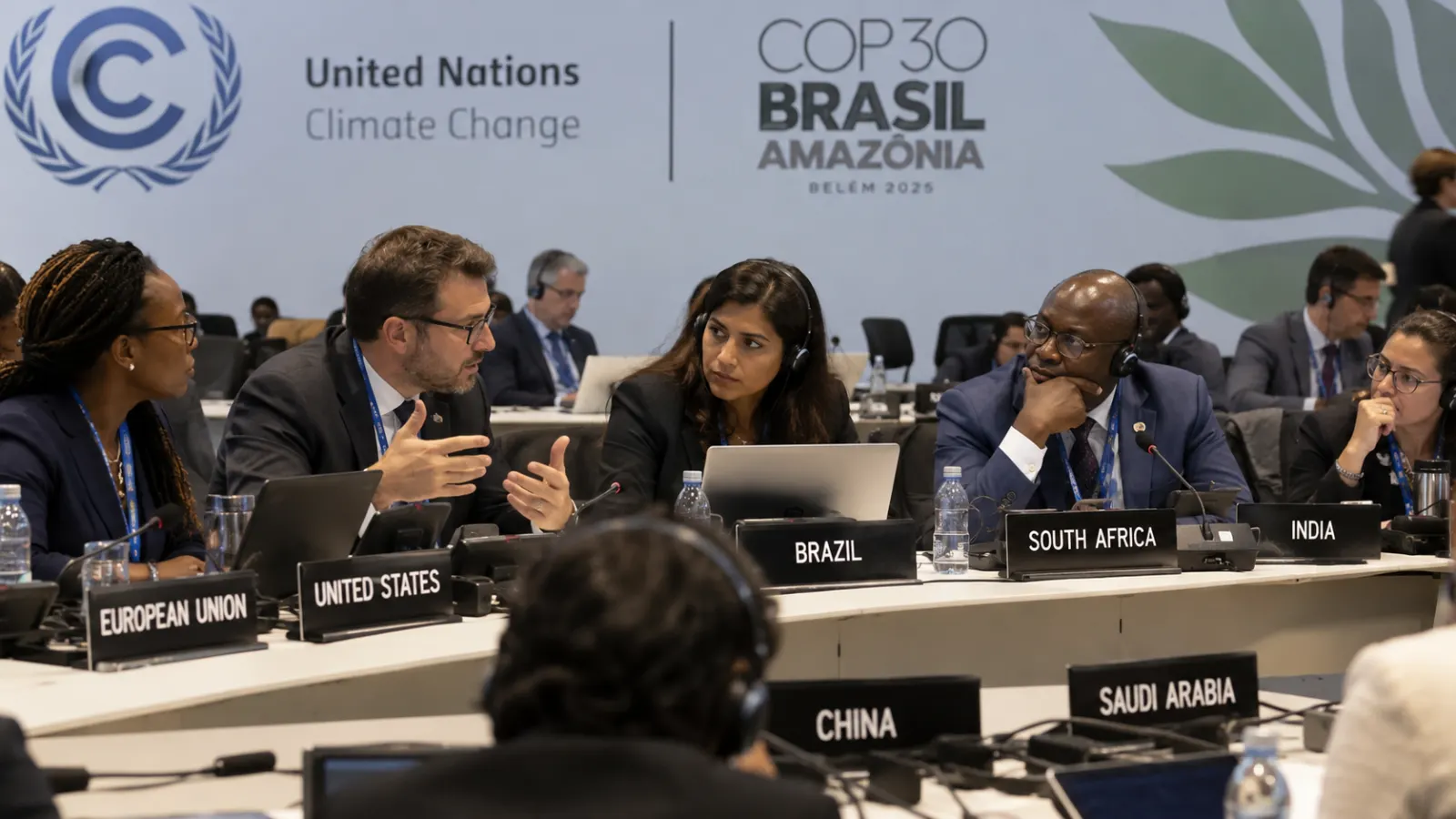
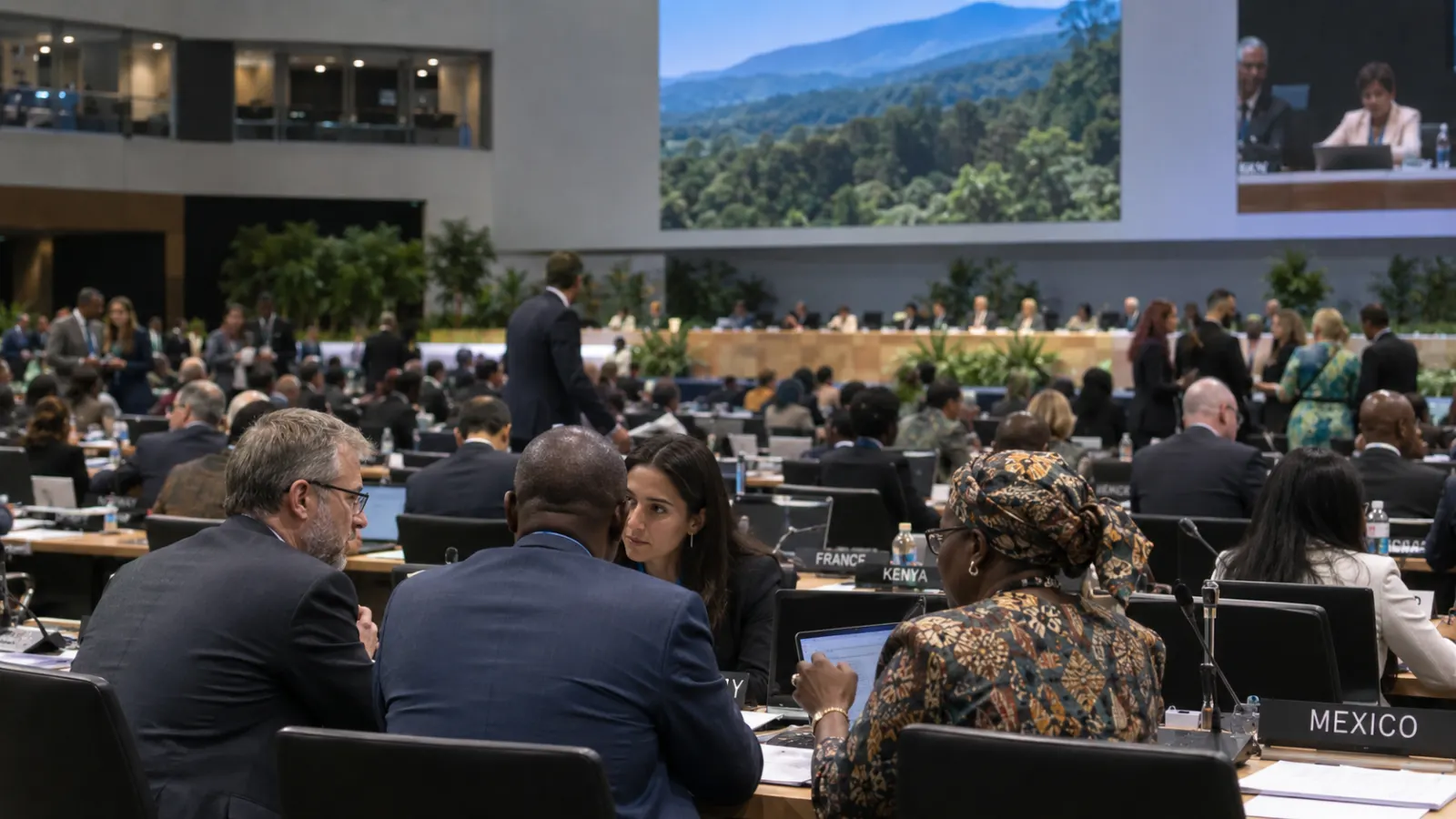
New Delhi no longer speaks like a state waiting for permission. It speaks like a country that sees itself as a civilisational power, an economic market, a security actor and a diplomatic bridge at the same time. This confidence is visible in India's language on strategic autonomy, its claim to represent the Global South, its push for supply-chain resilience, its defence partnerships with the West, its continuing ties with Russia, its cautious competition with China and its repeated demand that global institutions reflect twenty-first century realities.
But ambition is not the same as freedom. India's global rise is unfolding inside a harsher international system. The United States wants partners but also expects alignment. China offers economic scale but brings strategic pressure. Russia remains useful for defence and energy, but its war in Ukraine has changed the diplomatic cost of old relationships. Europe wants India as a market and geopolitical partner, while also using trade, climate and regulatory rules to protect its own interests. The Global South wants India to speak for development concerns, but many countries do not want India to become merely another big power seeking influence.
The central paradox of India's foreign policy is therefore simple: New Delhi wants to expand its choices, but great power rivalry keeps narrowing the field in which those choices can be exercised. The art of Indian statecraft now lies not in avoiding rivalries, but in converting rivalries into bargaining space without getting trapped by them.
The current trigger: every partnership now comes with a condition
The immediate trigger behind this debate is the return of strategic competition as the organising principle of world politics. The post-Cold War language of liberalisation, globalisation and interdependence has been replaced by the language of sanctions, secure supply chains, strategic technologies, trusted partners, tariff walls, export controls and military deterrence. What used to be called economic policy is now called national security. What used to be called infrastructure is now connectivity strategy. What used to be called trade is now leverage.
India is directly affected by this shift. Its energy security still depends on stable access to imported oil and gas. Its defence modernisation still requires foreign technology and platforms. Its semiconductor, telecom, aviation and green energy ambitions depend on global capital and equipment. Its export strategy needs access to wealthy markets at a time when those markets are becoming more protectionist. In this context, India's global ambition cannot be assessed only by speeches at summits. It must be measured by whether New Delhi can secure technology, investment, markets, energy, finance and diplomatic space despite worsening rivalry among the major powers.
This is why India's diplomacy has become more transactional. It is not ideological drift; it is structural compulsion. A country of India's size cannot afford romantic alignment, but it also cannot afford isolation. It has to work with the United States on technology and the Indo-Pacific, Europe on trade and climate, Russia on defence and energy, Japan on infrastructure, the Gulf on energy and capital, Africa on development partnership, and the Global South on institutional reform.
Historical roots: from non-alignment to multi-alignment
India's instinct for strategic autonomy did not appear suddenly. It emerged from the experience of colonial subordination, Cold War bloc politics and the belief that political independence would remain incomplete without foreign policy independence. Non-alignment was never simply neutrality. At its best, it was an attempt to preserve agency in a world dominated by military blocs. At its weakest, it sometimes became rhetorical comfort in a world where material power mattered more than moral argument.
The post-1991 period changed the grammar of Indian foreign policy. Liberalisation pushed India closer to global markets. The nuclear tests of 1998 forced India to absorb sanctions, negotiate its place and eventually secure a civil nuclear opening with the United States. The rise of China sharpened India's security calculations. The Indo-Pacific turned maritime geography into strategy. The G20 presidency and the Voice of Global South initiatives gave India a platform to present itself as a country that could talk to both the powerful and the underrepresented.
But history also places limits. India is still not a permanent member of the UN Security Council. It remains dependent on imported energy. Its manufacturing depth is improving but uneven. Its defence ecosystem is more self-reliant than before but not yet fully autonomous. Its neighbourhood remains contested by China and politically unstable in parts. The gap between aspiration and capability is narrowing, but it has not disappeared.
The great power triangle: America, China and Russia
The United States is India's most important strategic partner in technology, defence interoperability, higher education, capital markets and the Indo-Pacific. Yet Washington is also a demanding partner. Its trade policy can be protectionist, its sanctions can affect third countries, and its domestic politics can change the tone of engagement quickly. India wants American technology and geopolitical support without becoming an American outpost. That balance is difficult but essential.
China is India's largest strategic challenge. It is not only a border adversary but also a manufacturing giant, infrastructure financier, maritime actor and technology competitor. The India-China relationship is complicated because dependence and distrust exist together. India wants to reduce critical dependence on Chinese supply chains, but global value chains cannot be redesigned overnight. The border problem keeps strategic trust low, while China's economic scale prevents complete disengagement.
Russia remains the most uncomfortable variable. For decades, Moscow supplied India with defence equipment, diplomatic support and strategic depth. The Ukraine war, however, has transformed Russia's relationship with the West and pushed Moscow closer to Beijing. India has benefited from discounted energy and preserved old defence channels, but the long-term risk is clear: a Russia more dependent on China may become less useful as a strategic balancer for India.
India angle: ambition needs domestic capacity
India's foreign policy leverage ultimately rests on domestic strength. No country can sustain great-power ambition only through diplomatic cleverness. It needs manufacturing capacity, technological depth, military readiness, financial resilience, administrative execution and social stability. India has advantages: scale, demographics, digital public infrastructure, a large services economy, a growing defence profile, an increasingly visible diaspora and a reputation for political independence. But it also faces constraints: infrastructure gaps, uneven human capital, slow judicial and regulatory processes, and a trade profile that still needs more high-value manufacturing.
This is why the foreign policy debate cannot be separated from economic reform. Strategic autonomy is not only about saying no to pressure. It is about having enough capability to survive the cost of saying no. If India wants to negotiate better trade agreements, it must be export-competitive. If it wants trusted supply chains, it must build reliable logistics and quality standards. If it wants defence autonomy, it must deepen indigenous research, manufacturing and procurement reform. If it wants to lead the Global South, it must deliver credible development partnerships rather than symbolic declarations alone.
The world respects moral language when it is backed by material capacity. India's challenge is to ensure that the language of Vishwa Bandhu, Global South solidarity and strategic autonomy is matched by factories, ports, laboratories, universities, warships, standards bodies, trade negotiators and financial institutions.
Counter-view: is India overestimating its room for manoeuvre?
A serious counter-view is that India may be overestimating how much space exists in a polarising world. Great powers often tolerate ambiguity only while it is useful to them. The United States may accept India's independent Russia policy in one phase and object to it in another. China may engage economically while applying pressure on the border or in the neighbourhood. Europe may praise India as a democratic partner but still impose carbon, digital and sustainability rules that hurt Indian exporters. The Global South may welcome India's voice but resist Indian leadership if it appears too self-serving.
There is also the risk of overextension. A country can attend many summits, join many minilaterals and issue many declarations without translating them into outcomes. Multi-alignment can become strategic sophistication, but it can also become diplomatic congestion. The test is not how many platforms India joins, but whether those platforms produce technology, security, capital, market access and crisis support.
Still, the counter-view should not become fatalism. India's room for manoeuvre exists because all major powers need something from India. The United States needs India in Asia. Europe needs India as a market and democratic partner. Russia needs India to avoid excessive dependence on China. The Gulf needs India as a labour, market and security partner. The Global South needs a large developing country with institutional access. India's task is to convert this demand into durable advantage.
What happens next
Over the next two years, India's global ambition will be tested in five theatres. The first is the Indo-Pacific, where maritime competition with China will intensify. The second is trade, where new FTAs and protectionist barriers will decide whether India can turn geopolitical interest into export growth. The third is technology, where semiconductors, AI, telecom, quantum and critical minerals will shape sovereignty. The fourth is the neighbourhood, where instability in South Asia can consume diplomatic bandwidth. The fifth is multilateral reform, where India will need to move beyond slogans and build coalitions that can alter institutional outcomes.
The editorial conclusion is clear: India is rising, but it is rising in a world that is becoming less generous. New Delhi's ambition is justified by size, history and capability. But ambition will become power only when India can manage rivalry without illusion, partnership without dependence and autonomy without isolation.
Internal Links to Add
• India’s Foreign Policy Is Becoming More Economic Than Ideological
• India’s Global Rise Is Reshaping the Language of Diplomacy
• India’s Foreign Policy Enters a New Era of Strategic Balancing
• India-China Rivalry Is Now Economic, Military and Technological