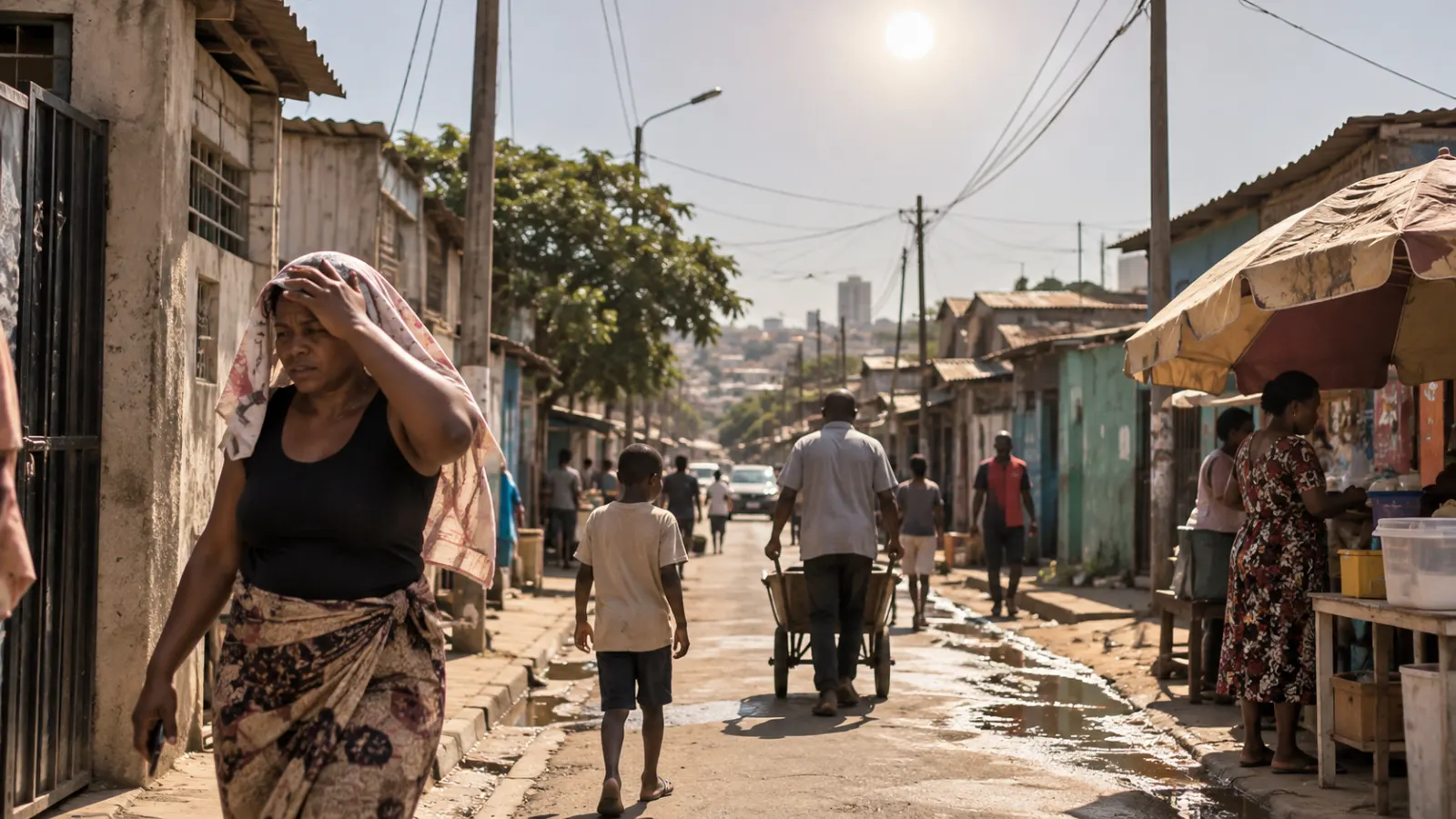
By the third week of May 2026, the global temperature map had a striking new feature. On a single day, all fifty of the world’s hottest cities were in India. By the following day, ninety-seven of the world’s hundred hottest cities sat within Indian borders, according to real-time tracking data reported widely by Indian news outlets. Balangir in Odisha touched 48 degrees Celsius. Sasaram in Bihar and Varanasi in Uttar Pradesh were close behind. Brahmapuri in Maharashtra’s Vidarbha region recorded 47.2 degrees. Nineteen Indian cities crossed 45 degrees on the same Friday evening, according to International News and Views citing meteorological data released at 5.30 pm. The India Meteorological Department issued red and orange heatwave alerts across Delhi, Rajasthan, Punjab, Haryana, Uttar Pradesh, Madhya Pradesh, Vidarbha, Chhattisgarh, Bihar and Telangana, BusinessToday reported on 18 May 2026.
None of this is a weather story. It is a city story, a labour story, a power story and a public health story, written in degrees Celsius. Indian cities are not just getting hotter. They are operating under climatic conditions they were not designed for, with populations who were not warned in time, and with public systems that were built for a milder century. The heat is no longer an event. It is becoming a permanent operating condition, and it is exposing every weakness of urban India at once.
What is actually happening
The IMD defines a heatwave in the plains as a day when the maximum temperature reaches 40 degrees Celsius or higher and is at least 4 to 5 degrees above the seasonal normal. A “severe heatwave” requires deviation of 6 degrees or more. By those criteria, large parts of northern, central and eastern India have spent the better part of May 2026 inside a heatwave or severe heatwave zone, with multiple days of 45-plus readings across what climate researchers call the Indo-Gangetic and central peninsular belt.
The IMD is forecasting roughly ten to twelve heatwave days for north-west India this season, against a typical historical baseline of five to six days, according to the Tribune India report citing IMD scientists. In 2024 — India’s hottest year on record, by IMD reckoning — the country logged 554 heatwave days nationally. The 2024 figures included a Churu (Rajasthan) reading of 50.5 degrees Celsius on 28 May and a Mungeshpur (Delhi) reading of 49.9 degrees on the same day. The 2025 India-Pakistan heatwave killed an estimated 455 people in India, according to compiled state-level reporting, with 195 deaths in April and over 260 in May. The 2024 cycle killed 219 or more, according to Reuters and Indian government tallies, including 33 election polling staff stationed in extreme heat during the final phase of the general election. More than 40,000 people were hospitalised for heat-related illness across the country.
These are official numbers. The actual toll is almost certainly higher. Heat deaths in India are systematically undercounted because cause-of-death recording often attributes the proximate cause — cardiac arrest, respiratory failure — without identifying heat as the trigger.
Why heat in India 2026 feels different
Three forces are stacking on top of each other to produce the present moment.
The first is climate change at the planetary scale. South Asia is warming faster than the global average, with the IPCC’s Sixth Assessment Report identifying it as one of the most exposed regions to compound heat events. The 2026 season has also coincided with a delayed pre-monsoon, dry north-westerly winds sweeping in from Rajasthan and Pakistan, and the prolonged effects of La Niña on Pacific weather patterns disrupting normal monsoon formation — three factors that BusinessToday and Vision IAS climate analyses have flagged through May.
The second is the urban heat island effect. Concrete absorbs heat through the day and releases it through the night. Asphalt streets, tin and tile roofs, vehicles and waste heat from air-conditioner condensers all add to ambient warming. Cities like Delhi, Nagpur and Ahmedabad now routinely run several degrees hotter than their surrounding rural areas, according to climate research cited in Vision IAS analysis. Night-time temperatures are no longer dropping the way they once did, which means the human body never gets the recovery window evolution depended on. The 2026 heatwave produced overnight temperatures around or above 30 degrees Celsius in roughly 35 cities, International News and Views reported in late May.
The third is the wet-bulb factor. The figure on a weather report is the dry-bulb temperature. The figure that actually kills people is the wet-bulb temperature, which combines heat and humidity to measure how efficiently the human body can cool itself through sweat. When wet-bulb temperatures cross around 31 to 32 degrees Celsius, the body of even a healthy adult at rest begins to face physiological threat. Outdoor workers, the elderly, children and those without access to cooling face the threat sooner. India’s coastal and Indo-Gangetic regions — Mumbai, Chennai, Kolkata, the eastern UP belt, parts of Bengal — are increasingly touching these thresholds during humid heat events. The combination of high dry-bulb temperature with rising humidity in a country that lives outdoors for work is the danger that most weather reports do not communicate.
The infrastructure was built for a different climate
The list of systems now operating under conditions they were not designed for is long. Electricity grids are running peak loads they were not engineered to handle. Delhi’s peak power demand touched 8,439 megawatts on 25 May 2026, the highest May reading on record, with the State Load Despatch Centre projecting a possible breach of 9,000 MW this summer, against the previous all-time peak of 8,656 MW recorded in June 2024. Distribution transformers fail in localised neighbourhood outages. Metro and rail systems face track expansion issues and signal failures. Roads soften. Water supply lines, designed decades ago, cannot meet rising consumption during heat months. Hospitals without sufficient cooling struggle to maintain conditions for elderly patients and neonatal units. Schools sweat through afternoons in classrooms designed before air-conditioning was considered essential. Construction sites operate without mandated heat protections. Informal settlements, with tin or asbestos roofs and dense layouts, become heat traps.
Indian Railways had to cancel hundreds of passenger trains during the 2022 heatwave as an emergency measure to prioritise the movement of coal to power plants, the Wikipedia consolidation of that year’s reporting notes. The 2024 heatwave saw the All India Power Engineers Federation warn of potential blackouts on 18 June. The same pattern is now repeating in 2026 with greater frequency and earlier onset.
The human cost
The most exposed are those whose work requires being outside in the middle of the day. The International Labour Organisation, in its global heat-stress research, estimates that agricultural workers account for roughly 60 per cent of productive hours lost globally to occupational heat stress, with construction workers accounting for another 19 per cent. In India, this translates into delivery riders for food and e-commerce apps, construction labourers on real estate sites in Gurugram, Hyderabad and Pune, street vendors, traffic police, sanitation workers, daily-wage agricultural labour in the late kharif preparation period, and the millions of informal workers whose income disappears on a day they cannot work.
Heat is also a profoundly unequal experience. Air-conditioned homes, offices and cars insulate the affluent. The poor sweat. Women in households without cooling carry an additional thermal burden inside kitchens that double as sleeping spaces. Elderly people in flats without ventilation face cardiovascular stress that does not always declare itself as a heat death in official statistics. Children in government schools without functioning fans lose hours of learning. Pregnant women face elevated risks that obstetric data has begun to flag.
The Ahmedabad Heat Action Plan, developed after the 2010 heatwave in the city killed an estimated 1,344 people more than expected baseline mortality (the figure documented by Azhar et al. in their 2014 PLOS ONE study), has become the most cited Indian case study of municipal heat response. A 2015 evaluation by Public Health Professor Parthasarathi Ganguly, cited in the Wikipedia consolidation of the 2019 India-Pakistan heatwave, estimated that the plan saved roughly 800 lives in 2014 through early warning systems, school day reductions, free water distribution and the opening of public gardens during the hottest hours. The model has since been replicated across 23 states and several major cities, with the National Disaster Management Authority and the IMD coordinating early-warning systems, district vulnerability maps and outdoor worker guidance as part of national Heat Action Plans.
The grid contradiction
Heat creates cooling demand. Cooling demand creates electricity demand. Electricity demand, in an Indian grid still substantially fuelled by coal, creates emissions. Emissions create more warming. The loop is uncomfortable to acknowledge but it is the structural physics of the present moment.
The Central Electricity Authority’s Optimal Generation Mix 2030 report projects coal’s share of India’s power generation will decline from around 73 per cent in 2024 to about 55 per cent by 2030, with renewables — solar, wind, small hydro, pumped hydro, biomass — rising from roughly 12 per cent to 31 per cent. The longer arc, the CEA suggests in its 2035-36 projections covered by Mercom India in April 2026, points to coal at around 28 per cent of installed capacity and solar at roughly 45 per cent. These are the trend lines. The transitional period is the problem. Solar generation peaks at noon, when the sun is highest. Cooling demand in Indian households peaks between 6 pm and 2 am, when the sun has set and the day’s stored heat is being radiated by walls, roofs and streets. Battery storage is scaling but remains expensive. Until evening peak storage matches evening peak demand, the grid will continue to be balanced by coal-fired generation, with the climate consequences that produces.
What cities actually need
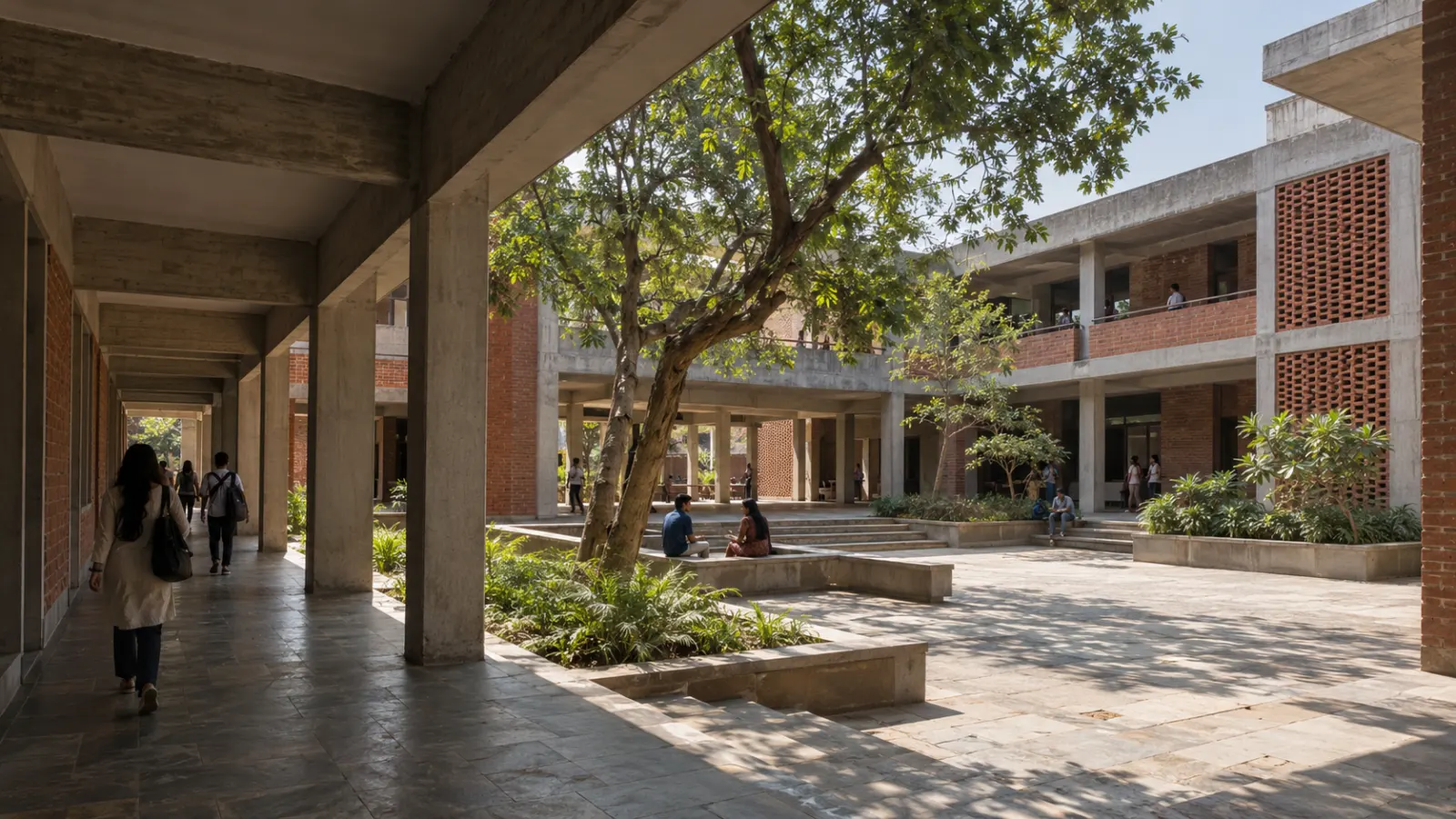
The list of what works is reasonably well understood by urban planners and public health specialists. Heat action plans with formal triggers and response protocols, the Ahmedabad model writ across every major city. Cool roofs painted with reflective material in low-income housing, which can lower indoor temperatures by 2 to 5 degrees at low cost. Urban forests and tree corridors that lower ambient temperatures by 3 to 7 degrees in their immediate vicinity. Shaded public spaces near transport hubs and informal markets. Water-sensitive urban design that restores tanks, ponds and permeable surfaces. Early warning systems that reach vulnerable populations in their languages. Public cooling centres in schools, community halls and libraries during extreme heat. Worker protection rules — mandated rest breaks, water provision, prohibitions on outdoor work during peak afternoon hours — enforced at construction sites and on agricultural fields. Climate-resilient building codes that mandate insulation, ventilation and shading in new construction.
None of this is technologically exotic. All of it is institutionally hard. Local bodies need budgets. Construction lobbies need to be regulated. State labour departments need to enforce rules they have on paper. The political incentive structure does not always reward investment in something whose primary benefit is preventing deaths that would have been attributed to other causes anyway.
What the rest of the world is doing
The Gulf monarchies, which have built around extreme heat with the help of energy abundance, run the most cooling-intensive urban systems on earth and offer limited lessons for an Indian context that must operate at very different cost ceilings. Singapore has invested in tree canopy, water bodies and shading codes that have measurable effects on ambient urban temperatures. Mediterranean Europe — particularly Spain after the deadly 2003 heatwave that killed over 70,000 people across the continent — has introduced formal worker protection rules with siesta-period prohibitions on outdoor labour. American cities run heat alerts and operate cooling centres. The Lancet Countdown on health and climate change publishes annual India-specific analyses identifying gaps. The templates exist. The willingness to implement them at Indian scale is the variable.
What most reports are missing
Most coverage of Indian heatwaves frames the story as weather. The under-reported angle is that heat is a labour problem. The losses are not just human lives, which are tragic but politically diffuse; they are wage hours, productive output, manufacturing throughput. The 2024 heatwave caused a three-month low in the rate of increase in new manufacturing orders in India, Wikipedia’s consolidation of that year’s reporting notes. Productivity losses from heat compound year over year in a country where outdoor labour, formal and informal, is a significant share of GDP.
The second missing angle is night-time temperatures. The recovery window matters more than peak temperature for human survival. A 47-degree day followed by a 22-degree night is survivable. A 44-degree day followed by a 31-degree night, increasingly common in Indian metros, is not.
The third missing angle is groundwater. Heatwaves drive water demand. Water demand, in cities like Bengaluru, Chennai and Hyderabad, is increasingly being met by deeper borewells and tanker economies. Each heat season accelerates groundwater depletion that takes years to reverse. The water crisis and the heat crisis are not separate stories; they are the same story viewed from a different tap.
What happens next
The next several weeks will determine the death toll of the 2026 cycle. IMD forecasts indicate continued severe heatwave conditions across northern and central India through the first week of June, with monsoon onset on the Kerala coast expected on or around 1 June and progress northward over the following four to six weeks. Whether the monsoon arrives on time and progresses normally will shape both the immediate human cost and the agricultural outcome for the kharif crop.
In the longer term, three questions matter. Will the next Union Budget and the next round of state budgets allocate the capital to expand municipal heat action plans, build out cooling centres and enforce worker protection rules? Will building codes for new urban construction mandate insulation, ventilation and shading as standard rather than optional? Will the grid transition deliver the storage and renewable evening capacity needed to break the cooling-coal loop?
None of these is a heroic question. All of them are governance questions. Heat is not a problem that can be solved by individual heroism or technological breakthrough. It is solved by municipal corporations doing routine work at scale.
Conclusion
Indian cities are running a climate stress test they did not consent to and are not currently passing. The 2026 numbers are not, on the historical record, an anomaly; they are an acceleration of a trend the IPCC has been documenting for two decades. The infrastructure mismatch is real. The political response is uneven. The municipal response is improving in patches — Ahmedabad, Hyderabad, parts of Delhi — but is far short of what the temperature trajectory requires.
The honest version of the conclusion is this. The Indian summer is no longer a season. It is an annual reckoning with how seriously a country takes the people who live and work in its open spaces. The 2026 heatwave is telling the truth about the gap between policy paper and ground reality. The question is whether anyone in the rooms that make budgets and codes is still listening when the temperature briefly drops in June and the headlines move on. The people who carry vegetables, deliver packages, lay bricks and direct traffic do not have the luxury of waiting for the next election to find out.