What happened?
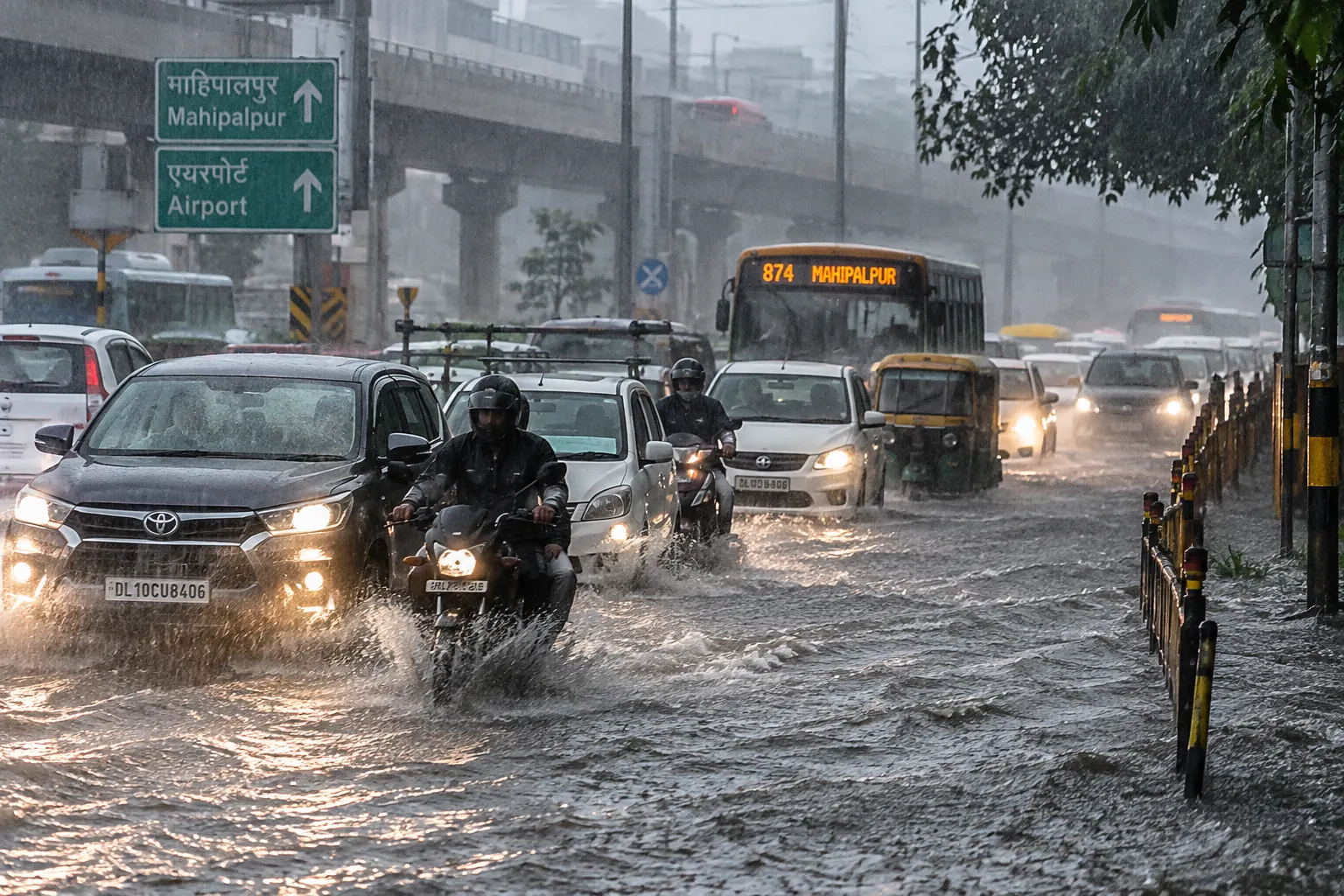
Major Indian cities including Delhi, Mumbai, Pune, Nagpur, Lucknow, and Jaipur have experienced severe traffic disruption multiple times in May 2026 due to dust storms, unexpected rain showers, and extreme heat-related road surface failures. Each weather event has exposed the same vulnerabilities — inadequate drainage, poor road maintenance, and traffic management systems that cannot adapt in real time.
Key Points
Multiple dust storm and rain events causing 2–4 hour traffic jams in Delhi, Mumbai, and Pune in May 2026
Delhi Outer Ring Road flooding within minutes of moderate rain — perennial problem unresolved
Nagpur's civil lines area saw roads damaged by sudden downpour highlighting poor surface quality
Traffic signal failures during power cuts add to disruption during and after weather events
Emergency services (ambulances, fire, police) delayed — health and safety consequences
India's urban road infrastructure designed for historical weather patterns that are now changing
Background
India's urban roads and drainage systems were largely designed in the 1980s and 1990s, based on rainfall and weather data from that era. Climate change has increased the frequency and intensity of extreme weather events. Urban road design is also constrained by rapid and often unplanned urbanisation — storm water drains are routinely encroached upon, blocked by garbage, or simply absent in newer developments.
Main Details
In Delhi, the Outer Ring Road, ITO, and Minto Bridge underpass were again inundated within 20–30 minutes of a moderate rain shower in May 2026. Vehicles were stranded, with drivers unable to judge water depth. Emergency vehicles were stuck in the resulting gridlock.
In Nagpur, the sudden pre-monsoon downpour exposed multiple road sections that had received fresh bitumen but insufficient drainage repair. Water pooling led to accelerated pothole formation within days. In Mumbai, pre-monsoon rain in May caused the usual flooding of low-lying areas.
Reactions
Urban transport experts have repeatedly called for systemic overhauls — but these require coordinated investment across multiple agencies that rarely work in seamless coordination. Social media during each event fills with frustrated citizen documentation of jams, flooded underpasses, and broken traffic signals.
Impact Analysis
Traffic disruption is not just an inconvenience. Delayed emergency vehicles cost lives. Economic productivity losses from hours spent in jams are measurable. Fuel consumption and pollution during slow-moving traffic significantly worsen air quality.
What Happens Next
Monsoon is approaching, and with it the test of whether this year's pre-monsoon drainage and road repair work has been adequate. The longer-term solution requires climate-resilient urban infrastructure that takes 5–10 years and significant investment to build.
FAQ
Q: Why does Delhi flood so quickly after rain?
A: Storm drain encroachment, blocked drains, and undersized drainage designed for historical (lighter) rainfall events.
Q: What should drivers do when roads flood?
A: Never enter water whose depth you cannot assess — even 30 cm of fast-moving water can sweep a car. Reverse and find an alternative route.
Q: Why do traffic signals fail during power cuts?
A: Most Indian traffic signals run on grid power — only a small fraction have battery backup. Signal failures during cuts are routine.
Q: Is this a climate change impact?
A: Yes — higher frequency of intense rainfall events is a documented climate change signature in South Asian cities.
Q: Who is responsible for fixing urban drainage?
A: Multiple agencies share responsibility — municipal corporations, state PWDs, NMRDA — the lack of single accountability is itself part of the problem.