The arithmetic, when it arrived on Bloomberg's terminals on Monday evening, looked routine. Taiwan's total stock market capitalisation: $4.95 trillion. India's: $4.92 trillion. A gap of three hundredths of a trillion dollars. The numbers themselves are easy to miss in a busy market day. What they signal is harder to dismiss.
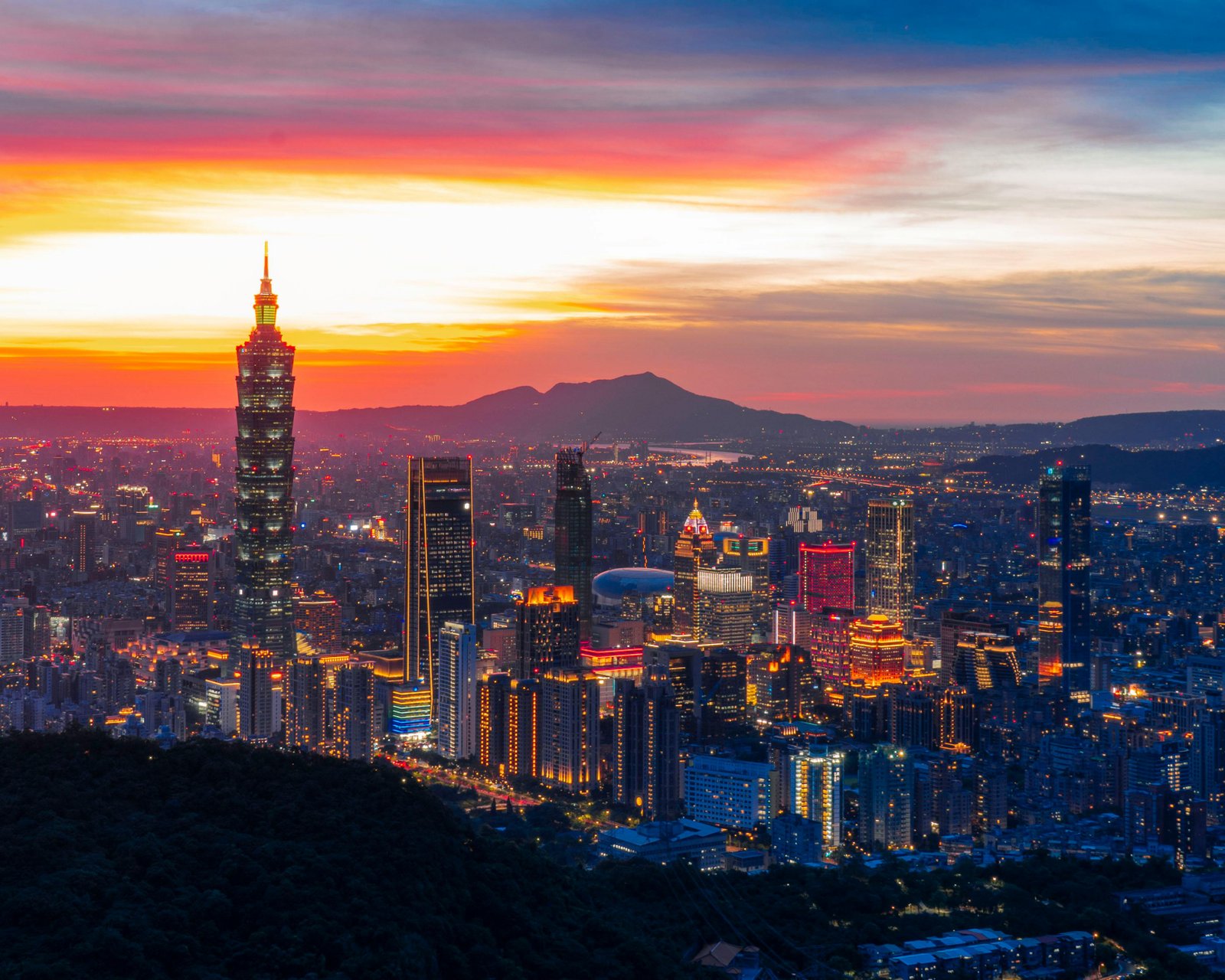
Taiwan is an island of roughly twenty-three million people. India is a country of nearly a billion and a half. Taiwan's gross domestic product is a fraction of India's. Yet at the close of trading on 25 May 2026, the total value of all listed companies on the Taiwan Stock Exchange edged past the total value of all listed companies on India's National Stock Exchange and Bombay Stock Exchange combined. Taiwan now ranks behind only the United States, mainland China, Japan and Hong Kong. India, which has held that fifth position for a meaningful stretch over the past three years, now sits sixth. Bloomberg reported the milestone in the early hours of 26 May, with Business Standard, Reuters, The Print, Republic World and Yahoo Finance carrying the figures within hours.
This is the kind of fact that ought to make Indian policymakers pause, because it does not fit the dominant narrative about Indian economic ascent. The honest reading is that this is not a story about India failing. It is a story about how the global economy now values strategic technological capability over raw economic scale. To understand what happened, one company has to be understood first.
What is actually happening
The reversal in rankings is, on the available evidence, essentially the story of one company: Taiwan Semiconductor Manufacturing Company, the world's largest contract chipmaker. TSMC's shares have rallied between 46 and 49 per cent in 2026, depending on which trading day's close is used as the reference point, according to data compiled by Bloomberg and reported by Republic World and The Logical Indian. The chipmaker's market capitalisation now sits somewhere between $1.8 trillion and $2.1 trillion, depending on the exchange rate and the trading session. TSMC accounts for roughly 42 to 45 per cent of the Taiwan Weighted Index, the country's benchmark equity gauge. The TAIEX hit an all-time intraday high of 44,097 points on Tuesday morning, Republic World reported, and is up more than 50 per cent in 2026 — among the world's best-performing major indices.
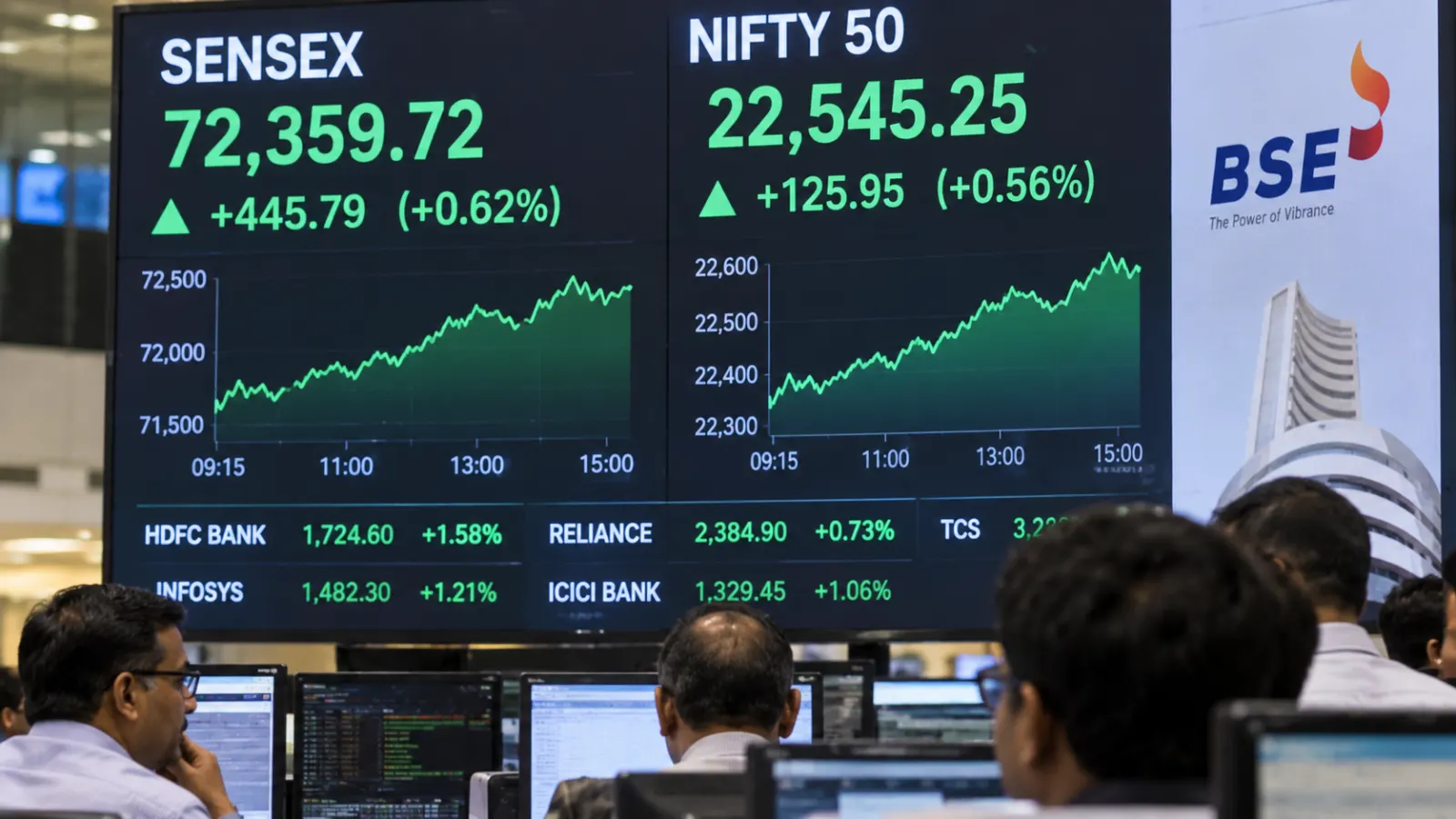
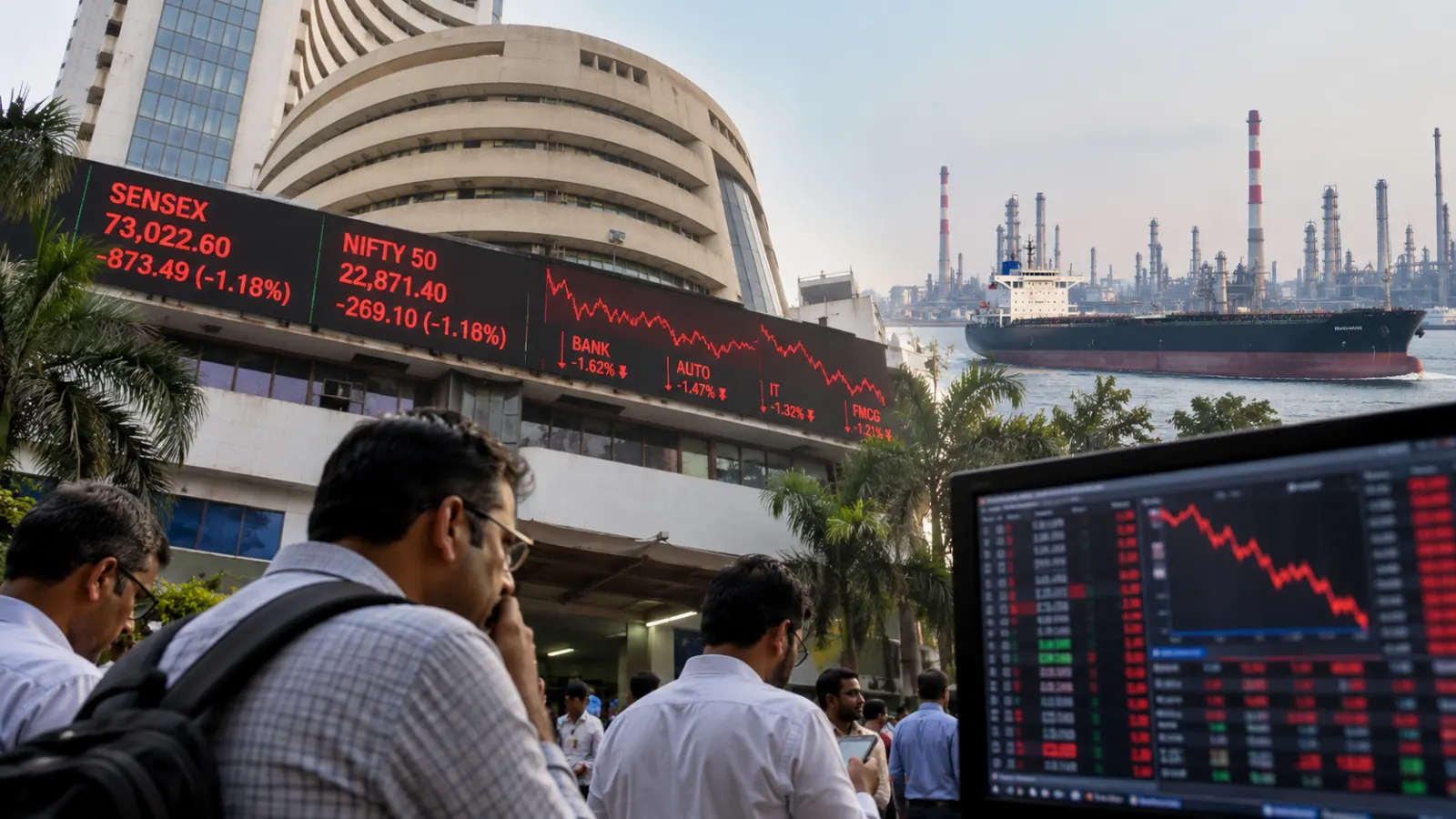
India's market, meanwhile, has spent 2026 grappling with the opposite dynamic. Foreign portfolio investors have sold close to $24 billion worth of Indian equities through the year so far, Republic World and Business Standard reported, in part because of stretched valuations after the strong rally of 2025, in part because of slowing corporate earnings growth, and in part because of a global preference for hardware technology exposure that Indian markets cannot easily provide. India's market capitalisation has declined slightly even as the Sensex and Nifty held up reasonably, because the FPI outflow has been partly absorbed by domestic institutional and retail buying. The decline is relative, not absolute. It is the gap that matters.
Understanding market capitalisation, briefly
Before going further, it is worth being precise about what is being measured. The market capitalisation of a company is the share price multiplied by the number of shares outstanding. The market capitalisation of a country's stock market is the sum across all listed companies. It is a measure of what investors are willing to pay, today, for ownership claims on future profits. It is not the same as gross domestic product, which measures the total value of goods and services produced.
A country can have a large GDP and a smaller market cap if a meaningful share of its productive activities is not listed on stock exchanges — agriculture, the informal sector, government services, family businesses. A country can have a small economy and a large market cap if a small number of its listed companies dominate a globally critical, high-margin industry. Taiwan's GDP is roughly $800 billion. India's GDP is approaching $4 trillion. Yet Taiwan's listed equities are now worth marginally more than India's, because the world's chip supply chain runs through a small set of fabs that are mostly Taiwanese, and because the AI build-out has revalued every company connected to that supply chain upward.
This distinction matters because the reversal does not mean Taiwan has overtaken India in economic terms. It means investors are paying more, in aggregate, for ownership of Taiwanese listed equity than for ownership of Indian listed equity. That is a different measurement, and a different signal.
The TSMC effect
Allow a brief detour, because TSMC's role in this story is not obvious to readers who do not follow technology closely. Most of the well-known chip companies — Nvidia, Apple, Qualcomm, AMD, Broadcom — design chips but do not manufacture them. The manufacturing is done at specialised fabrication plants, or fabs, that have invested tens of billions of dollars in equipment and process expertise. There are very few such fabs in the world capable of producing the most advanced chips. TSMC is the leader. It manufactures the cutting-edge chips that power Nvidia's data centre GPUs, Apple's processors, the latest smartphone modems, advanced automotive electronics and increasingly the AI training and inference workloads that have dominated technology investment since late 2022.
This means TSMC occupies a structural position in the global economy that is closer to a critical utility than to a typical company. When investors realised, through 2023 and 2024, that AI demand was structural rather than cyclical, they paid increasingly large multiples for TSMC's earnings. Yi Ping Liao, a fund manager at Franklin Templeton, told Bloomberg, in commentary widely reproduced including by Republic World, that "Taiwan's rising market capitalization is fundamentally a reflection of its heavy concentration in tech hardware, which is currently at the centre of the AI investment cycle". The same logic explains why South Korea has also seen significant inflows. The same logic explains why Indian equities, despite India's strong long-term GDP and demographic story, are seeing relative underperformance.
India and Taiwan: two different economic models
To compare the two markets fairly, it helps to look at what each economy actually does. India's listed market reflects a large, diverse, consumption-led economy. Banking and financial services dominate weighting. Energy companies like Reliance Industries are large index constituents. IT services firms — Tata Consultancy Services, Infosys, Wipro, HCL Technologies — provide global outsourcing exposure. FMCG, pharma and automobiles are well represented. The strengths of the Indian market are scale, demographics, the size of the domestic consumption opportunity and the depth of the services sector.
Taiwan's listed market reflects a small, export-oriented economy that has specialised, deliberately and over decades, in high-value electronics manufacturing. Beyond TSMC, the index includes major suppliers — Hon Hai Precision (Foxconn), MediaTek, ASE Technology, United Microelectronics, Pegatron — that together form the most concentrated semiconductor and electronics ecosystem on earth. The strength of the Taiwanese market is depth of expertise in a particular industrial cluster.
Both models work. They work differently, and they reward investors differently. India offers exposure to a growing consumer economy. Taiwan offers exposure to a critical bottleneck in the global technology supply chain. In a year where AI investment is the dominant theme, the second offers higher beta. In a year where consumption growth is the dominant theme, the first does.
Why semiconductors are now geopolitical assets
The reason Taiwan's market overtook India's at this particular moment is not just AI demand. It is also a geopolitical re-evaluation. As the United States and China have moved toward technology decoupling — through export controls on advanced chips, sanctions on specific Chinese semiconductor firms, the US CHIPS and Science Act, the European Chips Act, Japan's renewed industrial policy and India's own semiconductor mission — chips have become the central battlefield of the next decade. Taiwan sits at the heart of this contest. It is simultaneously the most valuable supplier in the world and the most exposed to geopolitical risk.
Investors are aware of the risk. The "silicon shield" thesis — that Taiwan's chip dominance makes a Chinese military move against the island prohibitively costly because it would disrupt the global economy — is debated. The market, for now, is paying for Taiwanese chip exposure anyway, because the alternative is to under-allocate to the most consequential industrial story of the 2020s.
For India, the geopolitical position is different. The country has been a beneficiary of the China-plus-one diversification trend in electronics manufacturing, with Apple iPhone production scaling up in Tamil Nadu and Karnataka, contract manufacturing investment flowing into Greater Noida and Sriperumbudur, and the Tata-PSMC partnership building India's first significant fab in Dholera, Gujarat. The India Semiconductor Mission and the Production Linked Incentive schemes have committed substantial public capital — running into hundreds of billions of rupees — to chip assembly, testing and the early stages of fabrication.
These are real investments. They are also early-stage. India's first commercial wafers from the Tata fab are expected in 2026 or 2027, with the early production focused on mature-node chips rather than the leading edge that TSMC owns. Building a leading-edge fab takes capital running into tens of billions of dollars, deeply specialised talent, ultra-pure water in enormous quantities, reliable power, and an ecosystem of equipment and material suppliers that does not exist overnight. India has the design talent — many engineers at TSMC, Nvidia, Intel and AMD are Indian-origin — and increasingly, the capital and political commitment. The journey from where India is to where Taiwan is, even setting aside the leading-edge gap, is at least a decade.
What India can learn from Taiwan
The lesson is not that India should try to become Taiwan. India cannot, and it should not want to, because Taiwan's concentration is also its vulnerability. The lesson is about how Taiwan got here. Long-term industrial policy that did not shift with electoral cycles. Heavy investment in technical education focused on engineering depth at Hsinchu's National Tsing Hua and National Chiao Tung universities. Patient capital, often state-directed through Industrial Technology Research Institute (ITRI), willing to wait decades for returns. A close coordination between government, industry and research institutions. An export orientation that disciplined firms to global quality standards. A willingness to specialise rather than spread effort thin.
India's challenge is to apply some of these principles to a wider portfolio of industries, given that scale makes single-sector concentration neither possible nor desirable. The Production Linked Incentive scheme, the India Semiconductor Mission, the National Quantum Mission, the National AI Mission and the Green Hydrogen Mission together represent an attempt at industrial policy across multiple frontier sectors. Whether the political and bureaucratic system can sustain these commitments through multiple electoral cycles is the open question.
What ordinary Indian investors should take away
For the average Indian retail investor watching the news, the practical takeaway is more nuanced than the headline suggests.
First, the reversal in market cap rankings does not mean Indian markets have collapsed or that Indian companies are weaker than they were a week ago. The decline is relative, driven primarily by Taiwan's surge rather than an Indian collapse. The Sensex and Nifty remain within striking distance of their all-time highs. Domestic institutional buying and retail SIP inflows have held the market up even as FPIs have sold.
Second, the lesson is about portfolio diversification. Investors with exposure only to Indian equities have, in 2026, missed the AI hardware rally that has driven Taiwanese and Korean markets. Mutual funds and exchange-traded funds offering international exposure — particularly to US technology and Asian semiconductors — have provided a hedge that pure-domestic portfolios have not.
Third, the cycle could reverse. The AI investment thesis depends on continued growth in chip demand, which depends on continued enterprise and consumer investment in AI applications. If the AI enthusiasm cools — whether because of revenue disappointment, regulatory pressure, or a broader US-China decoupling that disrupts Taiwan's customer base — the Taiwanese rally could correct sharply. India's more diversified market, frustrating as it is in periods when no single sector booms, is also a kind of resilience.
What most reports are missing
Most coverage of the reversal has focused on the AI story and the TSMC concentration. Two angles are under-reported.
First, the role of foreign capital reallocation. The roughly $24 billion of FPI outflow from Indian equities in 2026 has gone somewhere. A meaningful share has gone into Taiwanese and Korean equities, into US AI-linked stocks, and into selected emerging market hardware plays. This is not a permanent reallocation. It is a sectoral one. When AI hardware enthusiasm peaks, the same capital will look for the next theme. India's positioning for that next wave — whether in green technology, biotech, or domestic consumption — will determine whether the next phase favours Indian markets again.
Second, India's listed market does not yet capture the full picture of Indian economic dynamism. Many of the most interesting Indian companies — in spaces like fintech, deep tech, climate tech, and electronics manufacturing services — are still privately held or in early-stage listings. The maturity of India's IPO pipeline, the depth of its mid-cap and small-cap segments, and the eventual listing of currently private giants will shape the market's structural size over the rest of the decade.
What happens next
Three trajectories are worth watching.
If the AI investment cycle persists through 2026 and into 2027, Taiwan's lead over India in market cap could widen, with TSMC and the broader Taiwanese hardware ecosystem capturing further capital. Indian markets in this scenario would underperform Asian peers but could still deliver respectable absolute returns, particularly in the banking, consumer and infrastructure segments.
If the AI enthusiasm cools — possibly triggered by enterprise revenue disappointment or a regulatory clamp on data centre energy use — the Taiwanese rally could correct. In this scenario, India's diversified market would outperform on a relative basis, and the FPI outflow could reverse.
If geopolitical tensions over Taiwan escalate — through a Chinese military provocation, an American policy shift, or an unrelated regional crisis — the Taiwanese market's risk premium would rise sharply, and capital would seek safer hardware exposure, possibly accelerating investment into India's semiconductor and electronics ecosystem.
Conclusion
Taiwan's $4.95 trillion overtake of India's $4.92 trillion on 25 May 2026 is, properly understood, not a story of one country failing and another succeeding. It is a story about how the modern global economy values strategic technological capability above raw economic size. A small island has built a position in one industry that the rest of the world cannot easily replace. That position is worth, in investor terms, more than the diversified breadth of a country fifty times its size.
For India, the takeaway is not envy. It is focus. Scale is an asset only when it is paired with capability that the world specifically needs. Building that capability — in semiconductors, in AI infrastructure, in clean energy hardware, in the half-dozen other industries that will define the next several decades — is the work that lies ahead. The 25 May reversal is not a verdict on Indian markets. It is a signal about which economies global capital believes will own the most consequential supply chains of the coming decade. India is in the conversation. The reversal is a reminder that being in the conversation is not the same as winning it.