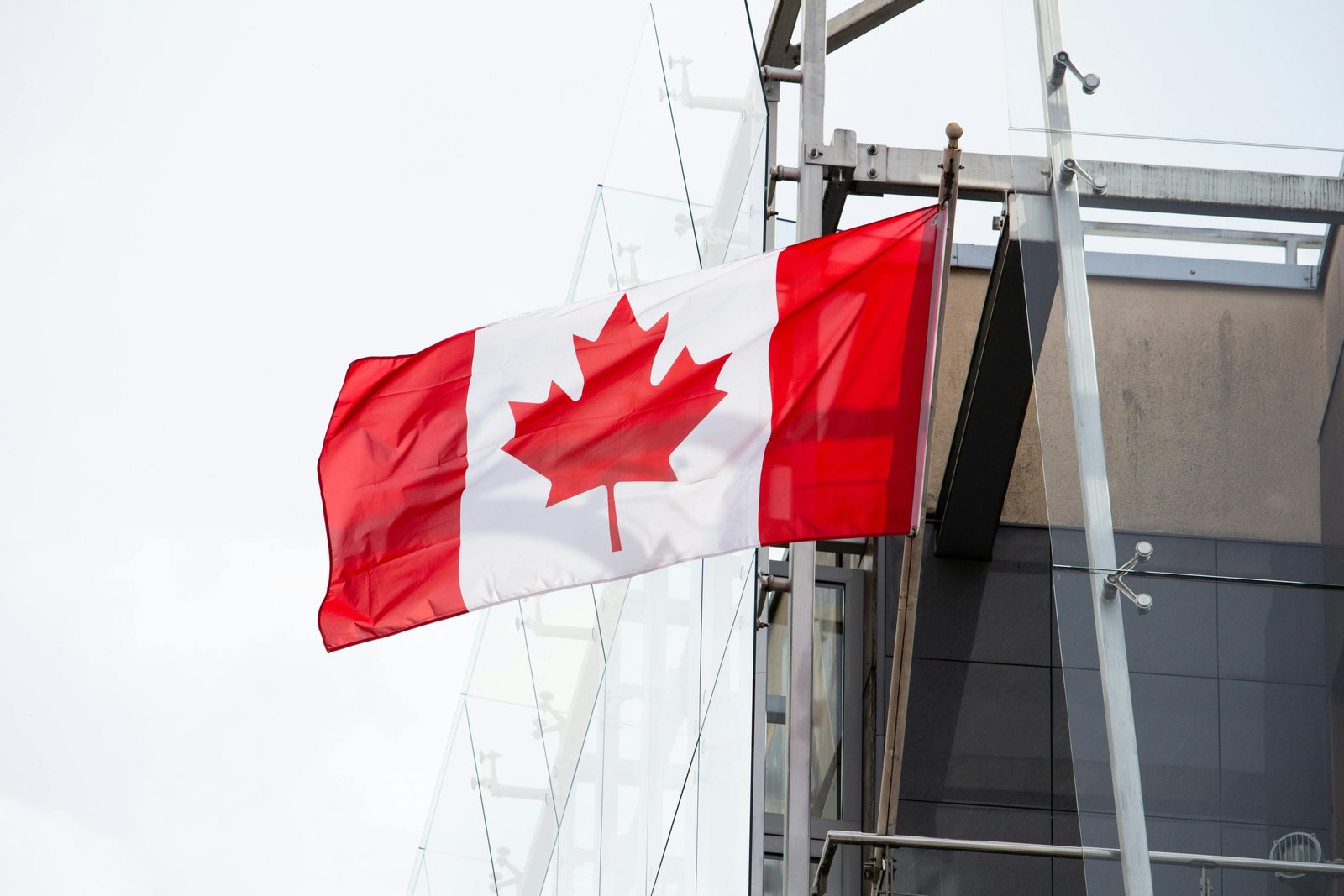
There is a particular satisfaction, in any reset between countries that have publicly fallen out, when the body language starts to ease. The handshake at Ottawa on the morning of 26 May 2026 had it. Union Commerce and Industry Minister Piyush Goyal, leading what ANI described as the largest-ever Indian business delegation to Canada — more than a hundred companies — met Prime Minister Mark Carney for a discussion that the Canadian side called "game changing" and the Indian side described as "forward-looking". For a relationship that as recently as October 2024 was generating diplomatic expulsions and visa freezes, the meeting itself was the message.
The substance, however, is what makes this story consequential. Goyal's visit, the third such senior-level Indian engagement with Ottawa in twelve months, is part of a structured push to conclude a Comprehensive Economic Partnership Agreement — CEPA — by the end of 2026. The target, announced jointly by Prime Minister Narendra Modi and Prime Minister Mark Carney at the G20 Leaders' Summit in Johannesburg on 23 November 2025, is to lift bilateral trade from its current level of around USD 8.5 billion to USD 50 billion by 2030. The political will, on both sides, appears for the first time in several years to be genuine. The question is whether the economic logic of the deal can survive the diaspora politics, electoral cycles and external shocks that have repeatedly derailed it before.
What happened in Ottawa
On 26 May 2026, in Ottawa, Goyal held a series of meetings with Carney, with Canadian Minister of International Trade Maninder Sidhu, with Foreign Minister Anita Anand and with Agriculture and Agri-Food Minister Heath MacDonald. The headline outcome, reported by ANI, Indiablooms and NewKerala, was that both sides agreed to work towards concluding the CEPA by the end of 2026. Carney described the deal as a "game changer for both nations". Goyal, in his readouts, highlighted opportunities for Canadian investments in Indian infrastructure, renewable energy, logistics, digital infrastructure and consumer sectors.
The Ottawa meetings build on three earlier rounds of high-level engagement. The first was the Modi-Carney meeting on 18 June 2025 at the G7 Summit in Kananaskis, Alberta, where the two leaders agreed in principle to rebuild a bilateral relationship that had been "wrecked", in the words of Deccan Herald, by Carney's predecessor Justin Trudeau's allegations about India's role in the murder of Khalistani Sikh extremist Hardeep Singh Nijjar in 2023. The second was the 7th Ministerial Dialogue on Trade and Investment in New Delhi on 13 November 2025. The third was the G20 Johannesburg meeting of 23 November 2025, at which the CEPA negotiations were formally launched. Carney followed with a four-day visit to India from 27 February to 2 March 2026, during which the CEPA negotiations were operationally activated. Global Affairs Canada ran a public consultation from 13 December 2025 to 27 January 2026 to gather input from Canadian stakeholders ahead of substantive talks. By May, the negotiating tracks — goods, services, investment, agriculture, digital trade, mobility and sustainable development — were all live.
How the relationship got here
The acute phase of the India-Canada crisis emerged in September 2023, when Justin Trudeau told the Canadian Parliament that there were "credible allegations" of Indian involvement in the murder, on Canadian soil, of Hardeep Singh Nijjar — a man designated by Indian authorities as a Khalistani terrorist but who, in Canadian terms, was a citizen and political organiser. India rejected the framing in the strongest possible terms. Diplomats were expelled on both sides. Trade negotiations froze. Visa processing was disrupted. Indian student admissions to Canadian universities, the largest cohort of international students Canada has, faced uncertainty.
Below the acute crisis sat older frustrations. Indian governments had, for years, been uncomfortable with what they viewed as Canadian permissiveness toward separatist political activity within the diaspora — referendum campaigns, glorification of figures like Nijjar and his predecessors, occasional violence against Indian diplomatic missions. Canadian governments had been concerned, in turn, about Indian human rights questions and what they viewed as efforts to influence Canadian domestic politics. These were structural disagreements between two democracies with overlapping but distinct constituencies. They surfaced explosively around the Nijjar matter. They did not end with one prime minister leaving office.
The Trudeau government's electoral collapse, the rise of Mark Carney — the former Bank of Canada and Bank of England governor — to the Liberal leadership and to the prime ministership, and a coincident shift in Canadian electoral politics on India-related questions opened the political space for re-engagement. The Carney government has, on the available evidence, decided that the economic logic of partnership with India outweighs the political logic of confrontation. The Indian government has reciprocated. The CEPA negotiations are the formal expression of that recalculation.
The economic case, in plain numbers
Two-way trade between India and Canada reached approximately USD 8.5 billion in 2024, or about CAD 31 billion when calculated in Canadian dollars including services, according to the Asia Pacific Foundation of Canada's March 2026 analysis. That figure is small relative to either country's total trade — for India, it is well under one per cent of total trade; for Canada, India is currently the tenth-largest trading partner. The USD 50 billion target by 2030 would multiply that figure roughly sixfold.
The structural complementarities that make this realistic are concrete. Canada is among the world's largest exporters of pulses, where India is the world's largest consumer. Canada produces and exports potash, the fertiliser input that Indian agriculture depends on heavily, particularly in the kharif and rabi cycles. Canada hosts substantial uranium reserves and is one of the few countries that can supply civilian nuclear fuel to India under existing safeguards arrangements. Canada is also positioning itself as a major supplier of critical minerals — lithium, cobalt, nickel, rare earths — that India needs for its electric vehicle and clean energy transition. On services, Canadian financial institutions including the major pension funds — CPP Investments, Ontario Teachers' Pension Plan, OMERS, Caisse de dépôt et placement du Québec — have already deployed tens of billions of Canadian dollars in Indian infrastructure, renewable energy and digital businesses.
From the Indian side, the offerings are equally clear. A growing middle-class consumer market that Canadian agricultural and consumer goods exporters need. A vast technology workforce that Canadian companies in fintech, AI and clean technology can integrate into their value chains. The world's most established pharmaceutical generics industry. Manufacturing capability that fits the China-plus-one diversification strategy increasingly favoured by Canadian and broader G7 investors.
Both Goyal and Carney highlighted these complementarities in their Ottawa readouts. Goyal specifically mentioned cooperation in energy security, civil nuclear energy, artificial intelligence and critical minerals as areas for future growth, Indiablooms reported.
The Trump factor that everyone is too polite to name
A piece of context that the Indian and Canadian official statements only hint at, but that informs the urgency on both sides, is the Trump administration's trade posture. Both countries have been hit by the broad-based US tariff increases announced through 2025, and both have been pushed into accelerated diplomatic engagement with diversification partners. Canada, traditionally focused on its USMCA relationship with the United States and Mexico, has seen its trade environment fundamentally disrupted. India, despite a generally constructive relationship with Washington on strategic matters, has faced periodic tariff threats on textiles, steel, aluminium and certain pharmaceutical categories.
For Canada, a deeper trade relationship with India is part of a broader Indo-Pacific diversification that began under Trudeau and has accelerated under Carney. The Canadian Indo-Pacific Strategy released in late 2022 explicitly named India as a critical partner in the region. For India, deeper engagement with Canada complements the ongoing pursuit of trade agreements with the United Kingdom, the European Union, Oman and others, all driven in part by the need to insulate Indian export-led growth from any single market's protectionist swings.
The Trump factor is not the reason for the India-Canada reset. It is the reason both governments have decided that the political costs of moving past the Nijjar crisis are now lower than the economic costs of staying stuck in it.
The diaspora dimension, treated honestly
A reset of this kind cannot pretend that the underlying political tensions have disappeared. The Indian-origin community in Canada — approximately 2.8 million people, including Indo-Canadians, non-resident Indians and students, Indiablooms reported — is one of the largest and most economically significant diasporas in the world. Sikh political organisation within that community has historically been concentrated in British Columbia, Ontario and parts of Alberta, with electoral significance in specific federal and provincial constituencies that has made Canadian politicians of all parties cautious about openly siding with the Indian government's framing of Khalistani extremism.
The reset does not require either government to capitulate on these questions. It requires both to manage them. The Carney government has signalled, in its rhetoric and its actions, that it will treat extremist political organisation that crosses into violence or material support for violence as a domestic security issue rather than a free-speech protection. The Indian government has accepted that Canadian domestic politics will continue to feature occasional rhetoric on Khalistani themes that India finds distasteful, and has agreed to manage that without breaking the broader relationship.
This is, in its quiet way, a maturation of both diplomacies. The previous cycle — public allegation, public denial, public expulsion, frozen channels — served neither country's interests. The current cycle, with structured engagement, named ministers, named meetings and a clear timetable, serves both.
What it means for Indian students and migrants
The most directly affected group, for Indian readers, is the student community. Indian students in Canada account for the largest cohort of international students at Canadian universities, with the most recent Statistics Canada data putting the figure at well over 400,000. The crisis years of 2023 to 2024 produced uncertainty over study permit processing, post-graduation work permits, and the policy environment for converting student visas into permanent residency. Several Canadian institutions, in regions with concentrated international student dependence, faced financial stress when the pipeline tightened.
The mobility track of the CEPA negotiations is expected to address some of these concerns, with potential commitments on student visa processing timelines, recognition of qualifications, professional licensing for engineers, accountants and healthcare workers, and short-term business visas for technical and managerial personnel. Whether the final deal includes substantial mobility provisions or treats them as separate from the core trade text is one of the open negotiating questions. The Canadian side has historically been cautious about binding immigration commitments in trade agreements. The Indian side has been pushing for them.
The China and Indo-Pacific frame
Neither government will say it directly in the joint statements, but both are also responding to the structural shift in the global economy that the China-plus-one trend represents. Canadian pension funds and corporate investors that had built significant exposure to China through the 2000s and 2010s have been reducing it through the 2020s, partly because of US-China decoupling pressures, partly because of Chinese regulatory unpredictability, partly because of human rights concerns. India is one of the few markets large enough, growing enough and politically open enough to absorb that capital reallocation.
For India, deeper engagement with Canada — alongside the Quad framework, the India-UK trade deal completed in 2025, the India-EU trade discussions, and the broader Indo-Pacific architecture — is part of building a diversified set of economic partnerships that does not depend on any single relationship. The Quad meeting in New Delhi on 26 May 2026, hosted by India the same day Goyal was in Ottawa, is part of the same picture. India is, in 2026, having more meaningful conversations with more major economies simultaneously than at any point in its post-Independence diplomatic history.
What most reports are missing
Most coverage of the India-Canada reset has focused on the diplomatic mood music. Two angles are under-reported.
First, the deal's success depends less on what India and Canada agree to at the top of the document and more on whether mid-level implementation actually happens. India's track record with trade agreements — the comprehensive economic partnership with Japan, the trade agreements with ASEAN countries, the deal with the UAE — has been mixed when measured on actual trade growth rather than headline numbers. The 50-billion-dollar target by 2030 is ambitious. Reaching it requires sustained tariff reduction, services market opening, mutual recognition of qualifications, supply chain investment and a financial architecture that lowers cross-border transaction costs. Each of these is administratively heavy. Each is vulnerable to electoral cycles.
Second, the diaspora reset is fragile. A single high-profile incident — a violent attack on an Indian diplomatic mission in Canada, a Canadian government statement on a Khalistani figure that India views as provocative, an Indian operation on Canadian soil that surfaces uncomfortable details — could rapidly re-freeze the relationship. The Carney and Modi governments have, between them, demonstrated the political will to compartmentalise these tensions. That will is contingent on both governments staying in office and on neither facing a domestic political incentive to weaponise the relationship for short-term gain.
What happens next
Three tracks are worth watching through 2026.
The CEPA negotiations. The target of conclusion by end-2026 is ambitious but credible if both sides commit negotiating capacity and avoid scope creep. The standard pattern for India's recent trade agreements — UAE, Australia, EFTA — has been to settle on a comprehensive but pragmatic text rather than seek a maximalist agreement. The CEPA will likely follow that template.
The student and immigration pipeline. Canadian visa policy for Indian students, post-graduation work permit availability and pathways to permanent residency are the issues most directly visible to Indian families. Any concrete improvement here would build domestic Indian political support for the relationship that has been hard to mobilise.
The diaspora politics. Provincial elections in British Columbia and Ontario, federal political cycles, and any incident involving Indian-origin religious or political organisations could test the relationship. Both governments will need to manage these without overreacting.
Conclusion
The India-Canada reset is, on the evidence available so far, a serious attempt at rebuilding a relationship that should not have been allowed to collapse in the first place. The economic complementarities are real. The strategic logic of diversification, on both sides, is compelling. The political will exists, for the first time in several years, at the top of both governments. The negotiating architecture is in place. The 26 May meetings in Ottawa are the latest, most visible sign that the work is now operational rather than ceremonial.
That is the good news. The honest version of the conclusion is that the underlying tensions that produced the 2023 crisis have not been resolved; they have been put aside. Whether they remain put aside depends on choices that both governments will be asked to make repeatedly, often under pressure, sometimes in election cycles, occasionally in response to incidents nobody has anticipated. The CEPA is the framework. Whether it survives the next storm — and there will be a next storm — is the real test. For Indian businesses, Indian students and the Indo-Canadian families that have spent three years navigating uncertainty, the next two years will determine whether this reset was a turning point or another pause.