For decades, Indian foreign policy lived under the shadow of someone else’s world order. During the Cold War, the world was divided between two superpower camps. After the Soviet collapse, the United States stood at the centre of a largely unipolar system. India had room to manoeuvre, but that room was limited by economic weakness, military constraints and diplomatic pressure from stronger powers.
That world is now fading.
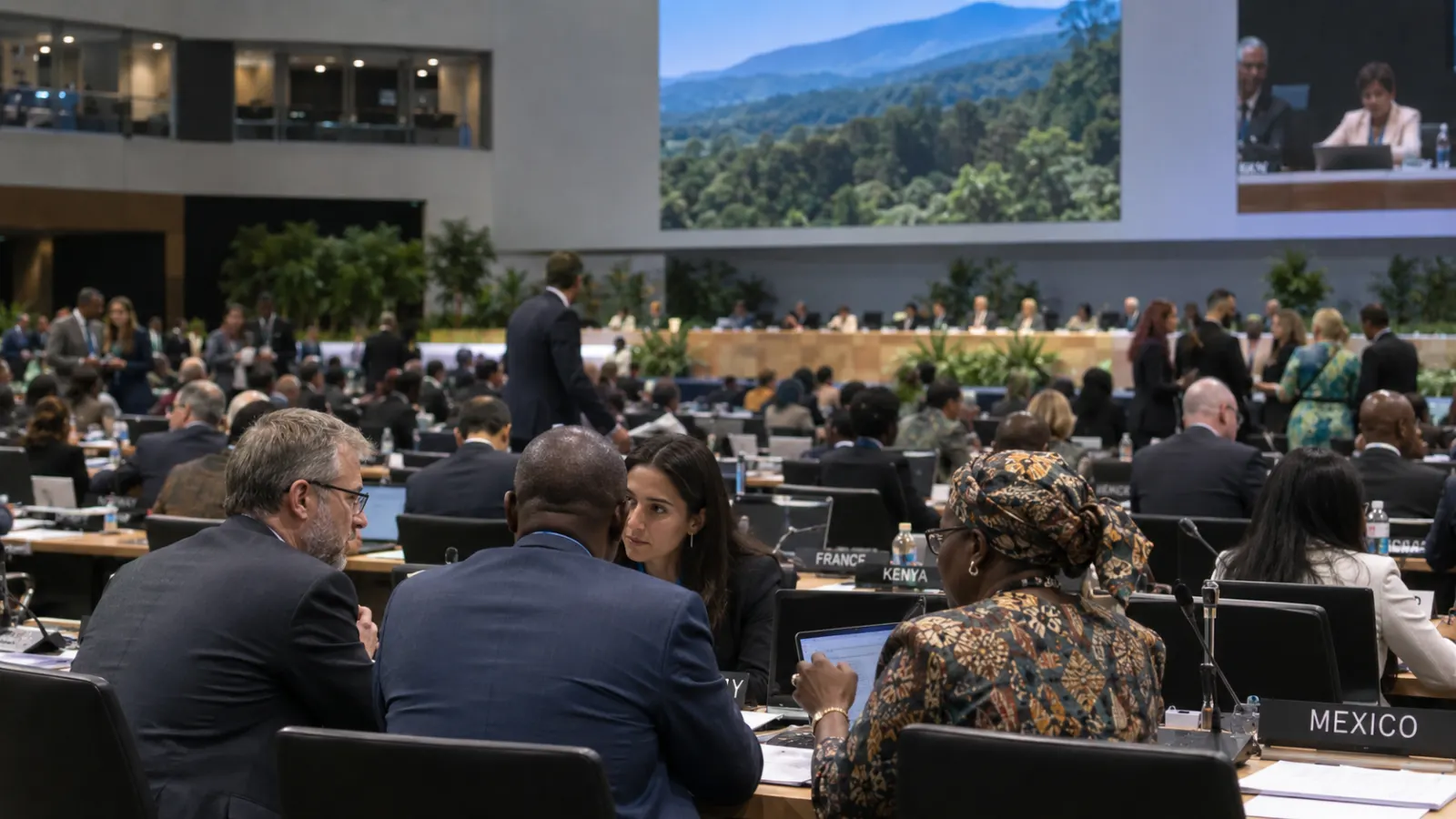
The 21st century is not returning to the old Cold War. It is becoming something more complicated: a multipolar order where the United States remains powerful, China is rising aggressively, Russia is disruptive, Europe is anxious, West Asia is assertive, and middle powers are no longer willing to behave like passive spectators. In this world, no single power controls everything. No alliance can solve every crisis. No country can rely permanently on one camp.
For India, this is both an opportunity and a warning.
Multipolarity gives India more space because it allows New Delhi to work with different powers on different issues. India can deepen defence ties with the United States, buy energy from Russia, engage Europe on trade, work with Japan and Australia in the Indo-Pacific, maintain ties with Iran and Gulf countries, participate in BRICS, speak for the Global South and still avoid becoming anyone’s junior partner. That flexibility is the heart of India’s modern foreign policy.
But the same multipolarity also creates more risk. A fragmented world is not automatically a fair world. It can be unstable, transactional and unforgiving. The more India engages with competing powers, the more it must manage contradictions. The more it claims strategic autonomy, the more it must prove strategic capability. In a multipolar world, space is available — but only to countries strong enough to use it.
India’s challenge is therefore not simply to enjoy multipolarity. It is to survive it, shape it and benefit from it without being trapped by it.
The End of the Comfortable World
The old language of global politics no longer explains reality. The United States is still the world’s leading military and technological power, but it no longer enjoys uncontested dominance. China has become an economic, military and technological rival to the West. Russia, despite sanctions and war, continues to influence energy, defence and Eurasian geopolitics. The Gulf states are no longer merely oil suppliers; they are investment powers, diplomatic brokers and strategic actors. Europe is trying to reduce dependence on both Russia and China while protecting its own industrial future.
This produces a world where power is scattered across several centres. That is multipolarity.
For India, this shift creates diplomatic openings. The country is no longer seen merely as a developing state asking for aid or concessions. It is seen as a market, a manufacturing base, a digital power, a defence partner, a climate actor, a voice of the Global South and a potential balancer in Asia. India’s population, economy, military capability and geographic position give it unusual relevance at a moment when all major powers are looking for partners.
This is why India is courted by almost everyone. Washington wants India as a strategic partner in the Indo-Pacific. Moscow wants India as a stable buyer, defence partner and diplomatic bridge. Europe wants India as a market and technology partner. Gulf countries want India as an investment destination and labour-linked economy. Japan and Australia want India as part of a stable Asian balance. The Global South wants India to speak the language of development, fairness and reform.
This is the advantage of multipolarity: India does not have to stand in one queue.
Strategic Autonomy Becomes Economic Autonomy
India’s old doctrine of non-alignment was born in a bipolar world. Its modern version is not non-alignment but multi-alignment. India does not avoid partnerships; it multiplies them. The purpose is not neutrality for its own sake. The purpose is to expand national options.
External Affairs Minister S. Jaishankar has repeatedly framed this shift as a world where strategic autonomy has stronger economic meaning, especially in technology, supply chains and critical sectors. In January 2025, he argued that India cannot afford to be left behind in critical and emerging technologies, and that partnerships must be chosen carefully according to India’s interests and geopolitical realities.
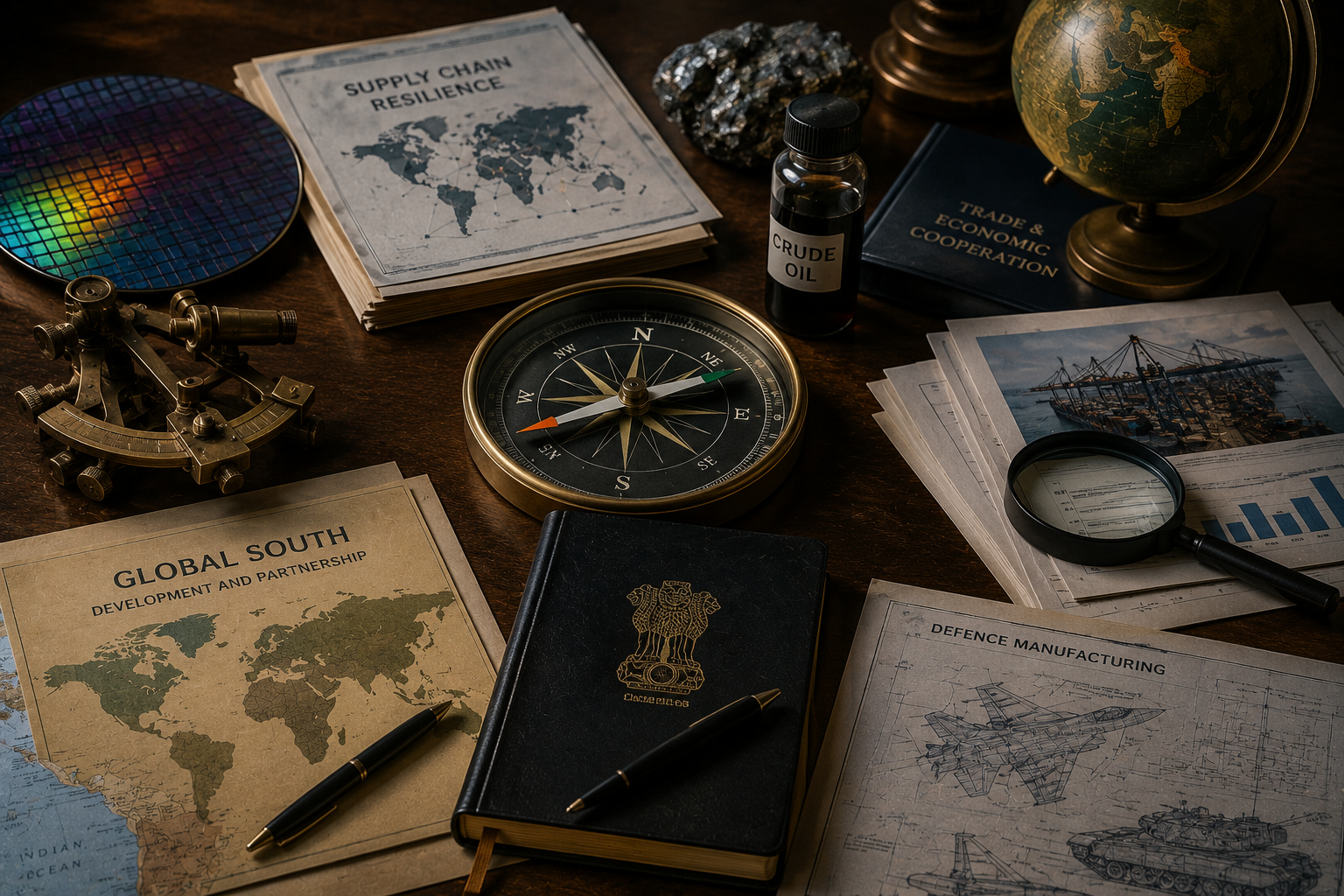
This is important because foreign policy is no longer limited to embassies, summits and defence deals. Today, foreign policy is also about semiconductors, rare earths, artificial intelligence, shipping routes, payment systems, energy supply, digital platforms, data flows, currency settlements and industrial policy. A country that depends too heavily on one power for technology, one region for energy or one route for trade is strategically vulnerable.
That is why multipolarity gives India an opportunity to diversify. India can seek technology cooperation with the United States, trade with Europe, energy with Russia and West Asia, infrastructure with Japan, manufacturing investment from multiple partners and development cooperation with the Global South. This is not diplomatic confusion. It is portfolio management.
But portfolio management works only when the portfolio is strong. If India remains dependent on foreign technology, imported energy, critical minerals from concentrated sources and vulnerable maritime routes, then multipolarity will not give freedom. It will only expose weakness.
BRICS, Quad and the Indian Balancing Act
India’s foreign policy today looks contradictory only to those who expect countries to behave like permanent camp followers. India is part of the Quad with the United States, Japan and Australia. At the same time, it remains part of BRICS, where China and Russia are central players. It engages the Shanghai Cooperation Organisation while also building closer defence and technology cooperation with the West.
This is the Indian balancing act.
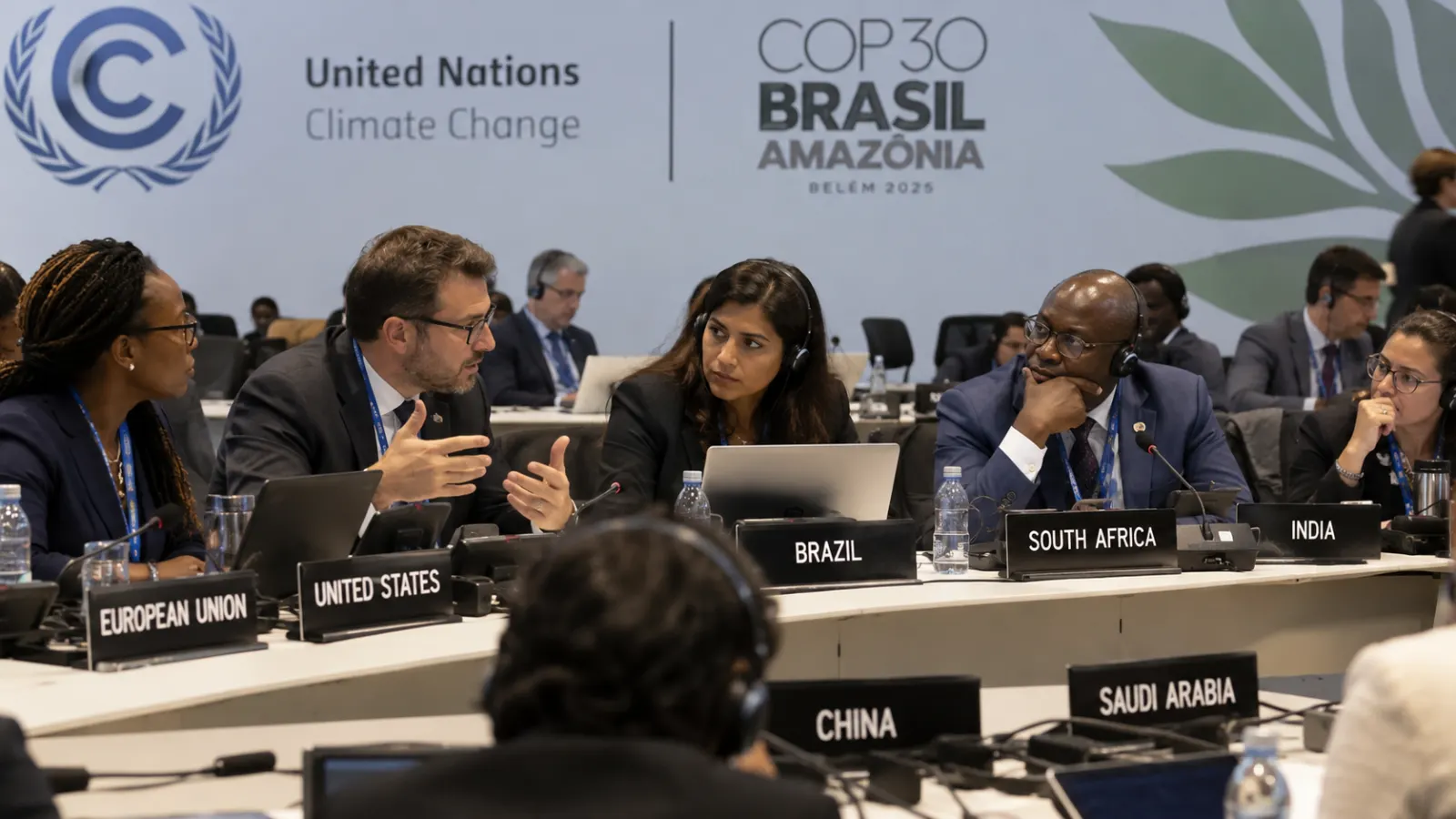
BRICS has expanded significantly. Egypt, Ethiopia, Iran, Saudi Arabia and the UAE became full members from January 2024, and Indonesia joined in January 2025; several countries also joined as partner countries in 2025. This expansion shows that many non-Western countries want platforms that are not controlled by the West. For India, BRICS offers a way to engage the Global South, push for reform of global institutions and prevent China from monopolising non-Western forums.
At the same time, the Quad reflects India’s concerns about the Indo-Pacific balance. The May 2026 Quad Foreign Ministers’ statement focused heavily on maritime security, supply chains, economic security, critical minerals and concerns over economic coercion. This matters because India’s biggest long-term security challenge is not abstract multipolarity. It is China’s power at India’s borders, in the Indian Ocean and across Asia.
So India’s position is not “East versus West.” It is issue-based alignment. With Russia, India may cooperate on energy and defence legacy systems. With the United States, it may cooperate on technology and Indo-Pacific security. With Europe, it may deepen trade and investment. With the Gulf, it may build energy, logistics and financial partnerships. With the Global South, it may raise development concerns. With China, it may manage competition while preventing uncontrolled escalation.
This is not easy. But it is rational.
China Is the Central Risk in India’s Multipolar Moment
Multipolarity gives India room because China’s rise has made India more valuable to the West. But China’s rise is also the greatest source of risk for India.
India and China are not merely two large Asian civilisations. They are neighbouring powers with an unresolved boundary, competing regional ambitions and different visions of Asia. The 2020 border crisis destroyed the illusion that economic engagement alone could stabilise the relationship. Since then, India has had to rethink Chinese investment, technology dependence, border infrastructure, military readiness and regional partnerships.
There have been efforts to stabilise ties. Reuters reported that India and China reached a patrolling agreement in October 2024 to end a four-year military standoff along their disputed frontier. In 2025, India also pushed for a permanent solution to the boundary dispute and stressed the need to bridge the trust deficit created after the 2020 crisis.
But stabilisation is not the same as trust. China remains India’s largest strategic concern because it can pressure India simultaneously through the land border, the Indian Ocean, Pakistan, trade dependency, technology supply chains and regional diplomacy. In a multipolar world, India may gain partners — but China also gains tools.
This is the paradox. Multipolarity helps India resist Chinese dominance, but it also increases the number of arenas where India and China compete.
The competition is not limited to soldiers at the Line of Actual Control. It extends to ports, undersea cables, 5G systems, digital platforms, critical minerals, development finance, multilateral institutions, the Indian Ocean, Africa, South Asia and the Global South narrative. China wants to be seen as the natural leader of the non-Western world. India wants to prevent that claim from becoming uncontested.
That is why India cannot afford passive diplomacy. It must build capacity in its neighbourhood, offer credible development partnerships, strengthen maritime presence, expand trade connectivity and become a serious manufacturing and technology power. In a multipolar order, influence belongs not to the loudest country but to the country that can deliver.
Russia Gives India Leverage, but Also Exposure
India’s Russia relationship is one of the clearest examples of how multipolarity creates both space and risk.
After the Ukraine war began, India resisted Western pressure to cut ties with Russia. It continued buying discounted Russian oil, arguing that its priority was energy security and affordable prices for Indian citizens. This gave India economic relief, preserved ties with Moscow and demonstrated that New Delhi would not automatically follow Western sanctions policy.
But the risks are also visible. Russia’s deepening dependence on China reduces Moscow’s ability to act as an independent balancer in Asia. If Russia becomes too closely tied to China, India’s old strategic comfort with Moscow becomes less reliable. At the same time, excessive dependence on Russian energy or defence systems can expose India to sanctions, supply disruptions and Western pressure.
Reuters reported that Russia supplied around 35% of Indian oil imports in 2025, though imports were expected to dip below one million barrels per day in early 2026 as India sought relief amid trade negotiations and sanctions-related pressure. This captures the wider dilemma: India benefits from discounted Russian energy, but the more contested the global sanctions environment becomes, the more that benefit carries diplomatic and financial cost.
India’s answer cannot be emotional attachment or sudden abandonment. It must be diversification. Russia remains useful, but India cannot allow any one relationship to become irreplaceable. Multipolarity rewards countries that keep options open; it punishes those who confuse habit with strategy.
The West Needs India, but Not Unconditionally
India’s relationship with the West has improved dramatically, especially with the United States, France, Australia, Japan and several European countries. Defence cooperation has deepened. Technology partnerships are expanding. Trade and investment discussions have gained momentum. The Indo-Pacific has created a strategic convergence between India and many Western democracies.
But India should not romanticise this convergence.
The West wants India as a partner, not necessarily as an equal in every domain. There will be pressure on climate, trade, digital regulation, data, intellectual property, human rights, Russia policy and market access. Western countries may support India against China in some areas, but they will also protect their own commercial interests. The United States may want India as a strategic partner, but it will still use tariffs, export controls and sanctions when it believes its interests require them.
This is why India must engage the West deeply but not depend on Western goodwill. The India-EFTA Trade and Economic Partnership Agreement, which came into effect on October 1, 2025, includes a commitment linked to $100 billion investment and one million direct jobs over fifteen years. Such agreements show how India can convert geopolitical relevance into economic gains. But trade deals are not charity. They require competitiveness, regulatory credibility and execution.
India’s real test is whether it can turn strategic attention into industrial transformation. Everyone may want India as an alternative to China, but no one will build Indian capacity unless India itself reforms land, labour, logistics, skills, courts, taxation stability, research, urban infrastructure and manufacturing ecosystems. Multipolarity can bring opportunity to India’s doorstep. It cannot force India to use it.
The Global South Wants a Voice, Not Another Slogan
India’s Global South diplomacy is one of its strongest multipolar assets. Many developing countries see India as more relatable than the West and less threatening than China. India’s democratic system, development experience, digital public infrastructure, pharmaceutical capacity and historical anti-colonial vocabulary give it credibility.
But Global South leadership cannot survive on speeches alone.
Countries in Africa, Asia, Latin America and the Pacific need financing, climate adaptation, food security, affordable technology, health infrastructure, debt relief and fairer trade rules. China has built influence by funding roads, ports, railways, power plants and telecom networks. The West offers institutions, capital and standards but often moves slowly. India must find its own model: affordable, respectful, scalable and less extractive.
India’s advantage is trust. Its limitation is capacity.
If India wants to lead the Global South, it must deliver more than statements at summits. It must expand development finance, training programmes, digital infrastructure partnerships, disaster relief, health cooperation and market access. It must also be careful not to appear as if it speaks for the Global South only when it helps India’s great-power ambitions.
In a multipolar world, moral vocabulary matters. But delivery matters more.
The Indian Ocean Will Decide India’s Strategic Weight
India’s geography is one of its greatest advantages. It sits at the centre of the Indian Ocean, close to vital sea lanes linking West Asia, Africa, Southeast Asia and the Pacific. Energy flows, container traffic and naval movements all pass through this wider maritime space.
Multipolarity makes the Indian Ocean more important because great-power competition is moving from land borders to sea lanes, ports, logistics hubs and maritime surveillance. China’s naval presence is expanding. The Gulf is becoming more strategically active. The Red Sea crisis has shown how quickly maritime disruption can affect global trade. The Indo-Pacific is now not merely a map concept; it is the operating theatre of global power.
For India, this means the Navy is not a secondary force. It is central to national strategy. Maritime domain awareness, island infrastructure, partnerships with littoral states, anti-piracy missions, submarine capability, logistics agreements and coastal security will define India’s ability to act as a net security provider.
The Quad’s 2026 focus on maritime security and supply-chain resilience reflects exactly this wider shift. If India can secure its maritime neighbourhood, it gains strategic depth. If it fails, outside powers will shape the ocean around it.
Multipolarity Punishes Weak Domestic Capacity
The biggest mistake India can make is to treat multipolarity as a foreign-policy gift rather than a domestic-policy test.
A country’s external power ultimately rests on internal strength. Diplomacy cannot compensate forever for weak manufacturing. Strategic autonomy cannot survive without energy security. Defence partnerships cannot replace domestic defence production. Global South leadership cannot be sustained if domestic inequality remains severe. Technology ambition cannot succeed without research universities, skilled labour and patient capital.
Multipolarity gives India more choices, but every choice requires capability.
If India wants to bargain with the United States, it needs technological value. If it wants to resist China, it needs military readiness and industrial depth. If it wants to keep Russia as a useful partner, it needs diversified defence systems. If it wants to lead the Global South, it needs resources. If it wants to attract supply chains, it needs infrastructure and policy predictability. If it wants to shape institutions, it needs intellectual and diplomatic capacity.
The world respects scale, but it rewards performance.
India’s population gives it potential. Its market gives it leverage. Its geography gives it relevance. Its democracy gives it legitimacy. But potential is not power until it is organised.
The Risk of Overstretch
There is also a psychological danger. As India becomes more important, it may begin to believe that all sides need India more than India needs them. That would be a mistake.
Multipolarity creates bargaining power, but it also creates volatility. Partners can change priorities. Elections can alter foreign policy. Wars can disrupt routes. Sanctions can hit supply chains. Financial crises can reduce investment. Technology controls can slow growth. Regional conflicts can force choices that India would prefer to avoid.
India must avoid overpromising. It cannot simultaneously be the leader of the Global South, the West’s China balancer, Russia’s old friend, the Gulf’s investment partner, Africa’s development ally, Europe’s trade partner and Asia’s security provider unless it builds the resources to support such a role.
Great powers are not built by slogans. They are built by logistics, capital, institutions, technology, military credibility and administrative competence.
India’s multipolar strategy must therefore be ambitious but disciplined. It should avoid unnecessary moral posturing, avoid permanent hostility where management is possible, avoid dependence where diversification is possible and avoid symbolic victories that create practical liabilities.
The New Meaning of Strategic Autonomy
Strategic autonomy in the 20th century meant not being forced into one camp. Strategic autonomy in the 21st century means something deeper: the ability to make independent choices because the country has economic, technological, military and institutional strength.
It is not enough to say “India will decide for itself.” The real question is whether India has the capacity to absorb the consequences of its decisions.
Can India withstand energy shocks? Can it protect its digital infrastructure? Can it manufacture critical technologies? Can it secure sea lanes? Can it reduce dependence on Chinese imports? Can it attract long-term capital? Can it handle simultaneous crises on the border, in the ocean and in global markets? Can it shape narratives instead of only reacting to them?
These questions define the future of Indian foreign policy.
Multipolarity gives India the space to choose. Capacity gives India the power to make those choices meaningful.
Conclusion: More Space Is Not the Same as More Safety
India is entering one of the most consequential phases of its modern foreign policy. The world is no longer locked into a neat hierarchy. Power is shifting, alliances are fluid, institutions are contested and middle powers are gaining influence. This gives India a historic opening.
But openings are not guarantees.
Multipolarity gives India more diplomatic room, more bargaining power and more strategic relevance. It allows New Delhi to engage multiple partners without surrendering autonomy. It allows India to speak for reform, development and a fairer global order. It allows India to benefit from great-power competition without becoming a battlefield of it.
Yet it also brings sharper dangers: Chinese pressure, sanctions risk, supply-chain vulnerability, maritime insecurity, diplomatic contradictions, technological dependence and the temptation of overreach.
India’s task is not to celebrate multipolarity as if it is automatically favourable. India’s task is to master it.
The future will belong not to countries that merely balance between powers, but to countries that build enough strength to shape the balance itself. For India, multipolarity is not a shelter. It is an arena. It gives more space, but it also demands more seriousness.
The central lesson is clear: in a fragmented world, India cannot afford to be confused, reactive or underprepared. It must be flexible without being vague, ambitious without being reckless, autonomous without being isolated and powerful without being arrogant.
Multipolarity has opened the door. Whether India walks through it as a true global power will depend not on the world’s disorder, but on India’s discipline.