For most of modern international politics, the world was narrated through superpowers. During the Cold War, Washington and Moscow dominated the strategic imagination. After the Soviet collapse, the United States stood at the centre of a unipolar moment. Later, China’s rise restored the language of great-power rivalry. Today, many global debates still begin with the same question: what will America do, what will China do, what will Russia do?
But that question is no longer enough.
The world is entering an age in which middle powers are gaining influence because superpowers no longer possess absolute control. The United States is still powerful, but it cannot impose outcomes everywhere. China is rising, but it cannot force every country into its orbit. Russia can disrupt, but it cannot build a global order alone. Europe is wealthy, but strategically fragmented. In the spaces between these powers, a new class of states is learning to bargain harder, hedge smarter and act more independently.
India, Türkiye, Saudi Arabia, the United Arab Emirates, Indonesia, Brazil, South Africa, Mexico, Vietnam, Qatar, Egypt, Nigeria, Japan, South Korea and Australia do not all belong to the same category in a strict academic sense. Some are advanced economies. Some are emerging powers. Some are regional powers. Some are energy powers. Some are security partners of the West. Some are members of BRICS. Some are democratic. Some are authoritarian. Some are formally allied. Some are fiercely non-aligned.
Yet they share one important feature: they are no longer satisfied with being treated as supporting actors in a drama written by superpowers.
This is the middle-power moment.
A middle power is not simply a medium-sized country. It is a state with enough economic, military, demographic, diplomatic, geographic or institutional weight to influence outcomes beyond its borders, but not enough power to dominate the entire international system. Middle powers cannot dictate the global order alone. But they can block, enable, mediate, balance, convene, supply, finance, connect and legitimise.
That gives them influence in a fragmented world.
The old model of power assumed hierarchy. Superpowers decided. Smaller states adjusted. But today’s international system is more transactional, more regionalised and more issue-specific. A country may need the United States for security, China for trade, Russia for energy, the Gulf for capital, India for market access, Türkiye for mediation, Indonesia for ASEAN diplomacy, Brazil for climate politics and South Africa for African legitimacy. No single power can provide everything. This creates bargaining space.
Reuters captured this shift in February 2026, reporting that erratic US policy was spurring middle powers into action, with states seeking strategic autonomy and forming partnerships that match their own interests rather than permanent ideological camps. This is the essence of the present moment. Middle powers are not necessarily anti-American, anti-Chinese or anti-Russian. They are pro-option.
They want room to manoeuvre.
The rise of middle powers has several causes. The first is the relative weakening of superpower control. The United States remains militarily and financially dominant, but its domestic politics has become more polarised and its foreign policy more contested. Allies and partners now ask whether Washington’s commitments will remain stable across administrations. China has immense economic power, but its assertiveness has created fear and resistance. Russia retains nuclear weapons, energy influence and military disruption, but the Ukraine war has revealed limits to its conventional power and pushed it into greater dependence on China.
The second cause is economic diffusion. Growth, manufacturing, technology adoption, energy wealth and demographic weight have given more countries strategic relevance. India is not simply a developing country; it is a major economy, a digital power, a defence actor and a demographic giant. Indonesia is not merely a Southeast Asian state; it is the world’s fourth most populous country and a key maritime and commodity power. Saudi Arabia and the UAE are not just oil exporters; they are capital hubs, energy managers, investors in technology and diplomatic brokers. Brazil is not only a Latin American country; it is central to food, climate, commodities and Global South politics.
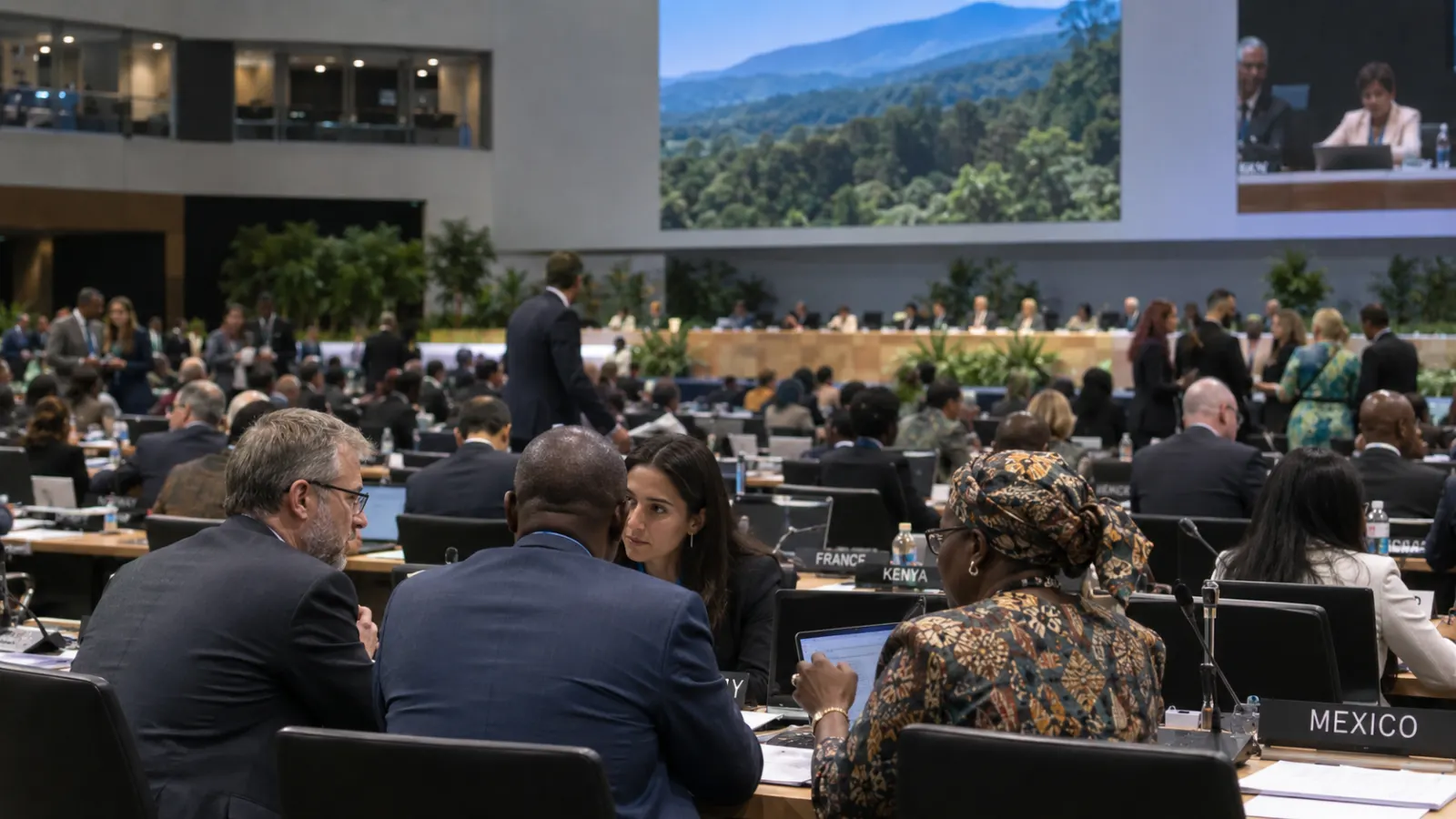
The third cause is institutional fragmentation. The United Nations remains important but often paralysed. The WTO is weakened. The Security Council reflects the power map of 1945 more than the world of 2026. As universal institutions struggle, smaller clubs and issue-based coalitions gain importance: G20, BRICS, Quad, AUKUS, I2U2, ASEAN-led forums, OPEC+, the African Union, the Gulf Cooperation Council, minilateral security dialogues and regional trade frameworks.
This benefits middle powers because they can operate across platforms.
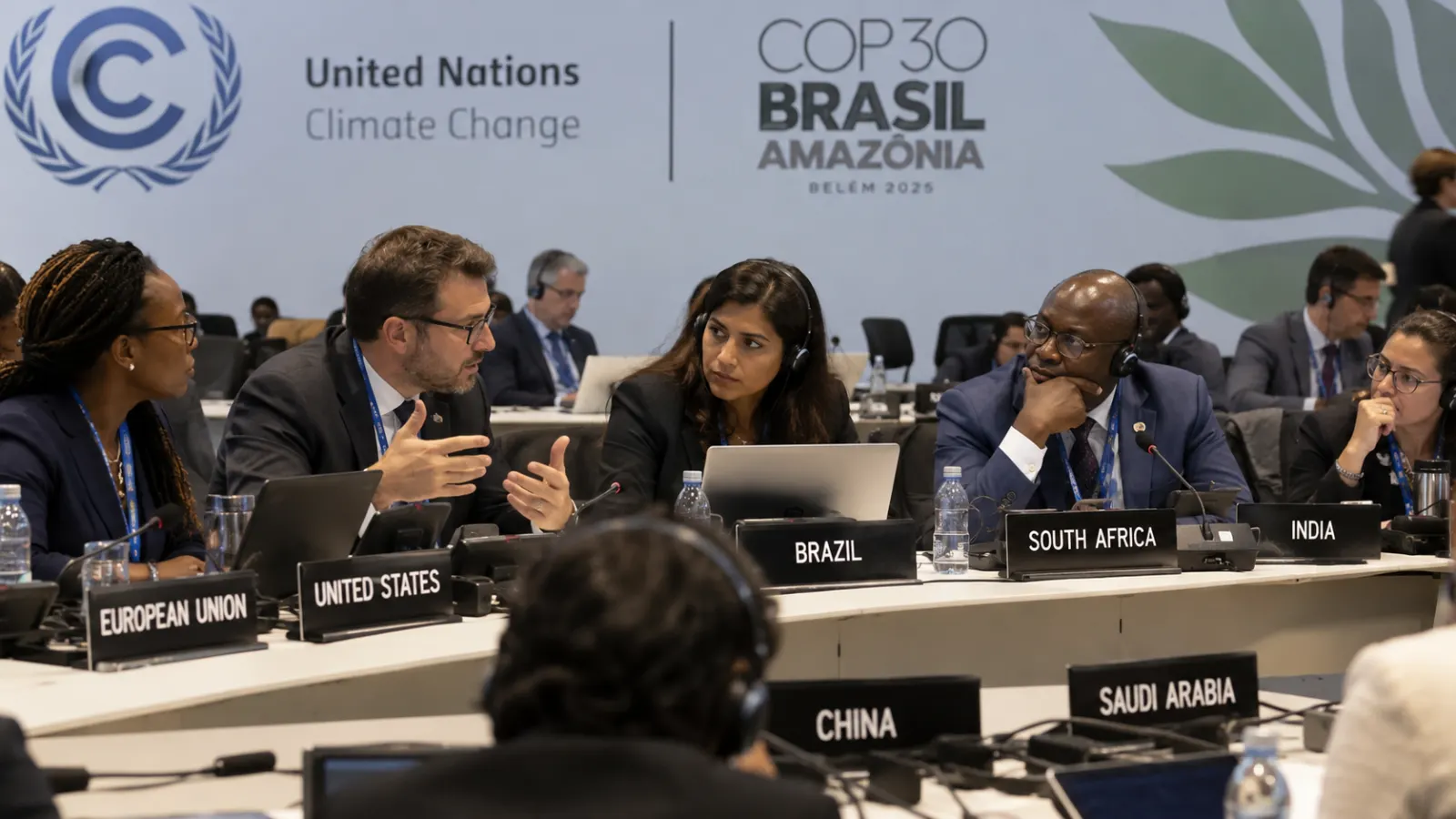
The G20 shows this clearly. It brings together major advanced and emerging economies and represents roughly 85% of global GDP, 75% of international trade and around 80% of the world’s population, according to Australia’s Department of Foreign Affairs and Trade. Unlike the G7, the G20 includes India, Indonesia, Brazil, Mexico, Saudi Arabia, South Africa and Türkiye alongside the traditional Western powers and China and Russia. That makes it one of the most important arenas of middle-power diplomacy.
India’s G20 presidency in 2023 demonstrated how a middle power can use global platforms to shape narratives. India hosted the Voice of Global South Summit in January 2023 under the theme “Unity of voice, Unity of purpose,” presenting itself as a bridge for developing countries to place their priorities on a common platform. India also pushed development, digital public infrastructure, multilateral reform and climate finance into global debate. This was not the behaviour of a passive state waiting for great powers to decide. It was agenda-setting.
BRICS shows another side of the same trend. Originally composed of Brazil, Russia, India, China and South Africa, BRICS has expanded into a broader platform of emerging and non-Western powers. The official BRICS 2026 website states that Egypt, Ethiopia, Iran, Saudi Arabia and the UAE became full members from January 2024, and Indonesia joined in January 2025; several other countries joined as partner countries in 2025. Indonesia’s entry was also confirmed by Reuters in January 2025, which described it as a full member and noted its interest in strengthening emerging nations and advancing Global South interests.
This matters because BRICS is not only an economic club. It is a signal that many countries want more voice in global governance. Some want reform of Western-dominated institutions. Some want alternatives to dollar dependence. Some want development finance. Some want diplomatic space. Some want to avoid choosing between the West and China. BRICS gives them a platform, even if the group itself contains serious contradictions.
Those contradictions are important. BRICS includes democracies and authoritarian states, energy exporters and energy importers, China and India despite border tensions, Gulf monarchies and Iran despite regional rivalries, and countries with different views on Russia, Israel, the United States and global finance. In May 2026, Reuters reported that Iran’s war cast a shadow over a BRICS foreign ministers’ meeting in Delhi, with differences emerging between Iran and the UAE on opposing sides of the Gulf conflict.
This shows that middle powers are not forming one disciplined anti-Western bloc. They are creating bargaining platforms. BRICS can amplify dissatisfaction with the Western-led order, but it cannot easily produce unity on every crisis. That is the nature of middle-power politics: flexible, transactional and often contradictory.
India is perhaps the most important example of this new middle-power influence, although India increasingly sees itself as more than a middle power. It is a civilisational state, a major economy, a nuclear power, a technology market, a defence actor and a voice of the Global South. Yet its method is deeply middle-power-like: strategic autonomy, multi-alignment, issue-based cooperation and refusal to become a junior partner of any bloc.
India works with the United States, Japan and Australia in the Quad. It buys Russian oil and maintains defence ties with Moscow. It competes with China at the border and in the Indo-Pacific while cooperating with China in BRICS and the SCO. It engages Europe on trade, technology and climate. It builds ties with the Gulf for energy, investment and diaspora interests. It speaks to Africa and Latin America through development and Global South platforms.
This is not inconsistency. It is the logic of a world where fixed camps are too costly.
India’s influence comes from its ability to sit in multiple rooms. It can speak to Washington without being an ally, to Moscow without being subordinate, to the Global South without being economically marginal, and to the West without being Western. That gives India a diplomatic elasticity few states possess.
Türkiye is another example. It is a NATO member, but it buys Russian systems, talks to Moscow, sells drones to Ukraine, controls access through the Turkish Straits, engages the Middle East, projects influence in the Caucasus, operates in Africa and presents itself as a mediator. Türkiye helped facilitate the Black Sea Grain Initiative in 2022, signed in Istanbul with the United Nations, Russia and Ukraine to allow safe transportation of grain and foodstuffs from Ukrainian ports. Conciliation Resources notes that the initiative helped export nearly 33 million tonnes of grain to 45 countries, easing pressure on global food prices.
That was classic middle-power diplomacy. Türkiye could not end the Ukraine war. But it could enable a specific deal that neither superpower could produce alone. It used geography, diplomatic access and transactional flexibility to create a limited but meaningful outcome.
The Gulf powers show another version of middle-power influence. Saudi Arabia, the UAE and Qatar are no longer only energy suppliers. They are investors, mediators, financial centres, technology buyers, sports diplomacy actors and regional power brokers. Their influence comes from capital, energy, geography and diplomatic flexibility. They host negotiations, fund infrastructure, invest in AI, manage oil production, mediate prisoner swaps and maintain channels with rivals.
The UAE has played a visible mediation role between Russia and Ukraine. Reuters reported in August 2025 that Russia and Ukraine exchanged 146 prisoners of war from each side after mediation by the UAE. Such diplomacy does not make the UAE a superpower. But it gives it relevance. In a fractured world, the ability to speak to both sides becomes power.
Qatar has used mediation as a core instrument of influence, especially in Gaza-related diplomacy. Reuters reported in July 2025 that Qatar, Egypt and the United States presented Israel and Hamas with an updated ceasefire proposal, reflecting Doha’s role as a mediator despite severe political complexity. Qatar’s influence does not come from population size or military dominance. It comes from diplomatic positioning, financial capacity, media reach and willingness to host difficult talks.
Saudi Arabia is pursuing a broader transformation. It wants to be not only an oil power but a central actor in investment, AI, sports, infrastructure, tourism, logistics and regional diplomacy. It engages Washington on security, Beijing on trade and energy, Moscow through OPEC+, and the Global South through development and investment. Its power lies in being courted by everyone.
Indonesia represents Southeast Asia’s middle-power potential. It is the world’s fourth most populous country, a major democracy, a key maritime state, a nickel and commodity power, and the largest country in ASEAN. Its BRICS membership in 2025 signalled that Jakarta wants a larger role in Global South diplomacy, not merely a regional role. Indonesia also sits at the heart of Indo-Pacific geography. Its archipelagic position links the Indian and Pacific Oceans. Its choices matter for China, the United States, India, Japan, Australia and ASEAN.
ASEAN collectively represents another form of middle-power influence. No single Southeast Asian country can dominate the Indo-Pacific, but ASEAN as a regional platform can shape diplomatic language, convene major powers and resist being forced into binary choices. ASEAN’s power is not military dominance. It is convening power, normative language and centrality in regional architecture.
This is why both the United States and China court ASEAN. Washington wants ASEAN support for a free and open Indo-Pacific. Beijing wants to prevent ASEAN from becoming an anti-China platform. India wants ASEAN centrality to remain part of Indo-Pacific architecture. Japan and Australia invest heavily in Southeast Asian partnerships. ASEAN’s greatest challenge is maintaining unity when its members have different threat perceptions and economic dependencies. Its greatest strength is that everyone still needs to engage it.
Brazil and South Africa show how middle powers can shape debates through legitimacy, resources and regional identity. Brazil matters in climate politics because of the Amazon, agriculture, food security and Global South diplomacy. South Africa matters because of its African role, BRICS membership and post-apartheid moral identity. Both seek reform of global governance, including the UN Security Council. A 2024 G4 ministerial statement noted Brazil’s initiative on global governance reform during its G20 presidency and stressed that Security Council reform remained a priority after the Summit of the Future.
This is another central feature of middle-power politics: the demand for institutional reform. Middle powers do not want merely more invitations to Western-led meetings. They want changes in representation, voting power, finance, development priorities and agenda-setting. They argue that institutions built after 1945 cannot permanently govern a world where economic and demographic weight has shifted.
But middle powers are not automatically virtuous. Their rise should not be romanticised. They can be opportunistic, inconsistent, authoritarian, transactional or self-interested. They may speak of international law when it benefits them and remain silent when allies violate it. They may criticise Western double standards while practicing their own. They may use mediation for prestige. They may hedge so much that they avoid moral clarity. They may demand reform without offering coherent alternatives.
This is why the middle-power moment is both promising and unstable.
Carnegie argued in January 2026 that middle powers have the potential to help stabilise global order and advance cooperation, but that success depends on whether governments can agree on common objectives, mobilise resources and manage domestic politics in a populist age. That caveat is crucial. Middle powers can stabilise the world, but they can also fragment it further if every state pursues only tactical advantage.
The biggest strength of middle powers is flexibility. The biggest weakness is lack of unity.
There is no single middle-power ideology. India’s strategic autonomy is not the same as Türkiye’s transactional balancing. Saudi Arabia’s oil-backed diplomacy is not the same as Indonesia’s ASEAN-centred approach. Brazil’s climate and Global South voice is not the same as South Korea’s technology-alliance role. Australia is a middle power but deeply embedded in the US alliance system. South Africa is a BRICS member but economically vulnerable. Japan is sometimes called a middle power in diplomatic literature, but it is also a major advanced economy with enormous strategic capacity.
Because of this diversity, calls for a grand coalition of middle powers often sound more attractive than realistic. International Politics Quarterly argued in May 2026 that although calls for middle-power strategic alignment are growing, such coalitions lack the ideological glue needed to sustain a deeper global movement. This is a fair warning. Middle powers can cooperate issue by issue, but they are unlikely to become one united bloc.
The future is therefore not a “middle-power alliance.” It is a world of middle-power brokerage.
They will broker energy deals, prisoner exchanges, food corridors, climate finance, technology standards, regional ceasefires, supply-chain alternatives, development platforms and institutional reforms. They will not replace superpowers. They will complicate superpower dominance.
This is already visible in sanctions politics. The West imposed sweeping sanctions on Russia after the Ukraine invasion, but not every major non-Western economy joined. India continued buying Russian oil. Türkiye maintained economic channels. Gulf states preserved energy coordination. China deepened trade with Russia. Many Global South countries condemned war in principle but resisted joining Western economic punishment. The result was that Western sanctions hurt Russia, but did not isolate it completely.
This shows the end of absolute superpower control. The United States and Europe can still impose major costs. But if enough middle powers do not cooperate, sanctions become less total. Russia can reroute trade, sell energy elsewhere, find intermediaries and use alternative financial channels. This does not make sanctions useless. It makes them dependent on broader coalition-building.
The same applies to China. The United States wants to restrict Chinese access to advanced technology and reduce supply-chain dependence. But many middle powers do not want full decoupling. They want Chinese investment, American technology, European markets, Japanese infrastructure, Korean manufacturing, Gulf capital and Indian digital cooperation. They will not automatically follow Washington’s China strategy. They will calculate sector by sector.
Middle powers are especially powerful in supply chains. Critical minerals, energy routes, shipping lanes, food exports, semiconductor assembly, battery materials, fertiliser, rare earth processing and digital markets are distributed across many countries. A superpower may control one part of the chain, but not the whole chain. That creates leverage for countries that control key nodes.
Indonesia’s nickel, Australia’s lithium, the Gulf’s energy, India’s pharmaceutical and digital scale, Brazil’s food and climate assets, Türkiye’s logistics, South Korea’s chips and shipbuilding, Japan’s technology, South Africa’s minerals and the UAE’s capital all matter. In the new global economy, strategic relevance often comes from controlling a bottleneck.
This is why middle powers are courted so intensely. They can help build resilience or create vulnerability. They can support sanctions or weaken them. They can host bases or deny access. They can vote in international institutions or abstain. They can mediate or obstruct. They can provide capital, minerals, food, technology, manpower, ports or legitimacy.
Superpowers are discovering that domination is expensive when everyone has alternatives.
For the United States, the rise of middle powers requires a different diplomatic style. Washington cannot simply ask countries to choose democracy over autocracy and expect automatic alignment. Many states see US policy as inconsistent, especially on West Asia, trade, climate finance and intervention. If America wants middle-power support, it must offer concrete benefits: technology access, investment, market openings, defence cooperation, infrastructure finance and respect for autonomy.
The US must also learn that partnership does not always mean obedience. India may cooperate in the Quad while buying Russian oil. Saudi Arabia may seek US security guarantees while deepening ties with China. Türkiye may remain in NATO while bargaining with Russia. Brazil may support climate cooperation while criticising Western economic dominance. These are not always betrayals. They are expressions of agency.
For China, middle powers are both opportunity and obstacle. Beijing benefits when countries want alternatives to Western dominance. It offers infrastructure, trade, finance and market access. But Chinese assertiveness also pushes countries to hedge. India resists China at the border. Vietnam balances China carefully. Indonesia protects its maritime rights. Saudi Arabia does not want to become dependent on Beijing. African states want Chinese investment but also debt relief and options. China’s power creates influence, but also suspicion.
For Russia, middle powers are lifelines. Without India, China, Türkiye, the Gulf and other non-Western channels, Russia’s room for manoeuvre after Ukraine would be far narrower. Moscow needs energy buyers, diplomatic platforms, sanctions workarounds, arms customers and political partners. But Russia also risks becoming less central. Many middle powers engage Russia not because they admire it, but because it provides oil, weapons, diplomatic balance or bargaining leverage.
For Europe, middle powers are essential partners in a world where European influence alone is not enough. Europe needs India for technology and Indo-Pacific balance, the Gulf for energy and investment, Africa for migration and development partnerships, Latin America for climate and commodities, ASEAN for trade and strategic diversification. But Europe must stop assuming moral instruction is the same as partnership. Middle powers want respect, not lectures.
The rise of middle powers also changes the meaning of the Global South. The Global South is not a unified bloc of poor countries. It includes major economies, energy powers, industrial states, vulnerable island nations, low-income countries and ambitious regional powers. India, Brazil, Indonesia, South Africa and Saudi Arabia do not have the same interests as small debt-stressed states. Yet the term remains politically powerful because it expresses frustration with unequal global governance.
Middle powers use the Global South language to gain legitimacy. India presents itself as a voice for developing countries. Brazil speaks of reform and climate justice. South Africa invokes anti-colonial memory. Indonesia speaks through ASEAN and development solidarity. Gulf states offer investment and South-South cooperation. This language helps middle powers claim that they are not merely pursuing national interest, but representing a wider world.
Sometimes that claim is sincere. Sometimes it is strategic branding. Often it is both.
The central question is whether middle powers will use their influence to strengthen global order or merely maximise short-term advantage. They could push for UN reform, climate finance, debt relief, fairer technology access, development infrastructure, food security and more balanced trade. They could also play great powers against each other without solving structural problems. The middle-power moment can become constructive or cynical.
India has a special responsibility here. Because of its size, history and ambitions, India cannot behave like a purely transactional state forever. It wants to be a leading power, not just a balancing power. That requires providing public goods: disaster relief, development finance, digital infrastructure, climate solutions, maritime security, medical supply chains and diplomatic bridges. India’s credibility will depend on whether it can convert strategic autonomy into global contribution.
Türkiye, Saudi Arabia, Indonesia, Brazil and South Africa face similar tests in their own ways. Influence brings expectations. If they want a greater voice, they must also show greater responsibility. A world of middle powers cannot simply be a world of everyone bargaining for themselves.
The future international order will likely be neither unipolar nor neatly bipolar. It will be unevenly multipolar. The United States and China will remain the largest poles. Russia will remain disruptive. Europe will remain economically significant but strategically contested. Middle powers will decide many outcomes by choosing when to align, when to abstain, when to mediate, when to resist and when to convene.
This makes diplomacy more complicated but also more open. In a superpower-dominated world, smaller and middle states often had limited room. In today’s fragmented world, they can create space if they are skilled. Geography, demography, energy, technology, finance, food, minerals and legitimacy all become forms of power.
The danger is that too much fragmentation weakens collective action. Climate change, pandemics, financial instability, food insecurity, migration and AI governance require cooperation. If middle powers use their influence only to avoid commitments, global problems will worsen. If they use it to force fairer bargains, the world may become more balanced.
That is why this moment is so important. Middle powers are not merely reacting to superpower decline. They are helping define what comes next.
Superpowers have not disappeared. The United States can still shape wars, sanctions, markets and alliances. China can still transform global trade and infrastructure. Russia can still threaten Europe and disrupt energy and security. But none of them can command the world alone. They need partners, platforms, suppliers, mediators, financiers and legitimising voices. Middle powers provide or deny those things.
This is the new leverage.
The world is moving from command politics to bargaining politics. Superpowers can pressure. Middle powers can hedge. Superpowers can offer. Middle powers can compare. Superpowers can threaten. Middle powers can delay, diversify and convene. The global order is becoming less like a pyramid and more like a crowded negotiation table.
Middle powers gain influence because they understand one truth better than many superpowers do: in a fractured world, the side with the most options often has the most freedom.
That freedom will not automatically produce justice or stability. It can produce opportunism, ambiguity and paralysis. But it also gives countries outside the old centres of power a chance to shape the rules rather than simply obey them.
The age of absolute superpower control is over. The age of middle-power bargaining has begun.