For three decades after the Cold War, the dominant story of world politics was integration. Markets would connect states. Trade would soften rivalries. Technology would spread prosperity. Global institutions would manage disputes. Borders would matter less than supply chains. Ideology would matter less than growth. The future, it seemed, belonged to globalisation.
That age is ending.
The world is not returning to the simple bipolarity of the old Cold War, where two rigid camps divided almost every major decision. But it is also no longer living in the confident age of open globalisation. The new reality is messier: overlapping blocs, competing coalitions, selective partnerships, weaponised supply chains, regional security networks, tariff walls, technology restrictions, mineral diplomacy, sanctions regimes and payment alternatives.
The global order is fragmenting because states no longer trust interdependence to remain peaceful. They are discovering that what once looked like efficiency can become vulnerability. A chip supply chain can become a national security problem. A gas pipeline can become political blackmail. A port can become strategic access. A rare-earth export licence can become diplomatic leverage. A digital platform can become an intelligence concern. A currency network can become a sanctions weapon.
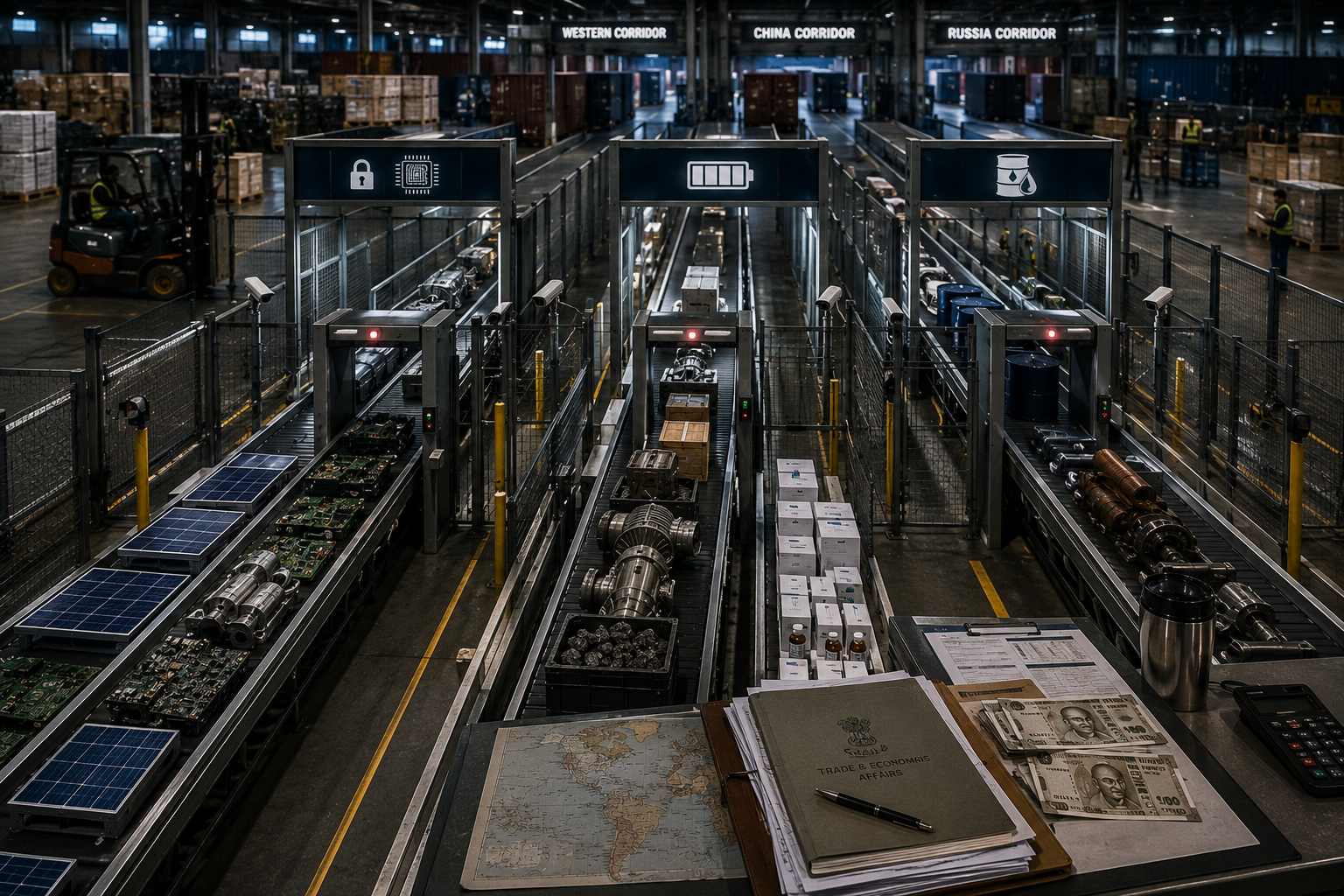
This is not the death of globalisation. Goods still move, capital still flows, students still migrate, companies still invest and countries still trade across political divides. But globalisation is being redesigned around security. The result is not one global market, but a world of guarded corridors.
The first sign of fragmentation is economic. The IMF warned in its April 2026 World Economic Outlook that downside risks are dominated by conflict, geopolitical fragmentation, renewed trade tensions and financial instability. It also noted that worsening fragmentation could weaken growth and destabilise markets. UNCTAD’s January 2026 Global Trade Update similarly said global trade entered 2026 under pressure from slower growth, geopolitical fragmentation, digital and green transitions, and tighter national regulation, all of which are reshaping trade flows, investment decisions and global value chains.
These are not abstract warnings. They describe the world companies now face. Multinationals no longer ask only where production is cheapest. They ask where production is politically safe. Governments no longer ask only where goods can be sourced efficiently. They ask whether a supplier can be trusted during crisis. Investors no longer look only at market size. They examine sanctions exposure, export controls, political alignment, data rules and supply-chain resilience.
This is the logic of geoeconomic fragmentation.
The global economy once rewarded concentration. If one country could produce cheaper solar panels, batteries, electronics or pharmaceutical ingredients, the world bought from that country. If one region could produce advanced semiconductors, the world accepted dependence because efficiency made everyone richer. If one energy supplier was cheaper, countries signed long-term contracts. The system worked as long as everyone believed commercial links would remain separate from geopolitical conflict.
That belief has collapsed.
Russia’s war in Ukraine showed Europe that energy dependence on an adversarial power can become a strategic weapon. The US-China technology war showed that chips, AI, cloud computing and advanced manufacturing equipment are no longer merely commercial products. China’s rare-earth controls showed that minerals can become diplomatic instruments. The Covid-19 pandemic had already exposed the fragility of concentrated medical and manufacturing supply chains. Together, these shocks have pushed states toward resilience over efficiency.
The second sign of fragmentation is security bloc formation. NATO has returned to the centre of European strategy, not as a relic of the Cold War but as an active deterrence system against Russia. At the 2025 Hague Summit, NATO allies agreed to a 5% GDP commitment by 2035, including at least 3.5% for core defence requirements and up to 1.5% for broader defence- and security-related spending.
This commitment reveals the direction of the world. Defence spending is no longer treated as a temporary response to Ukraine. It is becoming a structural feature of Western strategy. Europe is rearming. NATO is expanding. Finland and Sweden have joined the alliance. Eastern Europe has become central to deterrence. The old idea of a common European security space including Russia has been replaced by a hardened line between Russia and the West.
But the security map is not limited to Europe. In the Indo-Pacific, the United States is building a network of alliances and partnerships to balance China. The Quad brings together India, the United States, Japan and Australia. AUKUS connects the United States, United Kingdom and Australia through nuclear-powered submarine cooperation and advanced defence technologies. Japan is expanding its security role. The Philippines has become more important because of the South China Sea and Taiwan. South Korea remains central to deterrence against North Korea while also becoming important in technology and defence-industrial cooperation.
AUKUS shows how bloc politics is moving beyond traditional military alliances. In May 2026, AUKUS defence ministers announced a Pillar II project to develop payloads and systems for uncrewed undersea vehicles, with delivery starting in 2027, aimed at surveillance, strike, seabed infrastructure protection, anti-submarine warfare, electronic warfare and contested littoral operations. This is not only an alliance commitment. It is a technological bloc.
The Quad shows the same pattern in a more flexible form. At the Quad Foreign Ministers’ Meeting in New Delhi on May 26, 2026, the four countries announced a Critical Minerals Framework, emphasised diversified supply chains, and highlighted maritime security, port infrastructure, energy security and maritime domain awareness. This is not NATO in Asia. But it is a clear response to the fear that one country’s dominance over minerals, sea lanes or supply chains can create strategic dependence.
The third sign of fragmentation is the rise of alternative blocs outside the West. BRICS has expanded from a five-member grouping into a broader platform for countries dissatisfied with Western dominance. The official BRICS 2026 website states that Egypt, Ethiopia, Iran, Saudi Arabia and the UAE became full members from January 2024, Indonesia joined in January 2025, and several countries including Belarus, Bolivia, Kazakhstan, Cuba, Malaysia, Nigeria, Thailand, Uganda, Uzbekistan and Vietnam became partner countries in 2025.
BRICS is often misunderstood. It is not a disciplined anti-Western alliance. It includes India and China despite their border tensions. It includes Iran and the UAE despite deep regional contradictions. It includes energy exporters and energy importers, democracies and authoritarian systems, market economies and state-led economies. It is too diverse to function as a single strategic bloc in the way NATO does.
But BRICS matters because it symbolises a wider revolt against Western monopoly over global governance. Many countries do not want the world economy to be permanently centred on the dollar, Western banks, Western sanctions, Western credit-rating agencies, Western technology platforms and Western-led institutions. They want more voice, more options and more bargaining space. BRICS gives them a stage.
This is how fragmentation now works. It is not always formal alignment. It is the creation of options.
A country may cooperate with the United States on security, trade with China, buy energy from Russia, join BRICS, attend G20 meetings, seek EU investment, use Gulf capital, and maintain relations with Iran. This is not ideological confusion. It is strategic hedging. In a fragmented order, the most valuable asset is optionality.
India is the clearest example. It participates in the Quad, deepens defence and technology cooperation with the United States, maintains historical ties with Russia, competes with China, works within BRICS and the SCO, courts Europe, strengthens ties with the Gulf, and claims leadership of the Global South. India does not want a US-led unipolar order, but it also does not want a China-dominated Asia. It wants a multipolar order in which it has room to rise.
This is why the emerging world cannot be reduced to “pro-West” or “anti-West.” Most major non-Western states are not choosing one camp permanently. They are negotiating issue by issue. On Ukraine, many condemned violations of sovereignty but refused to join Western sanctions. On China, many fear dependency but want trade and investment. On the United States, many value technology and security cooperation but distrust unilateral pressure. On climate, many demand finance and fairness. On trade, many want market access without political subordination.
The fourth sign of fragmentation is technology separation. The digital economy was once sold as borderless. Today, it is being divided by export controls, data localisation rules, chip restrictions, cybersecurity laws, platform bans, investment screening and AI governance disputes. The United States wants to prevent China from accessing the most advanced semiconductors and AI-related computing capabilities. China wants technological self-reliance and reduced dependence on Western systems. Europe wants digital sovereignty. India wants domestic capacity and control over data infrastructure.
Technology is becoming the new frontier of bloc politics because it sits at the heart of economic and military power. Whoever controls advanced chips controls the future of AI, defence systems, surveillance, autonomous weapons, supercomputing, biotechnology and industrial automation. Whoever controls digital infrastructure can shape standards, data flows, payment systems and public administration.
This is why supply chains are being reorganised around trust. The old question was: who can produce this most cheaply? The new question is: who can produce this securely during a geopolitical crisis?
Rare earths illustrate this perfectly. China’s export controls on critical minerals have become a major point of tension with the United States and its partners. Reuters reported in May 2026 that China said it would cooperate with the United States on “reasonable” concerns about rare-earth export controls while defending the controls as lawful. The restrictions had affected minerals such as yttrium and scandium, which matter for high-heat applications, semiconductors and next-generation technologies. Reuters also reported that exports of heavy rare earths such as yttrium, dysprosium and terbium were still around 50% lower after controls imposed in April 2025 compared with the previous 12 months.
This is not merely a trade dispute. It is a preview of the future. The world’s most important resources are no longer only oil and gas. They include lithium, cobalt, nickel, graphite, gallium, germanium, rare earths, copper, uranium, semiconductor-grade materials and advanced manufacturing equipment. Countries that control extraction, processing or refining gain strategic leverage. Countries that depend excessively on one supplier become vulnerable.
The fifth sign of fragmentation is financial. The dollar remains dominant, and no rival currency is close to replacing it. But many states are exploring ways to reduce exposure to Western financial power. Russia and China use more local-currency settlement. BRICS discusses payment alternatives. Sanctioned states build workarounds. Central banks diversify reserves at the margin. Countries fear that access to Western finance, payment systems and reserves can be restricted during political conflict.
This does not mean de-dollarisation is imminent. It means financial fragmentation is growing at the edges. The dollar system remains powerful precisely because it is liquid, trusted and deeply embedded. But the more the West uses sanctions as a central tool of statecraft, the more other states search for insulation. The paradox is clear: sanctions demonstrate Western power, but they also motivate countries to reduce vulnerability to that power.
Russia’s war in Ukraine accelerated this trend. Western sanctions did not collapse Russia, but they forced Moscow to redirect trade, deepen reliance on China, sell more energy to non-Western buyers and use alternative financial channels. Many countries watched carefully. They learned that Western financial systems are powerful, but also political. That lesson will shape future behaviour.
The sixth sign of fragmentation is energy bloc politics. The old energy order was built around global markets, major producers and major consumers. The new energy order is divided by sanctions, price caps, LNG infrastructure, renewable supply chains, critical minerals, pipeline politics and maritime chokepoints. Europe reduced dependence on Russian gas. Russia redirected energy toward Asia. The Gulf balances between the United States, China, Russia and emerging markets. China secures long-term energy and mineral access. India buys discounted Russian oil while expanding renewables and courting Gulf suppliers.
Energy has always been geopolitical, but the energy transition has made it more complex. Oil and gas still matter. But so do solar panels, batteries, hydrogen, uranium, rare earths, copper grids and clean-tech manufacturing. A country may reduce oil dependence only to become dependent on Chinese solar panels or battery materials. A green transition without supply-chain strategy can create a new form of dependence.
This is why the global order is not simply splitting into military blocs. It is fragmenting into resource blocs, technology blocs, payment blocs, information blocs and industrial blocs.
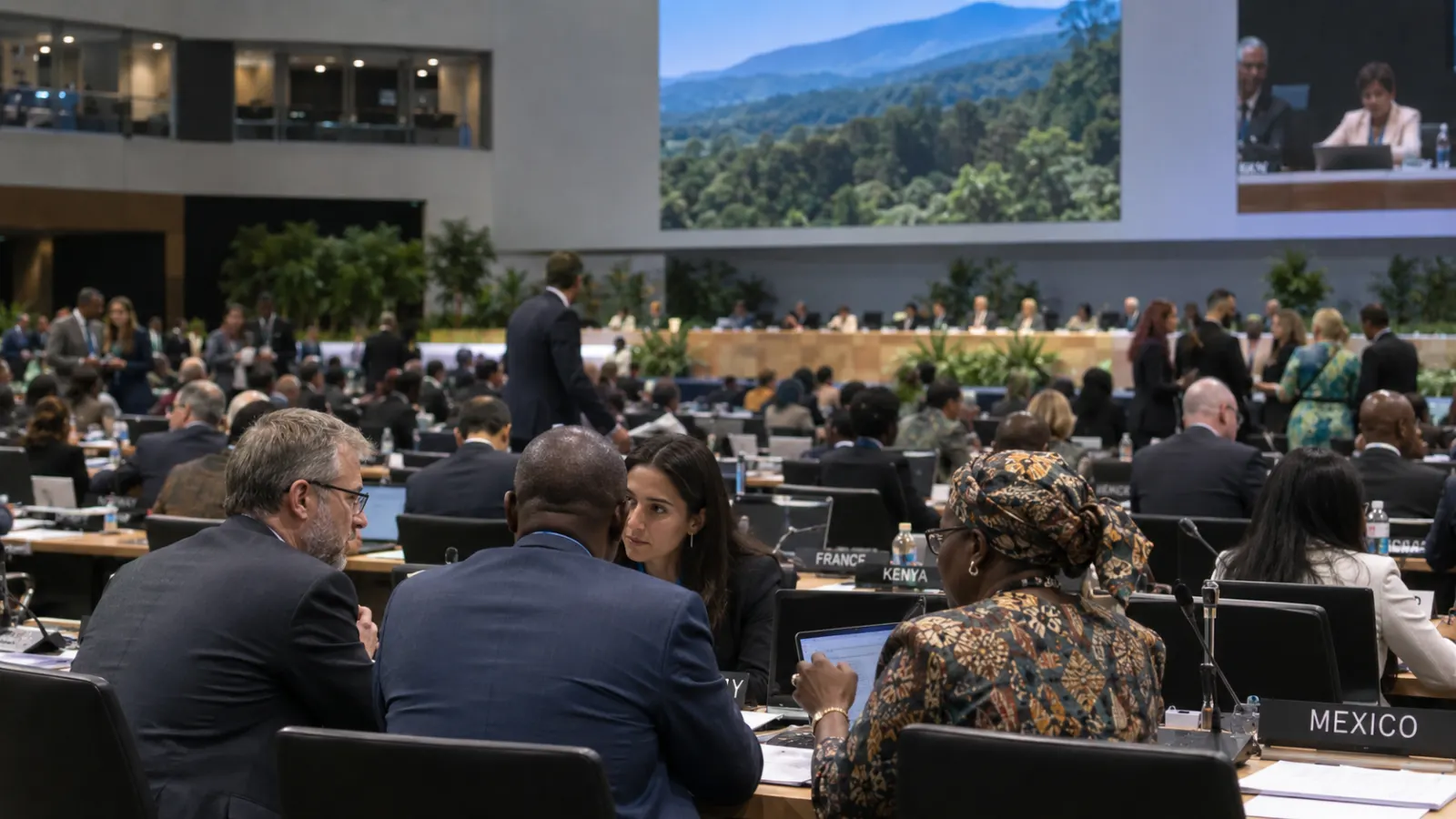
The seventh sign is institutional fragmentation. The United Nations still exists, but the Security Council is often paralysed by veto politics. The WTO still exists, but trade disputes increasingly move through tariffs, industrial policy and bilateral pressure. The IMF and World Bank still matter, but many developing countries seek alternatives from China, Gulf funds, regional banks and new development institutions. The G20 is important, but it is often a forum for managing disagreement rather than producing deep unity.
The WTO’s 2026 Global Trade Outlook noted that freight rates and transport services had been affected by repeated shocks including the pandemic, geopolitical conflicts, trade tensions and supply-chain disruptions. This captures the institutional problem: the old trade system was designed for predictable liberalisation, but the world now faces strategic disruption.
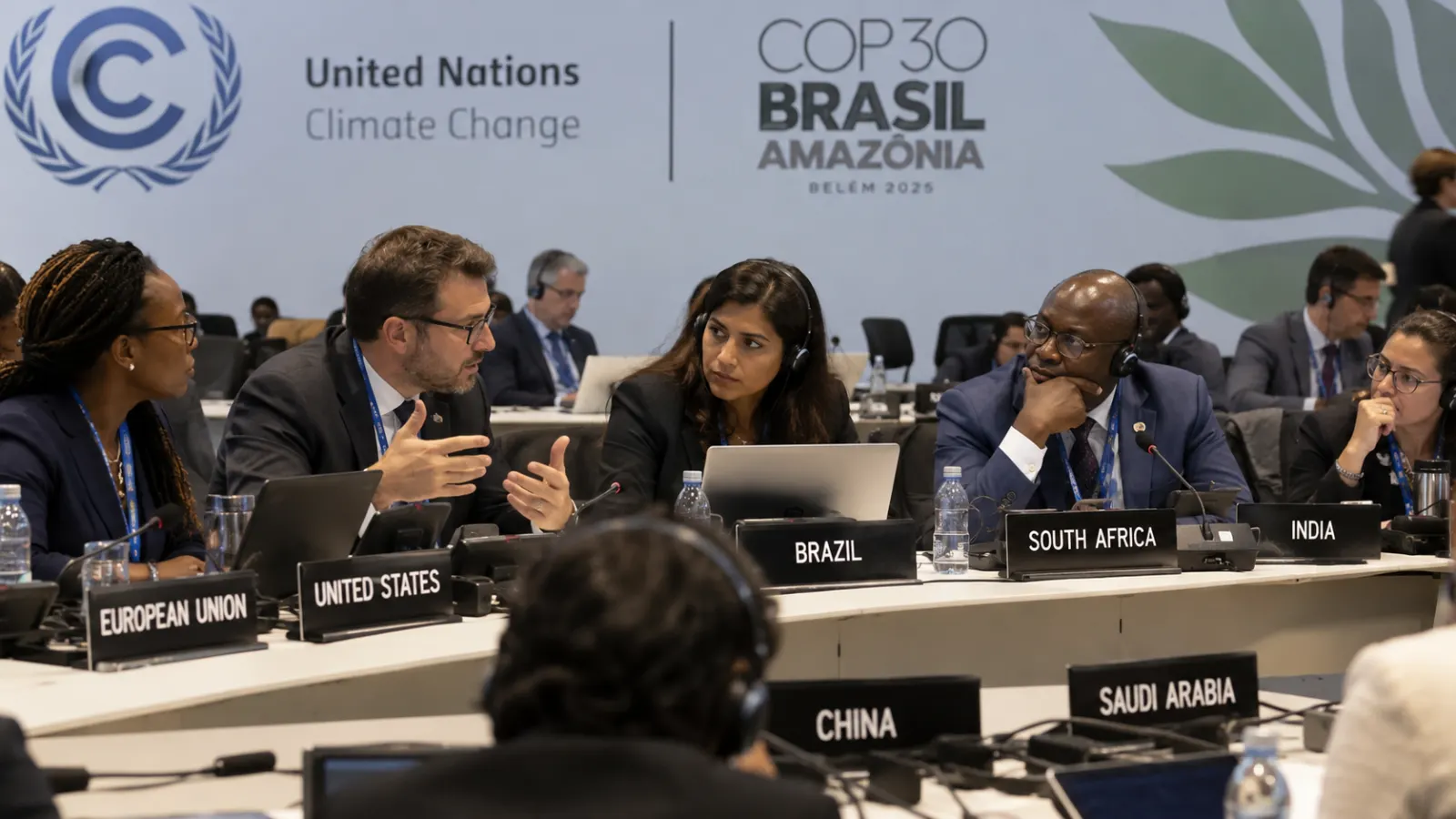
When institutions cannot manage rivalry, blocs emerge. Countries seek safety in smaller groups. NATO protects against Russia. AUKUS builds undersea capabilities. The Quad coordinates Indo-Pacific security and supply-chain resilience. BRICS amplifies non-Western bargaining. ASEAN protects regional centrality. The Gulf uses capital and energy diplomacy. The EU uses regulation, tariffs and industrial policy. The African Union seeks collective voice. Each group becomes a shelter from disorder.
But fragmentation does not mean every bloc is equally coherent. NATO is a formal military alliance. The Quad is a flexible strategic partnership. BRICS is a political-economic platform with internal contradictions. ASEAN is a regional diplomatic mechanism built around consensus. The EU is a market-regulatory union trying to become more geopolitical. OPEC+ is an energy coordination mechanism. These blocs overlap, compete and sometimes contradict themselves.
That is why the emerging order is not a clean map. It is a layered map.
India belongs to BRICS and the Quad. Türkiye belongs to NATO but buys Russian systems and mediates conflicts. Saudi Arabia works with the United States, China, Russia, BRICS and OPEC+. Indonesia joins BRICS while remaining central to ASEAN. The UAE cooperates with the West and deepens Asian ties. Brazil criticises Western dominance but trades widely. South Africa uses BRICS and Global South language while managing domestic economic constraints.
This layered alignment is the defining feature of the new world. Countries no longer want permanent dependence on one centre. They want multiple doors.
The Global South is therefore not becoming one bloc. It is becoming a marketplace of strategic choices. Some states want Chinese infrastructure but American security. Some want Russian weapons but European investment. Some want Gulf capital but Indian technology. Some want Western markets but non-Western diplomatic cover. This is frustrating for superpowers because loyalty is no longer automatic.
The United States sees this fragmentation as a challenge to the rules-based order. Its concern is understandable. If countries ignore sanctions, buy from adversaries, avoid alignment and build alternative institutions, American influence weakens. But Washington must also recognise that many states do not experience the “rules-based order” as neutral. They often see it as a system designed by the West, enforced selectively, and reformed too slowly.
China sees fragmentation as an opportunity. It benefits when countries want alternatives to Western dominance. It offers infrastructure, trade, finance and diplomatic support. But China also generates resistance because its economic coercion, military assertiveness and technology ambitions make many countries nervous. Beijing wants a more multipolar world, but many Asian states do not want that multipolarity to become Chinese dominance.
Russia sees fragmentation as survival. A unified Western-led world would isolate Moscow after Ukraine. A fragmented world allows Russia to sell energy, find buyers, use non-Western finance, receive diplomatic support and exploit disagreements. Russia does not need to lead a global order. It only needs to prevent the West from uniting the whole world against it.
Europe sees fragmentation as both danger and motivation. It fears dependence on China, instability from Russia, uncertainty from the United States and economic vulnerability from global shocks. That is why Europe talks about strategic autonomy, de-risking, industrial policy, defence readiness and economic security. But Europe’s internal divisions make it difficult to act quickly.
For India, fragmentation is both opportunity and risk.
The opportunity is obvious. A fragmented order gives India space to manoeuvre. It can deepen ties with the United States without becoming an ally. It can maintain ties with Russia without fully endorsing Moscow’s war. It can compete with China while engaging it in BRICS and multilateral forums. It can present itself as a voice of the Global South. It can attract supply chains seeking alternatives to China. It can use its market size, demography and technology base to bargain harder.
The risk is equally real. Fragmentation can disrupt global trade, raise energy prices, complicate defence procurement, split technology ecosystems, weaken institutions and intensify military competition in India’s neighbourhood. If the world breaks into hostile blocs, India may lose some of the flexibility it currently enjoys. Strategic autonomy works best in a world with multiple options. It becomes harder when blocs demand loyalty.
India must therefore avoid two mistakes. The first is romanticising multipolarity. A multipolar world is not automatically fairer. It can be unstable, transactional and coercive. Smaller states may face pressure from regional powers instead of one superpower. The second mistake is assuming non-alignment is enough. In today’s world, autonomy requires capability: manufacturing, technology, defence production, energy resilience, maritime power and diplomatic credibility.
Fragmentation rewards countries that can produce, secure and connect. It punishes countries that depend too much on others.
The deeper question is whether fragmentation is reversible. The answer is partly no. Some changes are structural. The United States and China will not return to the easy economic engagement of the early 2000s. Europe will not return to dependence on Russian gas. Countries will not forget pandemic supply-chain shocks. Technology will remain securitised. Critical minerals will remain strategic. Sanctions and export controls will remain common instruments of power.
But fragmentation can be managed. The world does not need to collapse into closed blocs. Trade can continue with safeguards. Technology cooperation can exist alongside security controls. Climate cooperation can survive rivalry. Global health systems can be strengthened. Financial institutions can be reformed. Middle powers can act as bridges. Multilateralism can become more flexible.
The worst outcome would be full bloc confrontation: Western bloc versus China-Russia bloc, with the Global South forced to choose. That would reduce growth, increase military risk, slow climate action, weaken development and make crises harder to solve. The better outcome would be competitive coexistence: states compete, diversify and protect critical sectors, but keep enough channels open to manage shared problems.
The world still needs cooperation because its biggest threats are not bloc-specific. Climate change will not stop at NATO borders. Pandemics will not respect BRICS membership. Financial crises will not ask whether a country is pro-West or pro-China. AI risks, cyber threats, food insecurity, migration, terrorism and debt distress require coordination across divides.
This is the central paradox of the new order: the world is fragmenting at precisely the moment when global problems require collective action.
That paradox will define the next decade. States want resilience, but the world needs openness. States want autonomy, but they remain interdependent. States want blocs for safety, but blocs can create insecurity. States want to reduce dependence, but complete self-sufficiency is impossible. The challenge is to build a world where security does not destroy cooperation.
Trust is the invisible infrastructure of globalisation. Once it erodes, trade routes become strategic routes, data centres become sovereign assets, ports become security concerns, currencies become weapons, and minerals become bargaining chips.
The world is not yet divided by a new Iron Curtain. But it is increasingly divided by invisible curtains: export controls, sanctions lists, technology standards, investment screens, data rules, defence partnerships, supply-chain audits and political loyalty tests.
This is the age of fragmentation.
The countries that succeed will be those that can operate across blocs without becoming trapped by them. They will diversify supply chains, build domestic capacity, maintain diplomatic flexibility, invest in technology, protect critical infrastructure and avoid ideological rigidity. The countries that fail will be those that confuse dependency with partnership and slogans with strategy.
The old global order promised that economic integration would produce political moderation. The new global order teaches that economic integration without trust produces strategic vulnerability.
That is why the map is changing. Not because globalisation disappeared, but because globalisation has become contested territory. Trade is now strategy. Technology is now power. Energy is now leverage. Finance is now coercion. Minerals are now diplomacy. Alliances are now industrial networks. Blocs are now insurance policies.
The global order is fragmenting because the world has entered a harsher phase of interdependence: connected enough to hurt each other, divided enough to distrust each other, and competitive enough to reorganise everything around power.
The question is not whether blocs will form. They already are.