The New Wars Are Won Without Firing a Shot
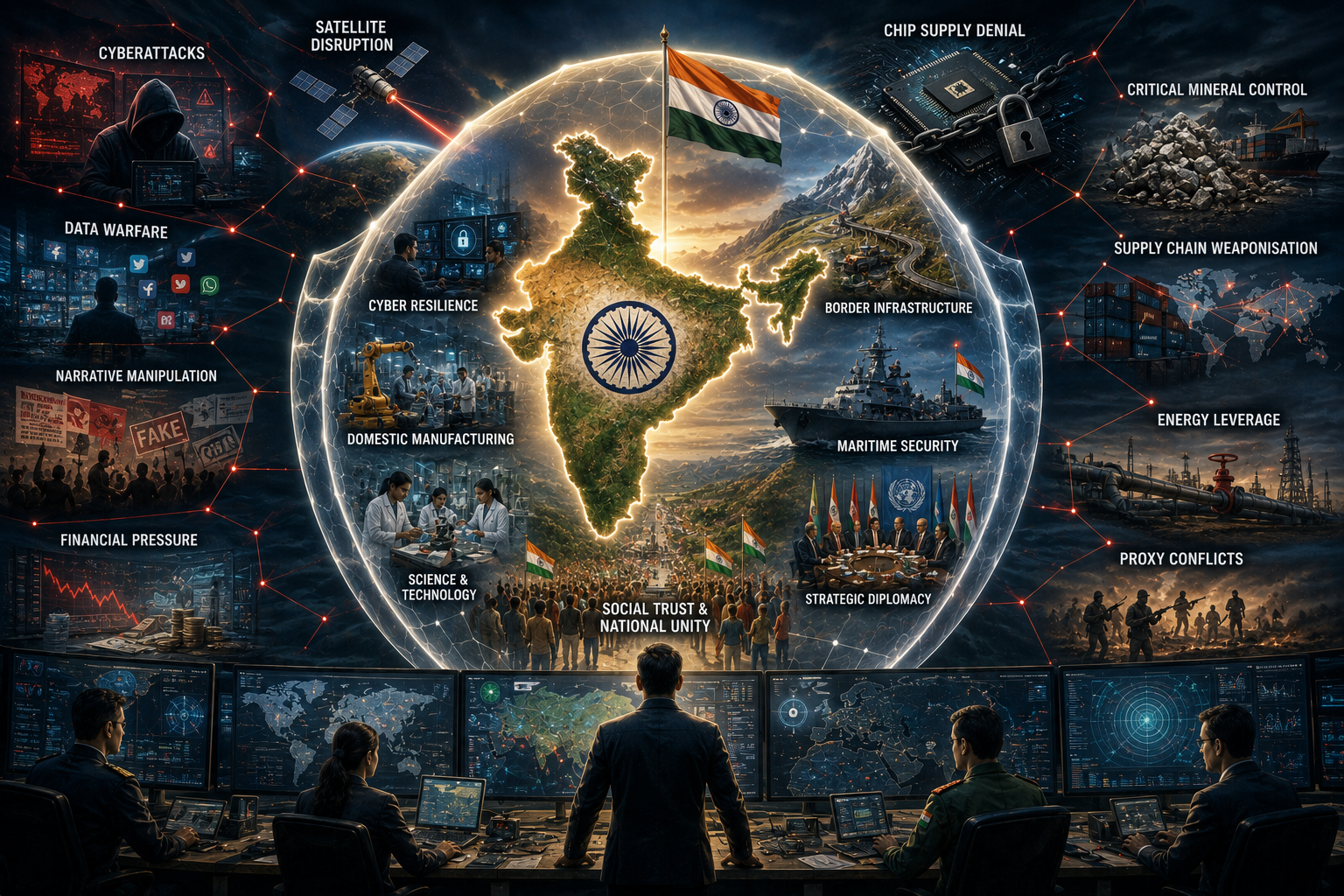
The most powerful wars of the twenty-first century may not begin with a formal declaration, a marching army or a missile crossing the sky. They may begin with a port disrupted, a currency pressured, a data centre compromised, a satellite blinded, a chip supply denied, a shipping lane threatened, a social media narrative manipulated, a critical mineral withheld or a border village slowly emptied by neglect. The battlefield has expanded beyond land, sea and air into code, capital, cognition, supply chains and infrastructure.
This does not mean conventional war has disappeared. Tanks still matter. Soldiers still die. Borders still bleed. But the art of power has changed. Sun Tzu's famous idea that the supreme art of war is to subdue the enemy without fighting feels newly relevant because states now have tools to weaken rivals below the threshold of open war. Sanctions, cyber operations, disinformation, debt leverage, technology denial, trade restrictions, proxy pressure, maritime coercion and infrastructure competition can all shift strategic outcomes before a shot is fired.
India must understand this transformation without hysteria. We are located in one of the world's most complex strategic neighbourhoods. We face unresolved borders, maritime vulnerabilities, terrorism risks, cyber threats, great-power rivalry, energy dependence, diaspora exposure, supply-chain fragility and climate stress. At the same time, we seek growth, investment, technology partnerships, Global South leadership and strategic autonomy. The new wars test exactly this balance.
The old map showed borders as lines. The new map shows dependencies. Where are the chips made? Who controls critical software? Which ports carry energy? Which cables carry data? Which countries dominate rare earth processing? Which platforms shape opinion? Which payment systems can be weaponised? Which satellites support navigation? Which technologies can be denied in a crisis? These questions are now part of national security.
The Ministry of External Affairs' Annual Report 2024-25 described India as committed to expanding strategic autonomy, supporting reform of multilateral institutions and addressing Global South priorities. That language captures India's diplomatic instinct: avoid becoming a camp follower while working with multiple partners. But strategic autonomy in today's world cannot be only diplomatic posture. It must be backed by economic, technological and military capacity. A country without capability has preferences, not autonomy.
The US-China rivalry is the central theatre of this new world. It is not merely a contest of armies. It is a contest over semiconductors, AI, standards, trade routes, universities, finance, rare earths, satellites, narratives and institutional influence. India cannot escape this rivalry. It must work with the United States and its partners where interests converge, compete with China where necessary, engage the Global South where credibility matters and preserve enough independent capacity to avoid strategic captivity.
The India-China border illustrates how geography and infrastructure intersect. A border is not secured only by soldiers. It is secured by roads, bridges, tunnels, airstrips, communications, logistics, surveillance and local population confidence. Ministry of Defence year-end material for 2025 highlighted Border Roads Organisation infrastructure projects and the connection between border infrastructure, defence preparedness and socio-economic progress in remote areas. This is strategic logic. A road in a border village is not only development. It is deterrence.
Yet infrastructure must be accompanied by human policy
Yet infrastructure must be accompanied by human policy. Border residents are not scenery. They are citizens at the edge of sovereignty. If they lack schools, healthcare, jobs, connectivity and dignity, the border weakens socially even if it is patrolled militarily. India's frontier policy must treat local communities as partners in security. The new war is won partly by ensuring that citizens near borders do not feel abandoned by the republic.
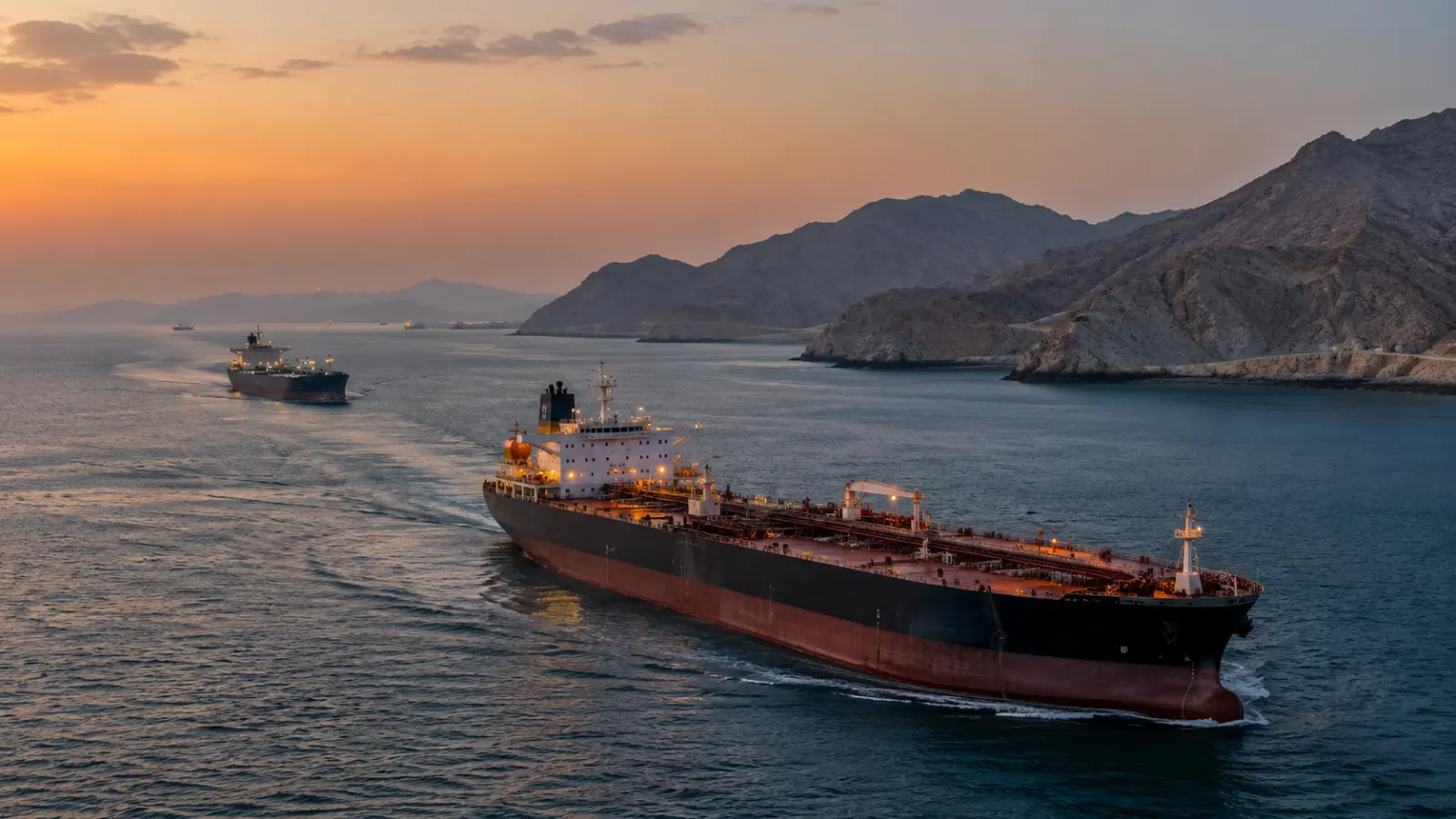
The maritime domain is equally crucial. India's location in the Indian Ocean is a strategic gift and responsibility. Energy flows, trade routes, submarine cables and naval presence make the ocean central to national power. Chokepoints such as the Strait of Hormuz, Bab-el-Mandeb and Malacca affect prices and security. Instability in the Middle East can affect Indian workers, remittances, shipping and energy. A country aspiring to be a major power cannot be sea-blind.
The new wars also operate through technology denial. The semiconductor lesson is clear. If chips are the foundation of modern devices, vehicles, defence systems, AI and communications, then chip dependence is strategic vulnerability. The India Semiconductor Mission's Rs 76,000 crore framework and approved projects, as described in official releases, are therefore part of national security. India does not need to make every chip. It does need trusted capacity, design strength, packaging and testing ecosystems, talent and resilient partnerships.
Cyberwarfare has already entered ordinary life. A 2025 PIB note on cyber fraud and security indicated a significant rise in cybersecurity incidents in India between 2022 and 2024. These incidents are not only technical events. They are signs of a society becoming more attackable as it becomes more digital. Banks, hospitals, power grids, ports, government databases, telecom networks and citizens' savings are all part of the security perimeter. A cyber attack does not need to destroy a city to damage confidence. It only needs to make citizens doubt the systems they depend on.
Narrative warfare may be even harder to manage. A rumour can inflame communities. A deepfake can influence perceptions. A coordinated campaign can discredit institutions. A foreign or domestic actor can exploit existing divisions. The most effective information operation does not invent all conflict; it amplifies real fault lines. India's diversity is a strength, but it also gives adversaries many emotional entry points. National security must therefore include social trust. A polarised society is easier to manipulate.
Sanctions and financial tools show another dimension. The global response to conflicts in recent years has demonstrated how access to financial networks, technology, insurance, shipping and reserves can become instruments of coercion. India must maintain relationships widely, build payment resilience, diversify energy, strengthen domestic industry and avoid overdependence on any single strategic ecosystem. Strategic autonomy is not anti-West, anti-China or anti-anyone. It is pro-Indian room for manoeuvre.
Military expenditure trends underline the intensity of the environment. SIPRI reported in 2026 that world military expenditure reached $2.887 trillion in 2025, with major increases in Europe and Asia-Oceania. This is the world India inhabits. Peace is desirable, but preparedness is not optional. However, preparedness must be intelligent. Spending more is not the same as becoming safer. The quality of capability, integration, technology, logistics, domestic production and doctrine matters.
India's defence modernisation must therefore focus on jointness, drones,
India's defence modernisation must therefore focus on jointness, drones, counter-drone systems, cyber, space, electronic warfare, logistics, precision munitions, indigenous design and faster procurement. But it must also avoid the illusion that every problem has a military answer. The new wars are won through whole-of-nation strategy: finance, industry, diplomacy, education, technology, social cohesion and administrative competence.
Critical minerals are a useful example. Electric vehicles, batteries, renewable energy, defence electronics and advanced manufacturing depend on mineral supply chains often concentrated in a few geographies. If India wants energy transition without new dependence, it must secure mining partnerships, recycling capability, processing technology and domestic research. Otherwise green transition may replace oil vulnerability with mineral vulnerability.
Food and water security also belong in the strategic conversation. Climate shocks can produce migration, price spikes, rural distress and political instability. A country that ignores agriculture research, groundwater stress and heat resilience may face security consequences without a foreign enemy. The new war may be fought by the monsoon against unprepared governance.
Diplomacy must adapt. India's Global South voice has value because many countries face similar vulnerabilities: debt pressure, climate risk, food insecurity, technology dependence and weak bargaining power in global institutions. But leadership requires more than speeches. India must offer credible solutions: digital public goods, affordable medicine, disaster response, capacity building, development finance, education partnerships and fairer technology arrangements. Soft power becomes strategic when it solves problems.
The Indian diaspora adds another layer. Millions of Indians live and work across the Gulf, North America, Europe, Africa and Asia. They are a source of remittances, influence and cultural connection. But they also create responsibility. Conflicts abroad can require evacuation, labour protection, diplomatic negotiation and community reassurance. In a turbulent world, diaspora policy is part of security policy.
How should India think about adversaries? With clarity, not paranoia. Every competitor is not an enemy. Every disagreement is not war. But every dependency must be mapped. Strategic maturity means knowing where cooperation is useful, where competition is unavoidable and where vulnerability is unacceptable. Emotional foreign policy is dangerous. So is naive globalism. India needs unsentimental engagement.
Domestic politics must not trivialise security. Turning every strategic issue into partisan theatre weakens public understanding. Border questions, military reform, cyber resilience, technology policy and foreign partnerships deserve scrutiny, but scrutiny must be informed. A democracy must debate security without leaking seriousness. Citizens need explanation, not slogans.
The editor's judgement is this: the new wars
The editor's judgement is this: the new wars are not replacing old wars; they are surrounding them. A country may avoid open conflict and still lose influence, autonomy, data, supply chains, talent and social stability. Victory increasingly means preventing coercion before it becomes visible. Deterrence now includes the capacity to absorb shocks, protect networks, maintain social trust, produce technology, secure borders, control narratives and keep diplomatic options open.
India's advantage is its scale, geography, talent, democratic legitimacy and growing global importance. Its weakness is uneven state capacity, social polarisation, dependence in critical technologies, cyber vulnerability and slow institutional reform. The next decade will test whether India can convert potential into power.
To win without firing a shot, India must build roads on borders, chips in factories, trust in society, resilience in cyberspace, credibility in diplomacy, research in universities, capability in defence and dignity in frontier villages. The soldier at the border and the scientist in the lab, the diplomat in a negotiation and the engineer securing a network, the teacher forming citizens and the journalist defending truth are all part of national security.
The war that never happens because a country is too resilient to coerce is the finest victory. That is the victory India should prepare for.
Economic resilience is the civilian face of deterrence. If a country depends excessively on imported energy, critical components, foreign platforms and volatile capital, it can be pressured without invasion. This does not mean autarky. Self-isolation would weaken India. It means intelligent diversification. India must know which dependencies are tolerable because markets can manage them, and which are intolerable because they can be weaponised in a crisis.
The private sector must be brought into strategic thinking. In the new security environment, companies that build telecom systems, cloud services, ports, drones, chips, batteries, fintech platforms, logistics networks and satellites are not merely businesses. They are part of national capability. The state should not control them crudely, but it must create frameworks for trusted supply chains, security standards, crisis coordination and indigenous innovation. National security can no longer be a closed conversation among uniformed and diplomatic elites alone.
Civil defence also deserves revival in a modern form. Citizens should know how to respond to cyber fraud, misinformation, disasters, infrastructure disruption and emergency communication failures. A resilient public is harder to panic. In a narrative war, calm citizens are strategic assets. In a cyber crisis, digitally literate citizens reduce damage. In a border emergency, informed local communities strengthen the state.
India's federal structure is important here
India's federal structure is important here. Many security challenges are implemented locally: policing, disaster response, land acquisition, border development, coastal regulation, cyber awareness, industrial policy, electricity distribution and public health. If Centre-state relations become excessively adversarial, national resilience suffers. Security is national, but capacity is often federal. Cooperative federalism is not only a governance slogan; it is strategic necessity.
The education system must also widen the meaning of national security. Students should learn geography, technology, economics, environment and media literacy as connected fields. A young Indian should understand why a chip matters to a car, why a cable matters to finance, why a port matters to energy, why a rumour matters to peace and why a village road matters to sovereignty. Strategic literacy should not be confined to experts.
India must also maintain moral clarity. Winning without firing a shot should not mean embracing deception as policy without limits. Democracies must defend themselves while preserving constitutional values. If a democracy copies every authoritarian method in the name of security, it may win a tactical contest and lose its own character. Strategic strength and democratic restraint must grow together.
The final test is patience. The new wars reward countries that prepare before crisis. Building chip capacity, border infrastructure, cyber resilience, maritime strength, social trust and research ecosystems takes years. Democracies often struggle with long-term preparation because elections reward visible immediacy. Editors, educators and citizens must therefore keep strategic issues alive beyond moments of crisis.
India should not seek conflict. Its civilisational interest lies in stability, trade, development and plural global engagement. But peace without preparedness is a hope, not a policy. The wiser path is to become so internally capable, technologically serious, socially cohesive and diplomatically flexible that coercion becomes costly for any adversary.
The supreme art of war today is not only to subdue an enemy without fighting. It is to build a nation so resilient that enemies find no easy point of pressure. That is India's strategic homework.
There is one more dimension: memory. Countries that remember past vulnerabilities prepare better. India's experiences with wars, sanctions, oil shocks, technology denial, pandemics and evacuation crises should not remain episodic memories. They should become institutional lessons. Every crisis should produce doctrine, infrastructure, training and reform. A nation that forgets after every emergency invites the next emergency to teach the same lesson at higher cost.
Preparedness also requires public trust
Preparedness also requires public trust. In a crisis, citizens follow instructions only if they believe institutions are competent and truthful. If everyday governance is marked by opacity, sudden claims of emergency credibility may fail. Thus, clean administration, honest communication and routine accountability are not separate from security. They are the trust reserves a country draws upon when pressure arrives.
The new wars are quiet until they are not. By the time a supply chain collapses, a cyber attack spreads or a rumour ignites violence, preparation is already late. India's strategic maturity will be measured by what it builds before television studios notice the danger.
The private citizen may think this is remote from daily life. It is not. When a digital payment fails during a cyber disruption, when fuel prices rise after a shipping shock, when a deepfake changes communal mood, when an imported component delays a factory, when a border road brings tourism and security together, strategy has entered ordinary life. The new war is not always fought by citizens, but it is often felt by them.
This is why strategic seriousness must become part of national culture. It should not appear only after a crisis. It should shape industrial policy, urban planning, education, media literacy, infrastructure finance and technology regulation. A country that treats security as only a military subject will miss the pressures that arrive through markets, networks and minds.
India's task is not to frighten its people, but to prepare them. Fear produces panic. Preparation produces confidence. The republic should speak to citizens with maturity: the world is competitive, vulnerabilities are real, peace requires strength, and strength now means much more than weapons.